|
November 2025 Public Health E-Newsletter |
|
Men's Mental Health
Happy Movember! No, that’s not a typo. While we enter November, adjust to the earlier sunsets and sweater weather, many health advocates recognize this month as a time to focus on men’s health. What started as a movement encouraging men to grow a mustache and post about it on social media to raise funds for men’s health has grown into a larger campaign to increase awareness about men’s health, both physical and mental.
Nationally, men die by suicide at a rate four times higher than women, and only 4 in 10 men who need mental health care get it. The stigma about asking for help and talking about emotional stress can cause men to delay seeking the help they need.
How can you start a conversation about mental health this Movember? Remember A-L-E-C.
-
Ask. Have you noticed a friend has dropped out of the group chat? Do they sound different when you catch up? It can be impactful to simply check in on someone to see how they are doing. Ask something like “You haven’t seemed quite like yourself lately. Are you feeling OK?”
-
Listen. After asking your opening question, give the person your full attention. You don’t need solve all of someone’s problems. Just providing a listening ear and asking follow-up questions to learn more goes a long way.
-
Encourage action. Help them focus on a simple thing that can improve their mindset. Can they add a little movement like a walk or jog into their day? Can they go to bed a little earlier to get better sleep? If they have been feeling low for more than a couple of weeks, suggest they chat with their doctor.
-
Check in. Follow-up after a few days or a week. This will remind the person you are still thinking about them, and gives you the chance to see if they are feeling any better.
If you or anyone you know are struggling with thoughts of suicide, dial or text 988 to talk to someone who can help.
The Village of Oak Park is aware of ongoing immigration enforcement activities conducted by U.S. Immigration and Customs Enforcement (ICE) and other federal agencies in the area. These agencies have not provided prior notice or communication to Village officials.
Oak Park is proud to be a Welcoming Village that values the diversity, resilience and contributions of immigrants and refugees. Village officials recognize that navigating immigration processes can be complex and finding trusted support is essential. In order to help connect residents and other community members with reliable assistance, this page contains a compiled list of local and regional resources. The resources include advocacy organizations, legal organizations, wraparound services and more. The Village does not endorse any of the organizations or providers cited.
We also encourage residents to use these printable Know Your Rights cards.
|
|
Final Narcan trainings of 2025
In collaboration with the Park District of Oak Park, we hare hosting two more trainings this year at the Community Recreation Center (CRC) this year.
Saturday, November 8, 1 to 3 p.m.
Saturday, December 6, 1 to 3 p.m.
Both trainings will be provided by our experienced and knowledgeable trainer, Sheila Haennicke. They are free and last approximately 90 minutes. The training has been developed for all community members, regardless of previous experience or expertise. Learn harm reduction principles, how to recognize an overdose, how Narcan works and how to administer it to an overdose victim — with hands-on practice included. All participants will receive a free opioid overdose prevention kit. Sign up for one of the trainings here!
We will be planning more training opportunities for 2026, so keep an eye on the Health Beat and the Village’s social media accounts.
|
Great American Smoke-out
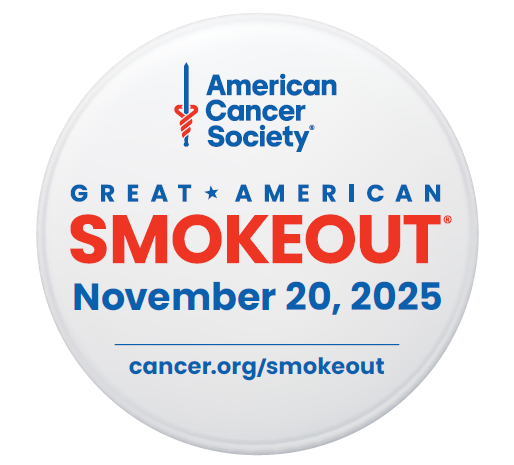
Each year on the third Thursday in November, the Great American Smokeout encourages people who smoke to take a meaningful step toward quitting, and in 2025 that date falls on November 20. The event, sponsored by the American Cancer Society (ACS), serves as both a symbolic start and a practical push: It invites individuals to set a quit-date, try to stop tobacco use for at least 24 hours and ideally begin a long-term plan to remain smoke-free.
According to the ACS, quitting tobacco use is most successful when it combines medicine, behavior-change methods, and emotional support, for example, nicotine-replacement therapy or prescription medicines, combined with counseling, quit-lines and online tools. It’s easier to quit when you surround yourself with support!
Some helpful resources include:
- The ACS’s toll-free help line (1-800-227-2345)
- The Illinois state quit-line (1-866-QUIT-YES), and
- The ACS’s Empowered to Quit webpage
The Smokeout helps smokers take that first “day one” step toward reducing their cancer risk and improving overall health.
|
|
Get to Know: Annie Dodge Wauneka, public health hero
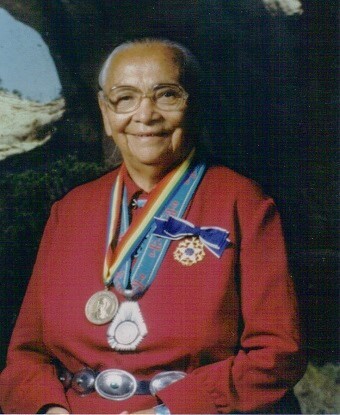
November is Native American Heritage Month, established to honor the heritage and legacy of the first people to live and form communities in the Americas. The land that is now Oak Park was originally inhabited by the Peoria, Kaskaskia, Kiikaapoi (Kickapoo) and Bodwewadami (Potawatomi) people, among others.
Native Americans have a long history of public health contributions. Annie Dodge Wauneka, a member of the Navajo Nation, made huge strides in public health education and disease prevention in her community. She was honored with the U.S. Presidential Medal of Freedom, the highest civilian honor. Born in 1910, Wauneka became the first female member elected to serve in the Navajo Tribal Council. She began several public health campaigns in her community to address influenza, tuberculosis and alcoholism. During a rise in tuberculosis in her community, Wauneka worked with the U.S. Public Health Service to increase awareness among her people. Going further, she even compiled a Navajo-English medical dictionary to allow white and Navajo doctors to more easily communicate and collaborate to prevent and treat communicable diseases among the Navajo.
|
Food assistance in and around Oak Park

Due to the federal government shutdown, people receiving Supplemental Nutrition Assistance Program (SNAP) funds, also known as food stamps, experienced an interruption in their access to these funds this month. More than 7% of Oak Park households receive SNAP benefits. Most recent data shows that the average amount of SNAP benefits received by enrolled households in Illinois is between $288 and $356 per month.
If you or someone you know needs food assistance this month or in future months, check out this list of locations where you can find help, which was put together by the Village of Oak Park’s ECHO team.
If you would like to donate to a local organization that provides food to households in times of need, visit:
-
Beyond Hunger, the organization that operates the OPRF Community Food Pantry, located in the First United Church of Oak Park.
-
The Greater Chicago Food Depository, which coordinates of a network of food pantries in Chicago and Cook County. Once enrolled, households can visit any of the food pantries in their network.
|
Keep food out of the danger zone this Thanksgiving
Don't let food-borne illnesses crash your Thanksgiving this year! The last thing anyone wants after a day spent celebrating with family and friends is the unwelcome symptoms of food poisoning. When preparing and serving food for a crowd, be especially careful when hosting those who are most at risk: Children under 5, adults over 65, pregnant people and people with weakened immune systems.
Our hosting tip? Remember: "clean, separate, cook and chill."
-
Clean: Wash your hands and food preparation surfaces often.
-
Separate: Keep raw meat separate from other foods, like produce, cheese and bread.
-
Cook: Cook everything to the correct internal temperature.
-
Chill: Never leave perishable food out for more than two hours (or one hour if exposed to temperatures above 90°F).
Your guests will be extra grateful when you follow these food safety guidelines! Read more at FoodSafety.gov.
|
|
Gratitude for our community
During this month of Thanksgiving, we wanted to share our gratitude for all Health Beat readers! We appreciate your time and your investment in the public health of our community. We are looking forward to the year ahead as we offer more opportunities to engage with you about our community health needs assessment and improvement plan. As we come to the end of another year, we are thankful for you!
|
|
|
|
|