|
February 2025 Public Health E-Newsletter |
|

Black History Month:
Celebrating the History of Health Activism
As we reflect on the Civil Rights Movement this month, we are highlighting a local public health leader who understood how ingrained racism created a gap in access to health care for the Black population. While the Black Panthers are often associated with their ideology of armed resistance, their philosophy and work encompassed much more than that. Spurgeon "Jake" Winters, a dedicated leader in the Chicago chapter of the Black Panther party, became deeply involved in social activism and improving living conditions in underserved neighborhoods. His strong belief in community empowerment drove him to partner with Dr. Quentin Young, a respected physician, to open the Chicago Free Health Clinic in Lawndale in 1969. This clinic was part of the Black Panther Party’s larger goal of addressing the healthcare needs of underserved communities, put into action by offering free health clinics in 13 cities nationwide.
The Chicago Free Health Clinic offered free medical services, including immunizations, nutrition counseling and sickle cell anemia testing, focusing on preventative care and health education. The clinic became more than just a healthcare provider; it was a symbol of the Panthers’ dedication to social change. Winters was instrumental in not only founding the clinic but also in ensuring that it became a cornerstone of community health.
The public health legacy of Jake Winters and the Black Panther Party has benefited our society, leaving a lasting imprint on our current healthcare institutions. To read more about the Black Panther Party and their public health legacy, click here. For information about the history of Chicago's Free Health Clinic, click here
|
|
New Animal Control Officer
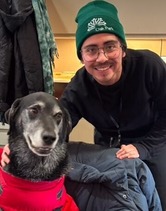
Kyle Fortner is the newest addition to our Public Health Department.
Kyle brings extensive experience in animal management to the team. Having entered the field in 2019, Kyle has encountered countless scenarios ranging from stray dogs and injured wildlife to criminal investigations. In addition to animal management and enforcement, Kyle has a well-developed background in community and environmental education, public safety and advocacy for our unhoused community.
Whether assisting our neighbors, protecting wildlife or advocating for responsible pet ownership, Kyle is committed to helping the Village flourish – one paw (or claw) at a time!
|
Farmers Market application
The 2025 Oak Park Farmers’ Market Vendor Application was released on January 15, and for the first time ever, it is available online! This new online format makes it easier for vendors to apply, ensuring a smoother and more efficient process. If you are a producer local to Illinois, Wisconsin, Michigan, Indiana or Iowa, be sure to visit the website between now and March 1 to submit your application and be considered for a spot at the market this season!
|
|
Free community Narcan trainings

Starting this month through the end of the year, we will host free monthly in-person trainings on opioid overdose prevention and the use of Narcan nasal spray. Our 90-minute training is ideal for people who want to be ready to respond if they encounter a person experiencing a potential opioid overdose. The training covers harm reduction principles, signs and symptoms of opioid overdose, how Narcan works in the body, hands-on practice with Narcan nasal spray and time for questions and answers. Participants will also receive a free opioid overdose prevention kit to take home.
This month the training will be held at Good Shepard Lutheran Church on Saturday, February 8 at 1 p.m. Sign up here.
|
Maintaining cervical health: Tips for prevention

Cervical cancer is largely preventable, yet many people still miss the opportunity for early detection. Routine Pap tests can help identify abnormal cells before they develop into cancer, leading to higher survival rates and better outcomes. In addition, the HPV vaccine can prevent infection that can lead to cervical cancer.
We encourage everyone with a cervix—including women, trans men, and nonbinary people—to take proactive steps in safeguarding their health by discussing cervical cancer prevention with their healthcare provider. These simple screenings can save lives.
For more information on screening options and resources, visit Planned Parenthood's website here.
Taking care of your health today helps secure a healthier tomorrow. Don’t wait—schedule your screening and take charge of your wellbeing.
In addition, the World Health Organization is leading a global effort to eliminate cervical cancer, aiming for a world where no one has to face this preventable disease. You can learn more about this important initiative here.
|
|
|
Ask the Public Health Department
Why is Public Health important for traffic safety?
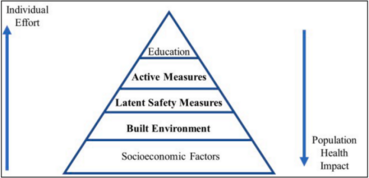
Public Health plays a critical role in traffic safety because it focuses on preventing injuries and deaths, promoting safer road environments, and improving overall well-being for communities. The Safe Systems Pyramid approach is a holistic public health-based strategy that promotes the value of shared responsibility in traffic safety.
Here are six principles of this approach:
-
Deaths and injuries are unacceptable: While no crashes are desirable, the Safe System approach prioritizes crashes that result in death and serious injuries, since no one should experience either when using the transportation system.
-
Humans make mistakes: People will inevitably make mistakes that can lead to crashes, but the transportation system can be designed and operated to accommodate human mistakes and injury tolerances and avoid death and serious injuries.
-
Humans are vulnerable: People have limits for tolerating crash forces before death and serious injury occurs; therefore, it is critical to design and operate a transportation system that is human-centric and accommodates human vulnerabilities.
-
Responsibility is shared: All stakeholders (transportation system users and managers, vehicle manufacturers, etc.) must ensure that crashes don’t lead to fatal or serious injuries.
-
Safety is proactive: Proactive tools should be used to identify and mitigate latent risks in the transportation system, rather than waiting for crashes to occur and reacting afterwards.
-
Redundancy is crucial: Reducing risks requires that all parts of the transportation system are strengthened, so that if one part fails, the other parts still protect people.
Read more about this system here. In Oak Park, the Village is finalizing its Vision Zero action plan. Learn more at www.engageoakpark.com/visionzero.
|
|
|
|
|