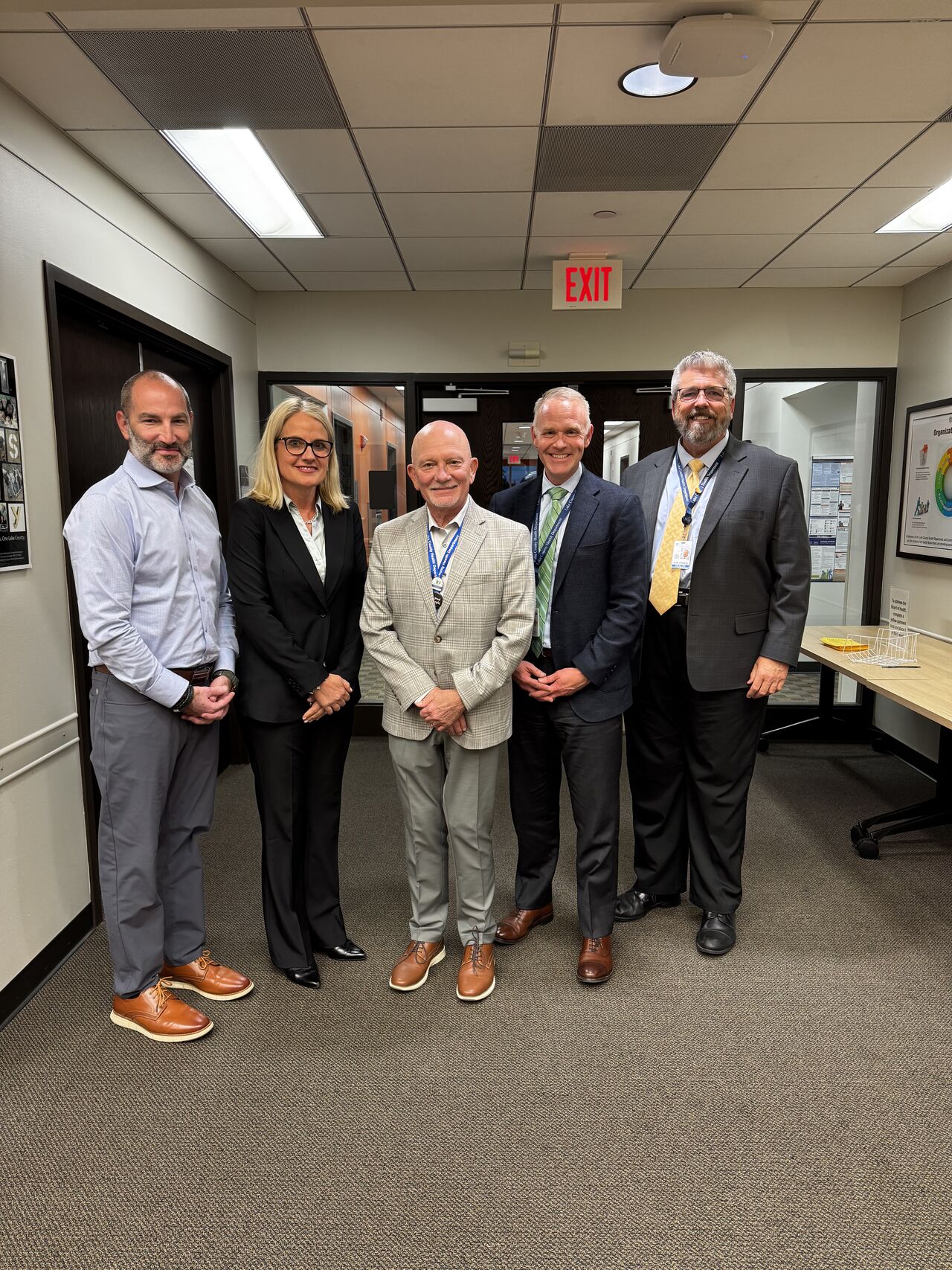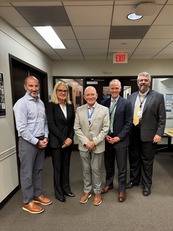
We are excited to announce that the Lake County Board recently appointed three new members to the Board of Health:
-
Dr. Ben Feinzimer, DO, an emergency medicine physician with Endeavor Health who also serves as the EMS medical director for multiple area fire departments;
-
Dr. Mary Faith Terkildsen, MD, a board-certified OB/GYN with Endeavor Health/NorthShore who provides comprehensive women’s health care across the Lake County area with a focus on breast health and gynecologic care; and
-
Dr. Mary Roberson, EdD, the founder and CEO of the Northern Illinois Recovery Community Organization (NIRCO) in Waukegan, who has spent nearly three decades in behavioral health advocating for substance-use recovery and mental health and serves on the Lake County Opioid Initiative and Drug Court Team.
As we welcome our new Board of Health Members, we also want to thank our departing members, Dr. Sylvia Johnson Jones, Lucille Devaux, and Dr. Rachel McDowell, for their service to the Health Department and our community.
|
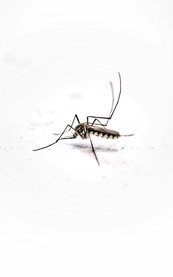
The Health Department recently sent out a press release reporting the first human case of WNV in 2026. A large proportion of human WNV cases occur in late summer, and mosquitoes remain with us into the autumn until the first hard frost.
Mosquitoes can bite day and night, causing itching and swelling at the bite site. Some mosquitoes can also carry dangerous diseases, including West Nile Virus (WNV), which can be transmitted through their bites and make you sick.
Protect yourself and your family from West Nile Virus by following the 4 Ds of Defense:
- Drain – Drain standing water from items around your home, yard, and business.
- Defend - Use insect repellent when outdoors.
- Dawn to Dusk - Protect yourself from morning to night, especially during prime times for mosquito activity.
- Dress - Wear long sleeves, pants, and closed-toe shoes when outdoors to cover your skin.
Residents can visit the Health Department's new Communicable Disease Data Hub to view Lake County's mosquito surveillance data and vector-borne disease case counts by year. Visit FightTheBiteNow.com for more information about staying safe from mosquitoes. Lake County residents can call the Health Department’s West Nile hotline at (847) 377-8300 to report stagnant water, dead bird locations, and to learn more about West Nile Virus symptoms.
|
 Stay ahead of flu season by getting your seasonal flu vaccine as soon as possible. It is recommended that everyone aged six months and older get the flu shot in early autumn. Getting a flu vaccination has many benefits, including:
- Reducing your risk of infection
- Reducing the severity of the flu
- Preventing hospitalizations and deaths in people who get vaccinated but still get sick
- Protection for vulnerable populations
Visit the CDC’s Influenza page for more information about protecting yourself and your family from the flu. Visit the Illinois Department of Public Health’s Vaccine Locator to find flu shot locations near you.

In the U.S., bats are the most commonly reported animals with rabies. While they are non-aggressive and not all carry rabies, use caution if there is a bat in your living space.
- Do not touch or try to catch the bat.
- Close the door and block the bottom with a rolled towel to keep it away from people and pets.
- To remove a bat, call Animal Care and Control at (847) 377-4700, your local police department, or a licensed wildlife removal service.
- If a person was bitten, woke up to a bat in the room, or is unsure of an exposure, call the Communicable Disease program at (847) 377-8130 or a healthcare provider.
To learn more, visit the Health Department’s Rabies page.
|
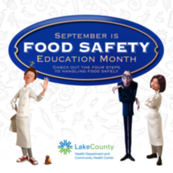
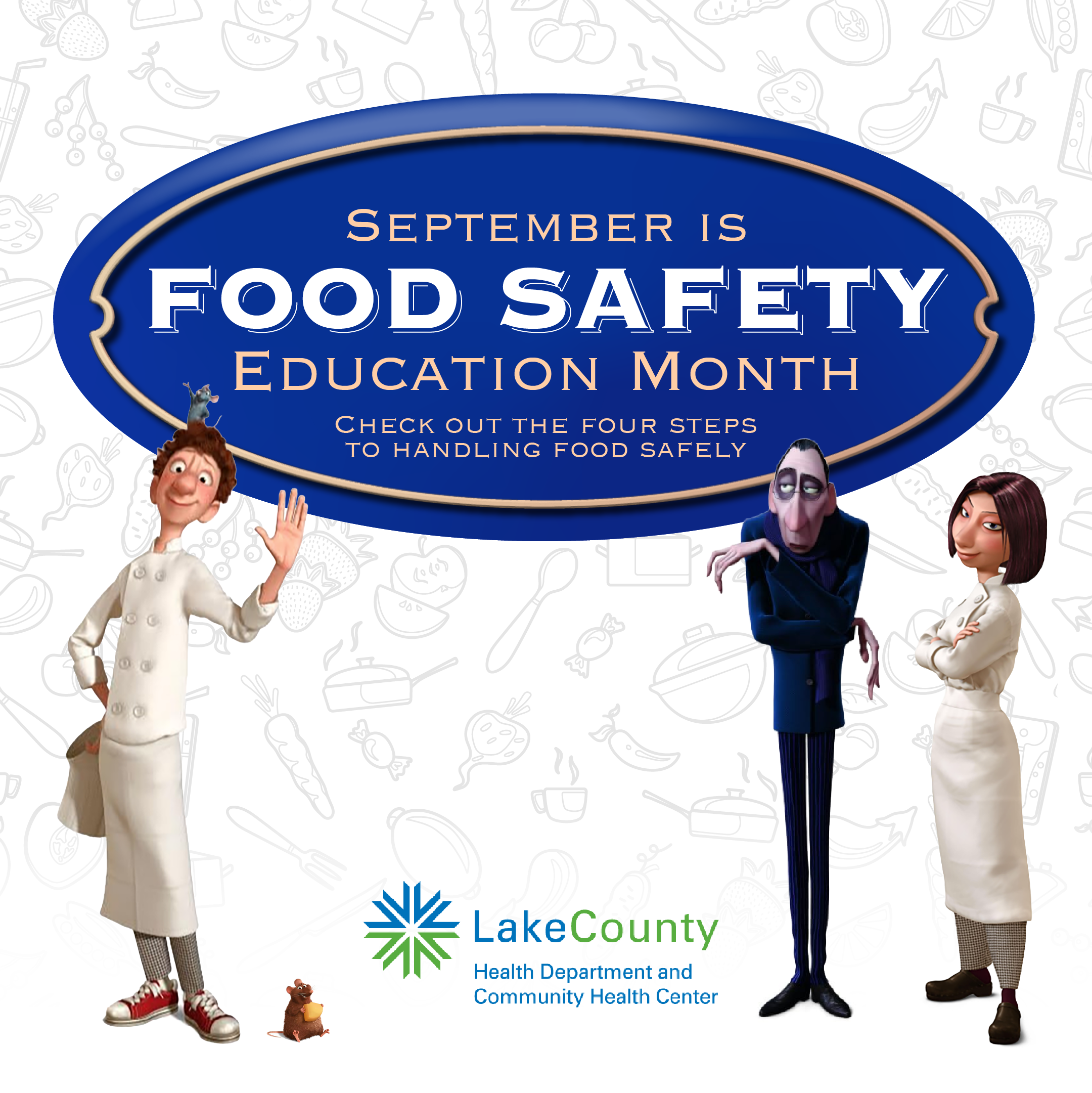
National Food Safety Education Month
It is estimated that 1 in 6 Americans are affected by foodborne illness each year. National Food Safety Education Month aims to promote proper food handling to avoid foodborne illness. Foodborne illness, also known as food poisoning, is caused by eating contaminated food.
The symptoms of foodborne illness may occur within minutes or take weeks and often present as flu-like symptoms and can include nausea, vomiting, diarrhea, cramping, fever, and chills. Some cases of foodborne illness can lead to hospitalization and even death.
Foodborne illness is preventable by following the basic safety guidelines— clean, separate, cool, and chill:
- Clean: Wash your hands, surfaces, and utensils frequently
- Separate: Keep raw foods and ready-to-eat foods separate
- Cook: Cook food to the correct temperature
- Chill: Refrigerate food promptly
Visit the Food and Drug Administration for more safe food handling tips.
|
 |
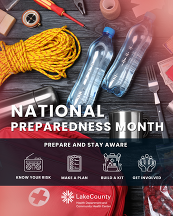
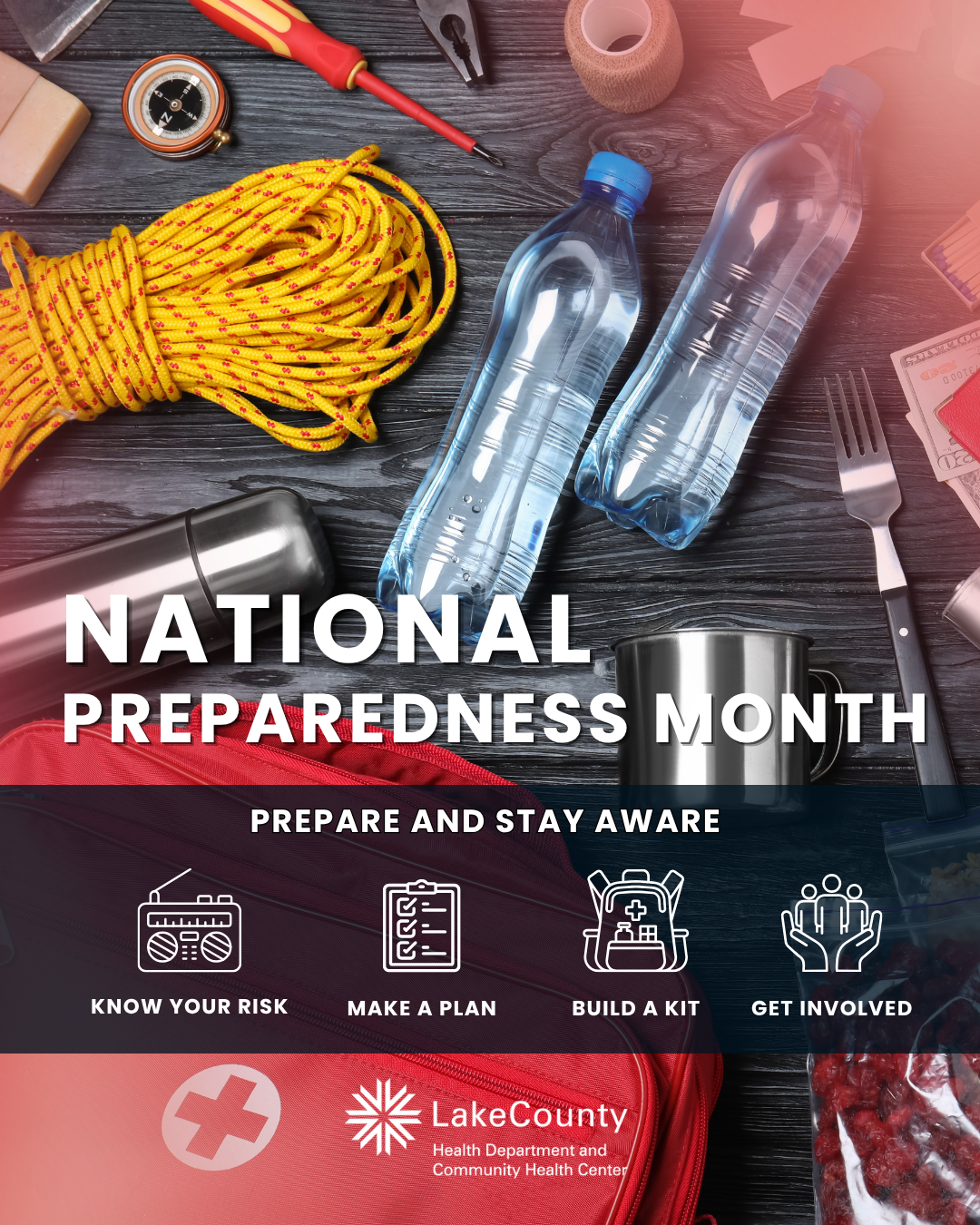
National Preparedness Month
Disasters and emergencies like power outages, weather hazards, home fires can happen at any time. National Preparedness Month aims to raise awareness about the importance of being prepared for disasters and emergencies by taking these four steps:
- Be in the know and get alerts. Know the different types of emergencies or disasters that could happen in your area and ways to stay safe
-
Make a plan for your household, including your pets, so that you and your family know what to do, where to go, and what you will need
- Have an emergency supply kit
- Get involved in your community by taking action to prepare for emergencies. You can help your family, friends and neighbors by taking a first aid and CPR class and learning how to use a fire extinguisher.
Find information and tips on how to protect yourself and your family before, during and after emergencies and disasters by visiting Ready.gov’s Disasters and Emergencies page. Ready.gov offers a free downloadable family emergency plan.
|
|
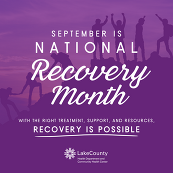
National Recovery Month
Every September, National Recovery Month celebrates the achievements made by those in the recovery community while promoting treatment and recovery practices.
Whether a person started taking prescription opioids to manage pain after a surgery or injury, or to manage chronic pain, prescription opioids can be addictive and dangerous. With the right treatment, support, and resources, recovery is possible.
Making a recovery plan increases the chances of success. Visit the CDC to learn more about recovery and how you can support those around you. For resources and support in our area, call 211 or visit 211lakecounty.org.
|
|
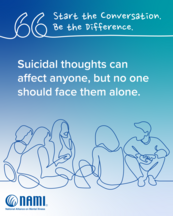
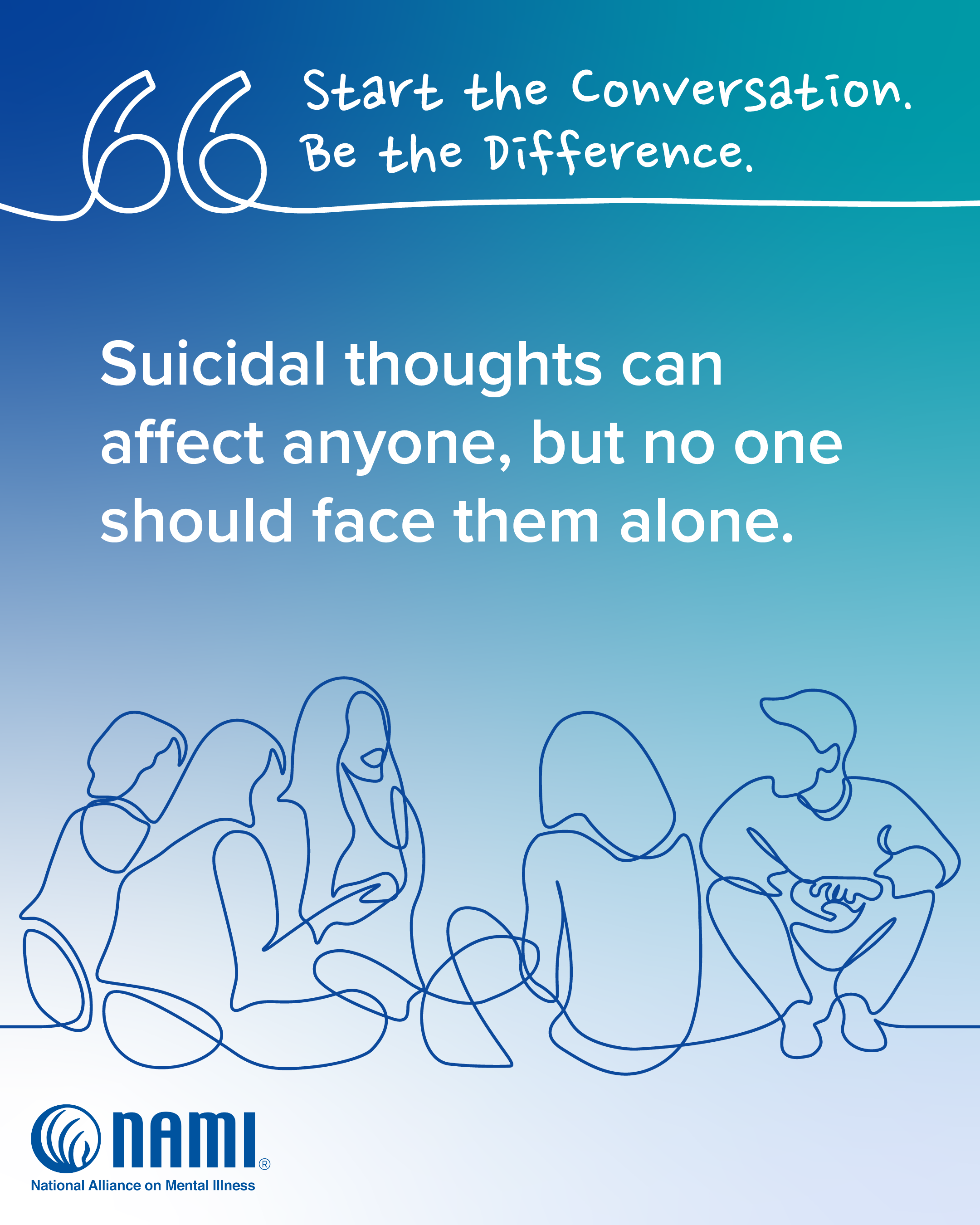
World Suicide Prevention Month
Suicide is among the leading causes of death in the United States. World Suicide Prevention Month serves as a time to remember those affected by suicide, raise awareness, and promote resources. This month encourages people to ask how someone is doing and really listen. Having a genuine interest in someone’s life can show them they are not alone and that help is available.
Suicidal thoughts, much like mental health conditions, can affect anyone regardless of age, gender, or background. While suicidal thoughts are common, they should not be considered normal, and they often indicate more serious issues. Know the signs of suicide and visit the National Alliance on Mental Health for more information and resources.
If you or someone you know is experiencing a mental health crisis, call or text 988 or visit our Crisis Care Program page for more resources.
|
Click to edit this placeholder text. |
|
 |
|

World Rabies Day
World Rabies Day is observed annually on September 28, marking the anniversary of the death of Louis Pasteur, the developer of the first rabies vaccine. It is also a day to raise awareness about rabies prevention and to highlight the tools being used to combat this disease.
Rabies is a viral disease that can be fatal to people if they do not receive medical care before symptoms start.
Although rabies is well controlled in the United States, the best way to avoid rabies is to keep your distance from wildlife. Any mammal can get rabies, but the most commonly affected animals in the United States are bats, raccoons, skunks, and foxes. Cats, dogs, and livestock can also contract rabies if they are not vaccinated. Do not entice animals with food and never approach injured animals; instead, contact animal control for assistance when needed. If you have an animal encounter that results in a bite or scratch, or are unsure, take the following steps:
- Don't engage with the animal
- Wash the wound with soap and water
- Talk to a healthcare provider about whether you need treatment for rabies
The Health Department offers rabies and distemper vaccines to all dogs and cats residing in Lake County. Visit our Pet Clinics & Costs page for more information, and call (847) 377-4700 to schedule an appointment.
Visit IDPH to learn more about rabies.
|
|
Where do I find information about...
Who can I contact to ask a question about...
-
Lake County Health Department Services: Call (847) 377-8000
-
COVID-19 in Illinois: Contact the Illinois Department of Public Health at 1-800-889-3931 or DPH.SICK@ILLINOIS.GOV
|