Staff Explores Stormwater Solutions with Area Project Tours
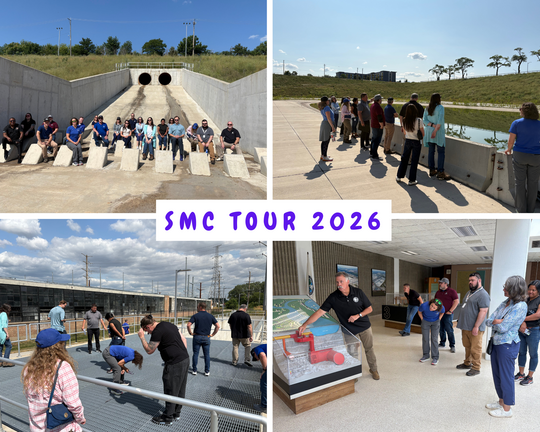 Lake County Stormwater Management Commission (SMC) staff recently toured two different Metropolitan Water Reclamation District of Greater Chicago (MWRD) stormwater improvement projects to gain firsthand insight into their efforts and positive impacts on the region. The tour provided a valuable continuing education opportunity, encouraging staff to learn more about different processes to support and continue SMC’s mission to protect and enhance the health of Lake County’s watersheds.
The first stop was the Addison Creek Reservoir and Channel Improvements project. This flood control project was created to benefit communities along Addison Creek, including Bellwood, Northlake, Stone Park, Melrose Park, Westchester and Broadview. The $81 million, 600-acre-foot reservoir can hold 195 million gallons of stormwater, protecting the communities from overbank flooding. It features a control and intake structure, 80-inch intake pipes, spillway, pump station, and discharge structure.
A $77 million channel improvement project increased the river’s capacity by widening the channel and removing restrictions that slowed water flow. This included updates to strengthen the riverbank, add native vegetation to improve habitat and stability, and remove bridges to allow water to move more freely. This project has eased public health and safety concerns by reducing flooding to approximately 2,200 homes and structures along the creek. It also removed 1,700 structures from the floodplain, meaning they are no longer considered at high risk of flooding. It’s estimated the reservoir and channel improvements will provide approximately $116 million in flood benefits.
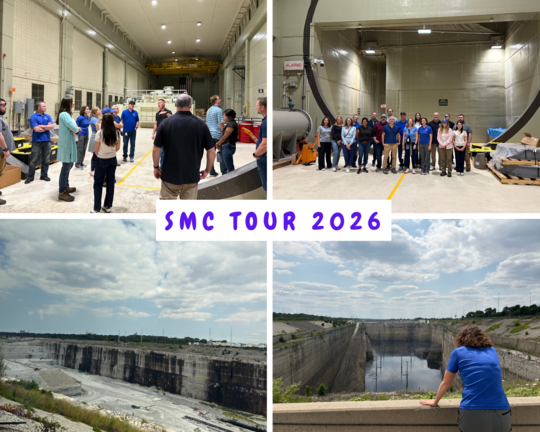
The second stop on the tour was the MWRD’s Mainstream Pumping Station. It is one of three stations in the Tunnel and Reservoir Plan (TARP) system, a system of deep tunnels and reservoirs built throughout Chicagoland to mitigate waterway pollution by preventing contaminated water from entering the Chicago River and Lake Michigan. The pumping stations move stormwater and sewage through tunnels up to 33 feet in diameter to storage reservoirs and then into water treatment plants.
Like many older cities, Chicago has a combined sewer system where sanitary sewage from homes, offices, and industries drain into the same pipes as stormwater. Chicago and 52 Chicagoland municipalities are connected to the TARP system and when heavy rain hits the Chicago area, the excess water can move through the tunnels to the reservoirs to reduce flooding and limit sewer overflow.
After visiting the Mainstream pumping station, which included going down 297 feet below ground level to see some of the mechanical equipment, SMC went to McCook Reservoir, one of the reservoirs of the TARP system. Blasted out of limestone, McCook Reservoir is being completed in two stages. The stage one reservoir was completed in 2017. It is about 300 feet deep, half a mile long and can store up to 3.5 billion gallons of sewer water. Stage two is currently under construction and will be able to hold an additional 6.5 billion gallons of sewer water. The MWRD’s three total reservoirs will have the capacity to store up to 17.5 billion gallons of water when complete.
This is water that would previously go untreated and overflow into the river when the sewer system would hit capacity. By the 1960s, Chicago area sewers overflowed and flooded roads and neighborhoods more than 100 days a year. The TARP system has had a huge impact while being one of the largest civil engineering projects on Earth.
Learn More about the TARP System
WMB Request for Proposals Open
The Lake County Stormwater Management Commission (SMC) is accepting request for proposals for Watershed Management Board (WMB) funded projects for Fiscal Year 2027.
Proposal Submission Deadline: 2 p.m. on Wednesday, September 30, via the SMC INFLOW portal.
SMC staff will review all proposal submissions based on the project prioritization criteria and will make recommendations to the WMB for their approval of projects at the December 9 WMB meeting. Project proposals recommended for funding by the WMB will be forwarded to the January 2027 SMC meeting for final approval and funding appropriations.
If you have questions about the new process, please contact your WMB watershed manager. You can complete the application all online, users just need to download the WMB member signature page to sign it and upload it to the portal.
Join Our INFLOW Webinar
New to the INFLOW system? SMC is hosting an INFLOW Instructional Webinar and Q&A on Wednesday, August 19 at 10 a.m. on the new Inflow application process.
Register for Upcoming Educational Opportunities
Lawn to Lake Gardening Class
Traditional lawn care relies heavily on fertilizers and pesticides to keep grass green and lush, but negatively impacts our ecosystem. Learn more about natural lawn care and develop a low maintenance care plan that protects people, pets and our waterways from chemicals with this course held by the University of Illinois Extension Lake County on Wednesday, August 12 at 6 p.m. All sessions are free and held virtually.
Winter Best Practices Workshops
Registration is now open for this year's Winter Best Practices Workshops taking place from September through November.
There will be a mix of in-person and virtual options available for Public Roads and Parking Lots & Sidewalks workshops. Attendance at these workshops count towards meeting MS4 and NPDES permit requirements.
Learn more and register to attend a program
Lake County is hosting an in-person Winter Best Practices Workshop on September 29 from 8 a.m. to 12 p.m. at the Central Permit Facility, 500 W. Winchester Road, Suite 201, Libertyville, IL. This in-person workshop will include a full hot breakfast served at 7:30 a.m., don't miss out!
Anti-Icing Liquids Panel Event
Lake County is hosting a free Anti-Icing Liquids Panel Event on September 29 from 12:30 to 2:30 p.m. at the Lake County Division of Transportation (LCDOT), 600 W. Winchester Road, Libertyville, IL. This event will feature various anti-icing local professionals that will briefly talk about their experiences with getting into liquid anti-icing methods and their current operations.
There will be time to ask the panelists questions, as well as tour LCDOT’s brine operations. Join us to learn from experienced professionals, connect with others, and enjoy complimentary light refreshments and snacks!
 Calibration Events
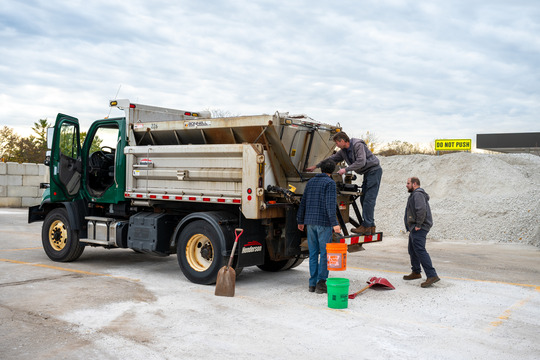
Lake County will be hosting a free in-person calibration event at the Lake County Division of Transportation in Libertyville, near the salt dome, on November 5. This returning event is an opportunity to bring winter maintenance vehicles to be calibrated with Force America and Lake County Division of Transportation staff.
One-hour timeslots will be available. Lake County entities will have priority at the November 5 event only. On-site Calibration events will also be available on November 3 and 4 at other locations in the region.
Now Accepting Nominations for Stormwater Awards
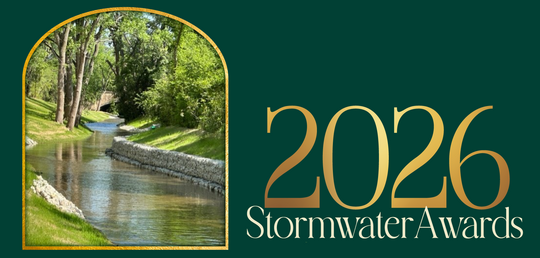
The nomination period is now open for Lake County Stormwater Management Commission's 2026 Stormwater Awards.
The Stormwater Awards recognize outstanding efforts by organizations, communities, groups, and individuals for projects and other proactive and innovative efforts to improve water quality, reduce flood damage, help restore natural drainage systems, and protect natural resources.
Nominations will be accepted through October 20. Awards will be given in the categories of:
- Community of the Year
- Best Management Practice and Development of the Year
- Education, Outreach and Media of the Year
- Stewardship of the Year
- Stormwater Manager of the Year
Manitou Creek-Fish Lake Drain Watershed-Based Plan Approved
Earlier this summer, the Lake County Stormwater Management Commission (SMC) and Lake County Board approved the Manitou Creek-Fish Lake Drain Watershed-Based Plan, which provides stakeholders a roadmap to reduce flood damage, improve water quality, and enhance natural resources in the nearly 50-square mile watershed in west-central Lake County.
Manitou Creek is the largest tributary to the Fox River completely in Lake County. It meets Fish Lake Drain just west of Long Lake and flows north into Fox Lake. The plan updates and combines previous watershed plans dating back 20 years and also meets federal guidelines for watershed planning, making many projects identified in the plan eligible for funding under the Clean Water Act. With the plan complete, SMC expects many local stakeholders to begin implementing its recommendations.
The plan report and accompanying mapping application are now available.
Intern Wanted!
SMC is seeking a Flood Mitigation Program Intern to provide administrative support at SMC. This is a full-time, long-term position, lasting about 6 months, that will assist with communication and collaboration between SMC, homeowners, stakeholders, and various government entities. The intern will also provide project documentation, and help with administrative records and cost tracking.
The internship position is open to recent college graduates and college students, especially those focused on environmental science, geography, urban planning, hazard or disaster mitigation planning.
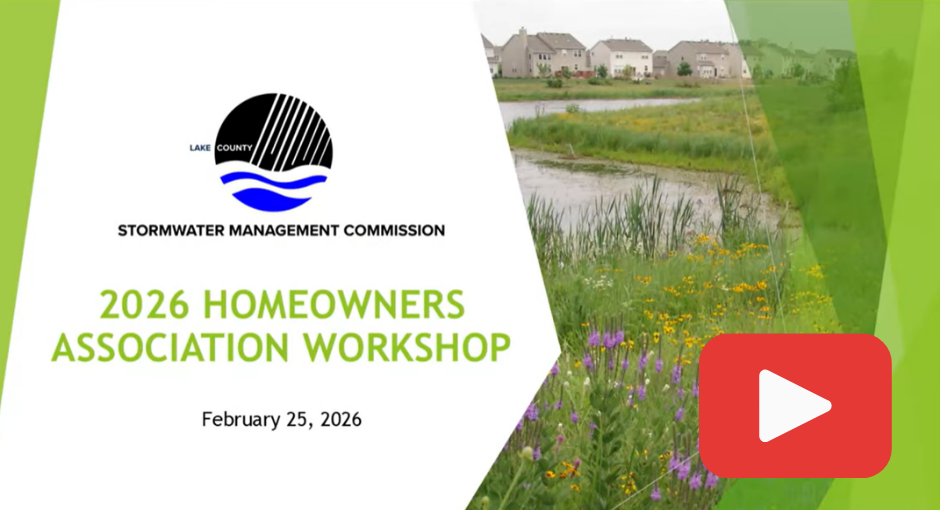
Earlier in the year, SMC hosted the 2026 Homeowners Association (HOA) Workshop and Vendor Expo to educate HOAs and property owners about maintaining detention ponds, wetlands, natural areas, and other drainage infrastructure. If you weren’t able to attend the event, the recording is now available to watch and learn from.
Six speakers at four different informational sessions shared about stormwater systems, operations and maintenance plans, stormwater funding assistance programs, HOA legal maintenance responsibilities for subdivision systems, and a recent case study about finishing a project despite challenges.
Grant Opportunity
The Illinois Environmental Protection Agency is now accepting applications for Section 319(h) Nonpoint Source Pollution Control Financial Assistance Program grants. These are grants available to local units of government and other organizations to protect water quality in Illinois. Projects must address water quality issues relating directly to nonpoint source pollution. The application deadline is September 16.
|