Celebrate International Compost Awareness Week (ICAW), May 3-9, by joining the Illinois Food Scrap & Composting Coalition (IFSCC) to learn more about compost and composting through a variety of virtual and in-person experiences and programs. There are a number of events planned in Lake County and throughout Illinois that include free compost!
The Lake County Health Department, in partnership with the Lake County Green Team and SWALCO (Solid Waste Agency of Lake County), is hosting a compost giveaway event on Friday, May 8, from 10 a.m. – 4 p.m. at the . at the Lake County Central Permit Facility in Libertyville. The compost giveaway events do limit the number of gallons per household; some events offer up to 20 gallons. Shovels will be provided, but please bring your own buckets. Compost is available while supplies last. To find an event near you, visit the IFSC website.
|
 |

Recent heavy rains have caused an increase in floodwater mosquitoes. Floodwater mosquitoes don't typically carry diseases or West Nile Virus; however, they are a nuisance. You can help control the mosquito population in your neighborhood by removing standing water around your home. Know that any standing water can turn into mosquito breeding habitats, even if it is a small amount. Did you know mosquitoes only need a tablespoon of water for breeding? That’s about the size of a bottle cap!
Continue to follow the “4 Ds of Defense” to protect yourself and your family from mosquitoes:
-
Drain: Drain standing water from items around your home, yard, and business.
-
Defend: When outdoors, use an EPA-approved insect repellent containing DEET, picaridin, oil of lemon eucalyptus, 2-undecanone, or IR3535 and reapply according to label directions.
-
Dawn to Dusk: Protect yourself all day and night, and wear repellent outdoors during these prime times for mosquito activity.
-
Dress: Wear long sleeves, pants, and closed toe shoes when outdoors to cover your skin.
Visit FightTheBiteNow.com for more information about staying safe from mosquitoes. Lake County residents can also call (847) 377-8300 to report areas of stagnant water.
|
|
The Health Department and its partners are hosting free community events to educate about sexually transmitted infections (STIs); encourage routine screening, preventative care, and treatment; and emphasize vulnerable populations for providers and the community. The following events will take place in May and June:
-
National Hepatitis Testing Day – Tuesday, May 19, from 9 a.m. to 1 p.m., at the Lake County Administration Building, 18 N. County Street, Waukegan. It is recommended that all adults (18+) get screened at least once in their lifetime for hepatitis B and hepatitis C.
-
HIV Long-Term Survivors Awareness Day – Wednesday, June 3, from 6 p.m. to 8 p.m., at the Lake County Health Department, 3010 Grand Avenue, Waukegan, in the third floor Board Room. Call Need2Know Lake County at (847) 377-8450 by June 1 to RSVP.
View the event flyers for more information.
Operation Dropbox began accepting donations today, May 1, at participating businesses, churches, and organizations throughout Lake County. Operation Dropbox is a donation drive supporting local veterans. The month-long drive will run until May 31.
The following items (new and unexpired) will be accepted at participating dropsite locations:
 Please view the event flyer or visit our Operation Dropbox page, for a list of dropsite locations throughout Lake County. Read the press release for more information.
Mental Health Awareness Month
Mental Health Awareness Month aims to break down stigma, raise awareness, and promote mental health and well-being. Just like physical health, mental health is important to a person’s overall well-being and can impact how one thinks, feels, and acts.
It’s important to remember that working on your mental health takes time and is personal. What works for someone else may not work for you. Change won’t happen overnight. Explore different practices and treatments to find what best fits your unique needs. Visit the NAMI and Mental Health America websites for more information about Mental Health Awareness Month.
For those in a mental health crisis, our Crisis Care Hotline is available 24 hours a day, 365 days a year at 988 or (847) 377-8088. Visit our Behavioral Health Services page to learn more about the services that Lake County offers.
|
|
Lyme Disease Awareness Month
Ticks can be very small in size, especially in their younger stages. As you and your family begin spending more time outside, it is important to protect yourself, family, and pets against the diseases they can carry, especially Lyme disease.
Lyme disease is spread through the bite of infected ticks. In most cases, the ticks that are attached 36 hours or more may transmit infection. The most common symptom of Lyme disease is the bullseye rash; however, other symptoms can include fever, headache, and fatigue.
Steps you can take to prevent Lyme disease include:
-
Dress: Wear long sleeves, pants, and closed-toe shoes when outdoors to cover your skin
-
Defend: Use insect repellent when outdoors and avoid tick habitats
-
Check: Check your entire body for ticks after being outdoors, including your children and pets
-
Remove: Use fine-tipped tweezers to promptly remove ticks
To learn more about protecting yourself and your loved ones from tick-borne diseases and to know what to do if you are bitten by a tick visit FightTheBiteNow.com.
|
|

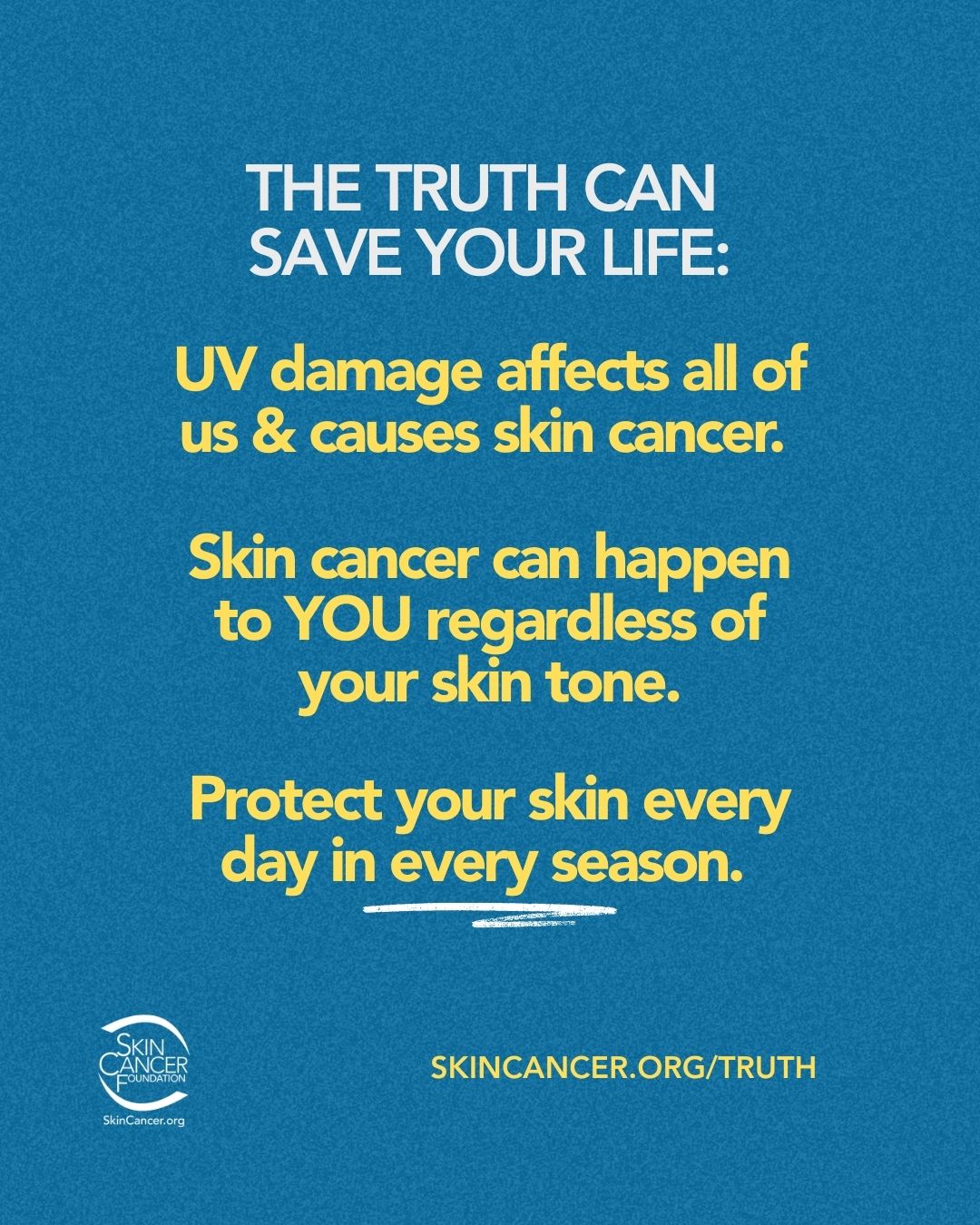
Skin Cancer Awareness Month
Skin cancer is America’s most common cancer—and one of the most preventable. Skin Cancer Awareness Month aims to dispel misinformation, raise awareness about the dangers of skin cancer, and educate about early detection.
Anyone can get skin cancer, at any age and any skin tone. Nobody is immune.
To lower your skin cancer risk, protect your skin from the sun and avoid indoor tanning. Sun protection is important all year round; even if it's cool and cloudy, you still need protection. UV rays, not temperature, do the damage.
Protect your skin when outdoors by:
- Staying in the shade, especially during the late morning through mid-afternoon.
- Wear a lightweight long-sleeved shirt or cover-up.
- Wear and reapply sunscreen at least every two hours.
Early detection is also key— make sure to perform regular skin self-exams and schedule an annual appointment with your dermatologist to get checked for skin cancer.
Visit the CDC for more information about skin cancer.
|
|

Healthy Vision Month
Make eye health a priority! During Healthy Vision Month, people are encouraged to take steps to protect their sight. Regular eye exams are an important part of eye health. Many eye diseases do not have symptoms in their early stages, so without an eye exam, you may not know you have a problem. Scheduling regular eye exams, including dilation, can help diagnose common vision problems and eye diseases. If it has been a while since your last eye exam, we encourage you to schedule an appointment this month!
Take steps to prevent vision loss by:
- Regularly getting a dilated eye exam
- Wearing protective eyewear
- Eating a balanced diet
- Knowing your family’s eye health history
Visit the CDC’s Taking Care of Your Eyes and Preventing Vision Loss pages for more information.
|
|
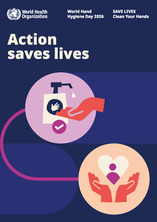
World Hand Hygiene Day
One of the most effective ways to prevent the spread of infections is by doing the simple act of washing your hands. World Hand Hygiene Day is celebrated every year on May 5. The World Health Organization’s (WHO) global campaign that launched in 2009, “SAVE LIVES: Clean Your Hands,” promotes that all healthcare workers should clean their hands at the right time and in the right way.
Hand hygiene is relevant to all health workers, patients, and their families at every single healthcare encounter. Having proper hand hygiene can prevent a range of infectious diseases.
Visit WHO and the CDC for more information about how to protect yourself and loved ones from the spread of germs by cleaning your hands often.
|
|

World Ovarian Cancer Day
World Ovarian Cancer Day, recognized annually on May 8, supports those who have been affected by ovarian cancer while also promoting awareness. All women are at risk for ovarian cancer.
Ovarian cancer signs and symptoms can include:
- Vaginal bleeding (particularly if you are past menopause), or discharge that is not normal for you
- Persistent bloating
- Feeling full too quickly, or difficulty eating
- Pelvic, abdominal, and/or back pain
- A change in your bathroom habits, such as more frequent or urgent need to urinate and/or constipation
Know what is normal for your body. If you are experiencing abnormal symptoms, reach out to your healthcare provider to determine if it is cancer or something else. Treatment works best when ovarian cancer is found in its early stages.
For more information about ovarian cancer, visit the CDC.
|
Where do I find information about...
Who can I contact to ask a question about...
-
Lake County Health Department Services: Call (847) 377-8000
-
COVID-19 in Illinois: Contact the Illinois Department of Public Health at 1-800-889-3931 or DPH.SICK@ILLINOIS.GOV
|