Residents should be aware of a scam targeting pet owners searching for lost animals. Individuals are impersonating Lake County Animal Care and Control and other local organizations to exploit individuals during emotionally difficult situations.
In reported cases, scammers contact people who have recently posted online about a missing pet and falsely claim the animal has been found. They then allege the pet has severe, life-threatening injuries requiring emergency surgery or say payment is required to retrieve the pet. The caller demands a large sum of money and pressures the owner by threatening euthanasia, release, or loss of custody if payment is not made immediately.
Residents are urged to remain calm if they receive a call from a suspected scammer and verify any such claims directly with the source through official channels.
-
Watch out for common red flags. If you get a message or call that includes any of the features below, be cautious, as it may be a scam:
- Pressure to send money quickly
- Reluctance/inability to provide detailed information and/or contact information
- Threats regarding your pet
- Excuses about why you can’t see your pet in person
-
Verify the claim by contacting the organization directly. Use a publicly listed phone number from an official website, not the number that called you.
-
Report the scam to your local police department If you believe you are targeted.
The Health Department’s Animal Care and Control can be reached at 847-377-4700 Monday through Friday from 8:30 a.m. to 5 p.m.
|
 We are excited to announce the release of the Health Department's 2025 Annual Report! The 2025 Health Department Annual Report highlights some of our key accomplishments and the impact of our work over the last year.
You can view the report in its entirety on our website.
 |
This Sunday, Daylight Saving Time (DST) “springs” us ahead one hour. DST starts annually on the second Sunday in March and ends on the first Sunday in November. With the sudden time change, we experience less light in the mornings. Waking up in the dark can be challenging because our brain will think it is nighttime and signal our bodies to continue sleeping. The changes in light and time can affect our circadian system and disrupt our sleep.
Take steps leading up to and during daylight saving time to help your sleep and overall health:
-
Keep a sleep routine: Aim for seven to nine hours of sleep each night. The night before DST starts, go to bed one hour earlier than normal to prepare.
-
Get outside in the morning: For one to two days leading up to the switch to DST, get outside in the morning. More natural morning light can help preserve your circadian rhythm.
-
Eliminate sleep disturbances: Avoid excess amounts of caffeine, alcohol, and screentime one to two hours before bedtime.
-
Exercise in the morning: Activity raises your body temperature, which can increase your wakefulness and help reset your internal clock.
Visit the CDC for more sleep resources.
|
|

It is estimated that more than 1 in 3 people in the U.S. get their drinking water from the ground. The other main source of drinking water is surface water, such as lakes or rivers. Groundwater Awareness Week, occurring during the second week of March each year, is observed as a reminder of how important groundwater is to our health and environment while encouraging yearly water well testing and well maintenance.
Between March 9 and March 20, 2026, the Health Department will be offering a reduced well water testing fee for homeowners who use well water as their primary source of drinking water. The normal $25.00 fee for testing for bacteria and nitrates will be reduced to $20.00.
Sterile test bottles and sampling instructions are available at the Lake County Central Permit Facility at 500 W. Winchester Road, Libertyville, the Health Department's headquarters at 3010 Grand Avenue, Waukegan, and 19 township or municipal offices located throughout Lake County. To find a location nearest you, call (847) 377-8020 or visit our Water Wells page. Water sampling kits can also be mailed out for $20.00 plus a postage fee.
Visit the Health Department’s Water Wells page for more information.
|
|
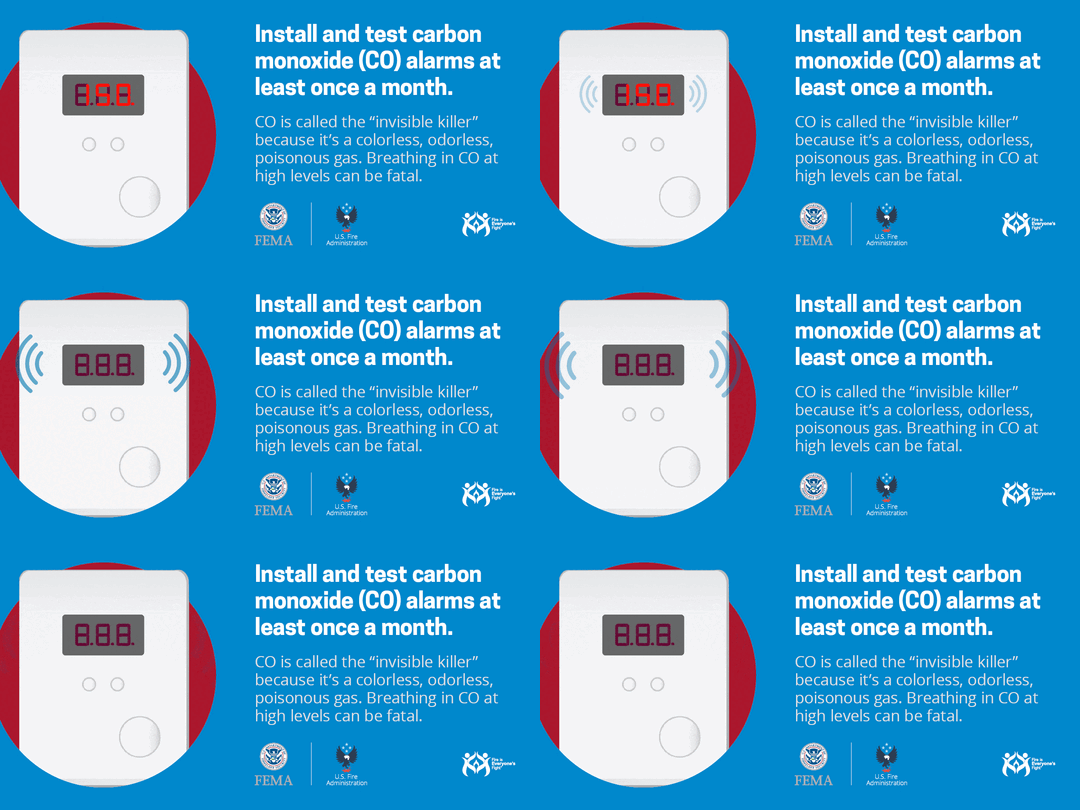 Carbon monoxide, also known as CO, is called the “invisible killer” because it's a colorless, odorless, poisonous gas that can be fatal if breathed in at high levels. Although unintentional CO exposures are most common during cold weather months (October to March), they can and do happen at any time of the year. CO is undetectable to the human senses, so people may not know that they are being exposed.
CO poisoning can occur when a fuel-burning appliance or machine, such as a furnace, heater or generator, is not working or vented properly.
Protect your family from the dangers of CO by:
- Installing and maintaining CO alarms inside your home to provide early warning of CO
- Use portable generators outdoors in well-ventilated areas away from all doors, windows and vents
- Have your gas appliances checked periodically for proper operation and venting
- Do not run the car or other gasoline-powered engines in a garage, even with the doors open.
Visit IDPH for more information about carbon monoxide, and check out IDPH’s recently released Carbon Monoxide Surveillance Report detailing CO exposures over a five-year period.
The Illinois Department of Public Health (IDPH) recently reported on the occurrence of measles in Illinois this year. As of now, Illinois has two confirmed cases.
Measles is one of the most contagious diseases. It often starts with cold-like symptoms followed by a rash a few days later. It can lead to serious complications, especially for young children and those with weakened immune systems.
Our best defense against measles is vaccination. The measles, mumps, rubella (MMR) vaccine is safe, effective, and provides long-lasting protection against all strains of measles. If you are vaccinated, you have great protection against measles; however, if you are unsure if you have been vaccinated or know you are not vaccinated, talk to your healthcare provider today.
Visit the IDPH for more information about measles.

March is National Nutrition Month created by the Academy of Nutrition and Dietetics. National Nutrition Month encourages making informed food choices and developing healthy eating and physical activity habits. This year’s theme, “Discover the Power of Nutrition," focuses on how food and beverage choices can help power your day.
This year’s National Nutrition Month weekly themes will focus on:
- Power Your Day with Nutrition
- Find Advice Backed by Science
- Stay Nourished on Any Budget
- Feel Good with Healthy Habits
For more information about the themes, visit eatright.org. View the following helpful handouts for 20 Health Tips and Smart Tips for Successful Meals.
|
|

Did you know there are often no first signs or symptoms of colorectal cancer (cancer of the colon or rectum)? Not counting some kinds of skin cancer, colorectal cancer is the fourth most common cancer in men and women, and fourth leading cause of cancer-related deaths in the United States.
Regular routine screenings, beginning at age 45, is the key to preventing colorectal cancer. If you're younger than 45 and think you may be at high risk of getting colorectal cancer, or if you're older than 75, talk to your healthcare provider about being screened.
Visit the CDC to learn more about colorectal cancer.
|
|
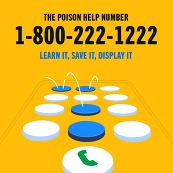
March is Illinois Poison Prevention Month, focusing on raising awareness about poisoning hazards and risks, especially for children. Be proactive by adding Illinois Poison Center (IPC) to the contacts in your phone. Their free, confidential helpline is 1-800-222-1222 and is available 24-hours-a-day, 7-days-a-week.
The IPC handles a variety of cases, ranging from minor to severe. Poisonings can occur after exposure to medication, vitamins/supplements, plants, household chemicals, automotive products, insect stings, animal bites, lead, carbon monoxide, etc. IPC offers an informative page called, “My Child Ate…,” with an extensive list of substances that include color-coded charts to help you quickly understand toxicity and what you should do next.
Follow these steps in the case of a suspected or confirmed poisoning:
- Call 911 if someone is unconscious or having trouble breathing
- Remain calm—most poison emergencies can be resolved over the phone
- Call the helpline, 1-800-222-1222, if you are concerned that you or someone else has been exposed to a potentially harmful substance
Check out this helpful Home Safety Checklist to prevent poisonings in your home. For more information and resources, visit the IPC.
|
|
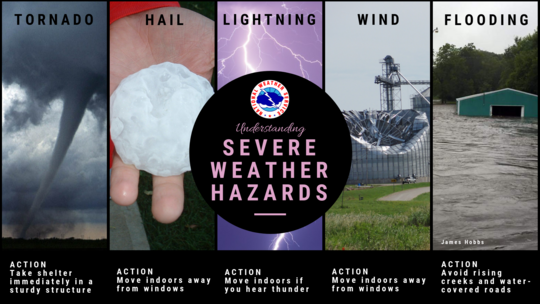 Severe Weather Preparedness Week, March 2–6, 2026, encourages Illinois residents to prepare for severe weather is before it is in the forecast. The Illinois Emergency Management Agency (IEMA) recommends that you:
- Keep all important records and documents in a secure waterproof container.
- Make an inventory of possessions using lists and photos/videos.
- Insure your property and possessions.
- Know how to shut off electricity, gas, and water.
- Compile an emergency kit and "go bag" to help your family for at least three days during extended power outages or evacuations.
-
Make a plan and build a kit for your pets.
- In case power is out, make sure flashlights have fresh batteries.
- Generators should only be run outside, never indoors or in enclosed spaces.
We encourage everyone to stay weather aware when severe weather is in the forecast. IEMA offers a helpful guide providing information about the dangers of floods, tornadoes, severe thunderstorms and lightning. IEMA’s Severe Weather Preparedness Guide and Ready.gov are both great resources with tips on how to prepare and stay safe if severe weather impacts your area.
|
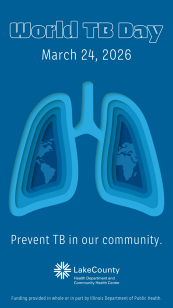
World Tuberculosis (TB) Day acts as a reminder that we all play a role in ending this preventable and curable disease. TB is one of the world’s leading infectious disease killers. There are two types of TB conditions: TB disease and latent TB infection. People with inactive (latent) TB may not feel sick or have symptoms, but they can develop active TB disease at any time. If left untreated, 1 in 10 people with latent TB will get sick with active TB, which can spread to others and be deadly.
Talk with your healthcare provider about your risk for TB.
The Health Department’s Tuberculosis Clinic provides screening, testing, consultation, education, treatment, and home visits for anyone living, attending school, or working in Lake County. Visit our TB Clinic page for more information.
|
Where do I find information about...
Who can I contact to ask a question about...
-
Lake County Health Department Services: Call (847) 377-8000
-
COVID-19 in Illinois: Contact the Illinois Department of Public Health at 1-800-889-3931 or DPH.SICK@ILLINOIS.GOV
|