|

The Illinois Department of Public Health (IDPH) recently endorsed the 2026 child and adolescent immunization schedule from the American Academy of Pediatrics - one of the nation's most trusted sources of evidence-based pediatric guidance.
This endorsement aims to provide clarity and consistency to Illinois residents and health care providers to protect the health and well-being of children, families, and communities statewide.
Childhood vaccines help protect against serious illnesses like measles, whooping cough, meningitis, and HPV-related cancers.
Vaccines are still covered through insurance, Medicaid, and the Vaccines for Children (VFC) program.
Find a vaccine provider near you using the IDPH Vaccine Locator Dashboard or contact your child’s healthcare provider with any questions.
Read more about IDPH’s endorsement in their recent press release.
|

The Lake County Health Department is proud to be recently featured in the Centers for Disease Control and Prevention Morbidity and Mortality Weekly Report (MMWR) for its work and response during a school-based TB exposure. You can read the full report to learn how strong collaboration between schools and health departments is essential to increase testing during close contact investigations.
|
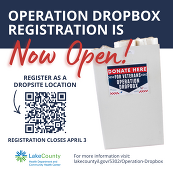
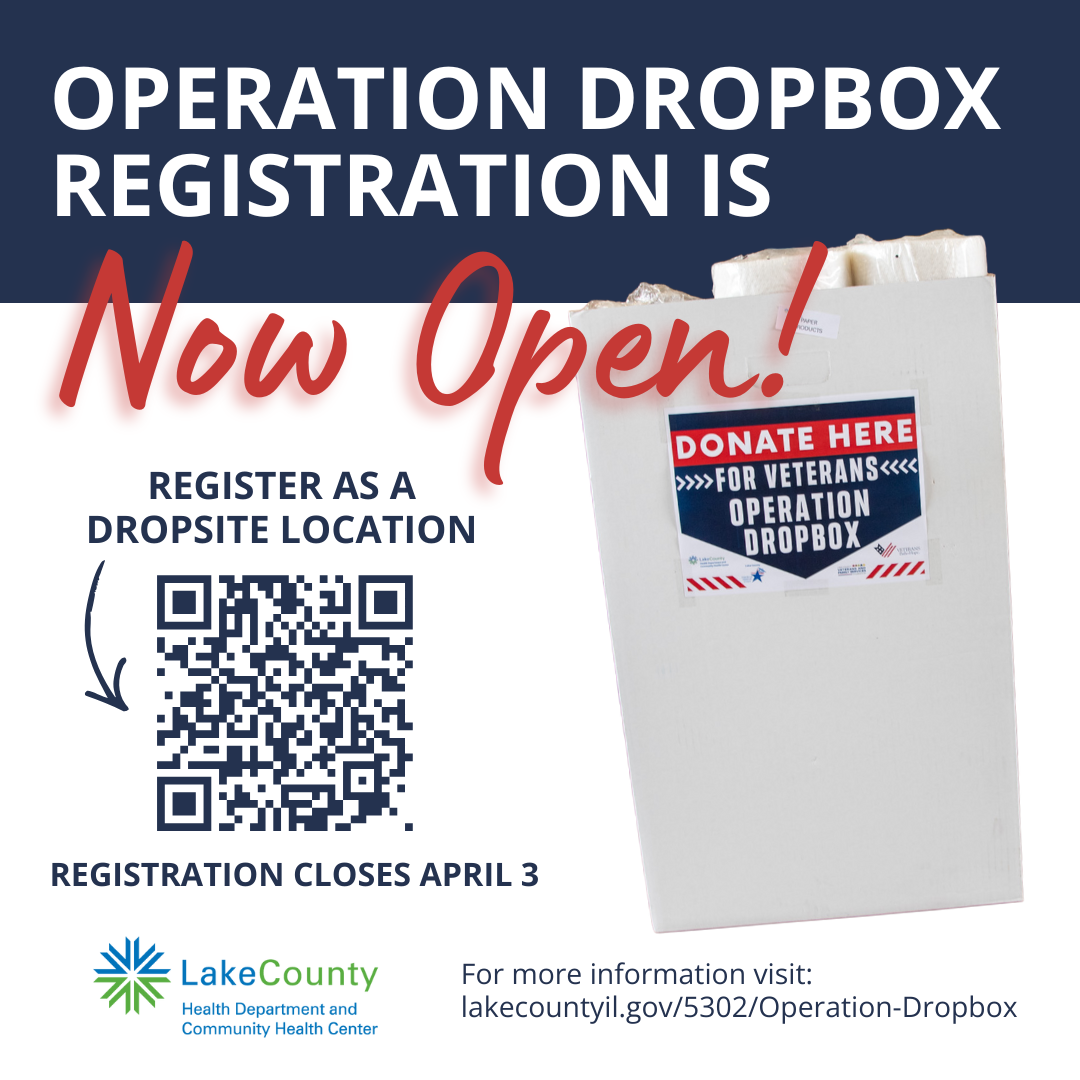
The Health Department is excited to announce its 2nd annual Operation Dropbox, a donation drive dedicated to supporting more than 3,000 local veterans and their families, in collaboration with the McHenry County Department of Health. Organizations, churches, libraries, and businesses in both Lake and McHenry counties are invited to participate as drop site locations for this important initiative.
Organizations interested in hosting a donation box or a one-day event can sign up at the Health Department's Operation Dropbox webpage. All necessary materials, including donation boxes and signage, will be provided. The deadline to sign up is Friday, April 3, with supplies delivered between April 28 and April 30.
Read the full press release for more information.
|
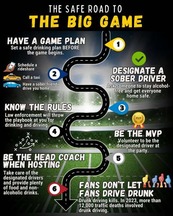
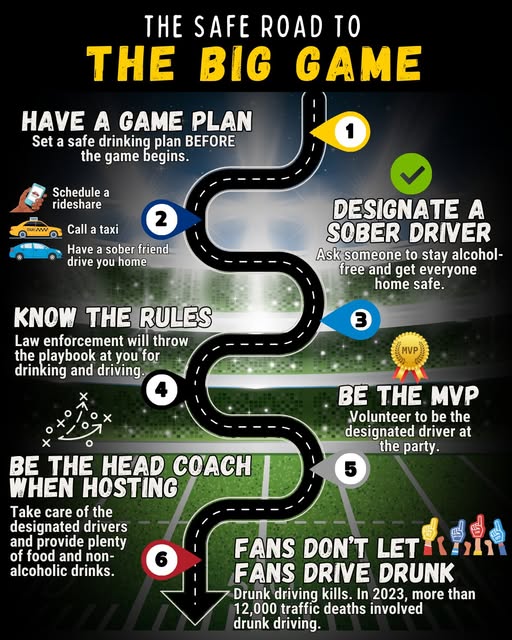
Every day, about 34 people in the United States die in drunk-driving crashes — that's one person every 42 minutes. Alcohol reduces the function of the brain, impairs thinking, reasoning and muscle coordination. All these abilities are essential to operate a vehicle safely.
Being a responsible driver is simple: if you are drinking, do not drive.
- Plan your safe ride home before you start the party, choose a non-drinking friend as a designated driver.
- If someone you know has been drinking, do not let that person get behind the wheel. Take their keys and help them arrange a sober ride home.
- If you drink, do not drive for any reason. Call a taxi, a ride-share service, or a sober friend.
- If you’re hosting a party where alcohol will be served, make sure all guests leave with a sober driver.
- Always wear your seat belt — it’s your best defense against impaired drivers.
If you see an impaired driver on the road, contact local law enforcement. Your actions could help save someone’s life.
For more information and statistics, visit the National Highway Traffic Safety Administration.
|
 |
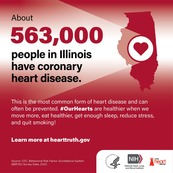
American Heart Month
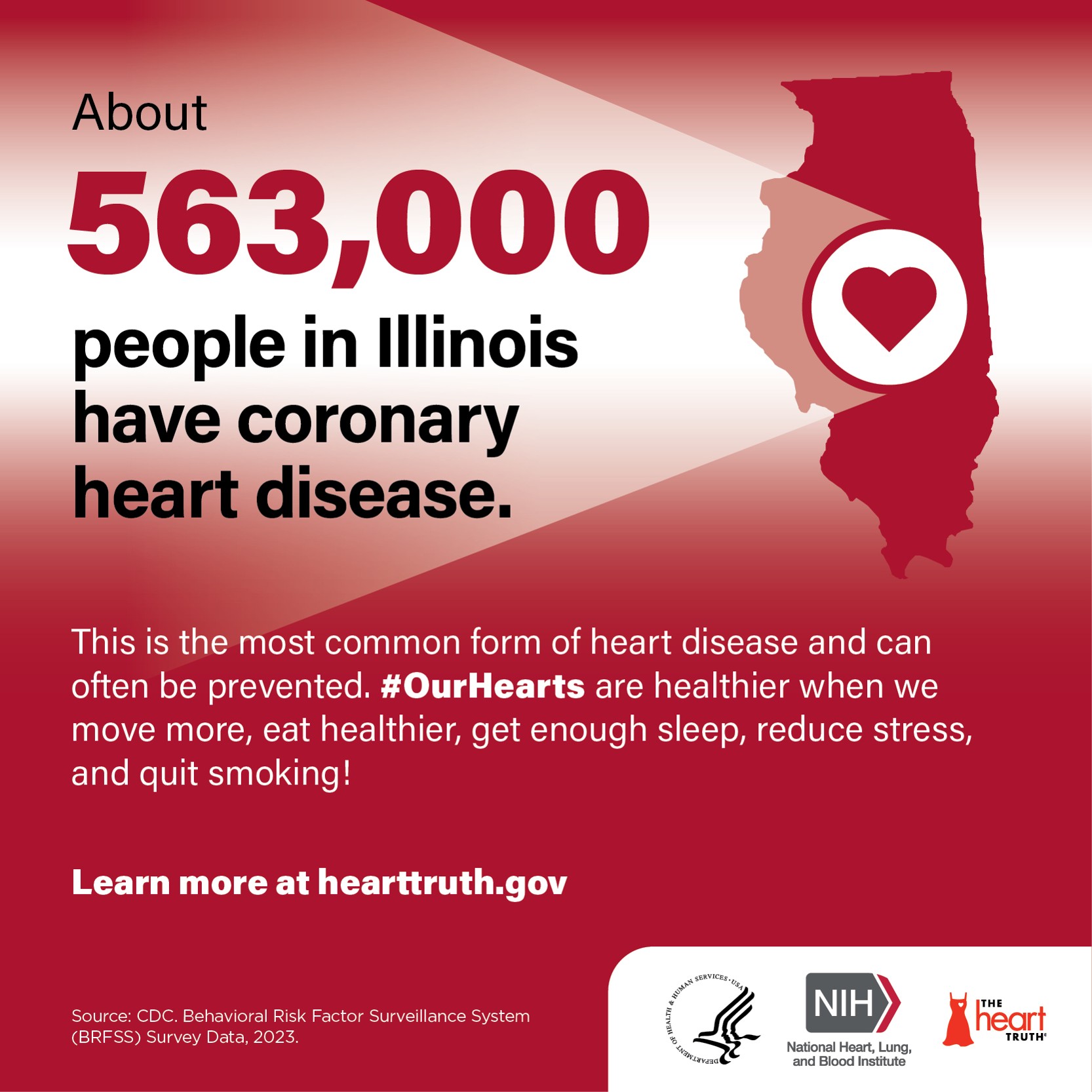
Heart disease is the leading cause of death in the United States – 1 in 5 people die from it each year, even though it is largely preventable. Research shows that many Americans will likely develop some form of heart disease, but you don’t have to be one of them. Devoting a little time every day to care for yourself can go a long way toward protecting the health of your heart. Simple self-care, such as taking a moment to de-stress, giving yourself time to move more, preparing healthier meals, and getting enough sleep can all benefit your heart. Check out this guide on 10 Ways You Can Support Heart Health.
Knowing your own risk factors for heart disease can help guide your lifestyle choices. Talk to your healthcare provider if you have any questions or concerns.
Visit the National Heart, Lung, and Blood Institute to learn more about living a heart-healthy lifestyle.
|
|

National Children’s Dental Health Month
National Children's Dental Health Month is a great time to promote the benefits of good oral hygiene. Did you know that cavities (tooth decay) are the most common chronic disease of childhood? Untreated cavities can cause pain and infections that may lead to problems with eating, speaking, playing, and learning. The good news is that cavities are preventable!
Developing good dental health habits can help children get a jump start on a lifetime of healthy teeth and gums. Parents and caregivers can help their child develop healthy dental habits by:
- Brushing teeth two times a day with fluoride toothpaste
- Floss daily
- Eat healthy foods and limit sugary beverages
- See a dentist twice a year
A child should see a dentist within six months of their first tooth appearance or by the age of one. Schedule an appointment with your dentist today to make sure your teeth are healthy and clean. If you don’t have a dentist, you can learn more about Dental Care at the Lake County Health Department.
Visit the CDC for more information and resources about children’s oral health.
|
|
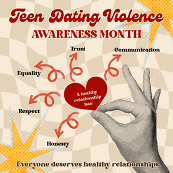
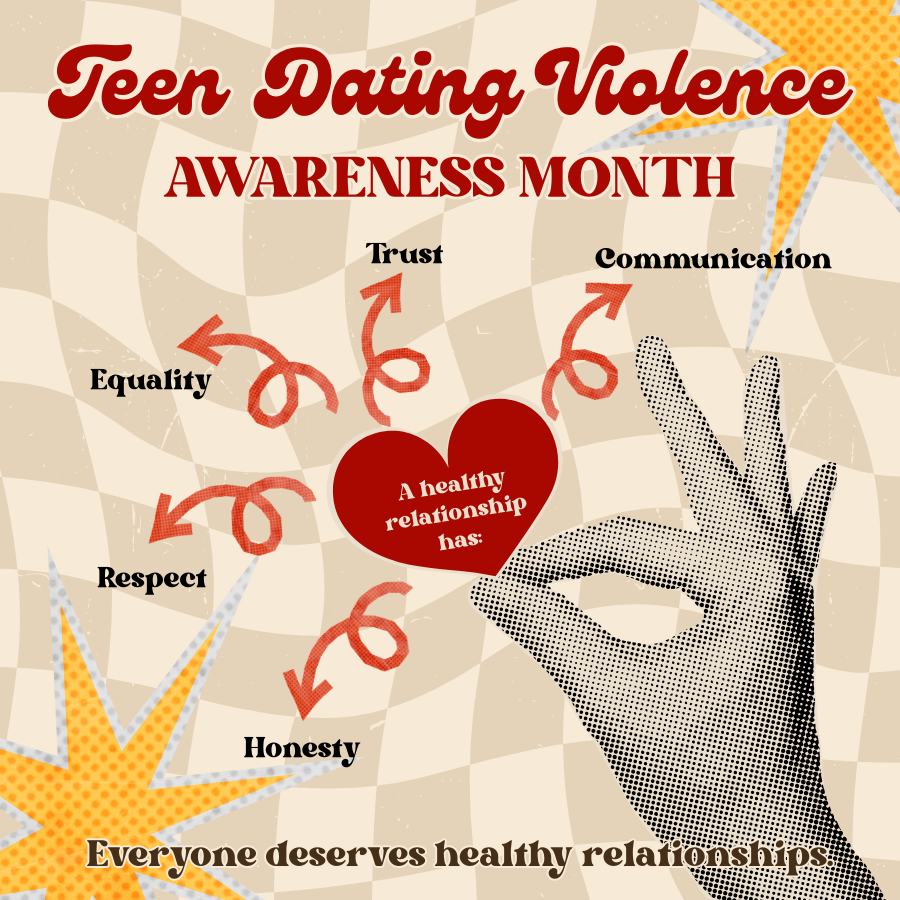
Teen Dating Violence Awareness Month
Dating violence is more common than people think, especially among teens & young adults with 1 in 10 high school students face dating violence. This year’s theme, “Real Love Respects,” centers around one truth: respect is non-negotiable.
Healthy relationships all depend on a few key elements: healthy communication, healthy boundaries, mutual respect, and support for one another. It is a good idea to regularly check in with each other about each person needs while also ensuring both of you have space and privacy, and be sure to keep an eye out for the warning signs of dating abuse.
Be aware that relationships exist on a spectrum, and it can sometimes be hard to tell when a behavior goes from healthy to unhealthy or even when it becomes abusive. Know the typical warning signs of abuse.
Love is Respect advocates are available 24/7and are available by texting (“LOVEIS” to 22522), calling (866.331.9474), or live chatting online. They offer confidential support for teens, young adults, and their loved ones seeking help, resources, or information related to healthy relationships and dating abuse in the US.
Visit Love is Respect to learn more about what a healthy relationship looks like, personal safety, and how you can support others.
|
|

Shingles Awareness Week
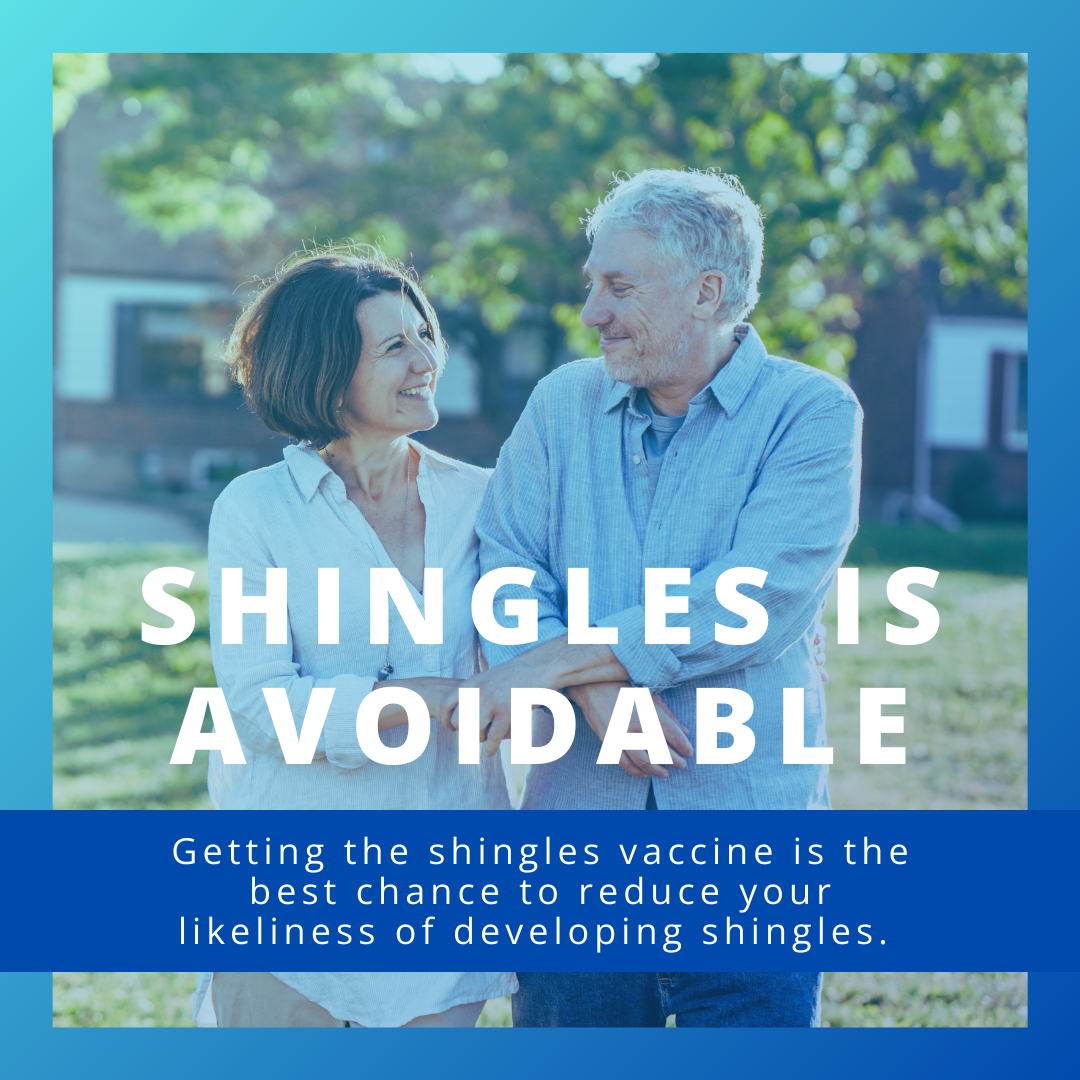
Shingles Awareness Week occurs annually at the end of February to raise awareness around the risk of shingles. Shingles is a painful, blistering skin condition that people develop when the virus that causes chickenpox reactivates in their bodies after they have already had chickenpox. Over 90% of adults over the age of 50 already carry the virus that causes shingles, and over 30% of adults will develop shingles in their lifetime. Shingles can sometimes lead to serious complications like long-term nerve pain and vision loss.
Shingles is avoidable. Getting the shingles vaccine is the best chance to reduce your likeliness of developing shingles. If you do get shingles, getting vaccinated can reduce your chances of long-lasting pain. Talk to your healthcare provider about your vaccination options.
Visit the CDC’s Shingles page for more information.
|
Where do I find information about...
Who can I contact to ask a question about...
-
Lake County Health Department Services: Call (847) 377-8000
-
COVID-19 in Illinois: Contact the Illinois Department of Public Health at 1-800-889-3931 or DPH.SICK@ILLINOIS.GOV
|
|
|
|
|