|
During the month of September, we celebrated our 30th anniversary as an FQHC! Staff across the Health Department submitted photos and participated in videos, answering, “Why health centers are important and what our FQHCs mean to them.” Watch our video to see their answers!

September was also filled with clinic open houses at Belvidere Medical Building, Midlakes, and Zion Health Centers in celebration of our 30th anniversary! Each open house offered tours of the clinics, chances to connect with staff, and experience the importance of community health centers.
We had many guests stop by including leadership from the Health Department and Lake County, IL Government, the Gorter Family Foundation, State Representative Laura Faver Dias, Lake County Regional Office of Education #34, and City of Hope.
Additionally, leadership from the Health Department, Illinois Department of Public Health (IDPH) and Congressman Brad Schneider joined us to share messages with staff and the community about the vital role health centers play.
Thank you to all our community partners who visited our centers this month — your support means everything!
|

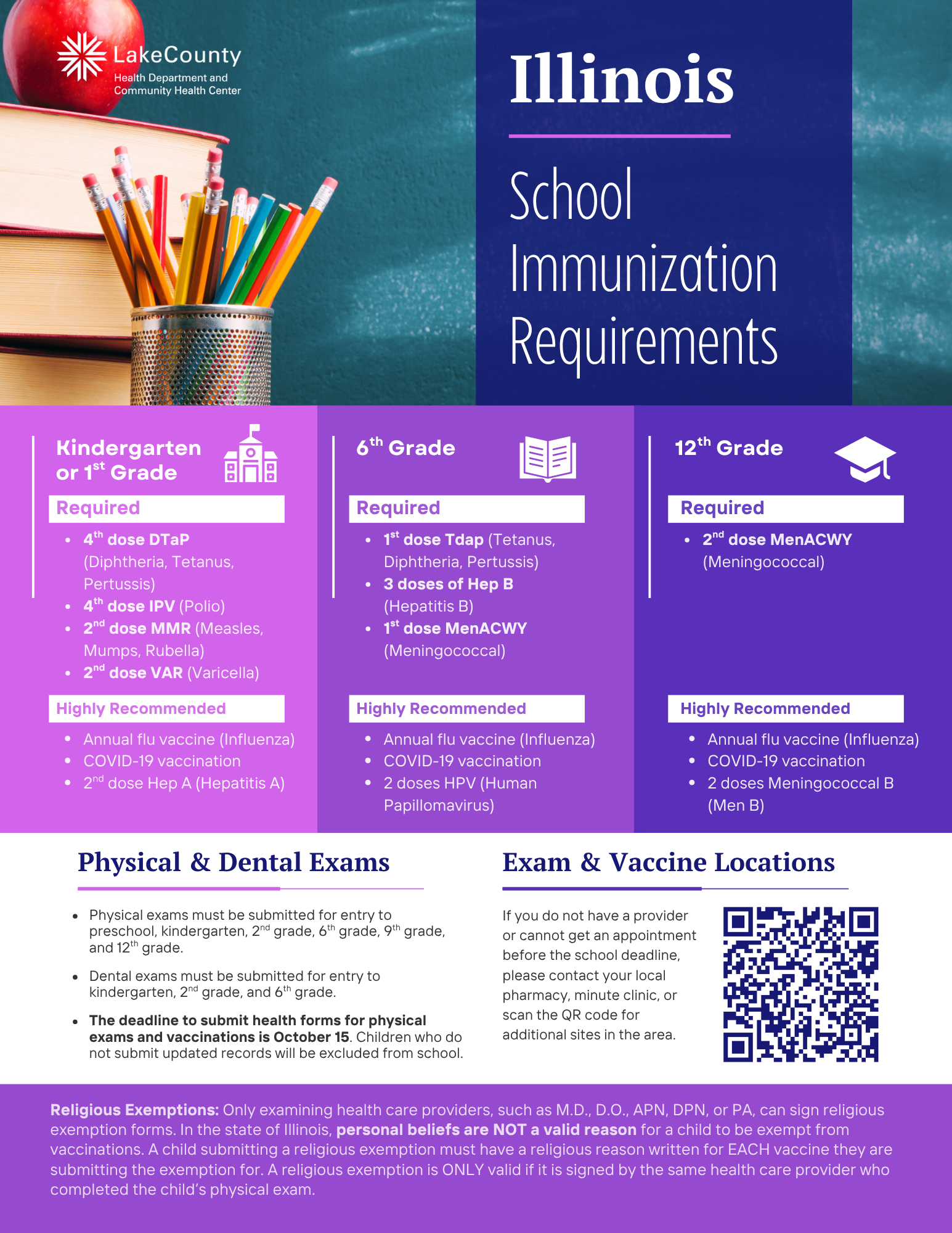
Have you submitted your child’s health forms? The deadline to submit health forms for physical exams and vaccinations is October 15. Children who do not submit updated records will be excluded from school.
Physical exams must be submitted for entry to preschool, kindergarten, 2nd grade, 6th grade, 9th grade, and 12th grade. Dental exams must be submitted for entry to kindergarten, 2nd grade, and 6th grade.
Contact your healthcare provider or local healthcare site to get your child's healthcare records updated. If you do not have a provider or cannot get an appointment before the school deadline, please contact your local pharmacy, minute clinic, or one of these listed sites.
|

Respiratory virus season is upon us, and now is the best time to protect yourself from severe illness, hospitalization, and death by getting your annual flu vaccine, COVID-19 vaccine, and RSV vaccine (if eligible).
COVID-19 Vaccinations
COVID-19 vaccines prompt our bodies to recognize and help protect us from severe disease, hospitalization, and death from the virus that causes COVID-19.
Per the Illinois ACIP, the COVID-19 vaccine is recommended for:
- All children ages 6 months through 23 months.
- Children ages 2 years through 17 years who have at least one underlying risk factor, who have weakened immune systems, who have never been previously vaccinated for COVID-19, who live in congregate settings or live in households with those at risk for severe COVID-19.
- Children ages 2 years through 17 years without underlying risk factors whose parents/guardians want them to get a COVID-19 vaccine.
- All pregnant people and those who are planning pregnancy, those who are postpartum (after pregnancy), or during lactation.
- All adults 18 years and older.
Reach out to your healthcare provider with any questions about COVID-19 immunizations.
|
Flu Vaccine Information
Stay ahead of flu season by getting your seasonal flu vaccine as soon as possible. The annual flu vaccine is recommended for everyone six months and older. Getting a flu vaccination has many benefits, including:
- Reducing your risk of infection
- Reducing the severity of the flu
- Preventing hospitalizations and deaths in people who get vaccinated but still get sick
- Protection for vulnerable populations
Visit the IDPH’s Influenza page for more information about protecting yourself and your family from the flu.
Respiratory Syncytial Virus (RSV)
Respiratory syncytial virus, or RSV, is a common respiratory virus that usually causes mild, cold-like symptoms. Most people recover in a week or two, but RSV can be serious. Infants and older adults are more likely to develop severe RSV and need hospitalization. RSV vaccines can help to reduce the risk of severe illness and hospitalizations.
RSV Immunizations are available for:
- All pregnant people during weeks 32 through 36 of pregnancy.
- All infants under the age of 8 months without maternal RSV vaccine protection entering their first RSV season.
- Children ages 8 months through 19 months who are at increased risk for severe RSV disease.
- Adults ages 50 years through 74 years at increased risk of severe RSV disease.
- All adults ages 75 years and older.
Reach out to your healthcare provider with any questions about RSV immunizations.
Contact your healthcare provider with any questions about your eligibility for the respiratory virus vaccines and to schedule an appointment to get vaccinated. For vaccination locations, visit IDPH’s vaccine locator or your local pharmacy.

An overdose can happen anywhere—be prepared by always carrying naloxone with you. Naloxone can be a life-saving medication that may be able to reverse an overdose from opioids — including heroin, fentanyl, and prescription opioid medications — when given in time.
If you or someone you care for uses opioids, carry naloxone. Visit Naloxone Saves Live to order free naloxone today!
|
 As autumn arrives, it's the perfect time to tidy up your medicine cabinet. On October 25th, from 10 a.m. to 2 p.m., properly dispose of your unneeded prescription medications. National Take Back Day is a bi-annual event that is a safe, convenient, and responsible way to dispose of unused or expired prescription drugs at locations in your community. In April, over 310 tons of total weight was collected!
Visit Take Back Day to find a collection location near you.

National Hispanic Heritage Month
Every year, from September 15 to October 15, National Hispanic Heritage Month takes place as a time to recognize and celebrate the many contributions, diverse cultures, and extensive histories of the American Latinx community. It is important to make healthy choices not only for you but for your family.
Visit the HHS Office of Minority Health (OMH) to learn more about making healthy choices.
|

Breast Cancer Awareness Month
October is Breast Cancer Awareness Month, a time to not only raise awareness but to also take action, and to support one another. Most breast cancer is found in women who are ages 50 and older; and although breast cancer mainly occurs in women, men can get it too as they also have breast tissue. Each man's risk depends on whether he has risk factors for breast cancer.
Early detection of breast cancer, including self-exams, scheduling regular clinical breast exams and mammograms, can make it easier to treat. It is recommended that women who are 40 to 74 years old and are at average risk for breast cancer get a mammogram. Talk to your healthcare provider about the best screening plan for you.
Eligible Lake County women can receive free breast and cervical cancer screenings through the Illinois Breast and Cervical Cancer Program (IBCCP), located at the Lake County Health Department. Visit the Health Department’s Breast & Cervical Cancer Screening page for more information.
More information about breast cancer can be found by visiting the CDC and National Breast Cancer Foundation, Inc.
|

Lead Prevention
Illinois has approximately two million houses with lead hazards and our childhood lead poisoning rates remain one of the highest in the nation. National Lead Poisoning Prevention Week was established to increase lead poisoning prevention awareness in the hopes of reducing childhood lead exposure. No safe blood level in children has been identified. Children six years old and under are especially vulnerable because their bodies are still developing and growing rapidly.
You can take steps to prevent lead exposure today by:
- Getting the facts: Lead is still a problem in many communities. Learn about lead exposure, lead hazards, and how you can protect you and your family.
- Getting your child tested: A blood test is the best way to find out if your child has lead poisoning. Talk to your child’s healthcare provider about getting a blood lead test if your child may have been exposed to lead.
- Getting your home tested: Minimize your risk of lead exposure by hiring a certified professional to test your home for lead if it was built before 1978.
Parents of children with elevated blood lead levels in Lake County can contact the Health Department’s Childhood Lead Poisoning Prevention program.
|

Mental Illness Awareness Week
During Mental Illness Awareness Week, October 5–11, we recognize this year’s theme, “Building Community: Supporting Mental Well-being Together,” as an opportunity to strengthen mental health support. One in five adults in the United States experiences a mental health condition. The impact of mental health not only affects the individual but also friends, family, coworkers, and others who support them. Mental health is something we all experience, manage, and need support with.
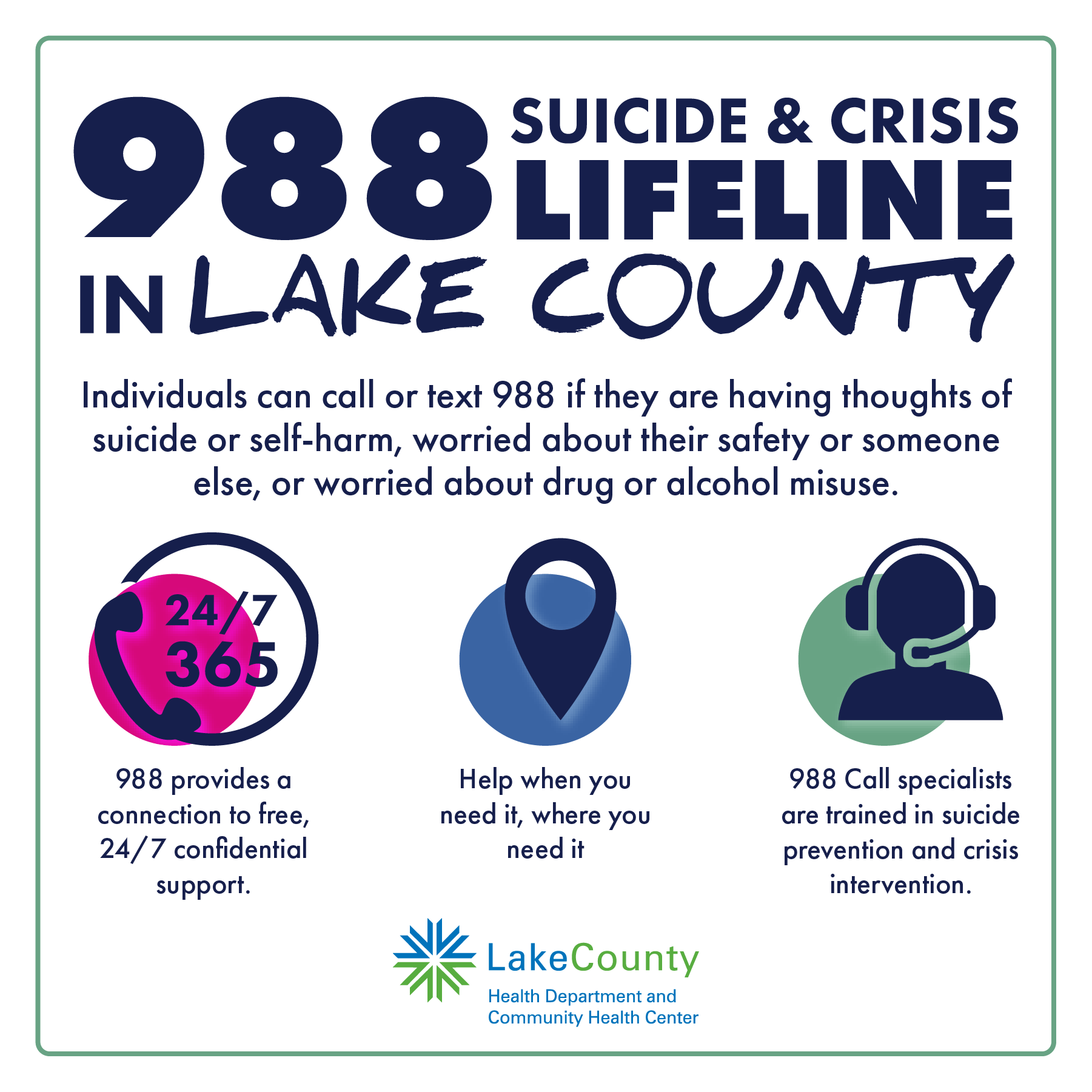
If you or someone you know is experiencing a mental health crisis, call or text 988 or visit our Crisis Care Program page for more resources.
|

Fire Prevention Week
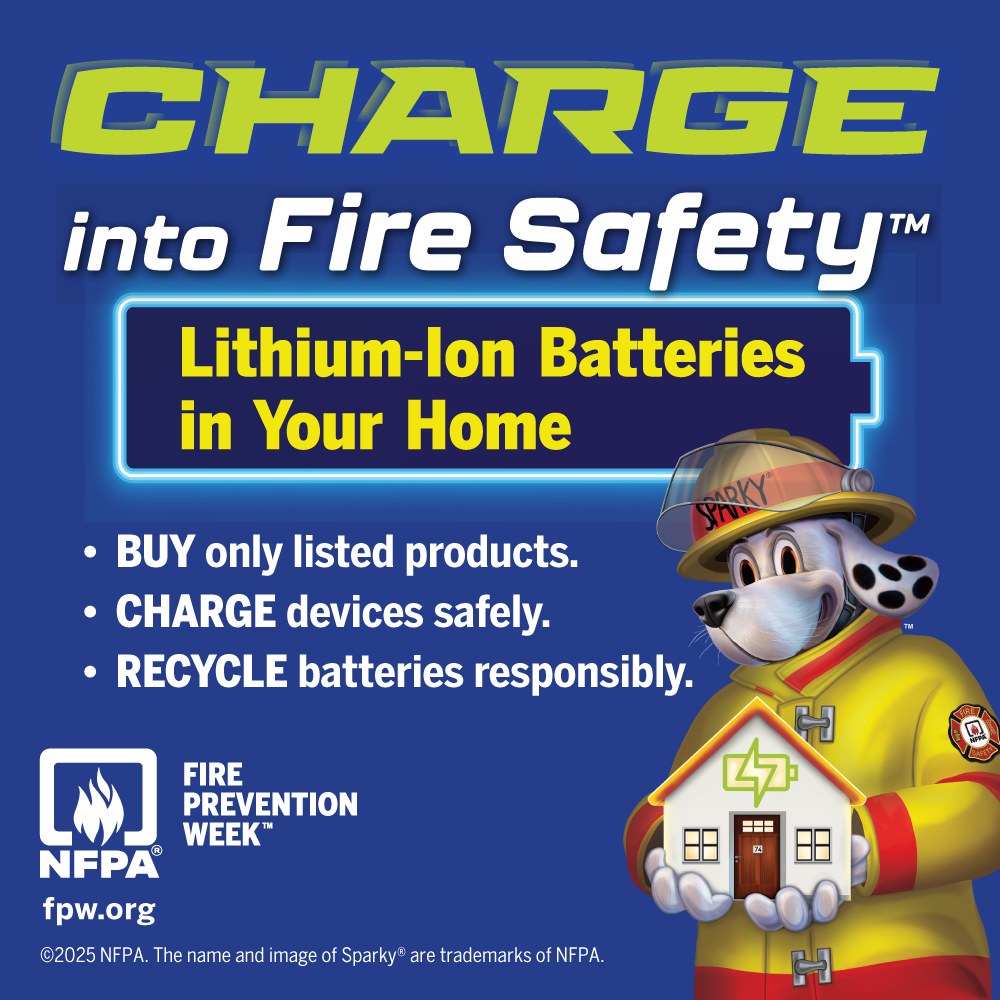
Fire Prevention Week is observed each year during the week of October 9 in commemoration of the Great Chicago Fire. This year’s theme, “Charge into Fire Safety™: Lithium-Ion Batteries in Your Home,” works to educate everyone about using these batteries safely.
Anything with a lithium-ion battery— phones, laptops, e-bikes, power tools—can become a fire hazard if it’s not charged safely. Always use the charger that came with the device or one approved by the manufacturer. If the cord only works when you bend it just right, it’s time to replace it.
Don’t toss lithium-ion batteries or devices in the trash or regular recycling bins—they can start a fire. Drop them off at a legit battery recycling spot —it’s safer and way better for the planet. Visit call2recycle.org to find a drop-off location near you.
Smoking Fire Safety
Most fires caused by smoking materials start on beds or furniture, or in trash. Know the steps to take to stay safe from fire.
The Health Department's Tobacco Free Lake County program offers resources and support to those looking to quit smoking. To make an appointment or to ask about the services below, call 847-377-8090 or email TFLC@lakecountyil.gov.
|
Where do I find information about...
Who can I contact to ask a question about...
-
Lake County Health Department Services: Call (847) 377-8000
-
COVID-19 in Illinois: Contact the Illinois Department of Public Health at 1-800-889-3931 or DPH.SICK@ILLINOIS.GOV
|