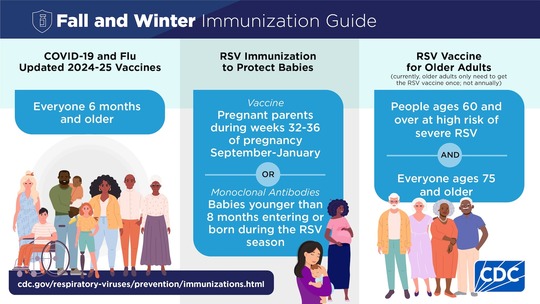
 Have you received your respiratory virus shots yet? If not, now is a great time to get protected before the holiday season is in full swing. Ideally, you should get vaccinated at least two weeks before the holidays to get the full level of protection that is provided by the vaccinations.
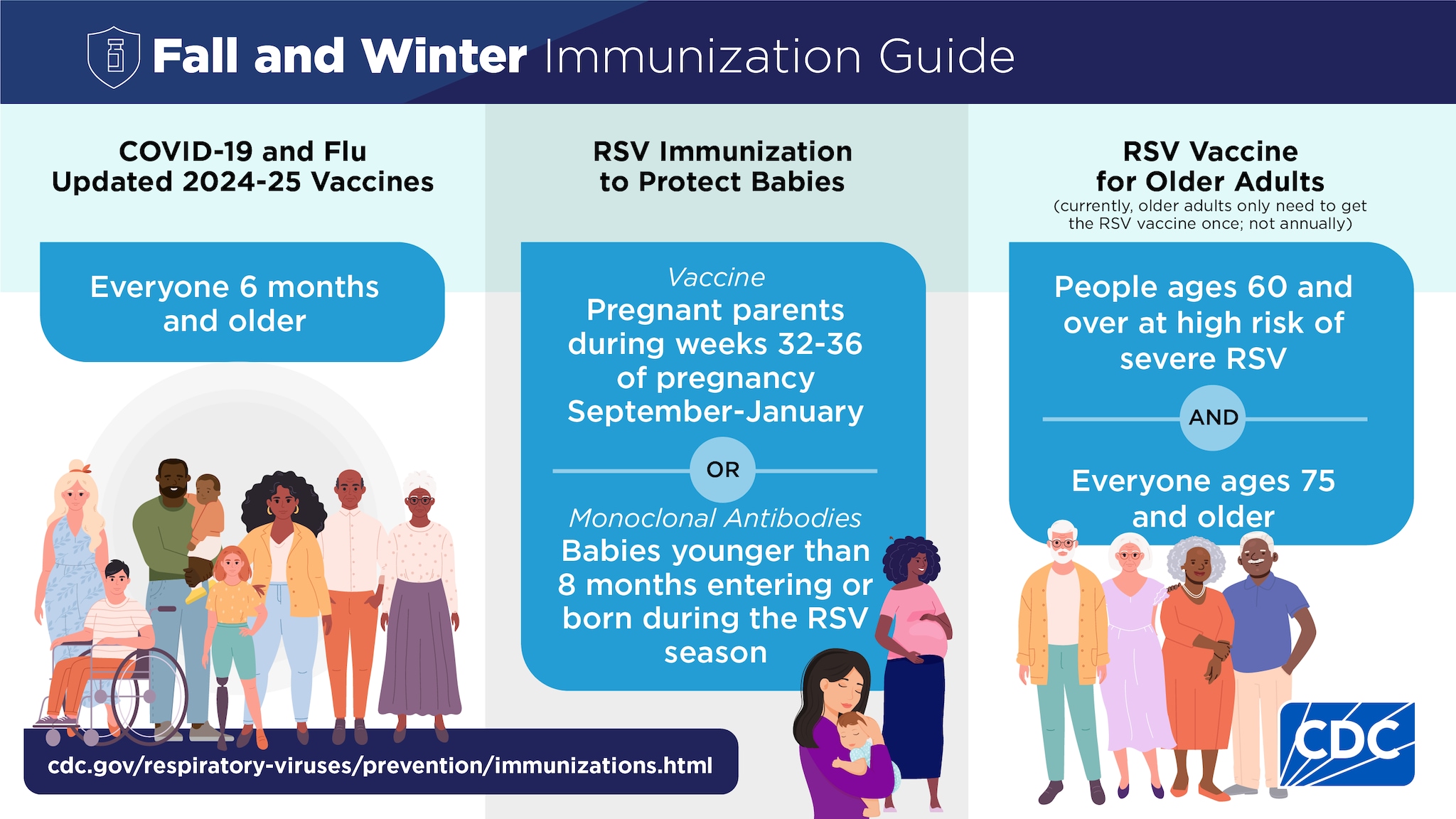
Getting vaccinated is the best way to reduce your risk of severe illness. Everyone six months and older is encouraged to get both a seasonal flu and updated COVID-19 vaccine. RSV immunizations are recommended for adults 60 and older, infants under eight months and some older babies at increased risk of severe illness, and certain pregnant people. Please reach out to your healthcare provider with any questions.
The flu, COVID-19, and RSV vaccines can all be administered at the same time to eligible individuals. Visit Vaccines.gov to find a flu shot and the 2024 COVID-19 vaccination near you.
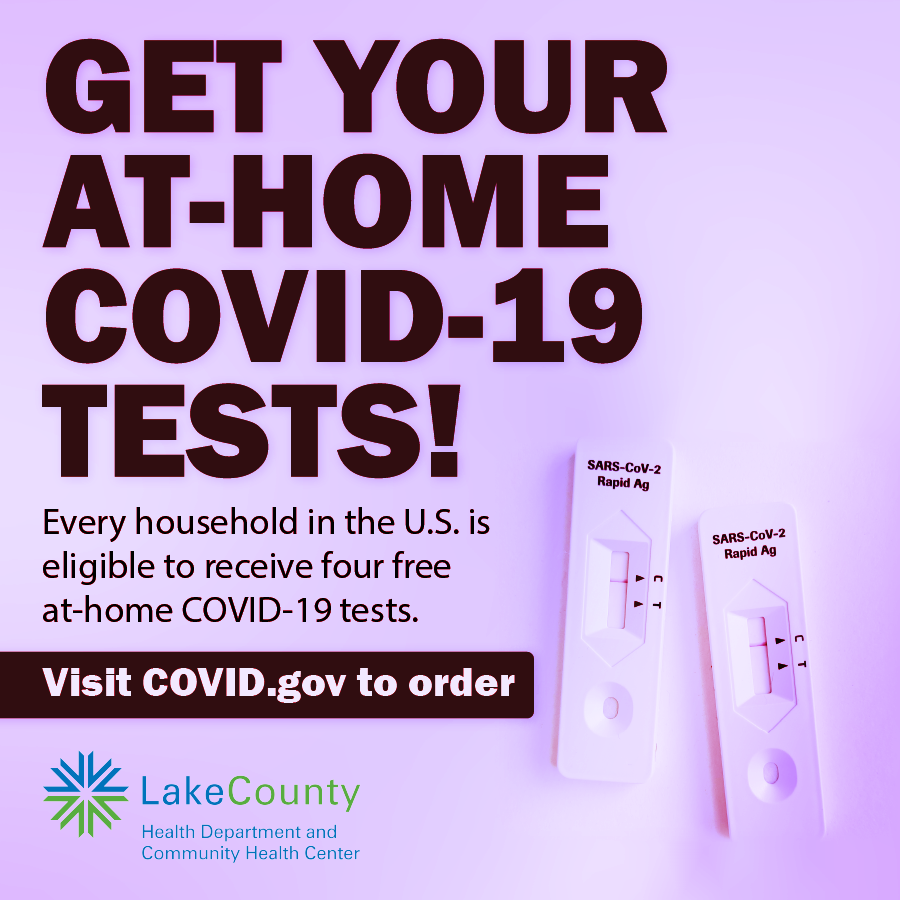 Be prepared for the upcoming holiday season and be able to test for COVID-19 at home. Each household became eligible to receive four free at-home COVID-19 tests at the end of September. Visit COVID.gov/tests to order today!
If you have any unused and "expired" tests check them before throwing them out. Some test expiration dates have been expanded. Visit the FDA to check your tests.
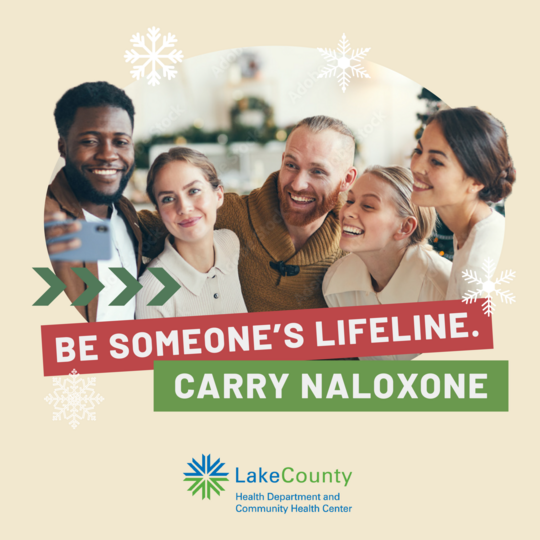 As we approach the official start of winter, we will start to experience colder temperatures more often. Did you know that naloxone nasal spray will freeze at temperatures below 5 degrees Fahrenheit? If the naloxone is frozen, the plunger will not move when pressed due to it being frozen. You can always thaw naloxone by leaving it at room temperature for about 15 minutes. It can be used once thawed. If there is a suspected overdose, do not wait for your naloxone to thaw and always call 911 immediately.
Do you need to order naloxone? Visit our Naloxone Saves Lives page to order naloxone today!
 Protect your family's health with an affordable insurance plan. All HealthCare.gov plans cover essential benefits like preventive services and prescriptions. Make sure you’re covered at the start of the new year. Sign up or update your plan by the December 15 open enrollment deadline for coverage starting January 1, 2025.
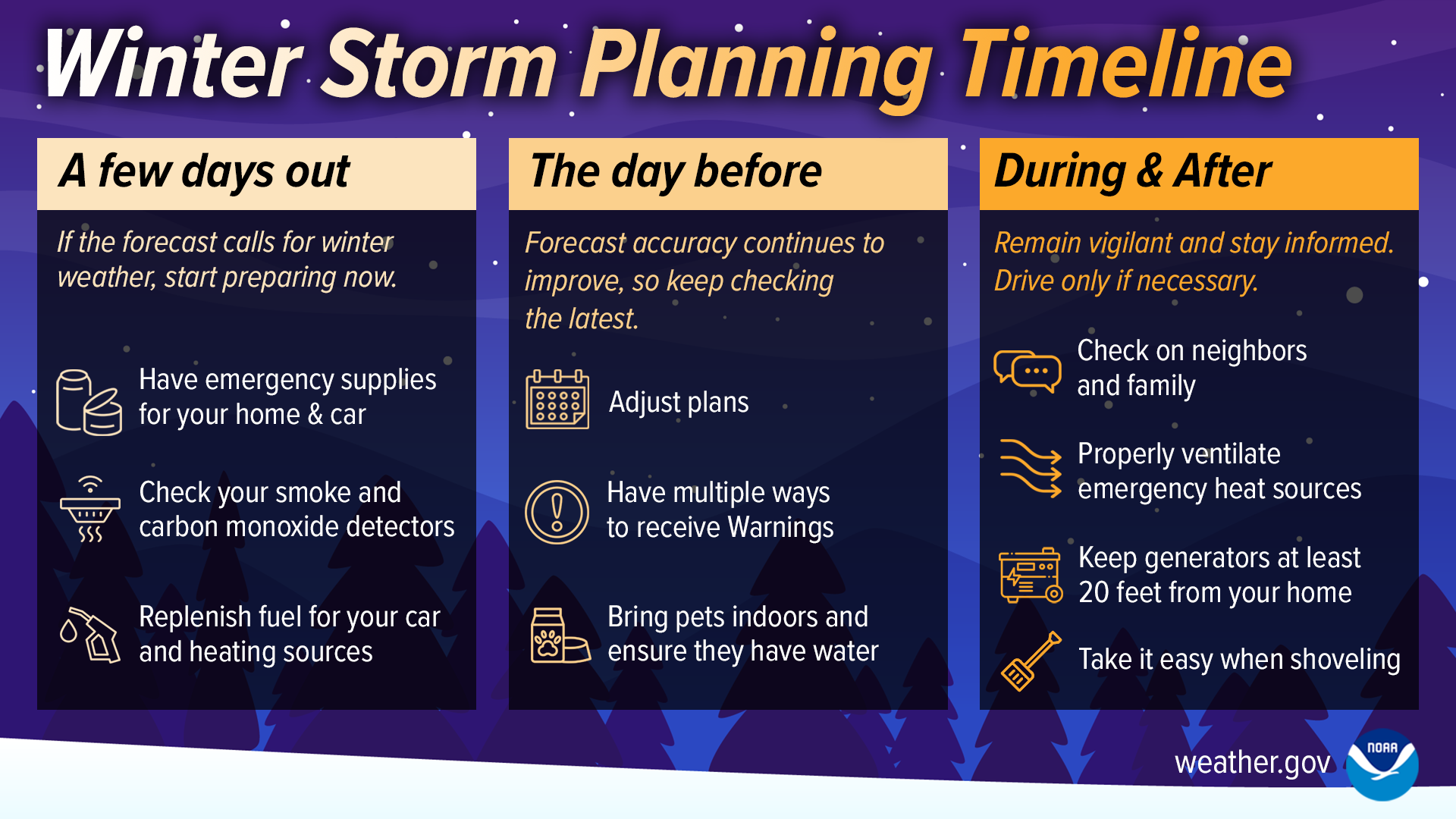
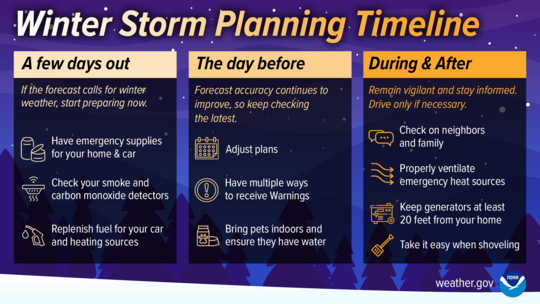 Stay ahead of winter weather by preparing your home, car, and be ready for emergencies. Don’t forget to include your pets! Make sure they have a warm, dry place to rest with plenty of food and water.
Prepare your home by:
- Winterizing your home
- Checking your heating systems
- Installing or test smoke and carbon monoxide detectors.
Prepare your car by:
- Servicing the radiator and check antifreeze levels
- Checking your tires’ tread or switch to all-weather or snow tires
- Keeping the gas tank full to prevent freezing
- Using windshield washer fluid with deicer
- Keeping an emergency kit in your car in case you get stuck
Prepare for emergencies by:
- Stocking food that doesn’t need to be cooked or refrigerated
- Making sure your phone is always charged
- Checking the weather forecast when traveling
- Keeping an emergency kit in your home in case the power goes out
Visit ready.gov for more winter weather preparedness tips.
 Pertussis, also known as whooping cough, is a very contagious respiratory illness that is easily spread from person-to-person through the air after a person with whooping cough coughs or sneezes.
Whopping cough symptoms often overlap with other illness. Early symptoms of whooping cough often appear like the common cold including a runny/stuffy nose, low-grade fever, and mild coughing. One to two weeks after the first symptoms start, the cough generally gets worse causing rapid, violent, and uncontrolled coughing fits.
The best way to prevent whooping cough is to get vaccinated. The whooping cough (pertussis) vaccination is recommended for everyone and is given in the same shot with diphtheria and tetanus vaccines. Every child should get the vaccine at 2, 4, 6 and 15 months of age, 4 to 6 years of age, and 11 to 12 years of age. Adults may also receive the vaccine if they have never had it or are routinely around infants younger than 12 months of age.
Talk to your healthcare provider with any questions about the whooping cough vaccine.
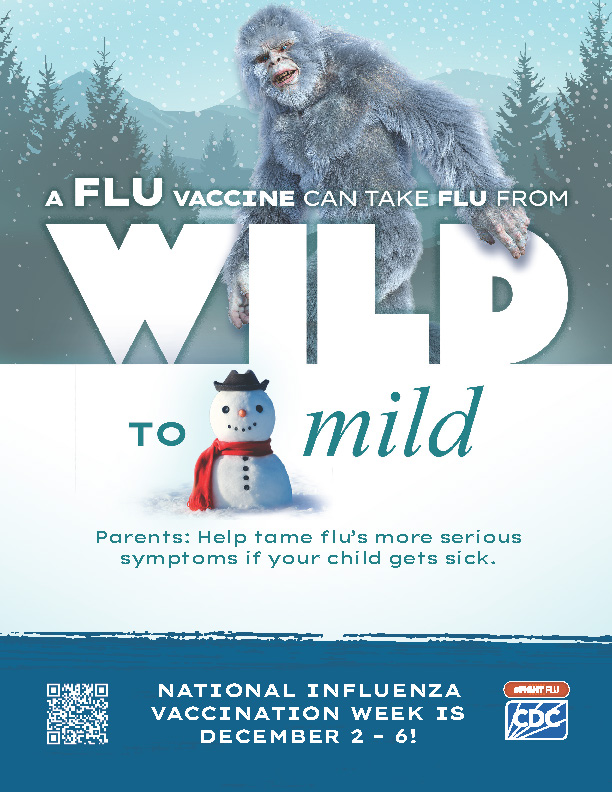
National Influenza Vaccination Week— December 2-6
Have you gotten your annual flu vaccine yet? National Influenza Vaccination Week (NIVW) is an opportunity to remind everyone that anyone six months and older can get their annual flu vaccine if they have not already. Since flu viruses are constantly changing and protection from vaccination decreases over time, getting a flu vaccine every year is the best way to reduce your risk from flu.
The flu vaccine has been shown to reduce the risk of flu illness, hospitalization, and death. This week is meant to remind people that there is still time to benefit from the first and most important action in preventing flu illness and potentially serious flu complications: get a flu vaccine today.
Visit Vaccines.gov to find a flu vaccination location near you.
|
 |

National Handwashing Awareness Week
National Handwashing Awareness Week is observed annually during the first week of December, aiming to educate people on proper handwashing techniques to prevent the spread of germs. Many diseases and conditions are spread by not washing hands with soap and clean, running water.
The five steps to proper handwashing include:
- Wet your hands with clean, running water (warm or cold), turn off the tap, and apply soap.
- Lather your hands by rubbing them together with the soap. Lather the backs of your hands, between your fingers, and under your nails.
- Scrub your hands for at least 20 seconds.
- Rinse your hands well under clean, running water.
- Dry your hands using a clean towel or an air dryer.
The best way to get rid of germs is to wash with soap and water; however, if you don’t have access to soap and water, you can use an alcohol-based hand sanitizer that contains at least 60% alcohol.
Visit the CDC for more information about When and How to Wash Your Hands.
|
|

National Impaired Driving Prevention Month
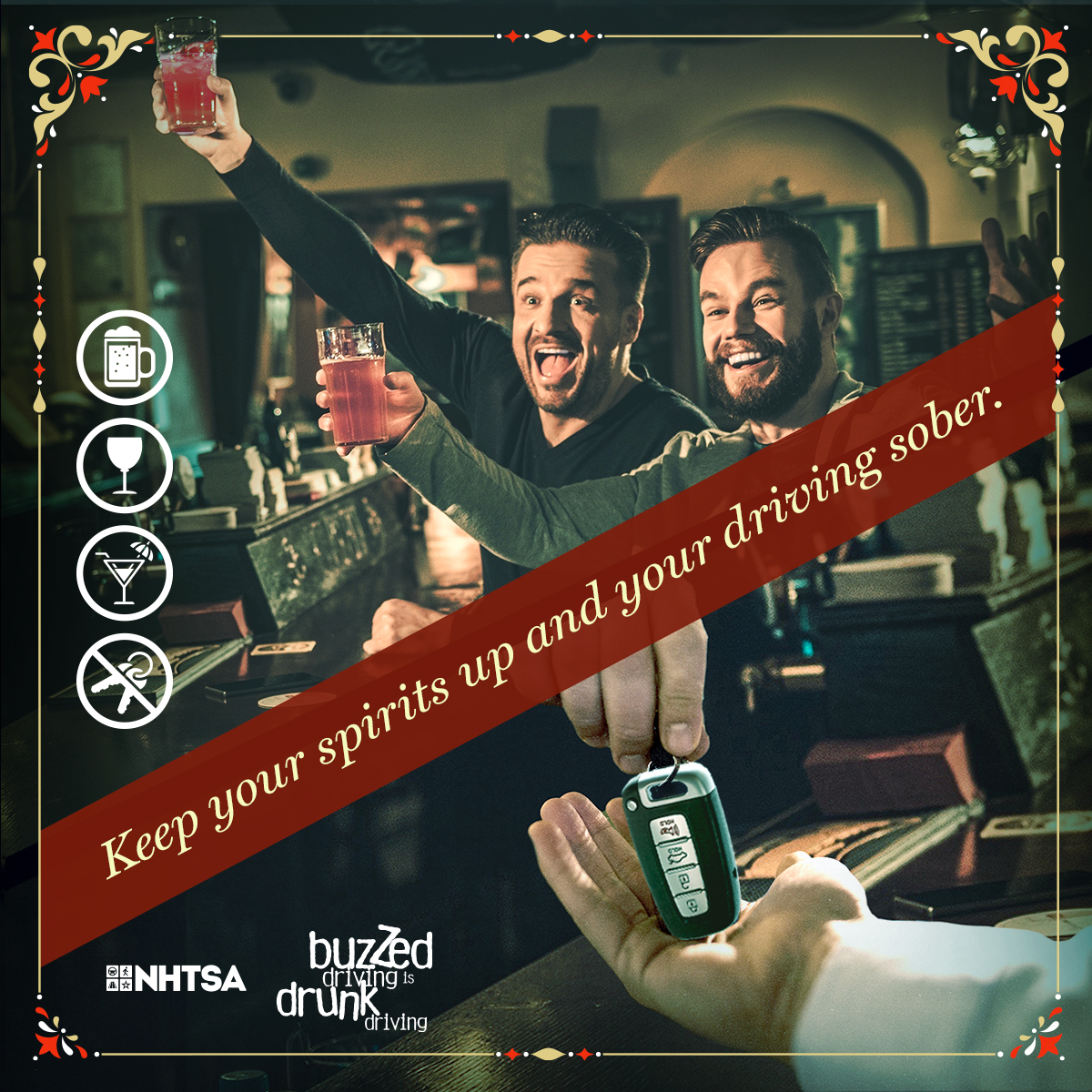
The end of the year is a busy time for many, with more drivers on the road than usual. This month encourages responsible decision making when driving including to never drive impaired. Impaired driving includes distracted driving, drugged driving, and drunk driving.
Did you know that many drunk-driving fatal crashes happen between midnight and 3 a.m.? If you’ve been drinking, do not drive. Call a sober friend, rideshare, or a taxi to get you home safely. Buzzed driving is drunk driving.
Remember to celebrate safely this holiday season.
|
Where do I find information about...
Who can I contact to ask a question about...
-
Lake County Health Department Services: Call (847) 377-8000
-
COVID-19 in Illinois: Contact the Illinois Department of Public Health at 1-800-889-3931 or DPH.SICK@ILLINOIS.GOV
|