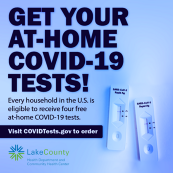
Be prepared for the upcoming holiday season and be able to test for COVID-19 at home. Each household became eligible to receive four free at-home COVID-19 tests at the end of September. Visit COVID.gov/tests to order today!
If you have any unused and "expired" tests check them before throwing them out. Some test expiration dates have been expanded. Visit the FDA to check your tests.
|
Take appropriate precautions this respiratory virus season as RSV, COVID-19, and the Flu start to circulate more. You can help prevent the spread by:
- Getting vaccinated
- Staying home if you are sick
- Washing your hands often with soap and water
- Cover your coughs and sneezes
- Wearing a mask around others if you or someone else is sick
Getting vaccinated is the best way to reduce your risk of severe illness. Everyone six months and older is encouraged to get both a seasonal flu and updated COVID-19 vaccine. RSV immunizations are recommended for adults 60 and older, infants under eight months and some older babies at increased risk of severe illness, and certain pregnant people. Please reach out to your healthcare provider with any questions.
Additionally, on October 23, 2024, CDC updated COVID-19 vaccine recommendations for people 65 years and older and for people who are moderately or severely immunocompromised.
The flu, COVID-19, and RSV vaccines can all be administered at the same time to eligible individuals. Visit Vaccines.gov to find a flu shot and the 2024 COVID-19 vaccination near you.
|

On Sunday, November 3, at 2 a.m., we gain an hour. For some, this can mean an extra hour of sleep or more time to do something productive or fun. For others, this time of year can be hard when days have less daylight.
When the seasons change, especially into fall and winter, some people feel sad or not like their usual selves. Seasonal Affective Disorder (SAD) is a type of depression that often starts in the late fall or early winter and then goes away in the spring and summer— called winter-pattern SAD or winter depression. Summer-pattern SAD or summer depression can also occur but is less common.
If you believe you are experiencing SAD, reach out to your healthcare provider to talk about the best treatment for you.
Visit the National Institute of Mental Health for more information about seasonal affective disorder.
|
 |
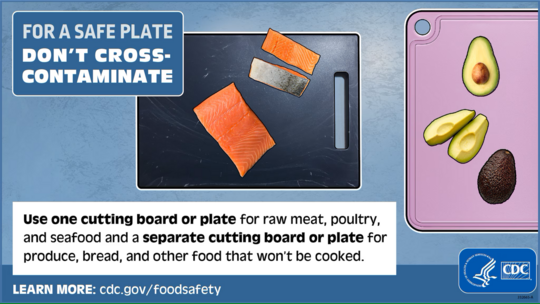 Are you planning on hosting Thanksgiving this year or in charge of bringing a side to dinner? Keep yourself, your family, and your friends healthy this holiday season by safely handling, preparing, and serving food. Avoid foodborne illness by following the Four Steps to Food Safety:
- Clean: Wash your hands and surfaces often
- Separate: Don’t cross-contaminate
- Cook: Check that food has reached the right temperature
- Chill: Refrigerate promptly
Visit the CDC for Thanksgiving food cooking tips and 10 Dangerous Food Safety Mistakes for more ways to avoid foodborne illness.
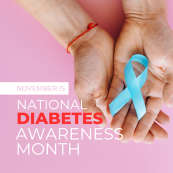
November is National Diabetes Awareness Month. Diabetes affects about 38 million Americans, including adults and youth. Diabetes can damage the eyes, kidneys, nerves, and heart, and it is linked to some types of cancer. There are three types of diabetes:
- Type 1 diabetes: the body makes little or no insulin. A person has to take insulin everyday and it is unknown how to prevent type 1 diabetes.
- Type 2 diabetes: the body doesn’t use insulin well and can’t keep blood sugar at normal levels. This can be prevented or delayed with healthy lifestyle changes.
- Gestational diabetes: the body can develop gestational diabetes while a women is pregnant and usually goes away after the baby is born.
Talk to your healthcare provider about your risk for diabetes and the best treatment options for you.
Visit the CDC’s Diabetes page to learn more.
|
|
November is National Alzheimer’s Awareness Month. There are over 6 million Americans living with Alzheimer’s Disease with 3 million new cases diagnosed each year. Alzheimer’s disease is the most common type of dementia with early symptoms typically appearing after age 60, and the risk increases with age.
It is not yet fully known what causes Alzheimer's disease but there are healthy lifestyle habits that can lower your risk of developing dementia, including Alzheimer's disease.
Visit the CDC to learn more about Alzheimer’s.
|
|
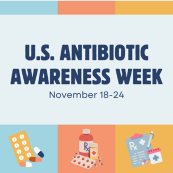
U.S. Antibiotic Awareness Week is observed annually from November 18-24. This week’s purpose is to focus on the importance of safe antibiotic use. Antibiotics only treat certain infections caused by bacteria, such as:
- Strep throat
- Whooping cough
- Urinary tract infection (UTI)
Some bacterial infections, such as many sinus infections and some ear infections, do not require antibiotics.
Antibiotics DO NOT treat viruses like the cold, flu, RSV, or COVID-19. Other medications, like antivirals, can treat viruses. However, respiratory viruses usually go away in 1-2 weeks without treatment.
If you are sick, ask your healthcare professional about the best way to feel better while your body fights off the virus.
For more information, visit the CDC for Antibiotic Do’s and Don’ts.
|
|
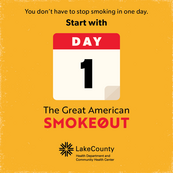
The Great American Smokeout occurs annually on the third Thursday in November. Quitting smoking isn’t easy. It takes time. And a plan. You don’t have to stop smoking in one day. Start with day one. You can set a day to quit as soon as tomorrow or up to 30 days from now. Be sure to give yourself enough time to come up with a quit plan, but not so much time that you’ll change your mind. No matter what age you are, you will feel the benefits of quitting smoking right away, and those benefits will continue to grow over time.
Smoking remains the single largest preventable cause of death and illness in the world. On November 21, join many people across the country in taking the path towards a healthier life and reducing your cancer risk.
Get help quitting smoking by calling (847) 377-8090 or visiting lakecountyquits.com.
|
Where do I find information about...
Who can I contact to ask a question about...
-
Lake County Health Department Services: Call (847) 377-8000
-
COVID-19 in Illinois: Contact the Illinois Department of Public Health at 1-800-889-3931 or DPH.SICK@ILLINOIS.GOV
|