|
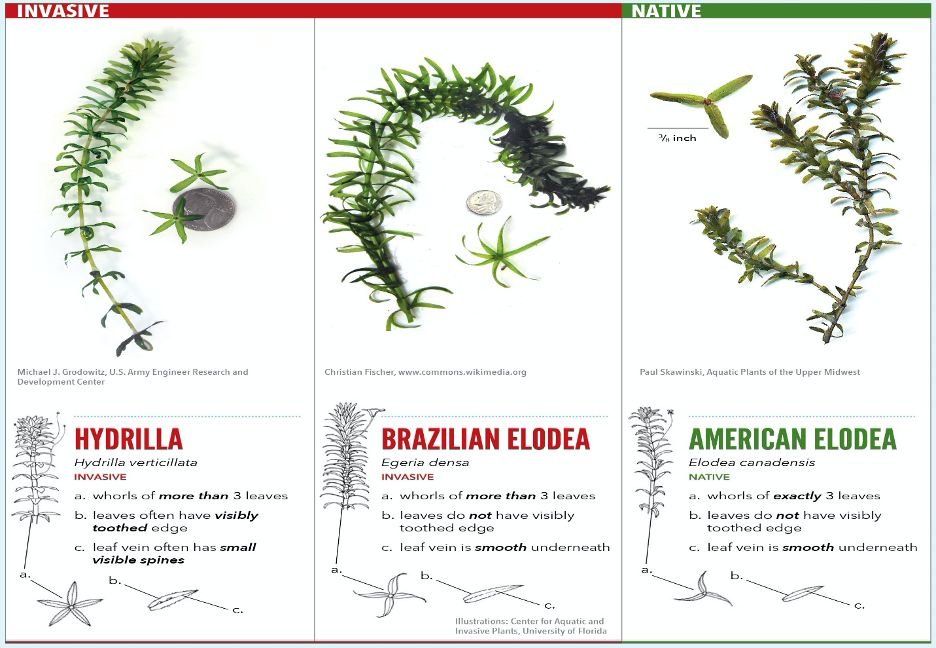
Folks who live, work, and play in Lake County should keep an eye out for an invasive aquatic plant; Hydrilla.
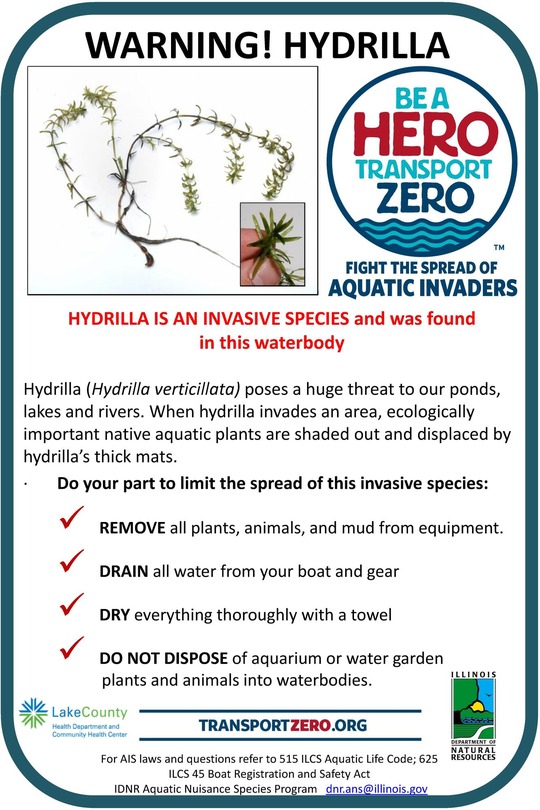
Hydrilla verticillata is considered the perfect aquatic weed. It can grow very rapidly and once it reaches the water surface it can quickly produce a dense mat of stems that outshades native submerged aquatic plants. It requires little light to grow and can readily colonize deep water (up to 20 feet deep). One tuber can produce over 2000 new tubers per square foot, and several thousand turions. A recent outbreak in an Indiana lake cost over 1 million dollars for treatment efforts.
In 2019 Hydrilla was found in a small pond in Lake County. This was the first infestation in the state of Illinois. This was a suspected aquarium dump because both Hydrilla and Brazilian Elodea were found in the pond. Treatment was promptly made, and as of today, the pond is still Hydrilla and Brazilian Elodea free.
This year Hydrilla was once again found in Illinois, in DuPage County. This brings to light the fact that everyone should be on the lookout for Hydrilla in Lake County as well. Remember to not dump aquariums or have water gardens with these invasive plants. Make sure boats are dry and disinfected before moving to another lake. Be a Hero! Transport Zero!
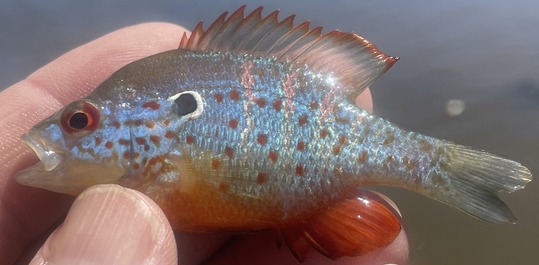
An Orangespotted Sunfish collected on the DesPlains River in Lake County
The Orangespotted Sunfish is one of Lake County's most colorful and flashy fishes. While it is not the largest fish, only averaging four inches in length, it makes up for its lack of size with bright colors and its namesake orange spots along its side. These tiny fish eat insects, crustaceans, and even other fish. They can commonly be found in backwaters and pools of slow moving rivers and streams. Although these fish can be very colorful, they are not indicators of good water quality. Orangespotted sunfish can tolerate lower water quality, especially higher levels of turbidity and siltation. While these fish can be caught by anglers, they are not usually the target of fishing because of their small size.
On Friday, December 20, a joint press release was issued by the Illinois Department of Natural Resources (IDNR), Illinois Department of Public Health (IDPH), and Illinois Department of Agriculture (IDOA) detailing the current avian flu situation affecting waterfowl throughout the state.
Avian flu, also known as bird flu, is a virus that spreads naturally among wild aquatic birds worldwide and can infect domestic poultry and other bird and animal species. While the risk to humans remains low, follow these tips to stay safe and informed:
- Do not handle or attempt to capture sick or dead birds.
- Keep pets away from bird carcasses to prevent infection.
- Report dead birds, especially five or more at one location, to IDNR.
- Report flu-like symptoms after exposure to sick or dead birds to your local health department immediately.
- If you must remove a dead bird from your property, refer to IDPH’s safe bird disposal guide.
Read through the original press release and visit the CDC for more information about preventing bird flu.

|
ILMA's annual conference is again "up north" but at a new location.
The event will be hosted at the Northbrook Hilton, located at 2855 Milwaukee Avenue. This venue has much to offer, including free parking, a restaurant, an indoor pool, and many restaurants and bars a short drive away.
As usual, ILMA will host extended workshops on the first day, Monday, and concurrent sessions on Tuesday and Wednesday. Are you a new member of ILMA or thinking about joining? This is the organization's biggest event of the year and a great opportunity to learn something new about lakes! So save the dates!
|
|