 Avian flu, also known as H5 bird flu, is a virus that spreads naturally among wild aquatic birds worldwide and can infect domestic poultry and other bird and animal species. Recently, it has caused an outbreak among poultry and dairy cows. Infection can occur through direct contact or through contact with surfaces that have been contaminated with the virus.
In late March 2024, avian flu was reported in dairy cows. Since April 1, 2024, two human cases have been reported. The CDC is monitoring the situation and currently showing no unusual flu activity in people.
The current risk to humans is low, and poultry is safe to eat if handled and cooked correctly. However, it is recommended that the public avoid consuming any raw milk or raw milk products.
Visit the CDC for more information about avian flu and the current situation.
 As of 2021, strokes were the fifth leading cause of death in the United States. A recent Morbidity and Mortality Weekly Report (MMWR) found that in the last decade, stroke rates have increased by 15% among adults younger than 65. Many strokes can be prevented by making healthy lifestyle choices, such as eating healthy, not smoking, and regularly exercising.
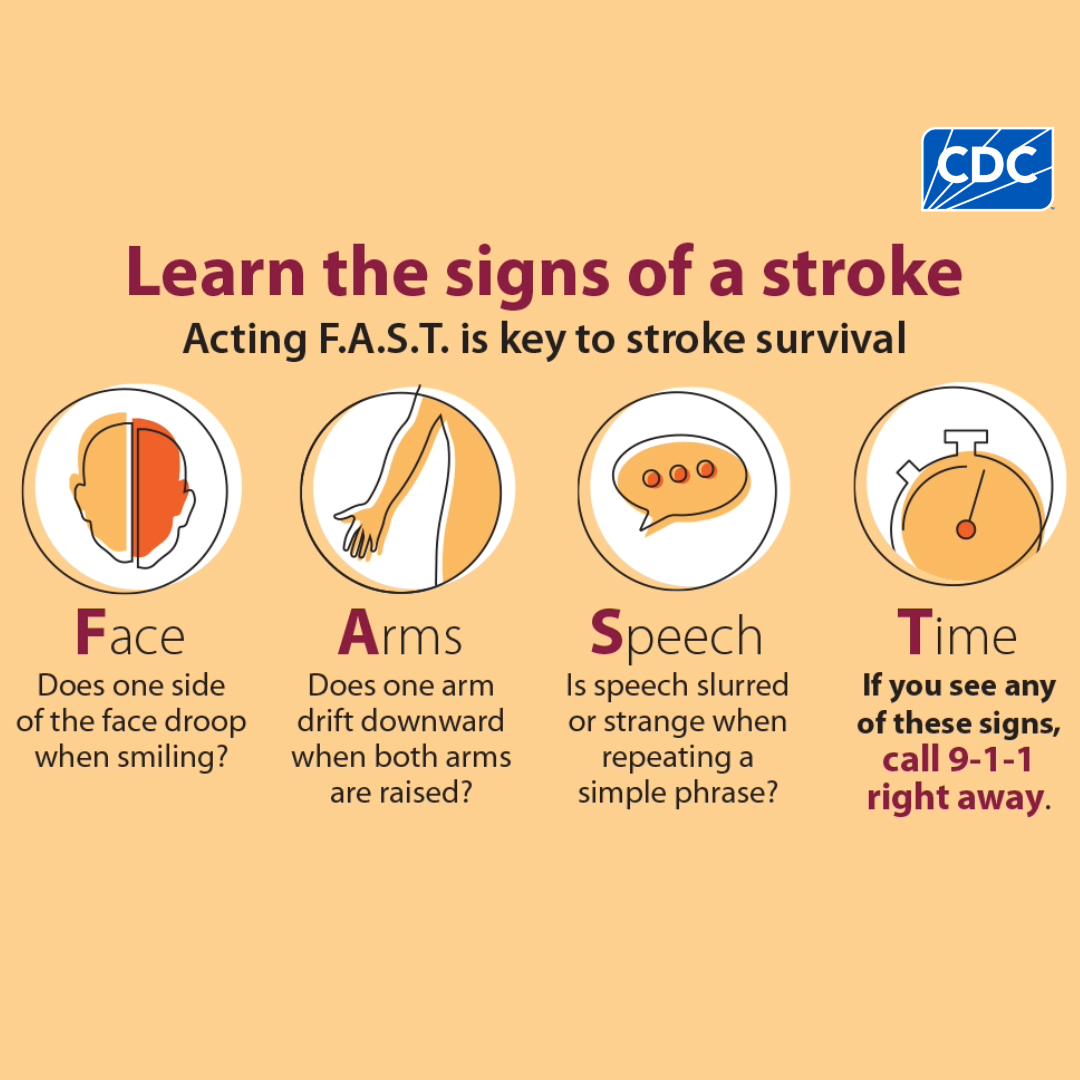
During a stroke, every minute counts, so knowing the signs and symptoms could save someone’s life, including your own. If you think someone may be having a stroke, act F.A.S.T. and do the following test:
-
F—Face: Ask the person to smile. Does one side of the face droop?
-
A—Arms: Ask the person to raise both arms. Does one arm drift downward?
-
S—Speech: Ask the person to repeat a simple phrase. Is the speech slurred or strange?
-
T—Time: If you see any of these signs, call 9-1-1 right away.
Make sure to note the time symptoms first appear. If you or someone else is having a stroke, do not drive to the hospital— call 9-1-1.
Visit the CDC to learn more about strokes.
 Health Department staff from many programs attended the very first Waukegan Pride Parade on Saturday, June 1! Though it was an exceptionally rainy day, it didn't stop people from coming out and enjoying the parade and all the booths set up.
Pride month is celebrated annually in June. At the Health Department, we strive to offer an inclusive and respectful environment for all who seek care through our programs.
We are proud to offer gender-affirming care for all individuals as well as comprehensive HIV care and prevention, including pre-exposure prophylaxis (PrEP) and transgender health services. Our confidential support services can help all people navigate healthcare with support. Call (847) 377-8450 for more information.

Every day, gun violence kills more than 120 lives and wounds hundreds more in this country. Throughout the month of June, there are a number of events taking place in honor of Gun Violence Awareness Month, including:
Additionally, Wear Orange Weekend is this weekend, June 7-9, in an effort to end gun violence and honor those lost to gun violence. The inspiration for wearing orange came after the tragic death of Hadiya Pendleton when her friends wore orange to remember her and raise awareness, with orange being the color hunters wear to protect themselves and others.
For more information or to find an event near you, visit WearOrange.org.
|
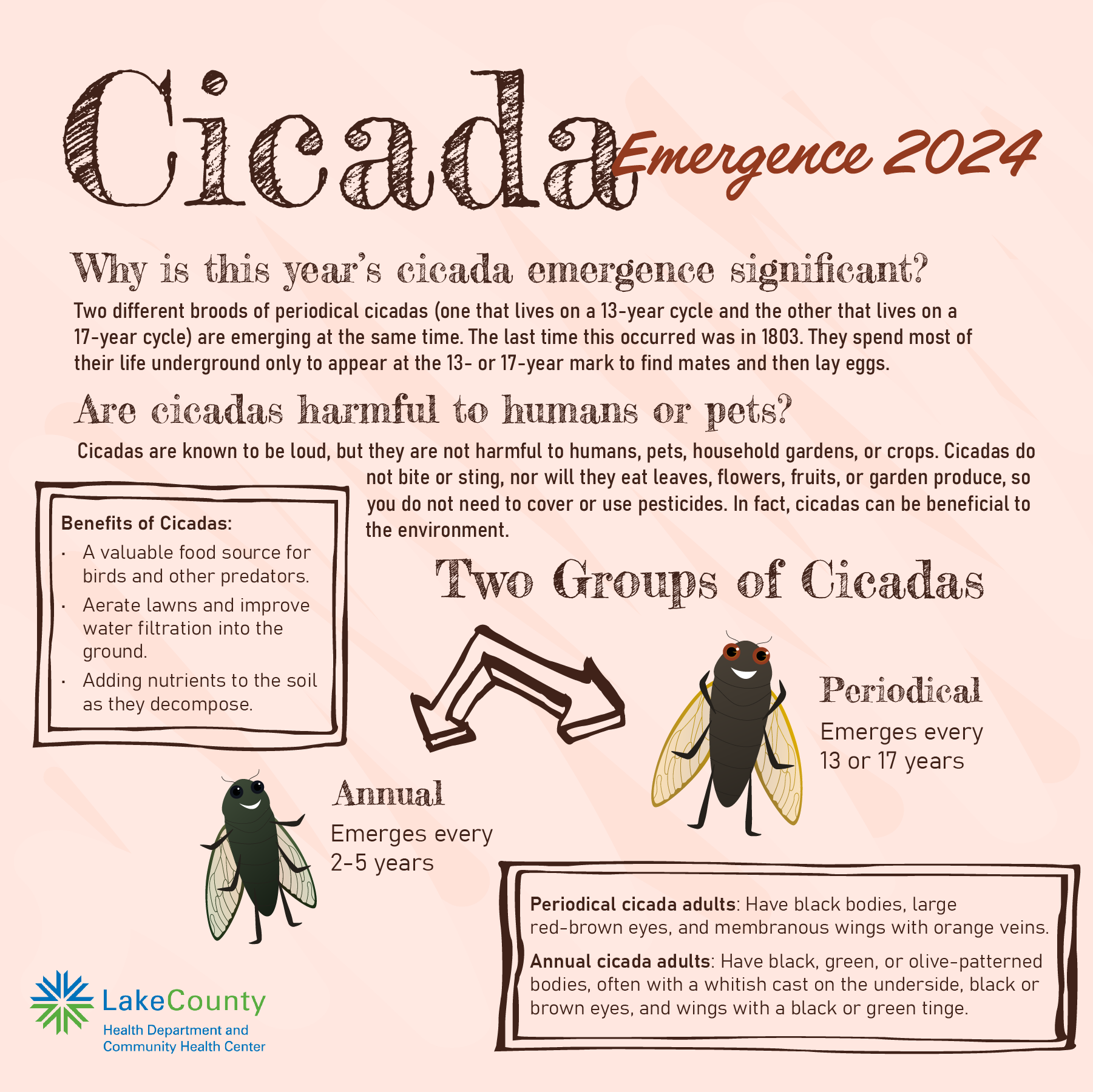
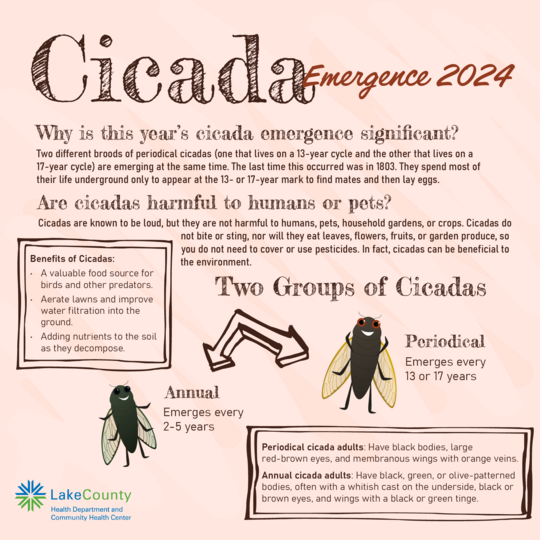 Have you seen any cicadas yet this year? Illinois is one of two states (the other being Iowa) where the two broods, or groups of periodical cicadas, will emerge simultaneously for the first time in over 200 years. Although Lake County is not in an area where both broods will appear, you might see the 17-year cicada in your area and annual cicadas that come up every 2 to 5 years.
These 13- or 17-year periodical cicadas (depending on the species) spend most of their lives underground, only emerging at the 13- or 17-year mark to find mates and then lay eggs.
Cicadas are known to be loud but not harmful to humans, pets, household gardens, or crops. In fact, they can be beneficial to the environment.
If you want to learn more in person, stop by the "Celebrating Cicadas" exhibit at the Dunn Museum in Libertyville through August 4. Additionally, you can visit the EPA to learn more about cicadas.

It’s that time of year again— longer days, warmer weather, and mosquitoes. Mosquitoes are more than just a nuisance; they can also carry dangerous diseases that can be harmful and, in some cases, deadly. One of those diseases is called West Nile Virus (WNV). West Nile Virus is the leading cause of mosquito-borne disease.
During warmer months, practice the “4 Ds of Defense” to protect yourself and your family from mosquitoes:
- Drain: Drain standing water from items around your home, yard, and business.
- Defend: When outdoors, use an insect repellent containing DEET, picaridin, oil of lemon eucalyptus, 2-undecanone, or IR3535 and reapply according to label directions.
- Dawn and Dusk: Protect yourself all day and night, and wear repellent outdoors during these prime times for mosquito activity.
- Dress: Wear long sleeves, pants, and closed-toe shoes when outdoors to cover your skin.
Visit FightTheBiteNow.com to learn more about staying safe from mosquitoes this summer.
|
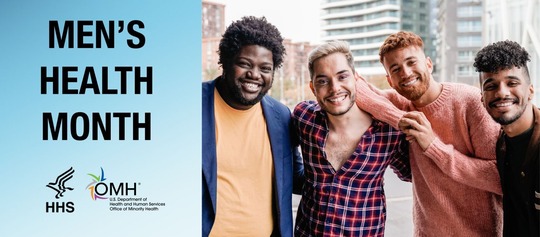 June is Men's Health Month. Did you know that, on average, men in the United States die nearly six years earlier than women and are at higher risk for many serious diseases, including heart disease, lung cancer, and HIV? During this annual observance, men and boys are encouraged to be proactive in their health by implementing healthy living decisions.
Even though Men's Mental Health Month is observed in June, healthy habits should be practiced year-round by:
- Getting regular checkups
- Eating a healthy diet
- Staying active
- Avoid smoking and exposure to secondhand smoke
- Limiting alcohol consumption
- Managing stress
To learn more about how to take charge of your health, visit the U.S. Department of Health and Human Services.

World Blood Donor Day on June 14 celebrates blood donors worldwide while promoting the continuous need for regular, healthy blood donations. Regular donation is the key to building a safe and sustainable supply. Blood is needed by women with complications during pregnancy and childbirth, children with severe anemia, often resulting from malaria or malnutrition, accident victims, and surgical and cancer patients.
To learn more about World Blood Donor Day.
|
National HIV Testing Day occurs annually on June 27. Getting tested for HIV can help a person know their status, and no matter the results, getting tested for HIV is the first step to staying healthy. At this time, the Lake County Health Department offers HIV self-testing kits so you can test when and where it is convenient for you. HIV testing is a critical tool to help end the HIV epidemic in the United States. Visit the CDC to find an HIV testing site near you, or call the Health Department at (847) 377-8450 for more information about HIV testing.
Visit the CDC for more information about HIV.
|
Where do I find information about...
Who can I contact to ask a question about...
-
Lake County Health Department Services: Call (847) 377-8000
-
COVID-19 in Illinois: Contact the Illinois Department of Public Health at 1-800-889-3931 or DPH.SICK@ILLINOIS.GOV
|