Swim Safely This Summer
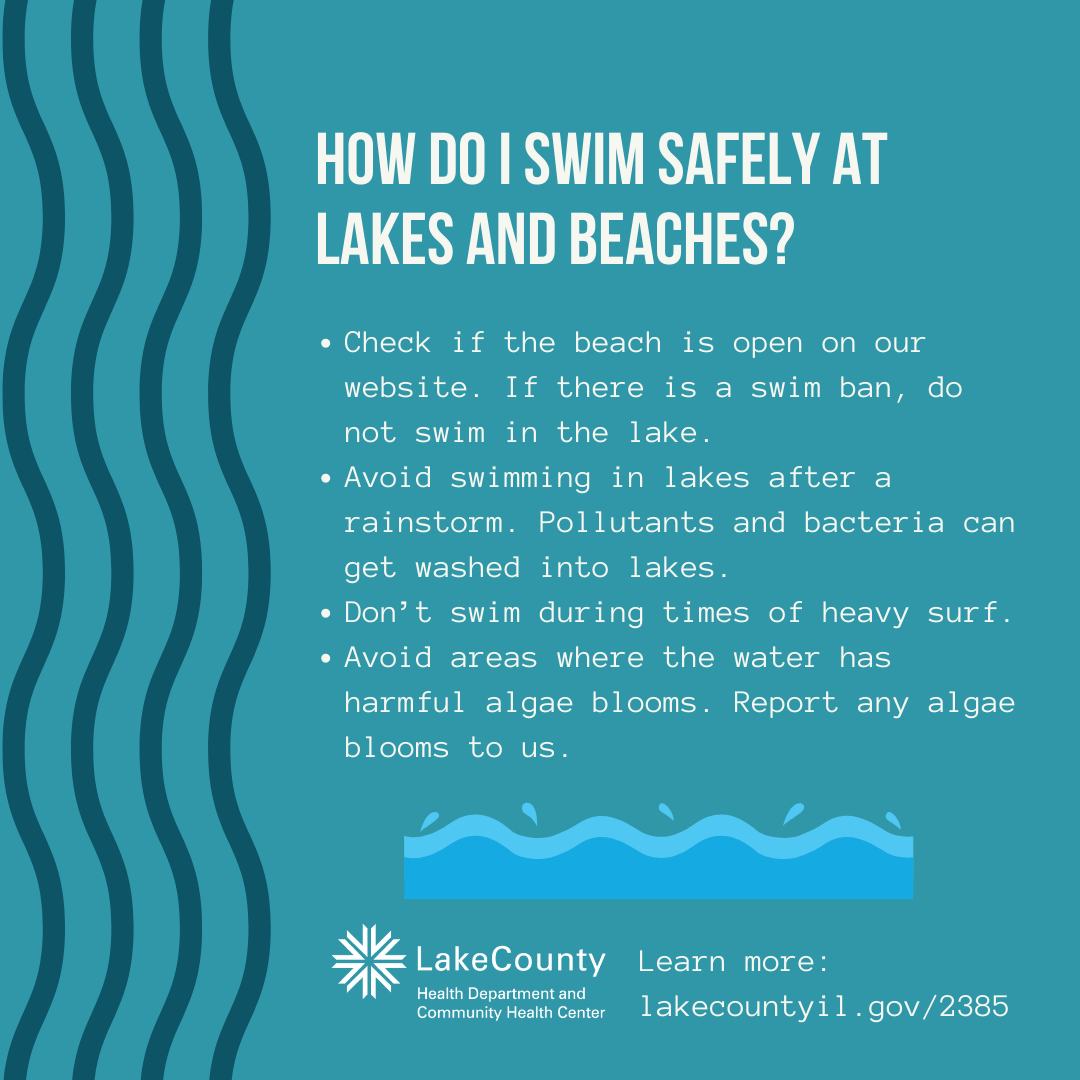
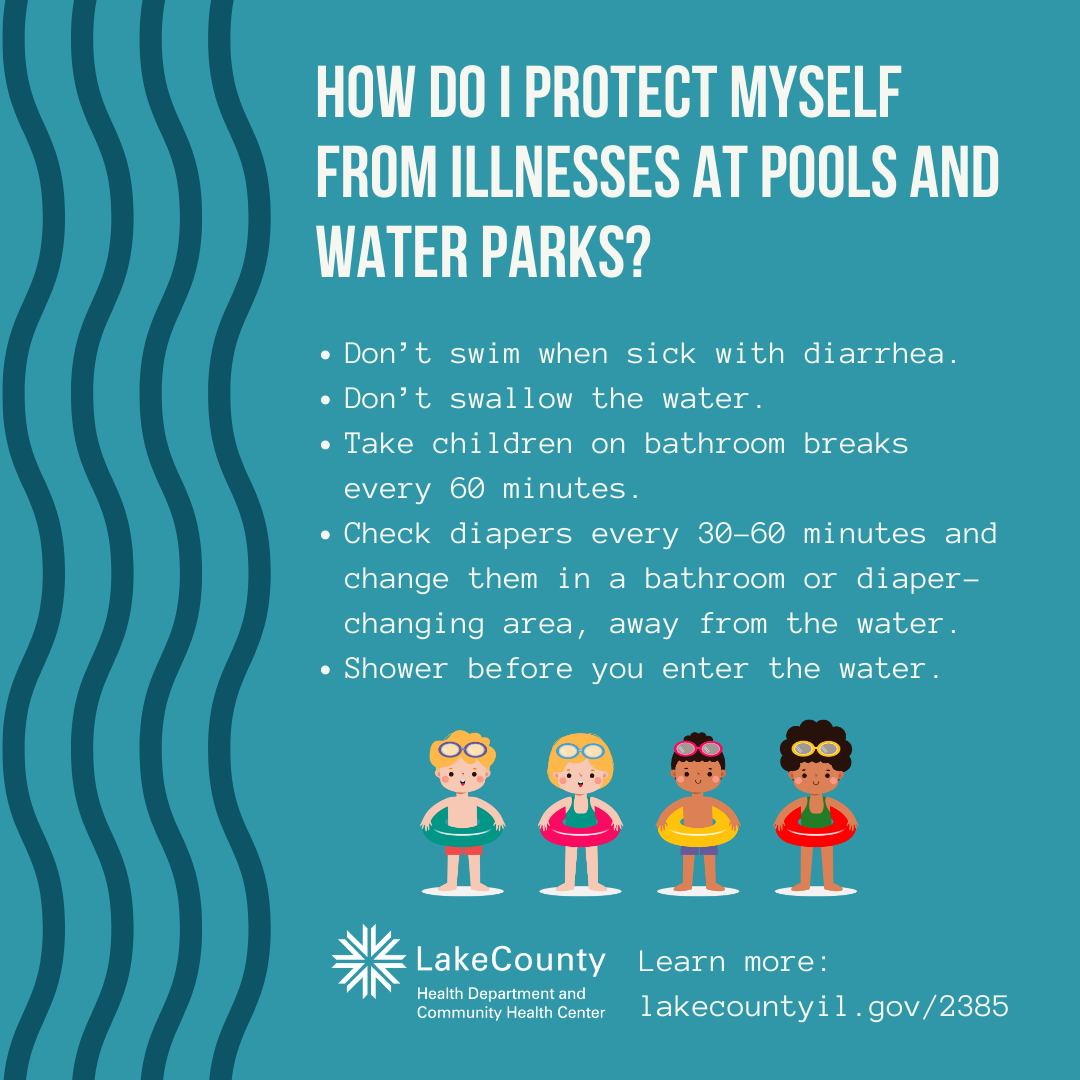
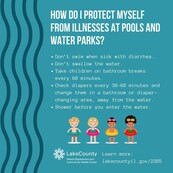
Whether you are swimming at your local pool or enjoying time at your favorite beach, it is important to protect yourself from illness, prevent the spread of gems, and practice safe swimming.
Recreational water illnesses (RWIs) can spread if you swallow, have contact with, or breathe in mists or aerosols from water contaminated with germs. You can also get them by having contact with chemicals that are in the water or that evaporate from the water and turn into gas in the air. Diarrhea is the most common RWI.
|
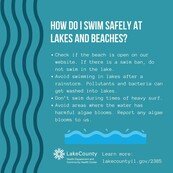
The Lake County Health Department monitors lake water for E.coli bacteria in over 100 Lake Michigan and inland lake beaches to ensure that the water is acceptable for swimming. From Memorial Day to Labor Day, beach closure information can be found on the Health Department’s Beach Monitoring and Advisories web page, which is updated daily by 10:00 a.m.
Read the full press release for more information and tips on how to swim safely at pools and lakes.
|
Hot Weather Safety
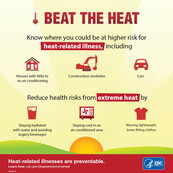
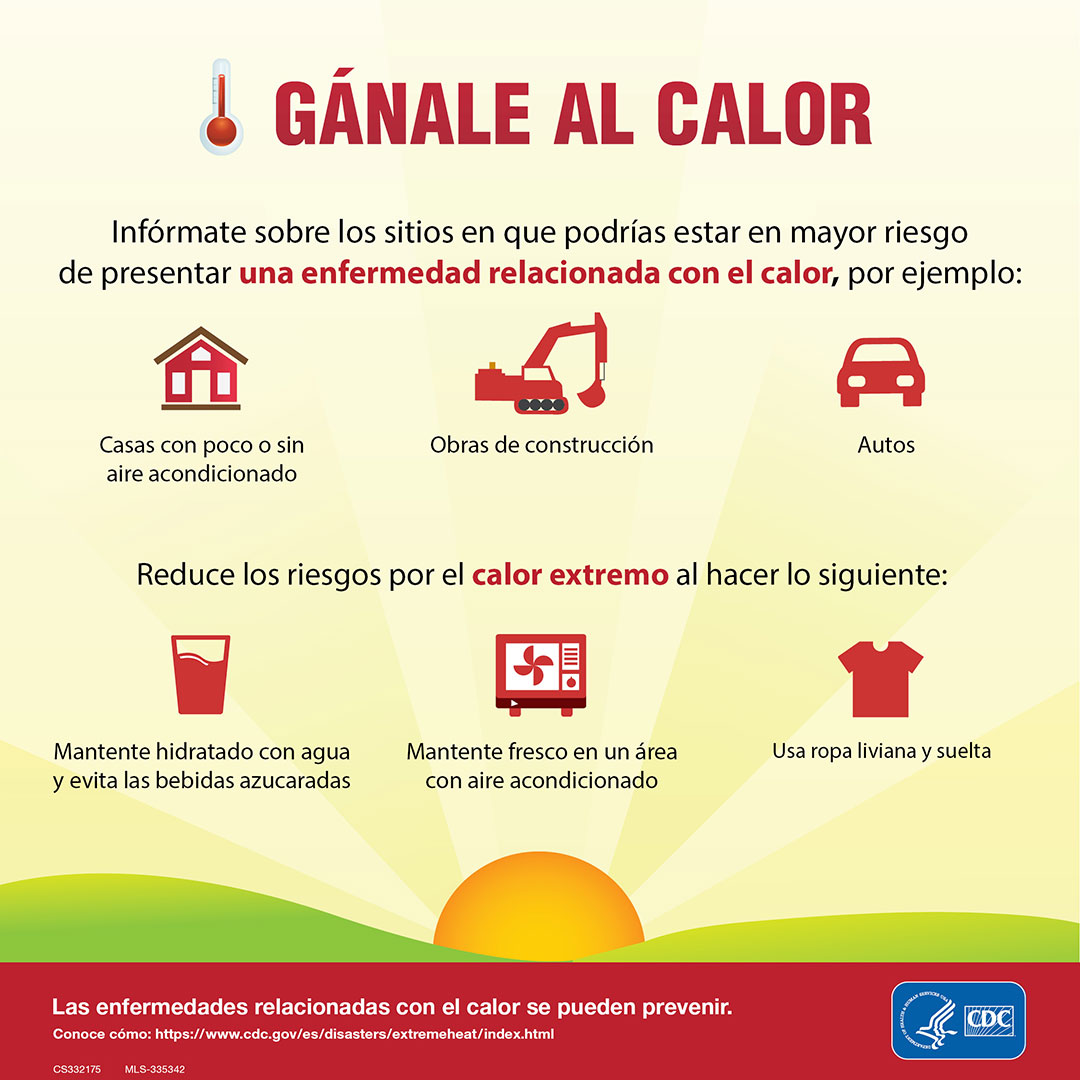
With high temperatures in the forecast, it is good to know how to stay safe in hot weather and know about heat-related illness. Getting too hot can make you sick if your body can’t regulate its temperature and properly cool you off. Visit the CDC for tips on how to prevent heat-related illness and what the symptoms of heat related illness look like.
It is also important to remember how to keep our pets safe during these high temperatures. During extreme heat:
- don’t leave pets in car
- limit outdoor play
- avoid excessive exercise
- avoid walking on hot sidewalks
- have access to fresh water and shade
Keep an eye out for signs of heat exhaustion during walks and outdoor play.
|
 |

Ticks are small joint-legged arachnids, not insects. Other arachnids include scorpions, spiders, and mites. Ticks cannot fly or jump, they can only craw. There are 800 tick species around the world but there are only eight that can transmit disease to humans.
Follow these tick prevention tips when spending time outdoors:
- Dress appropriately by wearing long sleeves, pants, and closed toe shoes when outdoors to cover your skin.
- Defend against ticks by using insect repellent and avoiding tick habitats.
- Check your entire body for ticks after being outdoors including your children and pets.
- Remove any ticks promptly with fine-tipped tweezers.
If you experience a rash that looks like a bull's-eye, or a rash anywhere on the body or an unexplained illness accompanied by fever following a tick bite, you should consult your physician and explain that you were bitten by a tick. Talk to your pet’s veterinarian about the best tick prevention to keep them safe
Visit the FighttheBiteNow.com and the CDC for more information about ticks.
|
|
|
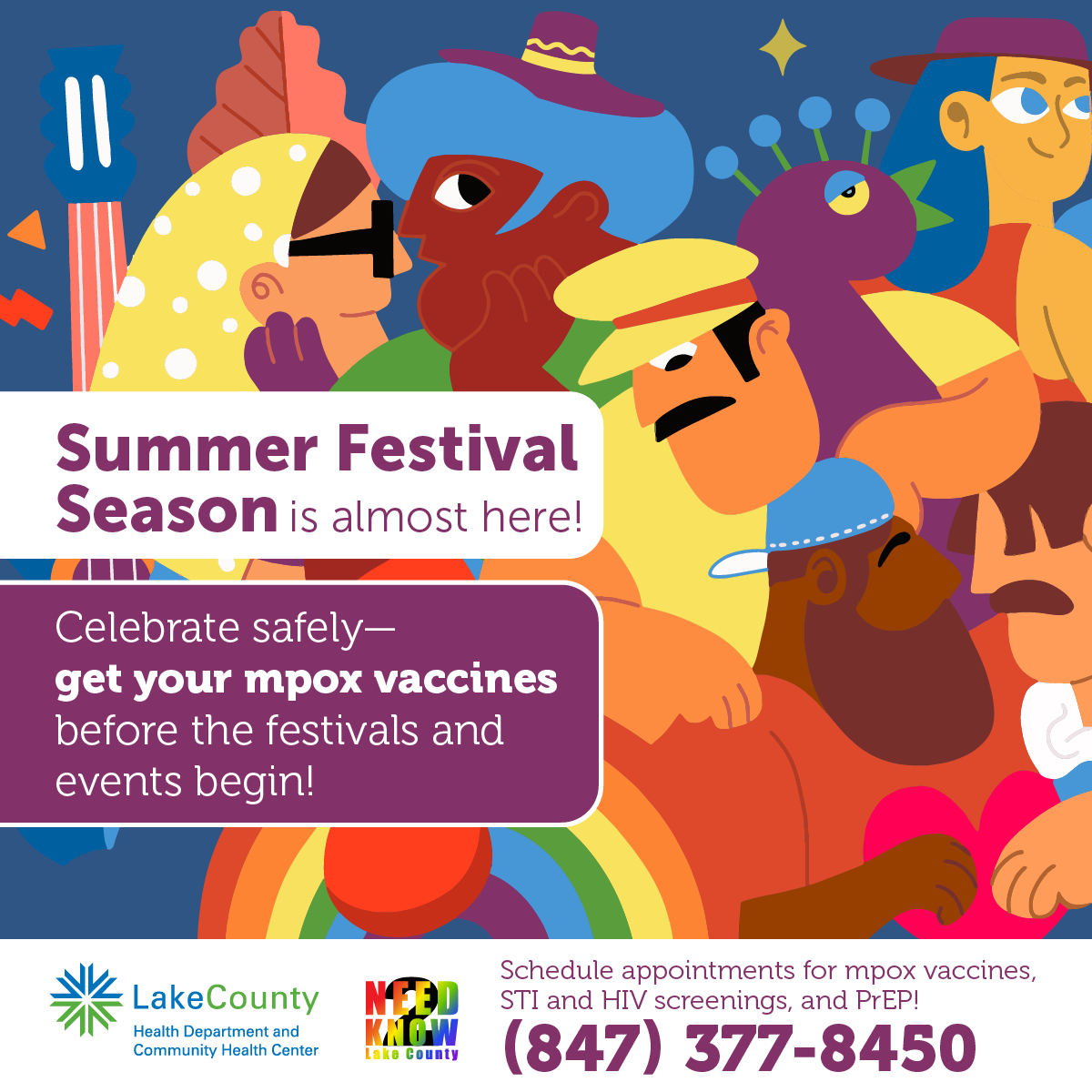
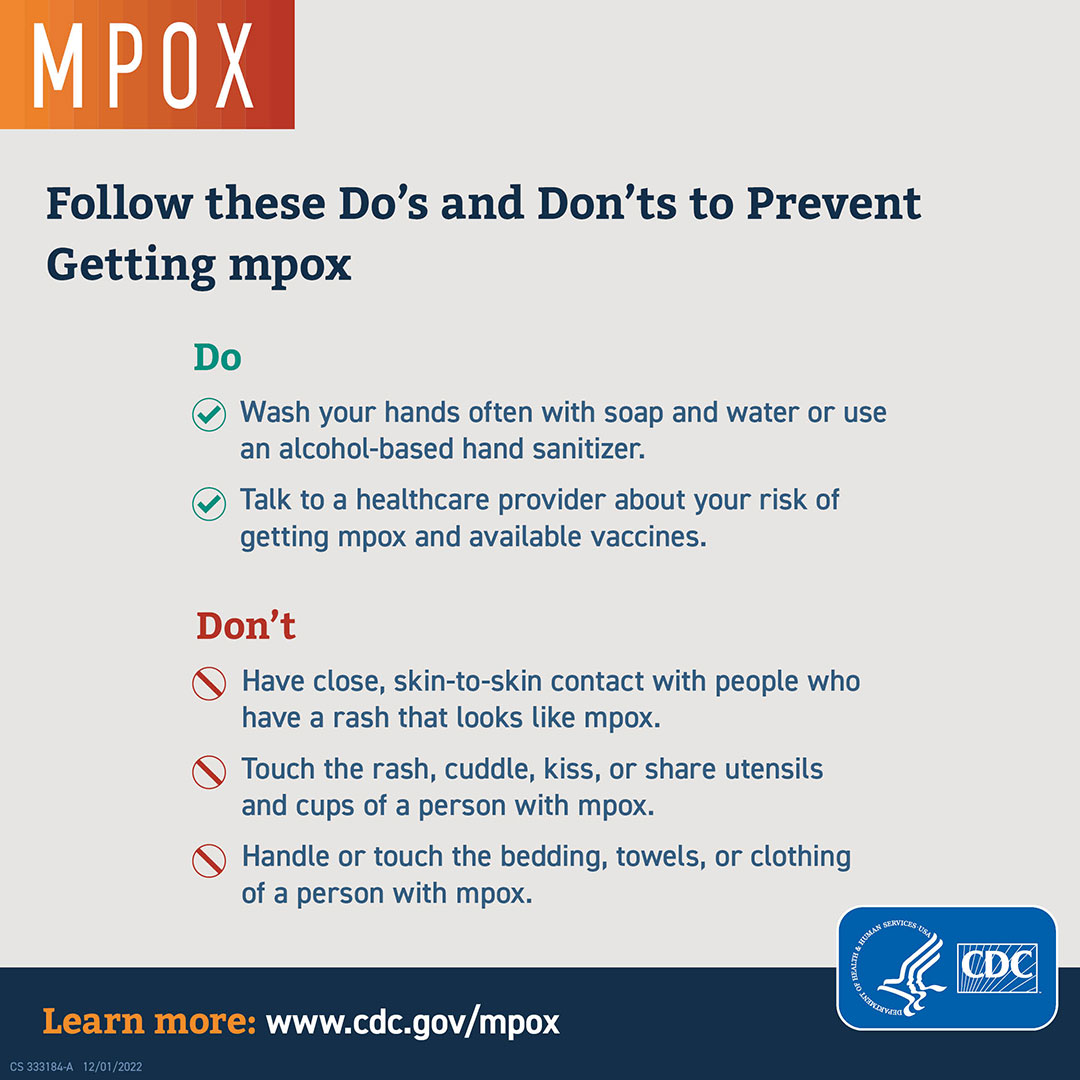
Although the number of reported cases of mpox has fallen dramatically since August 2022, some areas of Illinois have identified a resurgence of cases. There is an increased risk of an Mpox outbreak as summer festivals and other events get underway. Mpox is a disease caused by the mpox virus. Anyone can contract mpox through close personal contact, often skin to skin. Talk to your healthcare provider:
- to determine your risk of getting mpox
- if you have any lesions
- about getting vaccinated if you are in the high-risk category
|
|
 |

Even if you are not at high risk for mpox, you should stay informed about prevention, symptoms, and treatment. Visit the CDC for more information about mpox. If you need assistance scheduling a mpox vaccine appointment, call Need2Know at (847) 377-8450.
|
May 11, 2023, marked the end of the federal COVID-19 Public Health Emergency (PHE) declaration. The end of the PHE results in changes in the data that will be tracked and available at both the national and local level. As of May 26, 2023, the Lake County Health Department has made the COVID-19 Data Hub webpage inactive and will no longer publish Lake County COVID-19 data. The Health Department is grateful to all the residents who used the Data Hub to make data informed decisions throughout the pandemic.
If you would like to continue to track COVID-19 cases in your area, please visit the CDC’s COVID Data Tracker.
Pride Month

Pride month is celebrated annually during the month of June. Here at the Lake County Health Department, we strive to offer an inclusive and respectful environment for all who seek care through any of our programs.
The Lake County Health Department is proud to offer gender-affirming care for all individuals as well as comprehensive HIV care and prevention including pre-exposure prophylaxis (PrEP), transgender health services. Our confidential support services can help all people navigate healthcare with support. Call (847) 377-8450 for more information.
|
Alzheimer’s and Brain Awareness Month
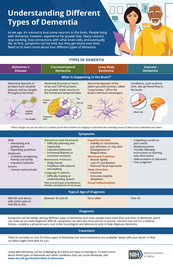
Alzheimer’s and Brain Awareness Month is recognized each June to raise awareness about Alzheimer’s disease and other dementias. The terms Alzheimer’s disease and dementia are often used interchangeably when in fact there is a difference. Dementia refers to impaired thinking, remembering, and reasoning skills. Alzheimer’s disease is only one type of dementia, although it is the most common and well-known. Other types of dementia include Lewy body dementia, frontotemporal dementia, and vascular dementia. Dementia is not a normal part of aging.
For more information and resources, visit the National Institute on Aging.
|
HIV Observances
During the month of June, HIV is spotlighted on June 5 and June 27.
 |
|
HIV Long-Term Survivors Awareness Day occurs on June 5. This day honors and celebrates long-term survivors of HIV. This annual occurrence also serves to raises awareness about their current challenges, and create changes to help prioritize, and improve the quality of life for long-term survivors and older adults with HIV. Visit HIV.gov for more information. |
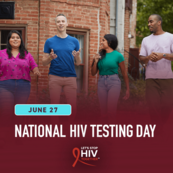
National HIV Testing Day occurs on June 27. Getting tested for HIV can help a person know their status as well as help them stay healthy. At this time, the Lake County Health Department offers free HIV self-testing kits so you can test when and where is is convenient for you. HIV testing is a critical tool to help end the HIV epidemic in the United States. Visit the CDC to find an HIV testing site near you or call the Health Department at (847) 377-8450 for more information about HIV testing.
|
Where do I find information about...
Who can I contact to ask a question about...
-
Lake County Health Department Services: Call (847) 377-8000
-
COVID-19 in Illinois: Contact the Illinois Department of Public Health at 1-800-889-3931 or DPH.SICK@ILLINOIS.GOV
|