|
The Illinois Lake Management Association is hosting its Annual Conference at the Holiday Inn—Gurnee, March 9-11th, 2023. We are looking to fill out our conference sessions with talks and presentations from professionals, teachers, students, or others with detailed knowledge of issues associated with research and management on lakes, waterways, watersheds, and fisheries.
Speaker slots will be 25 minutes. Topics may include but are not limited to:
- How Stormwater Impacts Water Quality in Lakes and Streams
- Planning Lake and Stream Restoration Projects
- Lake Management Planning
- Fishery Research and Management
- Aquatic Conservation Issues
- How Land Use in Watersheds Affect Fish Populations
- Granting Implementation
- Lake Nutrient Cycling & Nutrient Issues
- Harmful Algal Blooms
- Shoreline Protection and Enhancement
- Invasive Species Studies and Management
- Emerging Topics
Abstracts should not exceed 250 words and be submitted online:
www.ilma-lakes.org/call-for-presenters
For questions about presentations, contact Alana Bartolai at abartolai2@lakecountyil.gov.
The Illinois Lake Management conference will feature over 30 experts presenting on various topics. Take advantage of the opportunity to learn and network with persons throughout the industry. Exhibitors from leading consulting firms, government agencies, and lake management groups will also be in attendance.
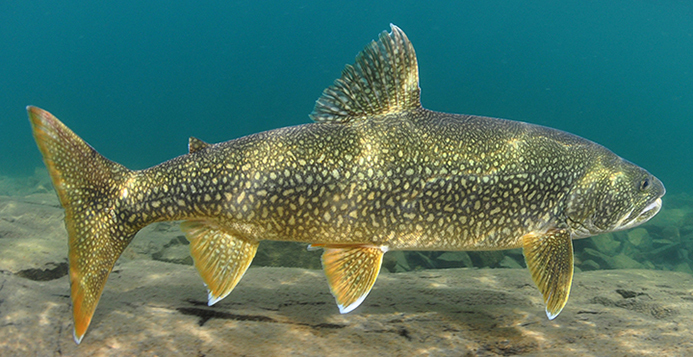
lake trout (Salvelinus namaycush) Photo © Paul Vecsei/Engbretson Underwater Photography
Lake Trout are native to the Great Lakes, Lake Michigan, and Lake County. The lake trout's average life span is seven to eight years. The average size of this fish is six pounds and 17 to 27 inches. It may attain a maximum length of 50 inches. The lower fins have white edges, and the tail fin is forked. An adipose fin is present. The body has light spots on a gray background.
Behaviors: The lake trout lives in the deep water of Lake Michigan. This fish reaches maturity at the age of five to seven years. Spawning occurs in winter. The female deposits several thousand eggs that are buried in gravel. Eggs hatch in 120 to 150 days. The lake trout eats fish, particularly chubs, sculpins, smelt, and alewives. Populations of lake trout were severely depleted by overfishing and attacks by sea lampreys in the 1940s and 1950s. Lamprey control and restocking of lake trout have helped to restore populations.
Habitat: Before the introduction of salmon and non-native trout into the Great Lakes, lake trout were the top predator. For the past several years, Illinois has stocked lake trout fingerlings in Lake Michigan in cooperation with other states in an overall lake trout rehabilitation program. Traditionally, the lake trout are commercially fished in Lake Michigan; however, it will be some time before the numbers of these fish will warrant reopening the commercial fishery.
Sea lampreys have severely reduced the lake trout populations. Chemical contaminants and over-fishing pressures have also added to the problem. However, increased attention to the management and control of the lamprey has helped some lake trout populations to increase.
Feeding and Habits: The establishment of zebra mussels in the Great Lakes and the subsequent water clarity has changed lake trout behavior, and they are now seen feeding further up in the water column. The lake trout feeds primarily on other fish, especially ciscos, alewives, smelt, and sculpin.
Reproduction: Lake trout spawn in the fall, depositing their eggs on shoals and rocky reefs after dark. Many lake trout return each fall to use the same spawning location.
The aforementioned information can be found on the Illinois DNR website.
Free AIS Webinar: Starry Stonewort – Identification and Management
Wednesday, October 26th 12:00 – 1:00 PM
Virtual: on Zoom
Register: Click here to register or
contact Alana Bartolai at abartolai2@lakecountyil.gov or 847-377-8009.
Presenters:
Alana Bartolai – Lake County Health Department
Keith Gray – ILM Environments
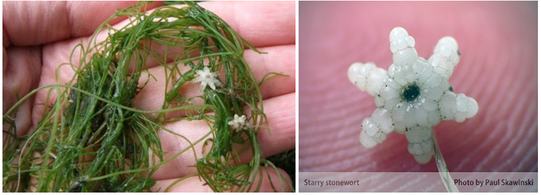
Protect your lake from aquatic invasive species! Starry Stonewort (Nitellopsis obtusa) is an extremely invasive species and can threaten Illinois’ lakes and rivers if introduced into them. They grow to be dense mats and are easily transported on recreational water equipment like boats and fishing gear. Join Lake County Health Department and ILM Environments for this webinar that will focus on identification, ecology, and case studies of Starry Stonewort management.
Our Team
Alana Bartolai, Ecological Services Program Coordinator
Gerard Urbanozo, Water Quality Specialist
James Fitzgerald, Water Quality Specialist
|