COVID-19 Outbreak Linked to Volleyball
The Lake County Health Department is currently investigating several COVID-19 cases linked to adult volleyball leagues. So far, 14 people who played or watched volleyball at Jesse Oaks Food & Drink in Gages Lake in September have tested positive for COVID-19. Of these cases, multiple people reported that they also played volleyball at other bar/restaurant locations, which could contribute to further spread of the virus. The investigation is still in progress.
If you played volleyball at Jesse Oaks in September:
-
Please quarantine at home for 14 days from your last game.
-
If you are still within your quarantine period, get a molecular (PCR) COVID-19 test, at least 5 days after your last game. Get tested sooner if symptoms develop.
-
Call the Communicable Disease program at (847) 377-8130 if you have not already been contacted by the Health Department.
If you visited Jesse Oaks in September and did not wear a mask and consistently maintain 6 feet of distance from others:
-
Please quarantine at home for 14 days from your last visit.
-
If you are still within your quarantine period, get a molecular (PCR) COVID-19 test, at least 5 days after your last visit. Get tested sooner if symptoms develop.


As we approach Halloween, the Illinois Department of Public Health (IDPH) has issued guidance for celebrating safely. As noted by IDPH Director Dr. Ezike, “We are still in a pandemic, and unfortunately, this year, that means the safest way to celebrate is to stay home and plan virtual gatherings.” If you do choose to gather, the IDPH recommends the following:
- If trick-or-treating, wear a proper face covering. Only trick-or-treat with members of your household. Maintain a distance of at least 6 feet from others while trick-or-treating.
- Consider leaving individually wrapped candy spaced apart on a drive way, in front of walkways, or any outdoor space where social distancing can be maintained.
- Do not eat any candy from tick-or-treating until you have washed your hands.
- Consider alternatives to trick-or-treating that limit interactions.
- Follow all capacity limits for hayrides, costume parties, and other social gatherings.
Remember, haunted houses are not permitted in Phase 4. If you participate in any in-person gatherings and believe you have been exposed to COVID-19, take precautions for 14 days after the event. Learn more recommendations for Halloween festivities here.
|
This year it is more important than ever to get a flu shot. Different viruses cause COVID-19 and influenza. That means you could get sick from both, even at the same time. Individuals at higher risk for severe COVID-19 symptoms, could get serious complications from flu as well. Getting the seasonal flu vaccination before the end of October is the best way to protect yourself and others.
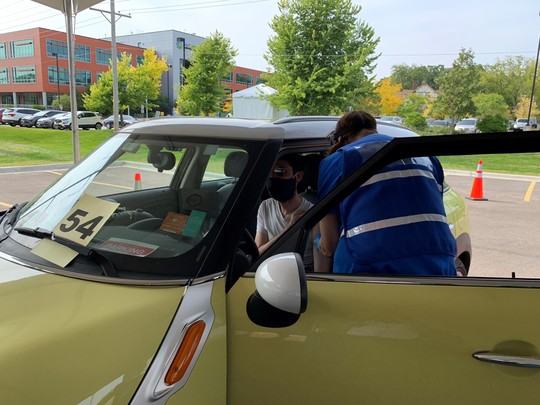 Recently many of our employees participated in a drive-thru flu vaccine clinic. Health Department employees get their flu shots to keep our patients and members of the community safe. Drive-thru clinics like these will be used when a COVID-19 vaccine is available. We are using this time to help ensure that our process is efficient and effective.
You can get your flu shot at one of our Community Health Centers by calling our Patient Access Center at (847) 377-8800 or by visiting VaccineFinder.org to find a provider near you.
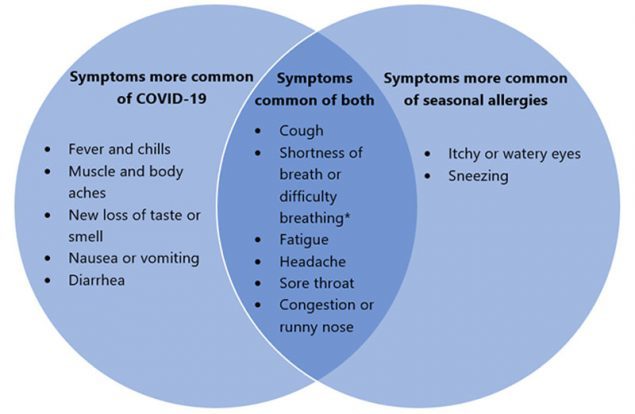 Source: CDC, "COVID-19 and Seasonal Allergies"
While COVID-19 and seasonal allergies share several symptoms, there are key differences between the two. It is important to keep in mind that the causes of seasonal allergies and COVID-19 are different. You can protect yourself and others from COVID-19 by wearing a mask, washing your hands, and watching your distance. To protect against seasonal allergies, consider ways to reduce exposure to pollen on high pollen days. Learn more about the differences between seasonal allergies and COVID-19 here.
According to the CDC, babies under one year old and children with certain underlying conditions may be more likely to have severe illness. These conditions include:
- Asthma or chronic lung disease
- Diabetes
- Genetic, neurologic, or metabolic conditions
- Heart disease since birth
- Immunosuppression
- Medical complexity
- Obesity
It is important to talk with your child’s healthcare provider about how any underlying conditions may increase risks of COVID-19. Monitor your child for symptoms every day and keep track of who your child comes in close contact with. If your child becomes sick, keep them home and call your healthcare provider.
Learn more about COVID-19 and Children here
Voting Safely During COVID-19
As we approach November, many are preparing to vote. As you make your plan to cast your ballot, be sure to take COVID-19 precautions into account. You can request a mail-in ballot online or by mail. If you do vote in person, take the following steps to protect yourself and others from COVID-19:
- Wear a mask and keep it on the entire time you are voting.
- Wash your hands before entering and after leaving the polling location.
- While in the polling location, use alcohol-based hand sanitizer often, especially after touching surfaces touched by multiple people.
- Maintain at least 6 feet of distance from others.
- Avoid crowds by voting early or at non-peak times.
- Bring your own black ink pen to use.
You can find out more on how to stay safe this election season at the CDC page on Recommendations for Voters. Learn more about Voting Options, Where to Vote, and more on the Lake County Voter Registration page.
|
The COVID-19 Housing Relief Program
The Lake County COVID Housing Relief Program (CHRP) provides rent and utility assistance for eligible households financially impacted by COVID-19. If you are a Lake County resident and need help paying rent or utility bills, you may qualify for the COVID-19 Housing Relief Program! To learn more about eligibility and how to apply, download the CHRP flyer. You can also call 211 or text your zip code to 898211 for more information.
Region 9 Update and Lake County COVID-19 Cases
The Region 9 testing positivity rate is 4.9% as of September 29, 2020, with daily increases reported in 3 of the past 7 days. This is an improvement from recent weeks. Thank you for everything you are doing to keep us on track! It is important to remember, that while we are headed in the right direction precautions like wearing masks and social distancing must be followed. These measures will be with us for months to come and are key to slowing the spread of COVID-19.
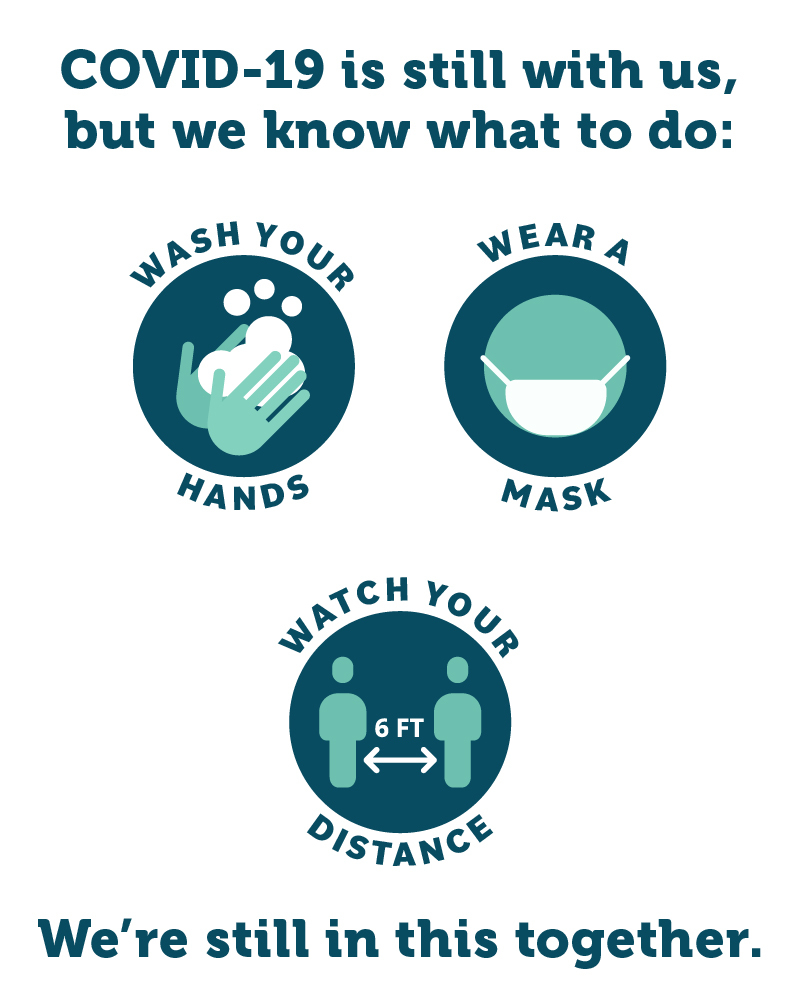
Illinois Region 1 will increase mitigation measures beginning October 3. This includes Boone, DeKalb, Carroll, Jo Daviess, Lee, Ogle, Stephenson, Whiteside, and Winnebago counties. The region will have new restrictions on bars, restaurants, meetings, social events, and gatherings, and organized group recreational activities. Commit to the 3 Ws – Wear a mask, Wash your hands, and Watch your distance.
As of October 2, 2020, 17,347 Lake County residents have tested positive for COVID-19, including 479 deaths.
Our Coronavirus Data Hub provides data and resources for our county, including cases and deaths, tests performed, demographic data, and an interactive map and charts.
View the Lake County, IL Coronavirus Data Hub
Virtual Town Hall
 On Wednesday, September 30, Lake County held a live COVID-19 Virtual Town Hall. Hosted by Lake County Board Chair Sandy Hart, panelists discussed the current COVID-19 situation.
If you missed the Town Hall, you can watch the recording in English and Spanish.
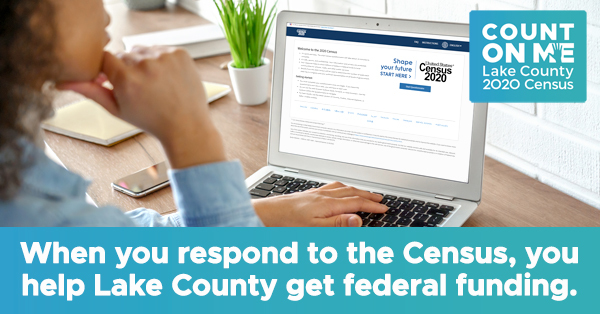
Important to Be Counted in the 2020 Census
Respond to the 2020 Census to help your community. To date, about 76.4% of Lake County residents have self-responded, and many more have provided responses to census takers who have visited their homes. However, there are still many who haven’t been counted.
The Census is safe. Lake County depends on a complete census count to receive adequate federal funding to support schools, healthcare, roads and more. Remember:
- The Census is confidential.
- Your Census response cannot be shared with law enforcement or immigration officials.
If you have not responded, please do so now online at my2020census.gov, or by calling 844-330-2020.
|
Do you have questions? The Illinois Department of Public Health (IDPH) has established a COVID-19 hotline and email address to answer questions from the public:
For additional information from the IDPH, visit: http://www.dph.illinois.gov/topics-services/diseases-and-conditions/diseases-a-z-list/coronavirus
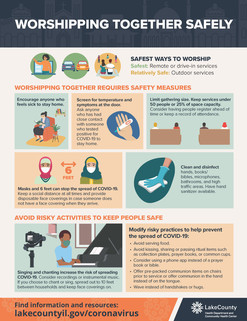
NEW! Guidance for Faith Communities
If you are returning to in-person worship services, follow precautions to keep yourself and others safe. Remember, the safest options continue to be remote and drive-in services. If you are sick, do not attend in-person services.
Visit our page on guidance for Faith Communities for more resources.
View the full infographic
|
Community Guidance and Resources
Protect yourself and your community. Our Information for Specific Groups page is now Community Guidance and Resources. This page is more user-friendly and has information to help residents stay safe and informed.
Communication Resources
We need your help to keep our communities healthy and safe. The Lake County Health Department, Illinois Department of Public Health (IDPH), and Centers for Disease Control and Prevention (CDC) offer free resources including fact sheets, flyers, posters, and videos.
View communication resources
Forwarded this email? Sign up to receive COVID-19 updates directly from the Lake County Health Department.
|