During the COVID-19 pandemic, the U.S Food and Drug Administration (FDA) has recalled over 100 hand sanitizer products. Many of the recalled products had harmful levels of methanol. Methanol is an alcohol used to make fuel and antifreeze. Methanol exposure can result in nausea, vomiting, headache, blurred vision, permanent blindness, seizures, coma, permanent damage to the nervous system or death. The FDA’s list of recalled hand sanitizers is updated as new recalls are announced.
|
Please check your hand sanitizer against the FDA’s list to make sure it has not been recalled.
On August 4, two Lake County community organizations distributed safety kits at the Puerto Rican Society at 150 Sheridan Rd. in Waukegan. The safety kits contained a hand sanitizer that was recently recalled. If you received a safety kit from the event, do not use the hand sanitizer. Learn more, read the press release from the Asociacion Comunitaria Latina here.
This week is National Health Center Week. We are joining Community Health Centers (CHCs) across the country in celebrating the work of Health Centers and the resources they bring to the community. Over the last few months, our CHCs have proven their resilience and stepped up to continue to provide access to affordable, quality healthcare.
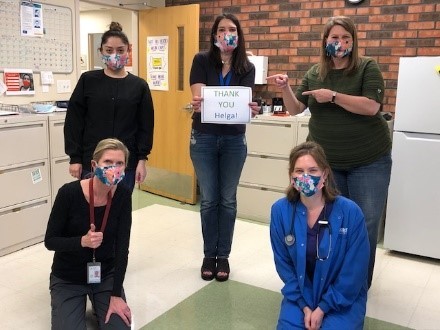
Today’s focus for National Health Center week is our dedicated staff. Many of our employees have been on the front lines of the fight against COVID-19, from telemedicine to testing to providing routine care for our patients. They are a valuable resource in our community.
|
Certain underlying health conditions increase your risk for severe illness from COVID-19. According to a recent report from the Centers for Disease Control and Prevention (CDC), obesity is the most common underlying condition that puts people at risk of severe illness from COVID-19.
The report states that “hospitalizations were six times higher, ICU admissions five times higher, and deaths 12 times higher among patients with underlying medical conditions, compared with those without.”
If you have an underlying health condition such as obesity, it is very important that you take action to keep yourself healthy during the pandemic.
- Take your medicines exactly as prescribed.
- Follow your healthcare provider’s instructions for nutrition and physical activity.
- Call your healthcare provider if you have concerns or feel sick.
 The COVID-19 pandemic has changed our lives in many ways. One thing that has changed is how we interact with friends and family. One thing that hasn’t changed is how difficult it can be when you feel like you might let someone down. How do you explain to your child that something they used to do, like having a sleepover, isn’t safe now? How can you help your child spend time with friends safely?
There are many ways you can take precautions without losing touch with the people you care about. Watch our latest COVID-19 conversations video on how to help your child navigate a social situation where their friends may not be taking precautions.
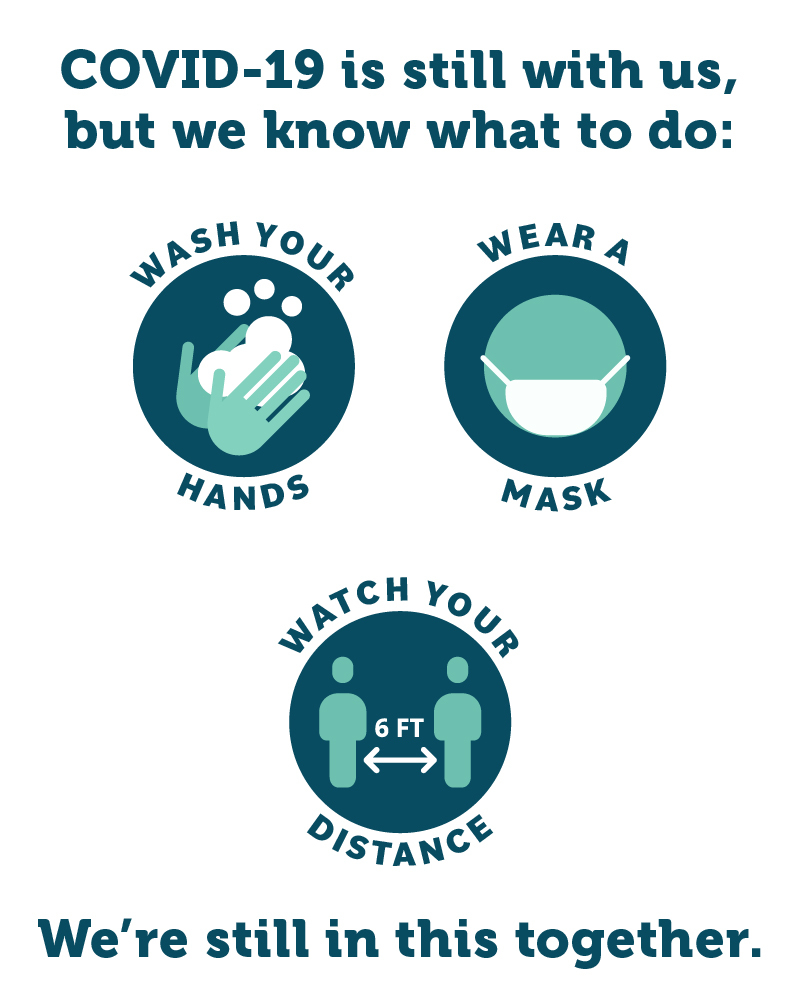
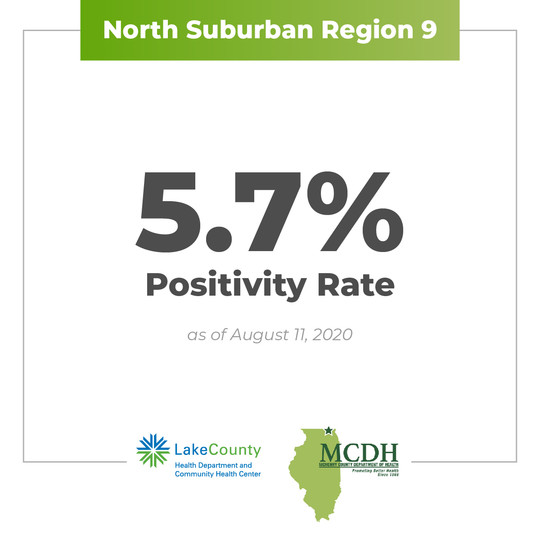 The Region 9 testing positivity rate is 5.7% as of August 11. Hospital admissions and capacity are currently stable. Commit to the 3 Ws – Wear a mask, Wash your hands, Watch your distance. Avoid crowds and aim for lower-risk ways of doing things. Working together, we can slow the spread of COVID-19 in our communities. If you missed our North Suburban Region 9 COVID-19 Q&A, you can watch the recording on our Facebook page, on YouTube, or our COVID-19 FAQ page.
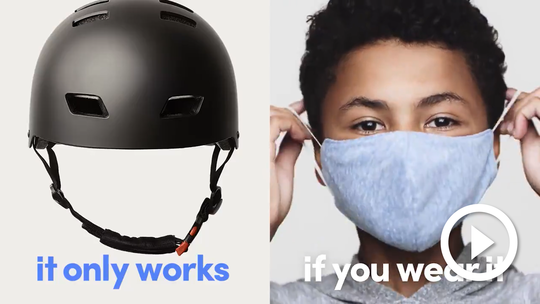 Face coverings, along with social distancing and hand washing, are effective at stopping the spread of COVID-19. It is important to wear your mask whenever you are in a public space and social distancing is not possible. For more information on how to wear a mask correctly, visit the CDC’s page, Considerations for Wearing Masks, and remember, it only works if you wear it.
 Wearing a mask can be difficult for everyone, but especially for children. Help your children understand the importance of wearing a mask while making it less intimidating. Check out this video from our Child and Adolescent Behavioral Services Team on some ways to talk to children about wearing masks. If you missed Part 1, you can watch it here.
 The spread of germs is not the only thing to worry about during the COVID-19 pandemic – we are also fighting an “infodemic.” These days, information travels fast online, and it can be difficult to tell what information is accurate. Sharing misinformation can be dangerous and make it more challenging to keep our communities safe. Misinformation can also promote stigma, discrimination, or violence.
We all have a role in fighting the infodemic. The World Health Organization shared a video outlining steps we can all take:
-
Look for facts and evidence. Be critical and question the source, comparing with other sources.
-
Choose carefully. Only share, like or forward content from trustworthy sources.
-
Be cautious. Do not share, forward, or like information you know is not true.
-
Be a good example. Correct or call out people in your networks when they post something that is untrue. Refer them to the correct information.
-
Spend less time online. Only check for the latest news once or twice a day, if needed. Exercise, listen to music, or read a book—protect your physical and mental health.
Hair Loss as a Symptom of COVID-19
People with COVID-19 have reported a wide range of symptoms. In a recent survey of over 1,500 people in a COVID-19 recovery group, and 27% reported hair loss as an ongoing issue.
Lake County CATCH
Lake County CATCH (Community Action to Combat Hunger) is a coalition of local organizations that connects families who are in need to food. So far, the program has served over 400 families! Watch this recent video or visit the Lake County CATCH Facebook page to learn more about the program. If you need help accessing food or other community resources, please call 211. Watch a discussion on the Lake County CATCH initiative with State Representative, Mary Edly-Allen.
|
Lake County COVID-19 Cases
As of August 14, 2020, 13,153 Lake County residents have tested positive for COVID-19, including 432 deaths.
Our Coronavirus Data Hub provides data and resources for our county, including cases and deaths, tests performed, demographic data, and an interactive map and charts.
View the Lake County, IL Coronavirus Data Hub
Mental Health First Aid
The Health Department’s Mental Health First Aid initiative has resumed operations and is now offering classes virtually. This includes a 2-hour self-paced course, followed by 4 hours of instructor-led training delivered virtually.
Mental Health First Aid is an education program that teaches adults how to recognize the signs and symptoms of a mental health challenge, how to listen non-judgmentally and give reassurance to a person who may be experiencing a mental health challenge, and how to refer a person to appropriate professional support and services. For more information and to sign up for classes, visit www.mentalhealth.today.
Open Burning Allowed on Tuesdays, Thursdays, and Saturdays in Unincorporated Lake County
This week the Lake County Board voted to modify its emergency ordinance on open burning. Now through October 14, 2020, open burning is allowed in unincorporated Lake County from sunrise to sunset on Tuesdays, Thursdays, and Saturdays.
The previous emergency ordinance temporarily banned open burning in unincorporated areas due to COVID-19. Learn more at lakecountyil.gov/4438.
According to the CDC, people with or recovering from COVID-19 may be at high risk of respiratory health effects from smoke exposure. Even if open burning is allowed in your area, please consider alternatives that are safer for everyone’s lung health:
- Grass clippings and leaves can be mulched, improving the soil and helping suppress weeds the following season.
- Consider composting leaves and other yard materials as they are building blocks for good compost.
- Residents living in Avon, Ela, Fremont, Lake Villa, Shields, or Warren townships are encouraged to reach out about their yard waste pick-up programs. A list of township contact information can be found on Lake County's website. Those living in other townships can contact their waste hauler to see if they offer a yard waste pick-up service in their area.
Do you have questions? The Illinois Department of Public Health (IDPH) has established a COVID-19 hotline and email address to answer questions from the public:
For additional information from the IDPH, visit: http://www.dph.illinois.gov/topics-services/diseases-and-conditions/diseases-a-z-list/coronavirus
Community Guidance and Resources
Protect yourself and your community. Our Information for Specific Groups page is now Community Guidance and Resources. This page is more user-friendly and has information to help residents stay safe and informed.
Communication Resources
We need your help to keep our communities healthy and safe. The Lake County Health Department, Illinois Department of Public Health (IDPH), and Centers for Disease Control and Prevention (CDC) offer free resources including fact sheets, flyers, posters, and videos.
View communication resources
Forwarded this email? Sign up to receive COVID-19 updates directly from the Lake County Health Department.
|