Ick…Food scraps…most folks don’t give it a second glance as
it tumbles into the garbage can. Cleared from the plate and cleared from our
minds. Unfortunately, this type of waste takes up an enormous amount of space
in our local landfills. It is estimated that over 40% of all edible food in the
U.S. is tossed out. That’s A LOT of waste, considering the current population
of the United States is over 320,000,000. According to the U.S. Census Bureau,
Illinois is the 5th most populous state in the country…we throw out a great
deal of food locally if population proportions are considered.
There is positive movement towards limiting food scraps in
our residential and commercial waste streams. The Illinois Food Scrap Coalition
(IFSC), recently incorporated as a non-profit with the Illinois Secretary of
State, is a group of solid
waste agencies (including SWALCO), counties, community and government
organizations, businesses, schools, institutions, service providers, and
processors dedicated to advancing food scrap composting in Illinois through
program implementation, policy, and advocacy. SWALCO
member communities are starting to evaluate and work towards 3-cart systems
(Recycling, Trash and Food Scrap) which will allow residents to discard food
scraps through their current waste hauler. In fact, the City of Highwood became
the first municipality in Illinois to include year round food scrap service in
the waste service all residents receive. Seasonal and year round drop off locations
are also being implemented in various locations throughout Lake County.
Composting turns
food waste into a valuable soil amendment, enriches the soil, helps
retain moisture and suppress plant diseases and pests. Composting reduces the
need for chemical fertilizers (great news for Lake County’s array of lakes and
wetlands!). Composting encourages the production of beneficial bacteria and
fungi that break down organic matter to create humus, a rich nutrient-filled
material. Composting reduces methane emissions and extends the duration of our
landfills. Composting brings us back to the basics and helps us refocus on the
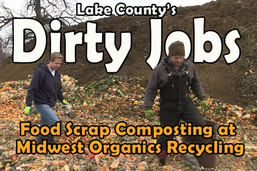
limited resources we share. Please take a few minutes to watch a recent episode of Lake County Dirty Jobs with Chairman Aaron Lawlor and SWALCO's Executive Director Walter Willis, they visited Midwest Organics, a composting site in Lake County.
We encourage
residents and businesses alike to participate in available food scrap diversion
programs, reach out to your local community boards, chat with your neighbors
and be a part of this next step towards waste reduction in Lake County.
|