
Thursday, Oct 1, 2020 | View in browser
 From the Chief's Desk
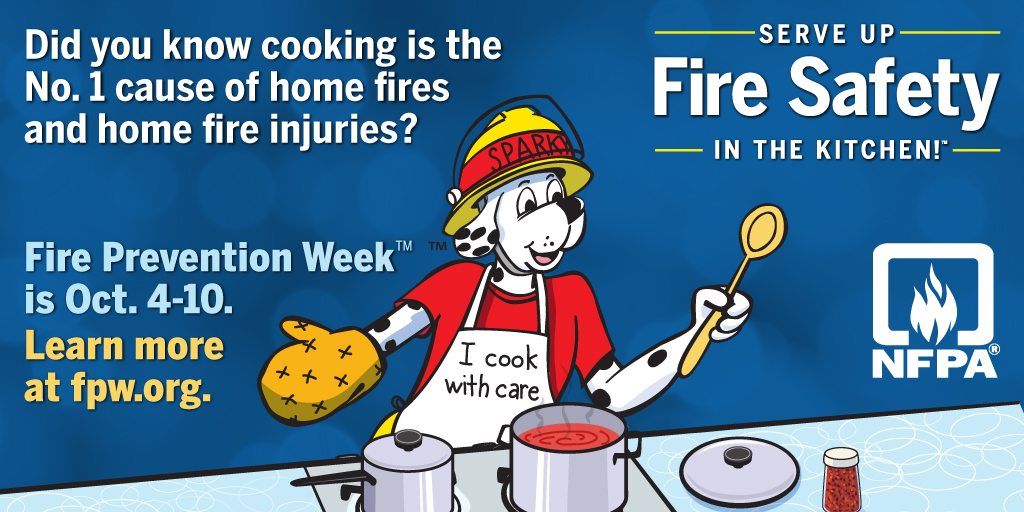
This month, the Evanston Fire Department is teaming up with the National Fire Protection Association (NFPA) - the official sponsor of Fire Prevention Week for more than 90 years - to promote this year’s Fire Prevention Week campaign, “Serve Up Fire Safety in the Kitchen!” The campaign works to educate everyone about simple but important actions they can take to keep themselves and those around them safe.
According to NFPA, cooking is the leading cause of home fires and home fire injuries in the United States. Almost half (44 percent) of reported home fires started in the kitchen, while two-thirds (66%) of home cooking fires start with the ignition of food or other cooking materials.
A cooking fire can grow quickly. We are encouraging Evanston residents to embrace the 2020 Fire Prevention Week theme and be as safe as possible when in the kitchen. Unfortunately, I have personally seen many homes damaged and people injured by fires that could easily have been prevented. Here are some important safety tips to keep you from having a cooking fire:
- Never leave cooking food unattended
- If you are simmering, baking, roasting, or boiling food, check it regularly, remain in the home while food is cooking, and use a timer to remind you that you’re cooking
- You have to be alert when cooking. You won’t be alert if you are sleepy, have taken medicine or drugs, or consumed alcohol that makes you drowsy.
- Always keep an oven mitt and pan lid nearby when you’re cooking. If a small grease fire starts, slide the lid over the pan to smother the flame. Turn off the burner, and leave the pan covered until it is completely cool.
- Have a “kid-free zone” of at least three feet around the stove and areas where hot food or drink is prepared or carried
The Evanston Fire Department will be hosting our Annual Open House on Sunday, Oct. 4 from 11 a.m. to 3 p.m. at Fire Department Headquarters, 909 Lake Street. Planned socially distant activities include auto extrication and technical rescue demonstrations, a children’s firefighter challenge course and fire and life safety educational activities for the entire family! I hope you can join us!
To find out more about the EFD’s Open House, call/text the City’s 3-1-1 system. For more general information about Fire Prevention Week and cooking fire prevention, visit fpw.org.
Enjoy this month’s Roll Call. If I can be of assistance in any way, please feel free to contact me at 847-866 5924 or bscott@cityofevanston.org.
Stay Safe!
Brian R. Scott
Fire Chief
EMS Calls: 472 for the month of September
Fire Calls: 321 for the month of September
 793 total calls for the month of September
Response Times:
EFD average response time for September: 3 minutes and 27 seconds from dispatch to emergency
NFPA Average: 4 minutes or less
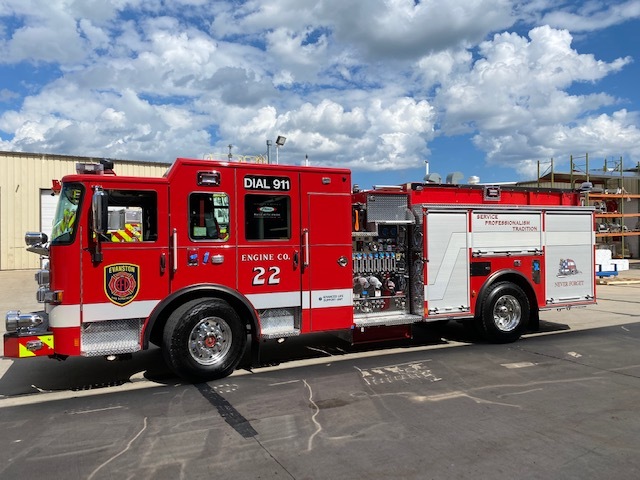 On Friday, Sept. 25 at 7:20 a.m., the Evanston Fire Department placed its new Engine 22 in service with a spectacular push in ceremony orchestrated by Fire Apparatus Operator Tim Gobat and crew. Along with a wonderful blessing from Chaplains Monte' Dillard and Heath Howe.
It took a dedicated committee comprised of firefighters, chiefs and mechanics over a year to design Engine 22, which is a 2020 Pierce Enforcer with the pumping capacity of 1500 gallons a minute at the cost of $640,000 dollars. Engine 22 will serve the great residents of Evanston for the next three decades responding to emergency calls of service.
The Evanston Fire Department would like to thank our Aldermen and Alderwomen, City staff and committee members involved for making Engine 22 a reality.
Training
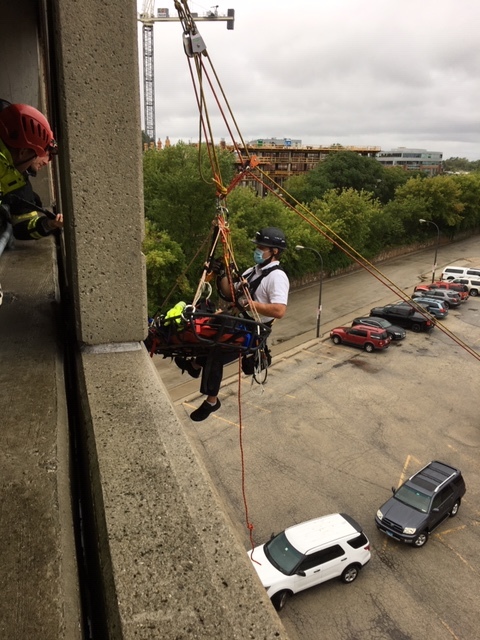 The month of September provided an opportunity for the Evanston Fire Department (EFD) members of the regional technical rescue team to learn and practice a relatively new high angle rescue technique. This technique will be demonstrated at the EFD Open House on Sunday, Oct. 4. Basically, it’s a safe, effective way to rescue someone from a construction site, water or communications tower, or any building or height that is inaccessible by EFD’s 100' aerial ladders. The rescue technique automatically moves a victim (in the rescue basket) and any rescuer (in the white shirt tethered to the basket) away from the structure while lowering to the ground so they may safely clear obstructions.
The technical rescue team resumed training three months ago under COVID-19 precautions (small groups, mandatory masks, and temperature scans). While the precautions have hindered training to a large extent, it has promoted small group trainings such as learning new rescue techniques. The smaller group sizes have increased individual knowledge, skills, and abilities by providing more hands on time. However, it has proven to be logistically harder to manage three times the training opportunities, and take away the larger response drills that are critical for large emergency scene management.
The picture above shows members of our regional TRT team practicing this technique at the Maple Sttreet parking garage.
Emergency Management
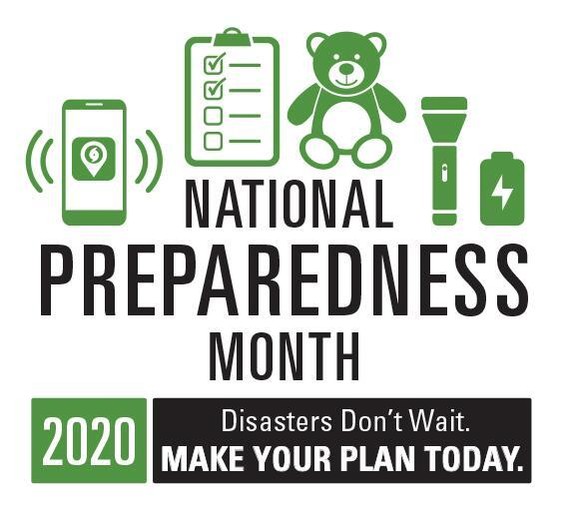 National Preparedness Month is recognized each September as an opportunity to promote family and community disaster planning. This year’s theme is “Disasters don’t wait. Make your plan today.” Educational topics covered include disaster planning, pre-disaster mitigation, making an emergency preparedness kit, and teaching youth about the importance of being prepared. Preparedness has never been more relevant than now during the pandemic.
Community preparedness is one aspect of disaster planning, and one which requires a whole community approach. Preparedness within the community starts with the individual. Preparedness training has been made available through the City’s website. To become more involved in preparedness training and community engagement, please consider visiting the Evanston Fire Department webpage to learn more about free training opportunities and becoming a volunteer of Evanston’s Community Emergency Response Team or Medical Reserve Corps.
Communications is a critical aspect of preparedness, and an important factor in disaster planning and pre-disaster mitigation. On August 10, emergency sirens where sounded to warn the public about the derecho’s threat of 100 m.p.h. winds and 1.5” hail. With only a siren and no additional means of communication, residents would not have received critical communications when seconds count. Evanston Alerts is an emergency notification system offered through the City which provides immediate notification about an imminent threat with directions on how best to respond. Evanston Alerts is free of charge and can provide messaging through text alerts, phone, or email. For more information about this service or to subscribe to Evanston Alerts, please visit the City’s Office of Emergency Preparedness website or call/text the City’s 3-1-1 system.
Additional steps that can be taken to promote individual and family preparedness are as follows:
-
Develop a plan and understand how to put it into action. Whether at home or in an office setting, emergency planning needs to be easily understood and practiced. Evacuation and shelter locations, accountability systems, and accessibility of critical resources are vital to effective disaster planning.
-
Build an emergency kit. Building an emergency kit, including supplies and personal protective equipment, are first steps in emergency planning. Be sure to include items such as safety glasses or face shields for eye protection, cell phones with chargers, flashlights, and first aid kits.
-
Shelter in place. Follow local emergency official announcements related to sheltering in place. In certain situations, you may need to take immediate shelter. If you see large amounts of debris in the air, or if local authorities say the air is badly contaminated, you may want to “shelter in place.”
-
Be aware if local emergency officials call for a mandatory evacuation of your area. Don’t wait until it's too late. Due to COVID-19, the Centers for Disease Control (CDC) says that you should bring two cloth face coverings and hand sanitizer if you need to seek public shelter.
-
Know what may impact your area and how you should respond. Identify potential hazards within your area and stay aware of local weather warnings. Follow instructions provided by your local officials and Office of Emergency Preparedness. If local authorities or the on-site managers direct you to evacuate or seek medical treatment, do so immediately.
For more information on this year’s Emergency Preparedness campaign, visit ready.gov/september
|