Friday, May 22, 2020 | View in browser
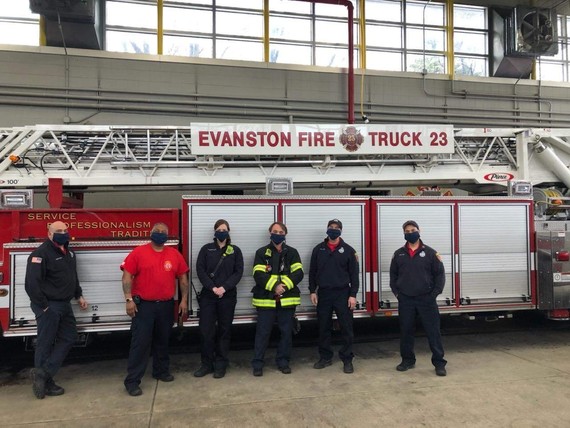
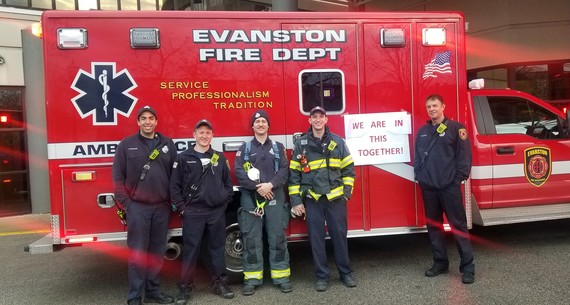 Left to right; FF Tyler Graham, FF Zack Cascarano, FF Mick Morel, FF James Trippi and FF Greg Young
From the Chief's Desk
A fire department deals with a large amount of statistics and metrics which can include everything from the budget and water flow calculations to staffing levels and calls for service. One of the most important and mission critical numbers we deal with is response times – the time it takes our firefighter/paramedics to respond to you in an emergency.
From taking the call by the dispatcher to the response from the fire station, the EFD takes every measure possible to keep our response times low in order to deliver assistance to you as quickly as possible. The combination of state-of-the-art technology, proper staffing and strategic fire station locations allow us to maintain response times well below the NFPA national standard of 4 minutes. In fact, our average emergency response time in 2019 was an enviable 3 minutes and 18 seconds.
With over 10,500 calls for service each year, that outstanding response time average translates to us being better able to save lives, reduce injuries and minimize property damage. It is the primary reason why we save over 98 percent of all property involved in fires as well as deliver advanced life support emergency medical care in a way that provides the very best chances for survival, especially relative to cardiac care.
You can play an important part in helping us with response times as well:
- Make sure your building address is easily visible, both day and night, from the street
- If at home, turn on your porch light and unlock the front door
- If you have a dog, please secure your pet in a separate room
- If a patient for a medical emergency is located deep inside a building or in a hard to find location, have someone meet the paramedics at the curb to guide them directly to the patient
- If you come across an emergency away from your home or business, please give as specific a location as possible to the 911 dispatcher. If safe, wait for the fire department to arrive to direct them further.
Please enjoy this month’s Roll Call. If you have questions, please feel free to contact me at 847-866 5924 or bscott@cityofevanston.org.
Please stay safe and stay healthy. Your life is our mission.
Brian R. Scott
Fire Chief
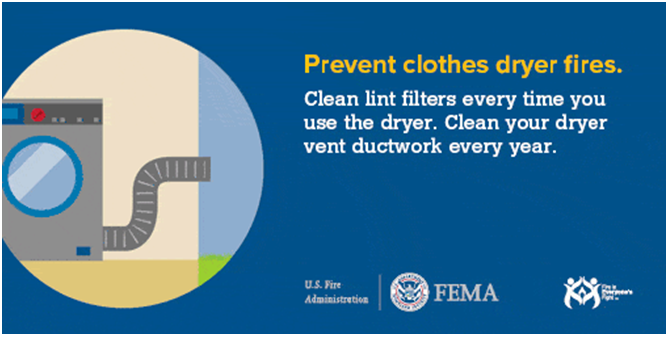
Fire Chief's Monthly Safety Tip
Below is a breakdown of recent emergency responses for April 2020.
EMS Calls
 461
Fire Calls
 195
Total: 656
Response Time
EFD's average response time for April: 3 minutes and 28 seconds from dispatch to emergency
NFPA Average: 4 minutes or less
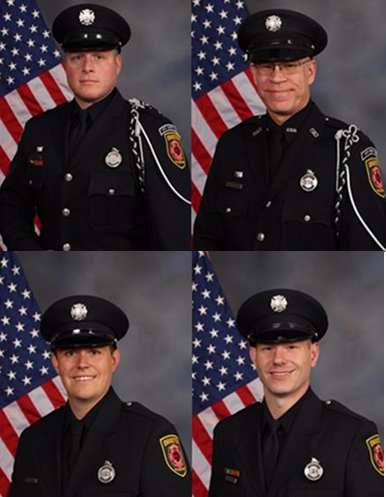
Top left to right; Captain Stephen Barlock, Captain Jason Hays. Bottom left to right FAO Brendan Collins, FAO Christopher Weglarz
Promotions
The Evanston Fire Department is happy to announce the promotions of four individuals. Together, these members have a total of 48 years of combined service and will be taking on new leadership roles within the department. Unfortunately, due to the circumstances EFD is currently unable to celebrate their successes in the traditional way of a promotional ceremony.
Brendan Collins and Christopher Weglarz have both been promoted to Fire Apparatus Operator (FAO). The position of Fire Apparatus Operator is responsible for the mechanics and operations of our fire trucks. EFD has several types of fire trucks; fire engines (pumpers), trucks (ladders) and squads (tool trucks). All of which are very important to our everyday operations. These vehicles range from 300k to 1 million dollars and have life expediencies of 20 years. FAO Collins and Weglarz will take on a tremendous amount of responsibility ensuring these vehicle operate at the most crucial times.
Stephen Barlock and Jason Hays have both been promoted to the rank of Captain with EFD. Captains organize daily trainings, special details, fire house operations, and of course emergency incidents. The Captains of EFD have a great responsibility of maintaining the skills, safety and engagement of the firefighters under their command. Both Captain Barlock and Hays have worked extremely hard to obtain these positions.
The Evanston Fire Department will host a combined retirement/promotion ceremony in the months ahead.
 How Firefighters Train During the COVID-19 Pandemic
The COVID-19 pandemic has reshaped every aspect of our society. The critical life and property saving services the men and women of the Evanston Fire Department offer every day on the front lines must continue despite how the world has changed. Firefighters’ knowledge, skills, and abilities (KSAs) are normally improved in two ways: on actual emergencies and during training sessions where many firefighters work hard under physically demanding situations in close proximity. The emergencies still occur despite the increased danger to firefighters’ health, but training must be more calculated.
So how do we maintain our KSAs for weeks and months without practicing for the more dangerous, lower frequency emergencies such as large structure fires and specialized rescues? The Shift Chiefs (members in charge of an entire shift of firefighters) and company officers (members in charge of a single fire engine with three firefighters) have been maintaining firefighters’ KSAs with small group lessons and skill sessions (while maintaining social distancing and/or wearing face masks). Many organizations, including EFD, have developed virtual platforms to share information related to firefighter skills as well as how to minimize virus transmission risk. Firefighters are able to access a wealth of knowledge at this time while minimizing risk. We are building a knowledge base to use on emergencies, but emergencies are not mitigated with knowledge alone – firefighters must be able to physically perform during emergencies – and that’s the impossible part to replicate now.
While we cannot practice like we used to, we are certainly improving our individual and small group KSAs that contribute to successful emergency mitigation. One day we will be able to resume regular training, but in the meantime, the training efforts of our Evanston Firefighters should be commended.
If you have any questions regarding Evanston Firefighter training, please contact Division Chief Matt Smith at mrsmith@cityofevanston.org.
CDC Recommended Guidelines to Stay Safe During COVID-19 Crisis
 Protect yourself from all infectious diseases by using these precautions:
- Stay home when you are sick
- Avoid contact with people who are sick
- Get adequate sleep and eat well‐balanced meals
- Wash hands often with soap and water for 20 seconds or longer and dry hands with a clean towel or air dry
- Wear a cloth face cover when going out in public
- Avoid touching your eyes, nose, or mouth with unwashed hands or after touching surfaces
- Cover your mouth with a tissue or sleeve when coughing or sneezing
- Clean and disinfect “high touch” surfaces often (includes door knobs,
- Call before visiting your doctor
For additional information, please visit cityofevanston.org/covid19.
Steps to improve fire safety in the home
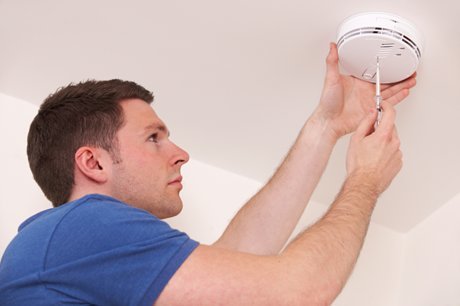 Follow these simple tips to help prevent house fires and to help keep your family safe if a house fire occurs:
Install a smoke alarm
Installing smoke alarms in your home is the simplest step you can take to help prevent tragedies. Install one on every floor level and in every bedroom. Follow manufacturer instructions for installation, test monthly and change the battery once per year.
Store matches and electrical items safely on moving day
Make sure matches and small electrical items are packed in clearly marked boxes and out of the reach of small children. Cover sockets and install cupboard locks at your new house as soon as possible if you have toddlers. Keep electrical leads away from high traffic areas to avoid trip hazards and remember to unplug appliances at night unless they are designed to remain on, such as freezers.
Check electrical appliances
Check socket limits and avoid overloading them, which can lead to overheating and fire hazards. Inspect plugs to ensure the house move has not dislodged wiring. Faulty electrics (appliances, wiring and overloaded sockets) cause around 7,000 house fires across the country every year.
Choose an escape route
As a family, select an escape route and make sure everyone knows about it. This is the best way to leave the house if there is a fire: ensure the exit is clear at all times. If doors are double locked at any time, everyone should be aware of where the keys are kept.
Check the chimney
Open fires have become more popular in recent years. It can be exciting to use one for the first time, but they can be dangerous. Before lighting one, ensure that the chimney has been swept. This includes chimneys being used as flues for gas fires. If in doubt, ask a professional.
Install carbon monoxide detectors
Around 50 people a year die from carbon monoxide poisoning due to faulty heating appliances. Carbon monoxide poisoning can result from burning all fossil fuels, not just gas fires and boilers, so you’ll need a detector even if you just have an open fire.
Invest in fire safety equipment
Fire extinguishers can and should be used in the home, but it is extremely important you know exactly how to use one. If they are used inappropriately they can cause injury.
|