|
|
From national conferences and regional discussions, to workshops and a safety summit, Chicago Metropolitan Agency for Planning (CMAP) team members have been on the move locally and nationally!
In this issue of the CMAP Update, you'll learn:
- Why the Catalyst Series made a stop at Richardson Adventure Farm in Spring Grove
- What the region's natural assets mean for the economy
- Which awards CMAP took home from the Association of Metropolitan Planning Organizations national conference
- What CMAP Executive Director Erin Aleman is leaving her car behind for
Thanks for following along with the latest news in this edition of the CMAP Update. We also have dedicated newsletters for topics like The Century Plan, regional economy, transportation, planning, climate, data updates, and more.
📩 Sign up now to discover our newsletters
|
|
Balancing growth with land conservation: a focus on the future in McHenry County
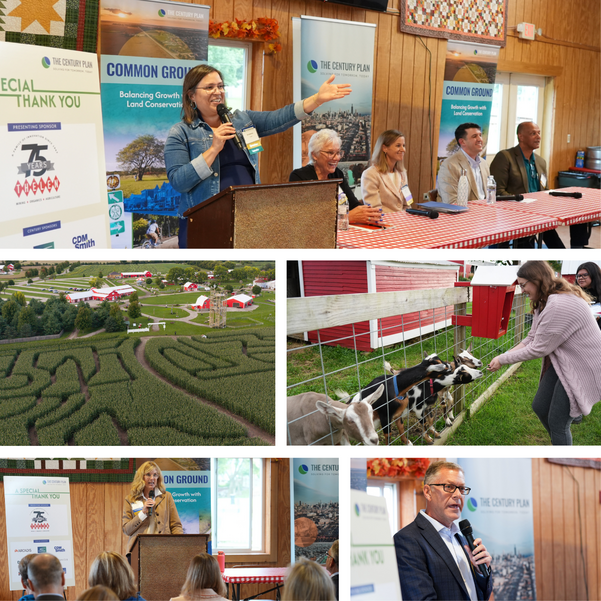
How can northeastern Illinois accommodate growth while protecting the natural places that make the region special? That question brought partners together at Richardson Adventure Farm in Spring Grove for the latest conversation supporting The Century Plan.
The event
📌 Regional leaders convened in McHenry County for the Catalyst Series event, “Common Ground: Balancing growth with land conservation,” which focused on how northeastern Illinois can preserve and expand open spaces while supporting economic growth and development.
The highlights
-
Natural systems don't stop at jurisdictional boundaries. The region is home to rich and biodiverse natural lands that cross municipal borders. Stewarding and expanding the region's network of open spaces will require collaboration on a regional scale.
-
Protecting nature has tangible benefits. Wetlands absorb stormwater, trees absorb carbon, plants support the pollinators that make agriculture possible, and communities increasingly want access to nature as part of their quality of life. Natural systems cost less to maintain than hard infrastructure while improving resilience in communities.
-
Open space preservation and restoration cannot be an afterthought. Housing, transportation, and energy often come to mind as the top regional systems that need investment. Open space is a critical system too, and we should plan for it with the same level of attention and urgency.
The venue
Thank you to our hosts! It’s not every day that you get to have an inspiring discussion about our region’s natural spaces — then get to pet goats and explore a corn maze.
👉 Join the conversation and help shape the region's future
|
|
Thriving nature, strong economy: experts highlight the value of our region's natural assets
Leaders from diverse sectors are coming together to shape The Century Plan. CMAP is convening decision-makers and action-takers from the seven counties we serve — representing government, business, and civic spheres — to think boldly about the future we want and how we get there.
At CMAP's previous Board meeting, a panel of experts in the conservation space discussed what our region's natural assets mean for economic development and positioning the region as a desirable location.
What they shared
-
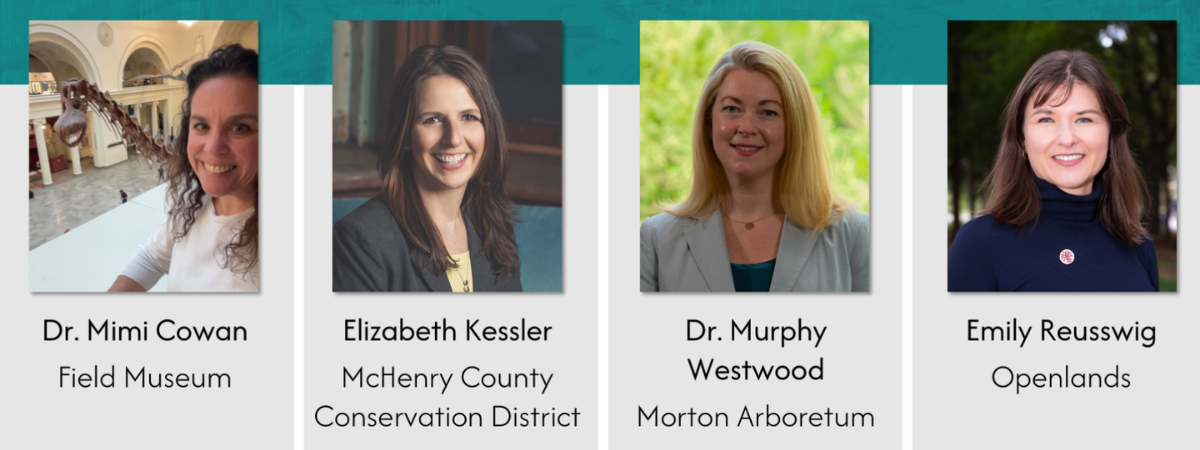
Dr. Mimi Cowan, Field Museum: Access to nature is now a major consideration for companies deciding whether their workforce can thrive here.
-
Elizabeth Kessler, McHenry County Conservation District: Outdoor recreation is a growing economic driver — and voters consistently support expanding open space.
-
Dr. Murphy Westwood, Morton Arboretum: Trees are the only form of infrastructure that increases in value over time.
-
Emily Reusswig, Openlands: Connected natural landscapes can boost tourism, reduce flooding, and improve regional climate resilience.
The bottom line: Expanding conserved land is both a quality‑of‑life investment and an economic one — and northeastern Illinois is well‑positioned to lead.
🌳 Hear the rest of the conversation
|
|
CMAP earns national recognition and shares expertise at AMPO conference
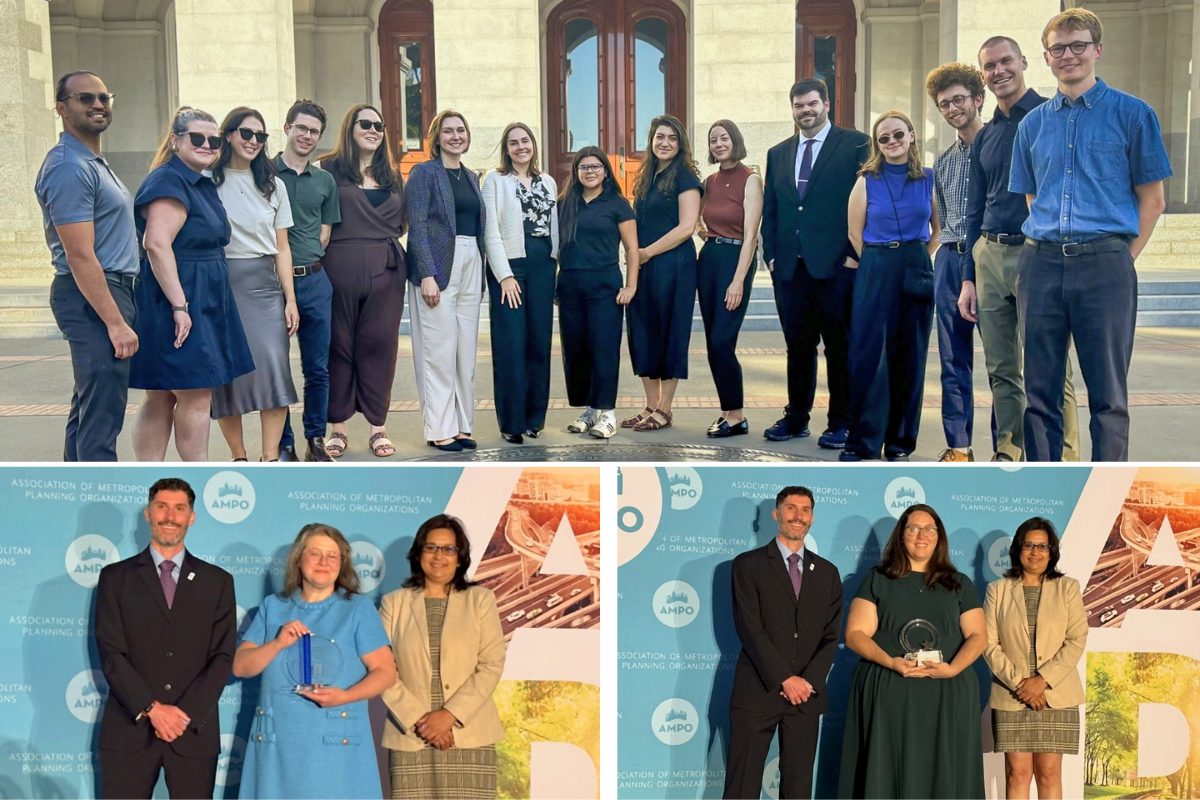
CMAP had a strong presence at the Association of Metropolitan Planning Organizations (AMPO) national conference.
The event
Our team members joined sessions and panels on accessibility in the public right-of-way, regional policy, extreme heat resilience, integrated planning, transportation options for working families, and managing fiscal uncertainty in long-range planning.
These conversations provided an important opportunity to exchange ideas with peers from across the country and strengthen the work we do here at home.
The highlights
⭐ Congratulations to CMAP Senior Policy Analyst Elizabeth Ginsberg who received the Rising Professionals Award, recognizing her leadership and contributions across transportation finance, strategic foresight, and regional policy. Elizabeth's work has helped advance major agency initiatives including the 2026 Regional Transportation Plan, the Plan of Action for Regional Transit, and The Century Plan.
⭐ CMAP’s Plan of Action for Regional Transit (PART) received an honorable mention for Outstanding Overall Achievement. Developed with extensive input from partners across the region, PART laid out a roadmap for sustainable funding, stronger service, and governance reform, informing the conversations that ultimately led to the creation of the Northern Illinois Transit Authority.
👉 Read more about other CMAP presenters and topics
|
|
Calling all communities: Municipal Survey helps CMAP better understand local needs
CMAP’s 2026 Municipal Survey is open, inviting northeastern Illinois’ 284 municipalities to share their priorities, challenges, and needs.
The survey
We recognize the time and coordination that goes into completing the survey and value the expertise our municipal partners bring. Strong participation gives CMAP a more complete picture of the region and helps us better target technical assistance, resources, policy analysis, and other support for communities.
What you can do
Communities should have received an email from their CMAP staff liaison with information about completing the survey, with a printed survey arriving in the mail shortly after.
📌 The ask: Complete and return the 2026 Municipal Survey by the extended deadline of October 23.
|
|
Who manages Illinois’ water supplies — and how do the pieces fit together? Don't miss the final water workshop
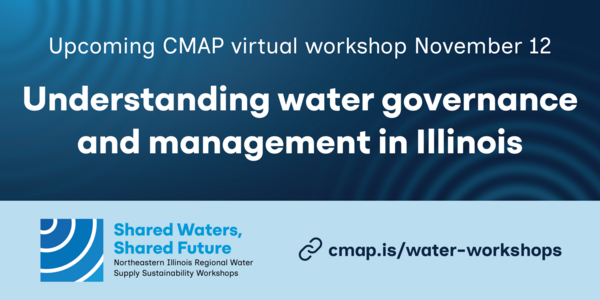
Who makes the decisions that shape Illinois’ water future? Join us for the fifth and final workshop in the Shared Waters, Shared Future series, "Understanding water governance and management in Illinois" on November 12.
The details
Illinois’ water supplies face changing demands and increasingly complex planning challenges. Responsibility for managing those supplies is distributed across different laws, agencies, governments, and institutions. Understanding how this works — and where challenges arise — can help inform future water-supply planning and management.
In this workshop, you’ll learn how water-supply governance works in practice, how responsibilities are shared across Illinois, and how other states have approached governance challenges.
💧 CMAP launched this series for to tackle today’s most pressing water challenges, especially for those who are already doing the work
- Local government staff members and elected officials
- Water utility managers and technical staff members
- Regional planners and policy professionals
- Community-based organizations and educators
- Residents and advocates interested in protecting local water resources
👉 Learn more and register for the workshop
|
|
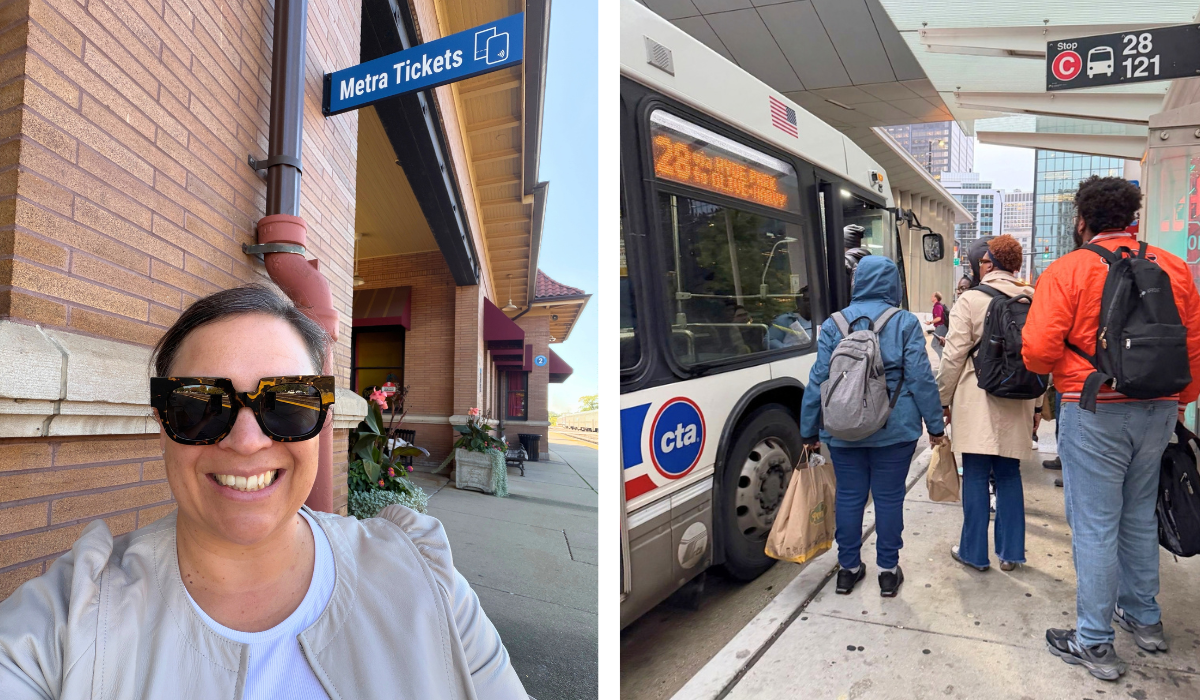
A Week Without Driving: CMAP's executive director joins campaign and leaves her car behind
What would change in your life if driving weren't an option? Would you have access to safe, reliable ways to reach work, school, appointments, family, and the places that connect you to your communities — whether by transit, walking, biking, rolling, or some other way?
Join CMAP Executive Director Erin Aleman in the #WeekWithoutDriving, an experience created for everyone to learn firsthand about barriers and challenges for nondrivers. From October 1 through October 8, Erin is leaving her car behind and paying attention to what works, what doesn't, and what we can learn from the experience.
🚆🚲🚌 Follow along on Erin's LinkedIn page
|
|
Economic summit focuses on what's next for the Southwest Side of Chicago
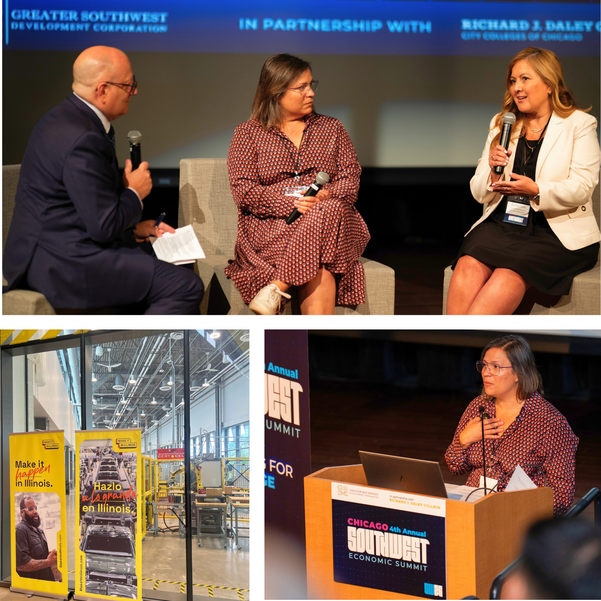
Will we shape the future or let it shape us? CMAP Executive Director Erin Aleman helped kick off the 4th Annual Southwest Economic Summit hosted by the Greater Economic Southwest Corporation.
The event drew leaders from across the region representing business, civic, nonprofit, education and community sectors.
Erin focused on planning through change and maximizing partnerships to drive change and make an impact.
👉Hear more from GSDC Executive Director Adrian Soto on the power of partnerships.
|
|
Safer roads in Illinois: working on traffic solutions at the IDOT summit
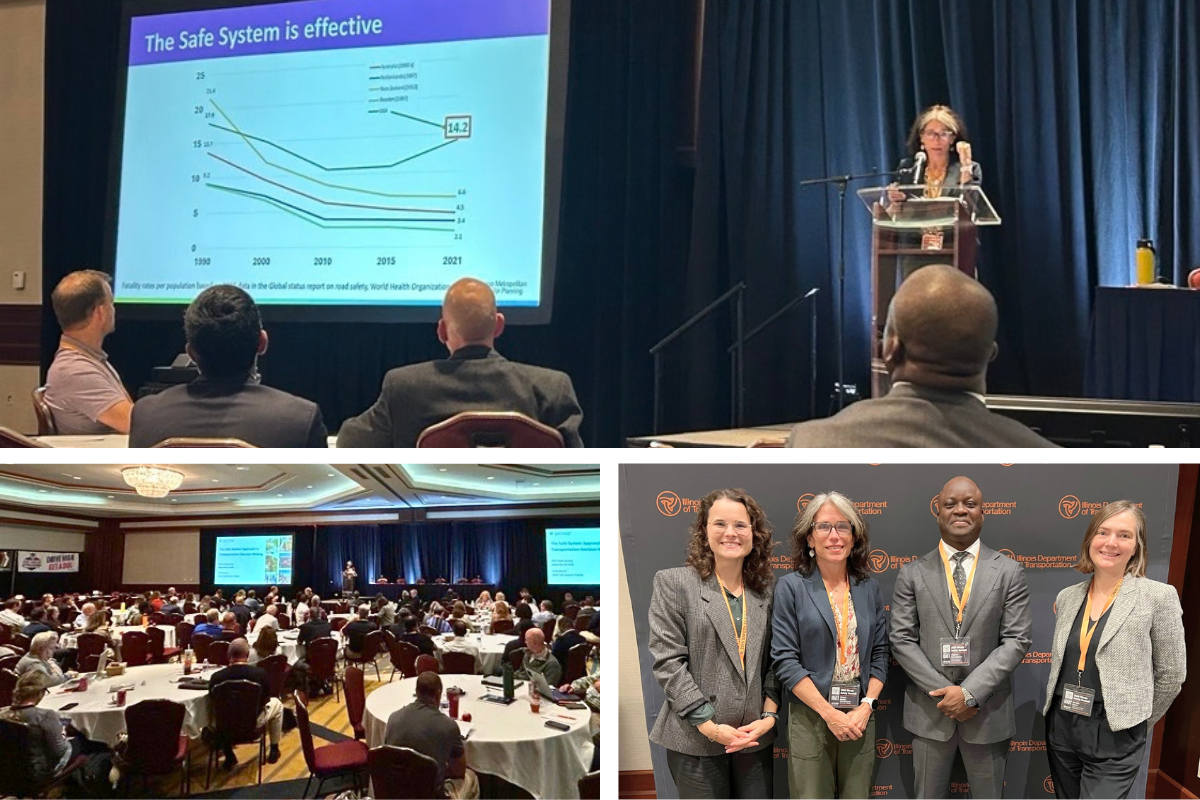
How can our state roads be safer? CMAP helped explore solutions at the Illinois Department of Transportation's (IDOT) Safety Summit.
📌 The summit brought together statewide stakeholders, focused on IDOT's Strategic Highway Safety Plan. In addition to panels and presentations, attendees brainstormed solutions for top traffic safety issues in Illinois and ways the plan can address them. CMAP Safe Systems Program Lead Vickie Barrett also spoke about the Safe System Approach, joined at the summit by CMAP Planner Alyson Dressman and Senior Planner Marielle Brown.
👉 Learn more about CMAP's traffic safety efforts and IDOT's Strategic Highway Safety Plan
|
|
Addressing regional housing challenges at Chautauqua symposium
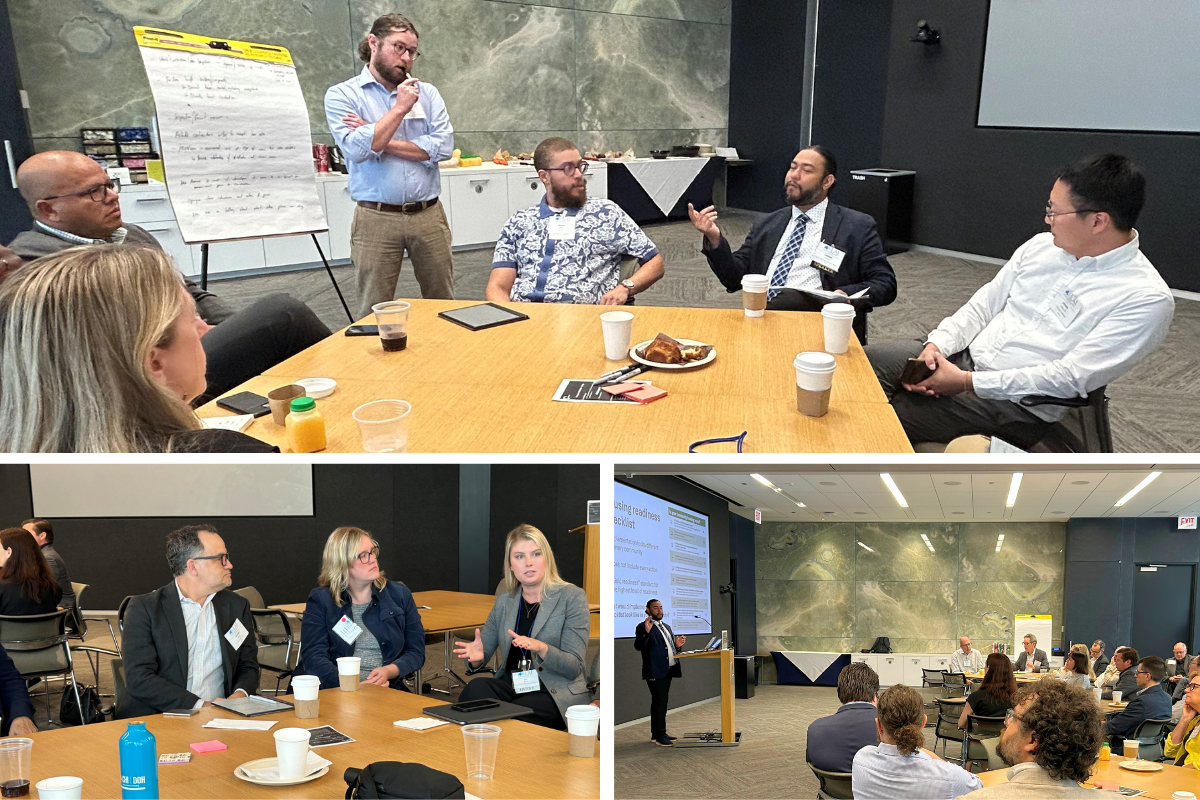
How are we working toward a future where it's easier to build the housing we need in northeastern Illinois? CMAP Planning Principal Enrique Castillo delivered the opening address at the Lambda Alpha International Chicago Chapter's annual Chautauqua symposium, which focuses on key land economics, urban planning, and development themes in the region.
The event
⭐ The program kicked off with Enrique discussing housing solutions, and then joining attendees for roundtable discussions on strategies to address the challenges facing the region. Topics included CMAP's housing readiness and partnerships in Kane, Lake, and McHenry counties, as well as critical questions The Century Plan is asking about the future of housing in a thriving region. Members broke into groups to work through four most common housing barriers: financing, regulations, elected officials, and community opposition (NIMBYism).
👉 Learn more about CMAP's housing efforts
|
|
NITA needs your input: head to an open house or take a survey
Looking to help shape the future of the Northern Illinois Transit Authority (NITA)? You have two opportunities in the next couple of weeks
Open house
Stop by the Burlington Room at Union Station in Chicago for an open house on Wednesday, October 14, from 3:00 to 6:00 p.m., to learn about what NITA, the Chicago Transit Authority, Metra, and Pace have planned for 2027 and beyond. Agency representatives will discuss regional service planning, budget priorities for next year, capital investments, safety, and the rider experience. There will also be tables for doing business with the regional transit system and applying to work at the agencies.
👉 Learn more and register for the open house
Budget feedback
Tell NITA which improvements would make the biggest difference in your transit experience. A new survey covers topics from public safety and reliability to modernizing vehicles, stations, and infrastructure. You can suggest your own ideas and highlight specific routes, stations, or stops that need attention.
👉 Take the NITA survey by Friday, October 16
|
|
Urban Transportation Center at UIC kicks off virtual fall seminar series with a look at the South Shore Line extension
A look at the West Lake Corridor Commuter Rail Project in Lake County, Indiana, will kick off the virtual fall seminar series for the Urban Transportation Center at the University of Illinois Chicago on October 15.
The speaker: Gary Babcoke, chief mechanical officer for the Northern Indiana Commuter Transportation District.
The project: The 8-mile extension of the South Shore Line provides direct commuter rail service to the high-growth areas of central and southern Lake County, Indiana, extending south from Hammond to Dyer. The project increases transportation options for central and southern Lake County residents traveling to downtown Chicago and surrounding areas as well as to South Bend International Airport.
Next in the series: "Baltimore Red Line: The History, Present, and Future of Transit in Baltimore" on November 19.
👉 Register for the October seminar the October event
|
|
|
|
|