|
Increasing EV adoption is central to Greater Chicago's climate strategy
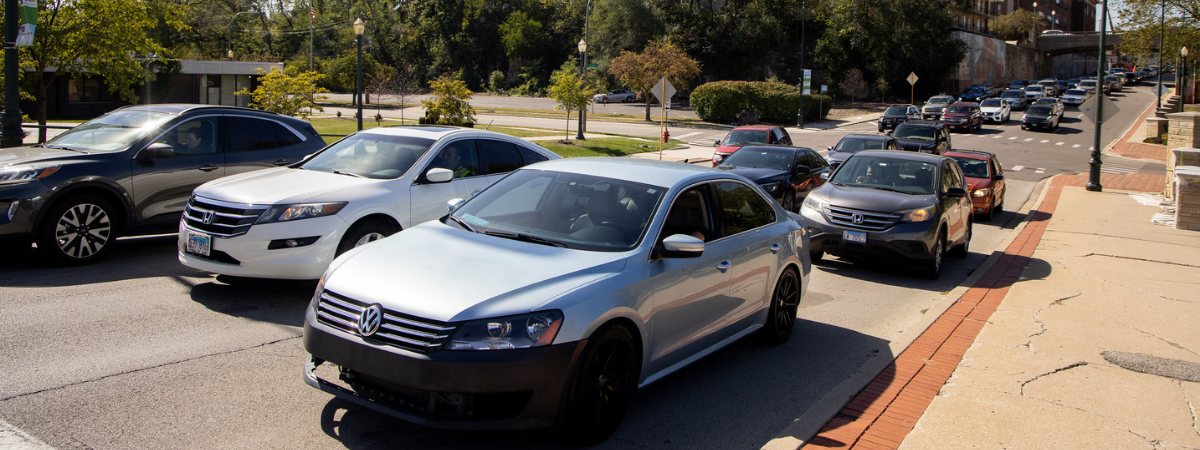
Transportation created more than a quarter of Greater Chicago's greenhouse gas emissions in 2020 — half of which came from passenger vehicles like cars and light-duty trucks.
The region needs multiple strategies to reach the goals laid out in the Comprehensive Climate Action Plan for Greater Chicago — and accelerating the transition to passenger electric vehicles (EVs) will have the largest impact
But current electric vehicle adoption rates are simply not enough. Even under stronger federal policies in place just a few years ago, the region was not on track to meet its EV targets. The gap is substantially larger under current federal policy, increasing the importance of state, regional, and local action.
The region can accelerate electric vehicle adoption. No single policy will achieve the pace of EV adoption needed to meet the region's climate goals. However, the climate action plan highlights three strategies that can work together:
- Advancing EV sales requirements
- Expanding EV incentives
- Building EV charging infrastructure
EVs aren't the only answer. Passenger EVs alone won't meet all our climate goals. The plan covers other ways the transportation sector can reduce emissions, like expanding transit, increasing walking and biking, improving freight efficiency, and reducing vehicle travel.
🚗 Read more about the importance of passenger EV adoption
|
|
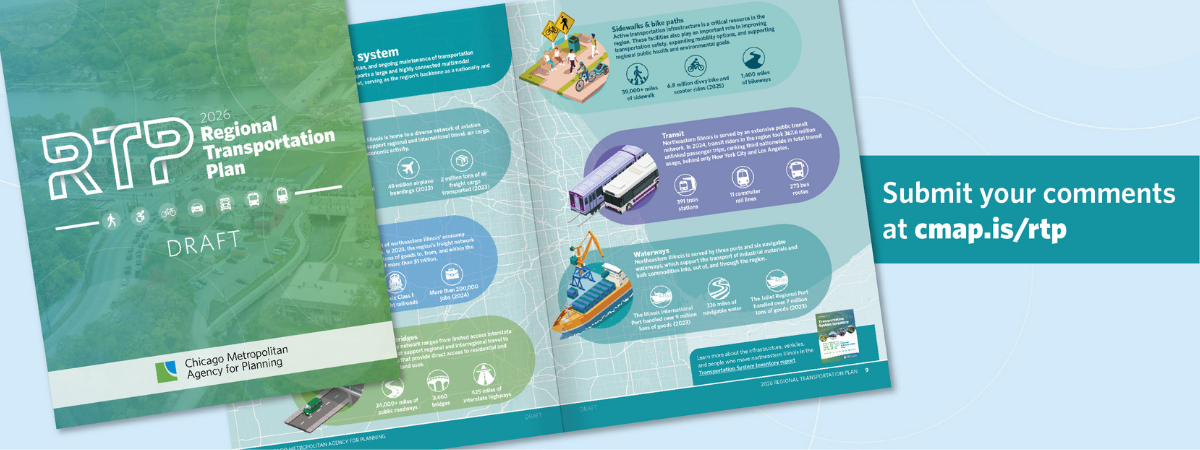
Public comment now open for draft 2026 Regional Transportation Plan
The Chicago Metropolitan Agency for Planning (CMAP) invites residents, partners, stakeholders, and transportation system users to review and comment on the draft 2026 Regional Transportation Plan, Air Quality Conformity Determination, and FFY 2027–32 Transportation Improvement Program.
The Regional Transportation Plan is a long-range blueprint for the future of transportation in northeastern Illinois. It outlines priorities and strategies to improve how people and goods move throughout the region, by strengthening connections, improving safety, reducing pollution, supporting economic opportunity, and investing strategically in the transportation system.
🗺️ Review the draft materials and share your comments by Friday, July 31.
|
|
Preparing northeastern Illinois' water systems for climate change
As climate conditions continue to change across the region, understanding and planning for drought becomes increasingly important. An extremely dry May followed by a rainy June highlighted how groundwater, streams, and soil respond differently to changing weather conditions.
To help communities understand these challenges and plan for the future, CMAP and the Illinois Indiana Sea Grant hosted a Shared Waters, Shared Future workshop focused on climate and drought preparedness. The workshop explores the available data sets, programs, and planning resources that support climate and drought preparedness for communities and water suppliers in northeastern Illinois.
Read the recap to learn about:
- Data and monitoring for climate and drought conditions
- Resources to support climate and drought preparedness
- Federal technical assistance for local water utilities
September 10: next Shared Waters, Shared Future workshop
From growing communities to new industries, demand for groundwater is changing. Discover how states are adapting their approaches to high-capacity well review to support both sustainable water supplies and future growth. Register today.
|
|
New Community Data Snapshots help communities track progress and plan for the future
CMAP released a new set of Community Data Snapshots for the region's 284 municipalities, 77 Chicago community areas, and 7 counties.
Each snapshot summarizes key details about demographics, employment, housing, transportation habits, and more.
Don't miss: built-in comparisons
- The Community Data Snapshots highlight how communities compare to the county and region.
- The "Change over time" section compares 16 key indicators with data from at least 10 years ago, making long‑term shifts easy to see at a glance.
🔍 Explore the Community Data Snapshots
|
|
CMAP awards technical assistance projects
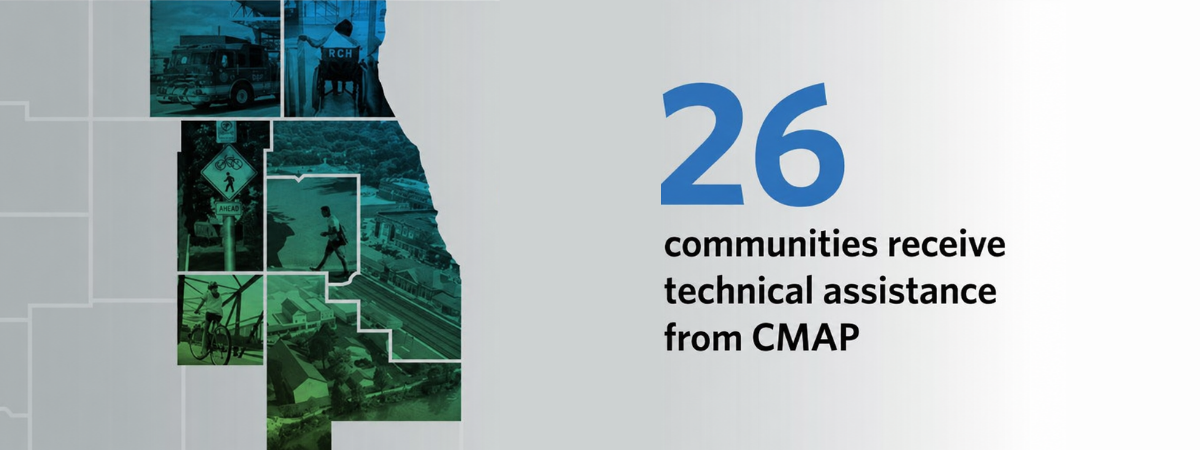
Twenty-six communities will receive technical assistance for projects that connect transportation, land use, safety, accessibility, and infrastructure investment.
Why it matters: Local transportation decisions shape how people get to work, school, transit, parks, services, and other everyday destinations. CMAP's technical assistance program helps communities align local priorities with regional goals, including safer travel, improved access, inclusive growth, prioritized investment, and a transportation system that works better for everyone.
What's next: CMAP will work with communities to kick off projects and begin engagement, analysis, and recommendations.
🔗 See how 26 communities are connecting transportation and local priorities
|
|
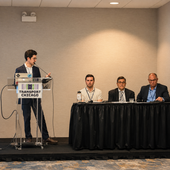
CMAP team shares regional transportation expertise at Transport Chicago
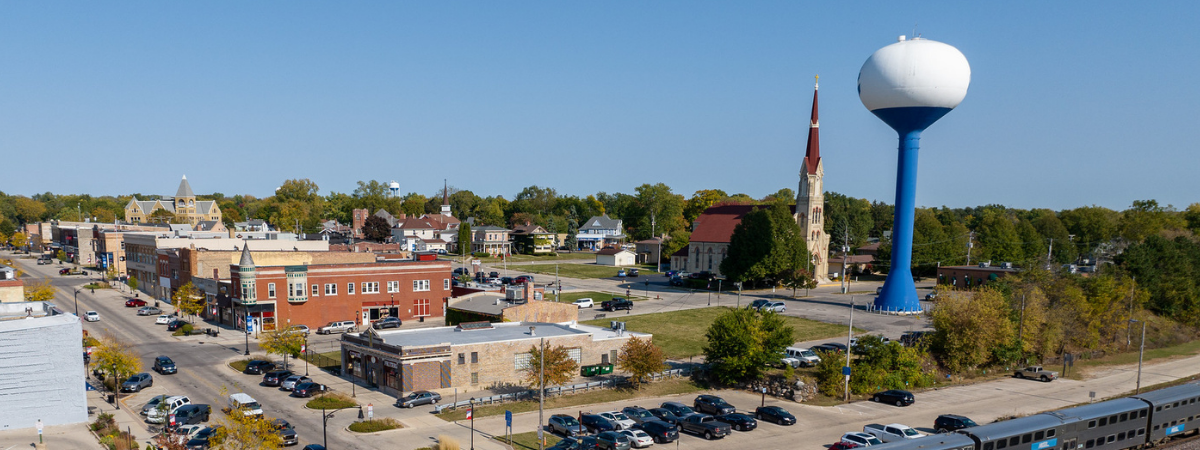
CMAP joined transportation leaders from across the region at Transport Chicago 2026 to share insights on the plans, policies, and partnerships shaping a stronger, more resilient transportation system that reduces regional emissions.
|
|
Jesse Altman moderated a panel on vehicle electrification and the electric grid, exploring how transportation agencies, utilities, local governments, and planners can better coordinate as transit agencies, fleets, freight operators, and communities transition to electric vehicles. |
|
Elizabeth Ginsberg, Noah Harris, and Nikolas Merten shared emerging strategies for a more reliable transportation system, including CMAP's work on congestion management and road usage charges as the region explores more sustainable ways to improve mobility and fund transportation needs. |
|
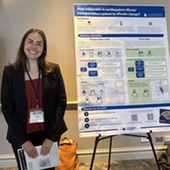
Aspen Walters presented a poster on the Transportation Resilience Improvement Plan, focusing on how the region's transportation system assets and transit riders are vulnerable to climate hazards and promoting the use of climate data in planning and investment. |
|
CMAP to discuss regional challenges and opportunities
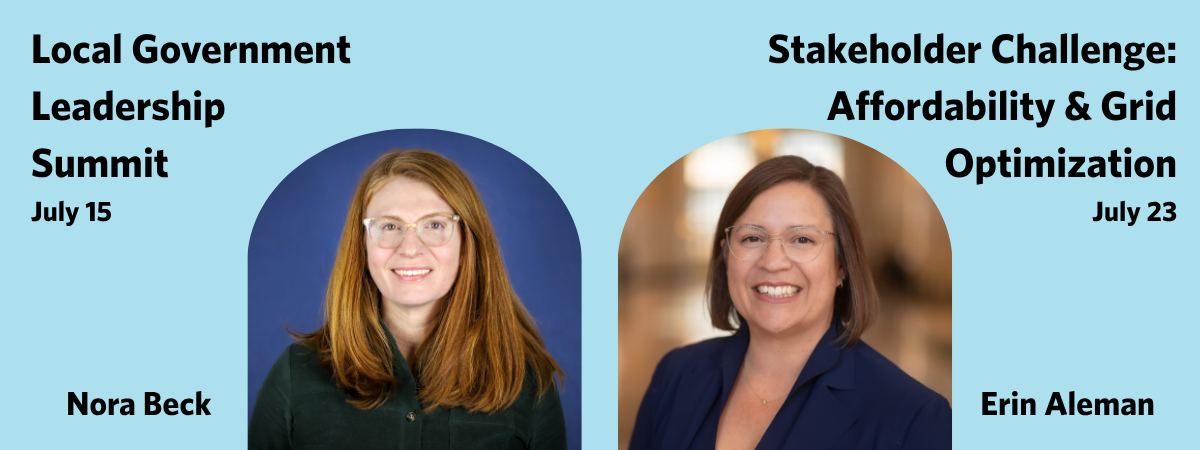
Nora Beck to speak at Local Government Leadership Summit
Principal Policy Analyst Nora Beck will be among the speakers at an event focused on green building successes, challenges, and opportunities.
The U.S. Green Building Council will host the Local Government Leadership Summit on Wednesday, July 15, at the Aon Center in Chicago. Nora's panel on regional challenges and opportunities will run from 1:20 to 1:45 p.m.
💡 Learn more about the Local Government Leadership Summit
Erin Aleman to open affordability and grid optimization stakeholder challenge
CMAP Executive Director Erin Aleman will provide opening remarks at the next Advanced Energy Group (AEG) stakeholder challenge on affordability and grid optimization. On Thursday, July 23, regional leaders will present critical obstacles to address within 12 months and challenge the audience to develop these obstacles into one point of focus.
|
|
Get ready to apply for the Illinois Transportation Enhancement Program
The Active Transportation Alliance, in partnership with the Illinois Department of Transportation (IDOT), is hosting a three-part statewide webinar series for the 2026 Illinois Transportation Enhancement Program (ITEP).
Webinar schedule:
- July 15: ITEP overview and eligibility criteria
- August 12: Application walkthrough, scoring criteria, and Q&A
- September 16: Q&A with IDOT staff
The 2026 ITEP will provide approximately $157 million for projects that provide and support connected alternate modes of transportation that are safe for all users, enhance the transportation system through preservation of visual and cultural resources, and improve quality of life. The application cycle runs from August 1 through October 5.
🚲 Learn about the ITEP
|
|
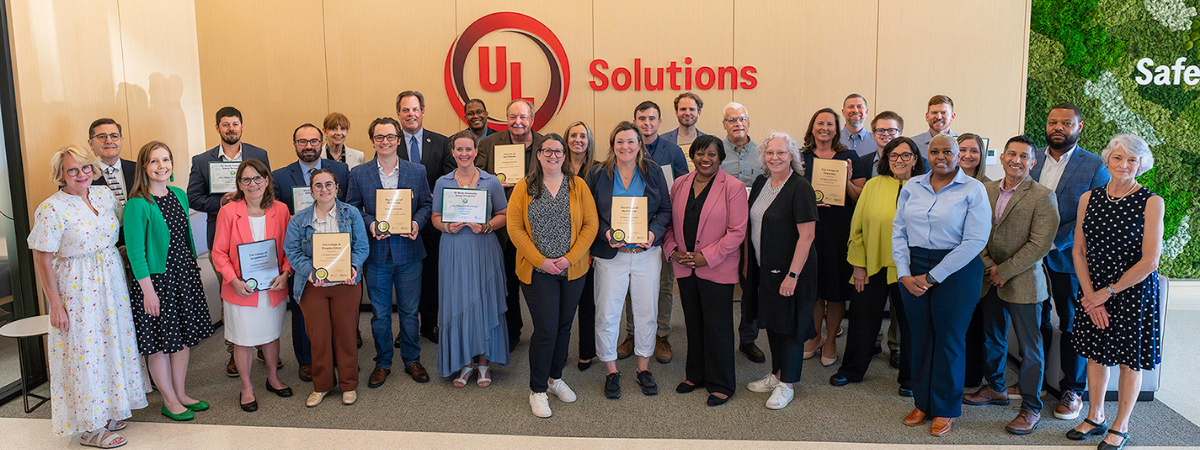 Photo credit: UL Solutions
|
|
Nine more communities are now EV ready
Congratulations to the latest cohort of the EV Readiness Program! The Metropolitan Mayors Caucus recently recognized 9 communities that completed the program which helps local governments plan for the transition to EVs. Burr Ridge, Des Plaines, Downers Grove, Grayslake, Northbrook, Pingree Grove, Streamwood, and Vernon Hills are now EV ready.
⚡ Want to join the next cohort of the EV Readiness Program? Applications close Friday, August 14.
|
|
DuPage County unveils four new EV charging locations
DuPage County, a past graduate of the EV Readiness Program, is celebrating the addition of four new EV charging stations. This includes a high-speed DC "fast" charger open directly to the public.
The new stations are located at the DuPage County Campus at the DuPage Care Center, DuPage County Courthouse, and JTK Administration Building.
|
|
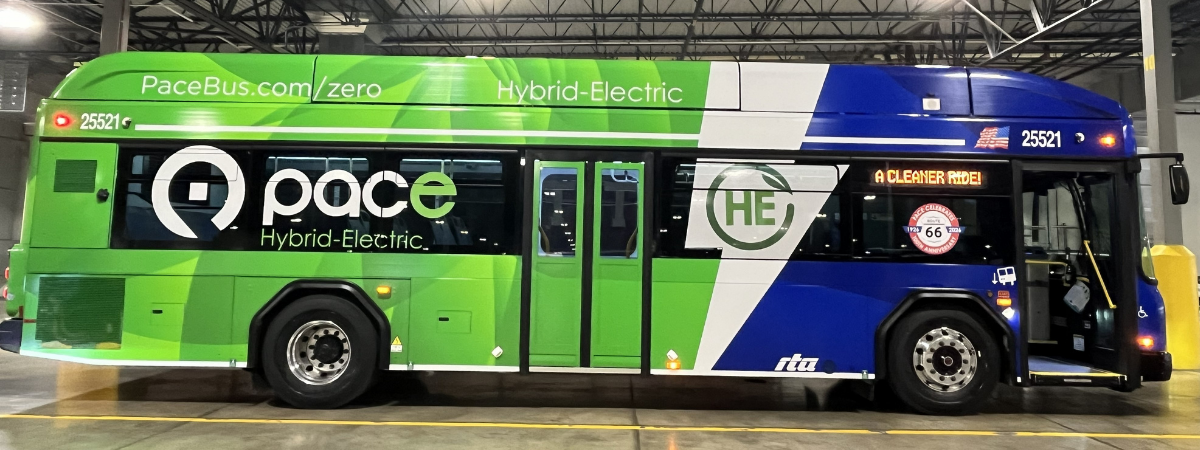 Photo credit: Pace
|
|
Hybrids are here: Pace launches hybrid fleet in Will County
Pace celebrated the introduction of 24 new hybrid-electric buses to its Will County fleet. This marks another important step in the agency's commitment to transition to a fully zero-emission fleet by 2040. The buses will deliver immediate benefits, including reduced greenhouse gas emissions, lower fuel consumption, quieter operation, and a smoother, more comfortable ride.
The Will County fleet is part of a broader rollout of new hybrid-electric buses across Pace's service region. In addition to the 24 buses in Will County, Pace will deploy hybrid vehicles at other garages later this summer as the agency continues modernizing its fleet.
|
|
Chicago Climate Week is coming to Chicagoland July 18–25
Chicagoland's first community-led, distributed, and regionwide Climate Week brings together events hosted by nonprofits, businesses, universities, community groups, government agencies, and residents.
Whether you're climate-curious or deeply involved in the space, Chicago Climate Week offers opportunities to learn, connect, celebrate, and take action.
📅 Learn more, browse events, and find ways to get involved
|
|
📅 Deadline: Monday, July 20
Residential Retrofits for Energy Equity (R2E2) offers no-cost technical assistance to municipalities with populations under 250,000 to advance equitable residential energy efficiency and electrification initiatives.
📅 Deadline: Friday, July 24
Climate & Equitable Jobs Act (CEJA) Capacity Grant Program provides community-based organizations with direct funding, leadership development, resources, and expert coaching to strengthen organizational capacity, allowing for the effective implementation of CEJA programming throughout the State of Illinois.
📅 Deadline: Friday, July 24
Chi-Cal Rivers Fund offers grants to reduce stormwater runoff with nature-based infrastructure, enhance fish and wildlife habitat, and activate restored habitats through public access improvements and community engagement.
📅 Deadline: Wednesday, August 5
|
|
|
|
|