|
|
Technical assistance may sound, well, technical. But at its core, it is about helping communities turn local priorities into action -- whether that means planning safer sidewalks, expanding housing options, engaging residents, or preparing projects for funding.
This month's newsletter highlights the many ways CMAP and our partners are building local capacity across northeastern Illinois. From newly awarded projects to completed accessibility plans and work undersway in Maywood and Rolling Meadeows, each effort strengthens one part of the region.
Together, these community-by-communty investments help build a more connected, resilient, and prosporous future for everyone.
Again, send your progress on planning to to elevate it in CMAP's next Planning newsletter.
|
|
CMAP awards 2026 technical assistance projects
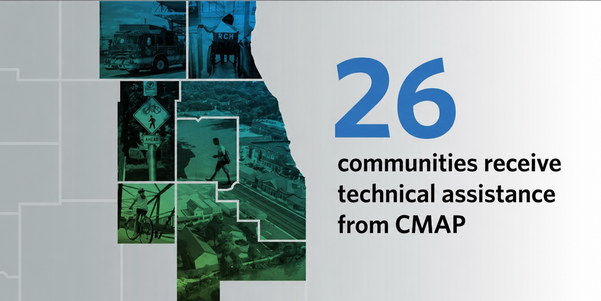
The Chicago Metropolitan Agency for Planning (CMAP) selected 26 communities to receive technical assistance for projects that advance safer streets, accessible infrastructure, stronger corridors, better capital planning, and more connected places.
Why it matters: These projects help local governments build capacity, engage residents, prioritize investments, and move plans closer to implementation.
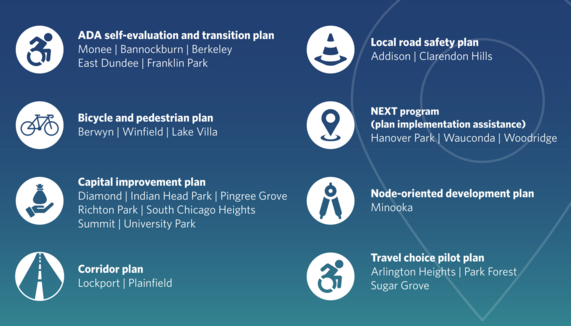
The awards include:
-
Accessibility: Americans with Disabilities Act (ADA) public right-of-way self-evaluation and transition plans in Bannockburn, Berkeley, East Dundee, Franklin Park, and Monee
-
Active transportation: Bicycle and pedestrian plans in Berwyn, Lake Villa, and Winfield
-
Corridor planning: Corridor plans in Lockport and Plainfield
-
Implementation: NEXT plan implementation assistance in Hanover Park, Wauconda, and Woodridge
-
Infrastructure planning: Capital improvement plans in Diamond, Indian Head Park, Pingree Grove, Richton Park, South Chicago Heights, Summit, and University Park
-
Place-based planning: A node-oriented development plan in Minooka
-
Safety: Local road safety plans in Addison and Clarendon Hills
-
Travel choice: Pilot plans in Arlington Heights, Park Forest, and Sugar Grove
The big picture: CMAP’s technical assistance program supports local planning priorities that align with ON TO 2050, the region’s long-range plan, including inclusive growth, prioritized investment, and a transportation system that works better for everyone.
Of note: CMAP and the Regional Transportation Authority (RTA) coordinate a joint call for projects, but each agency follows a separate review and award timeline. The RTA will announce its technical assistance projects at a later date.
What’s next: CMAP will work with communities to kick off projects and begin engagement, analysis, and recommendations.
🔗 Learn how 26 communities are advancing local priorities
|
|
Libertyville and Warrenville complete plans for accessible streets and sidewalks
Accessible sidewalks, curb ramps, crossings, and public rights of way help residents of all ages and abilities move safely through their communities.
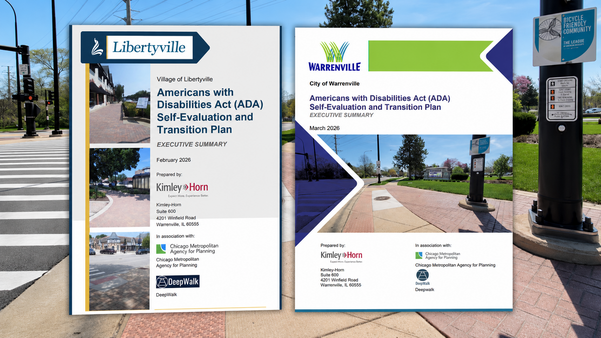
What’s new: Libertyville and Warrenville recently adopted ADA self-evaluation and transition plans, with support from CMAP. The plans identify barriers in sidewalks, crosswalks, streets, public parking, and other pedestrian areas and then prioritize improvements to make local infrastructure more accessible.
Why now? 241 of the region’s 284 communities must have ADA Public Right-of-Way Transition Plans, and regional compliance has grown steadily since CMAP began providing technical assistance in 2021.
Big picture: These plans help communities meet federal ADA requirements while improving walkability, safety, and access for everyone — including people with disabilities, older adults, families with strollers, children, and transit riders.
🔗 View the Libertyville plan
🔗 View the Warrenville plan
|
|
Rolling Meadows bike ride highlights local connections
The City of Rolling Meadows is working with CMAP to develop a bicycle and pedestrian plan for safer, more comfortable routes that connect people of all ages and abilities to parks, schools, businesses, jobs, and other key destinations.
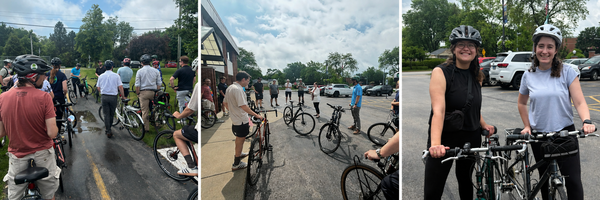
On June 9, CMAP joined the Northwest Municipal Conference's Bicycle and Pedestrian Committee for its annual field trip. Participants took a leisurely, 5.5-mile ride through the heart of Rolling Meadows' bicycle network, with stops to learn about local development and future connections.
After the bike tour, participants attended a lunch-and-learn at Rolling Meadows City Hall, where city and CMAP staff presented on CMAP’s technical assistance program, as well as the progress the team has made on the Rolling Meadows Bicycle and Pedestrian Plan so far.
What’s next: Insights from the ride and ongoing community engagement will help inform recommendations for the plan, including connected bikeways, sidewalks, and street improvements that make walking, biking, and rolling safer and more accessible.
🚴 Learn more about the Rolling Meadows Bicycle and Pedestrian Plan
|
|
Maywood residents help shape Roosevelt Road’s future
Through their technical assistance programs, CMAP and the RTA are working with the Village of Maywood to create a plan to transform Roosevelt Road into a safe, accessible, and thriving corridor. Roosevelt Road is an important community and regional connection — and local voices are helping shape what comes next.
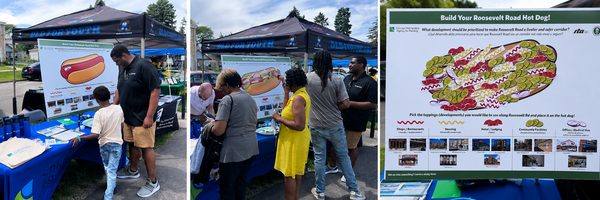
At Maywood’s Move with the Mayor event on May 30, CMAP invited attendees to build their ideal Roosevelt Road using a Chicago hot dog-inspired activity. Participants picked the types of development they would like to see along the corridor, from housing and restaurants to community facilities and other local destinations.
What’s next: CMAP also is seeking feedback through a new visioning survey to understand what improvements community members want to see on Roosevelt Road. The survey is open through mid-July.
📝 Take the Roosevelt Road visioning survey
|
|
Join regional leaders for a future focused conversation on transportation
Transportation has shaped northeastern Illinois for generations. The next century will require new ideas, stronger regional coordination, and shared strategies to keep people and goods moving. That's where The Century Plan comes in!
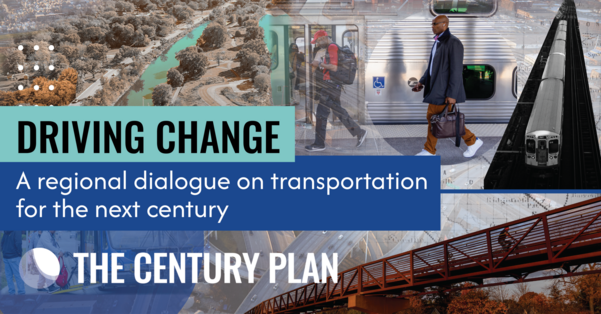
On Tuesday, June 23, CMAP will convene regional leaders and national experts in Joliet for Driving Change: A Regional Dialogue on Transportation for the Next Century, part of The Century Plan's Catalyst Series.
The conversation will explore how northeastern Illinois can reinvest in and innovate its transportation system — moving beyond the status quo to support a stronger, more connected region.
Featured speakers include Dr. Patricia “Trish” Hendren, executive director of The Eastern Transportation Coalition; Adie Tomer, senior fellow at the Brookings Metropolitan Policy Program; and Heather Worthington, principal at Urban3.
The event will take place from 11:00 a.m. to 2:00 p.m. Tuesday, June 23, at the Joliet Area Historical Museum. Lunch will be provided.
🔗 Get tickets
|
|
The Century Plan spotlight: managing our water advantage
|
|
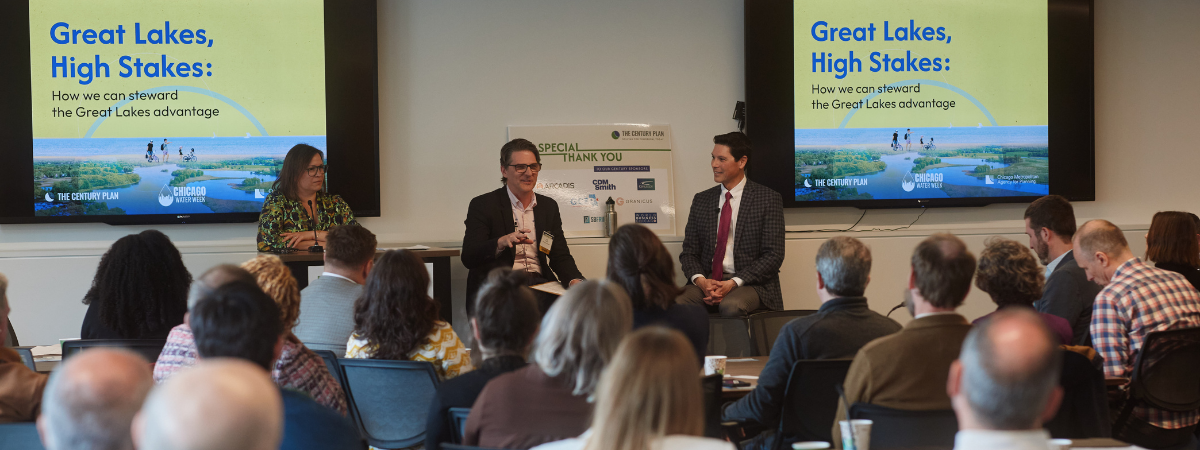
More than an environmental asset, water is the economic infrastructure that will shape our region’s future. Which is why it’s emerged as an important aspect of The Century Plan — and the focus of the latest Catalyst Series event.
Driving the discussion: Speakers Manuel “Manny” Teodoro, professor at the University of Wisconsin-Madison, and Joel Brammeier, president and CEO of the Alliance for the Great Lakes, led important conversations about the future of our region’s water.
💬 Dive into the discussion
|
|
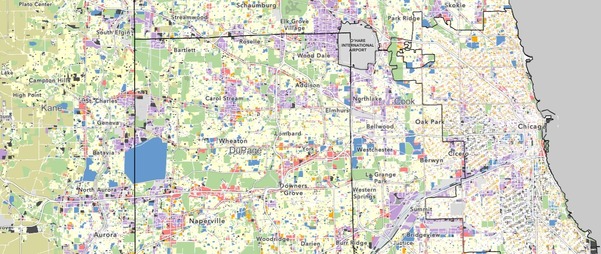
See how land use patterns are evolving across northeastern Illinois
CMAP updated its Land Use Inventory, with data that covers more than 50 types of land uses from commercial and residential to agriculture and open space.
The 2026 inventory features 2023 data, following refinement by CMAP, including a review of 60,000 parcels. It's used to develop long-range population, household, and economic forecasts in support of comprehensive planning projects.
|
|
Getting started with water sustainability planning
Water in northeastern Illinois is often seen as abundant, but increasing demand and drought risk are driving the need for more proactive planning.
In the latest workshop, we explored what water sustainability planning looks like in practice, and how peer examples and data can help communities begin or strengthen their own efforts.
Workshop highlights:
- Tools for smarter water management: Experts showcased platforms and tools that help communities balance growth with available water supplies.
- Groundwater insights: Case studies emphasized the value of local monitoring and groundwater modeling to understand future demand and risks.
💡 Read insights from the workshop
|
|
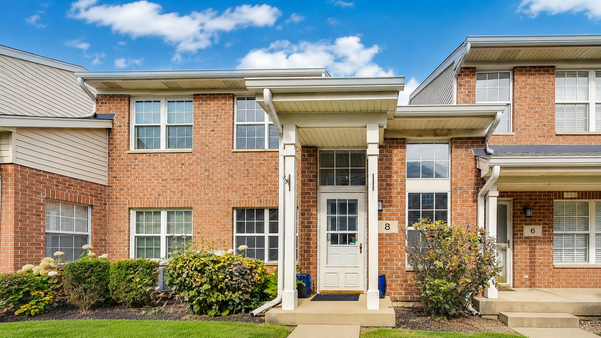 Townhomes in Elmhurst, a community that benefited from the Homes for a Changing Region program in 2025.
|
|
Applications open for Homes for a Changing Region
Why it matters: Housing needs are changing across northeastern Illinois. The Metropolitan Mayors Caucus is accepting applications for Homes for a Changing Region program, a program which helps communities assess local housing needs and identify strategies to support residents, workers, and businesses.
What communities can expect: Participating municipalities receive targeted technical assistance, including housing market analysis, community engagement, expert guidance, and an action plan with recommendations and potential funding opportunities.
A good fit for communities asking:
- Can current residents afford to stay in our community?
- Do we have housing options for seniors, young families, and local workers?
- How can we improve housing preservation and maintenance?
- What housing types may be needed in the future?
Applications are due Friday, June 19.
🔗 Learn more and apply
|
|
Learn about updates to IDOT's Complete Streets Policy on June 25
Participate in IDOT’s Bicycle and Pedestrian Accommodations training on June 25 from 9 a.m. to noon, offered both in person at IDOT's Schaumburg office (preferred) and virtually. The session provides an overview of IDOT’s Complete Streets policy and covers warrants, design considerations, and documentation practices for integrating active transportation facilities into state-led roadway improvements.
This year’s program also highlights updates to the AASHTO Bike Guide 2024, MUTCD 2023, and ADA/PROWAG 2023 guidelines. Attendees are eligible to earn three professional development hours.
Don't delay! Space is limited to just under 100 participants.
Who should attend? Local agency staff are encouraged to attend and to share the opportunity with other colleagues.
📅 Register today
|
|
|
|
|