|
The power of bringing regional leaders together to shape solutions
The work toward creating a stronger, more connected, and more resilient region is underway. The Chicago Metropolitan Agency for Planning (CMAP) is creating The Century Plan, northeastern Illinois' path forward.
Our region is facing significant challenges ahead, so we're listening to regional leaders, national planning officials, and voices throughout northeastern Illinois. We've enjoyed a month of workshops, panels, and collaboration.
In this edition of the CMAP Update, we're:
- Getting to work after selecting 26 communities to receive technical assistance
- Highlighting the latest Community Data Snapshots
- Inviting residents, partners, stakeholders, and transportation system users to review and comment on the draft 2026 Regional Transportation Plan, Air Quality Conformity Determination, and FFY 2027–32 Transportation Improvement Program
- Welcoming metropolitan planning organization professionals from across the country
- And much more!
We appreciate you taking the time to read the CMAP Update. We also have dedicated newsletters for topics like The Century Plan, regional economy, transportation, planning, climate, data updates, and more. Sign up now to discover our newsletters.
|
|
Driving change: Catalyst Series event focuses on transportation for the next century
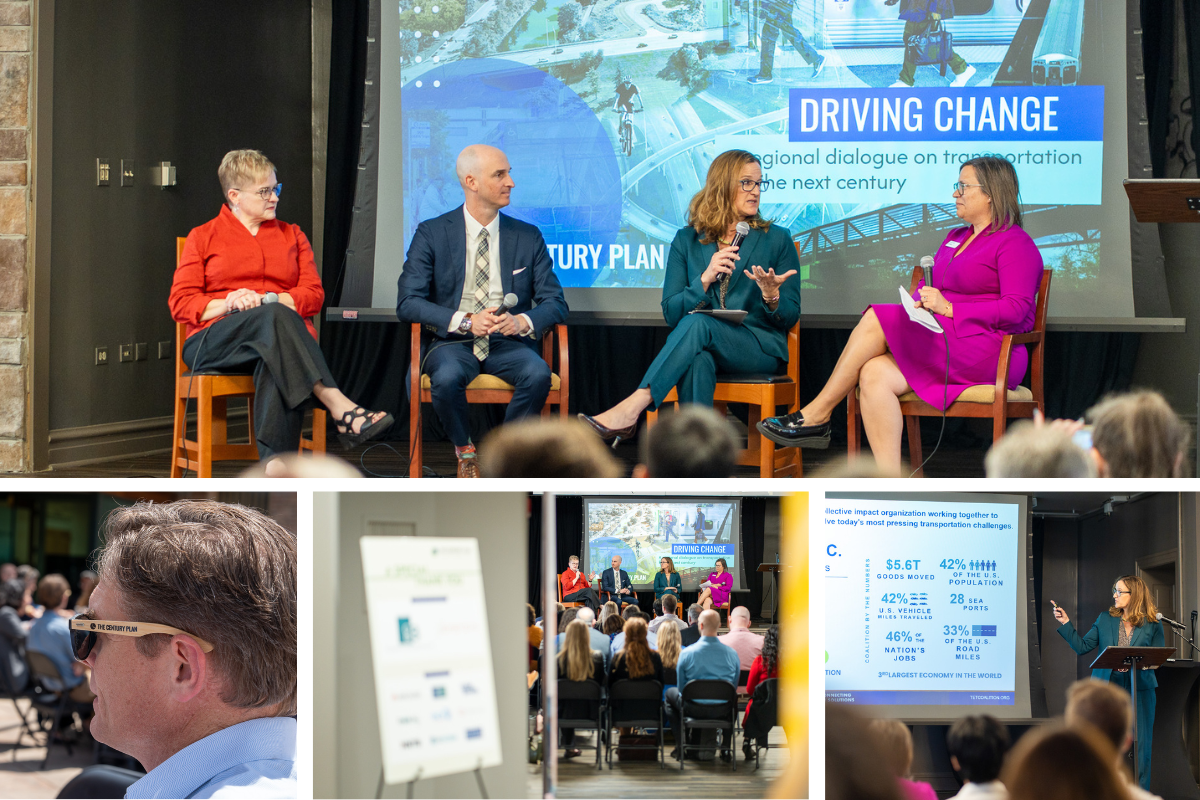
Transportation experts and stakeholders from government, business, and civic sectors joined us in Joliet for our fifth event in the Catalyst Series — Driving Change: A Regional Dialogue on Transportation for the Next Century.
How it'll help:
Insights will directly inform The Century Plan, our next long-term regional vision for northeastern Illinois. Thank you to our speakers for bringing their national expertise and on-the-ground experience to the conversation — and to all the participants for contributing thoughtful questions and discussions.
The highlights:
➤ Dr. Patricia “Trish” Hendren, Executive Director of The Eastern Transportation Coalition, highlighted the need to modernize transportation revenue as the connection between how we use and pay for our system continues to evolve. She emphasized the importance of coalition building and regional collaboration in shaping sustainable funding solutions.
➤ Adie Tomer, Senior Fellow at the Brookings Metropolitan Policy Program, spoke to the links between infrastructure and economic competitiveness. He noted that successful regions align housing, transportation, and economic strategy — and that we’re entering a new generation of transportation shaped by emerging technologies, rising costs, and climate pressures. His message was clear: we must think boldly about building the next century of transportation.
➤ Heather Worthington, Principal at Urban3, discussed the fiscal impacts of how and where we grow. She underscored the value of data-driven decision-making, regional alignment, and land use strategies that leverage existing infrastructure to create more economically resilient communities.
It was a high-energy day of learning and creative problem solving — from lightning talks to an engaging panel moderated by CMAP Executive Director Erin Aleman, to small group conversations that sparked new ideas.
We look forward to continuing this dialogue as we work toward a stronger, more connected, and more resilient region.
|
|
Developing a vision: hearing from voices throughout our region
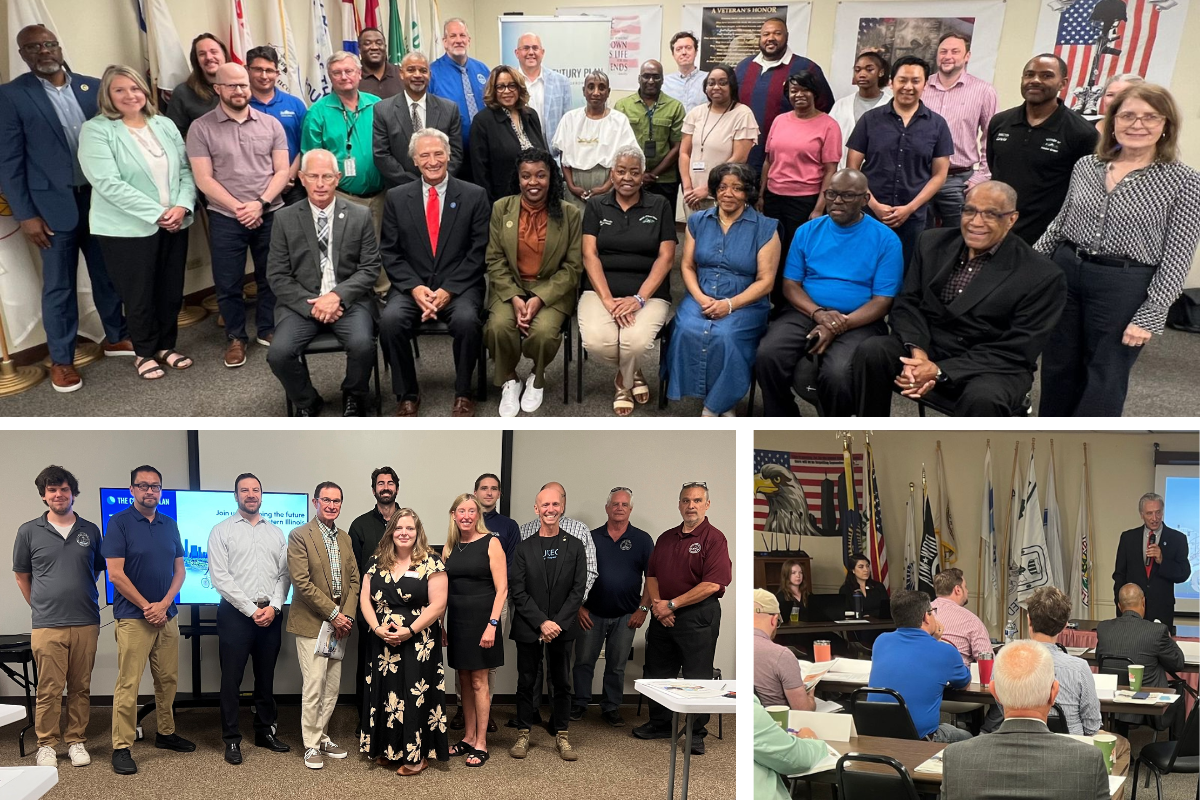
CMAP is working together with leaders throughout our region to develop The Century Plan. In separate workshops, we heard from officials from the South Suburbs and Lake County.
➡️In the South Suburbs, leaders from more than 35 municipalities joined a workshop, alongside the South Suburban Mayors and Managers Association, and talked about regional trends, community plans, and more. Thanks to SSMMA Executive Director Kristi DeLaurentiis and all who joined.
➡️In Lake County, representatives from the Lake County Municipal League shared perspectives about challenges and opportunities for regional coordination — and how they can move the needle on issues that impact residents' quality of life. We learned about their work with property owners to fill vacant retail space. We also heard about creating and maintaining a housing supply to meet residents' needs through all phases of life — a common theme heard in workshops with regional councils of government.
|
|
Essential insights: Community Data Snapshots can show you where your neighbors work, travel, and more
CMAP has for the region's 284 municipalities, 77 Chicago community areas, and 7 counties.
Each snapshot summarizes key details about demographics, employment, housing, transportation habits, and more.
What's new?
- Updated data from CMAP's latest
- Improved employment commute data that better shows where residents work and where employees in a community travel from
Don't miss: built-in comparisons
- The Community Data Snapshots highlight how communities compare to the county and region
- The "Change over time" section compares 16 key indicators with data from at least 10 years ago, making long‑term shifts easy to see at a glance
🔍 Explore your community's data through an , , or
|
|
Safer streets, better bike paths, improved accessibility, and more: technical assistance for 26 communities
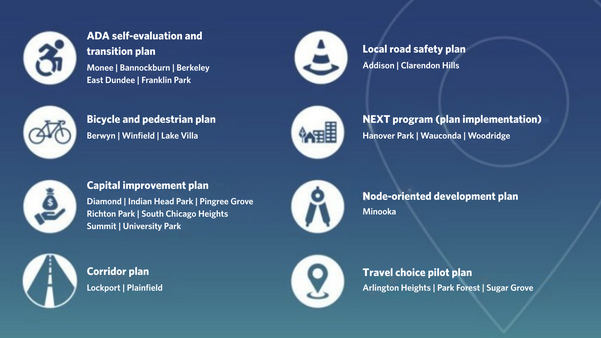
CMAP selected 26 communities to receive technical assistance for projects that connect transportation, land use, safety, accessibility, and infrastructure investment.
Why it matters:
Local transportation decisions shape how people get to work, school, transit, parks, services, and other everyday destinations. These projects will help communities plan safer streets, improve accessibility, strengthen corridors, support more connected places, and move priority investments closer to implementation.
The big picture:
CMAP’s technical assistance program helps communities align local priorities with regional goals, including safer travel, improved access, inclusive growth, prioritized investment, and a transportation system that works better for everyone.
Of note:
CMAP and the Regional Transportation Authority coordinate a joint call for projects, but each agency follows a separate review and award timeline.
What’s next:
CMAP will work with communities to kick off projects and begin engagement, analysis, and recommendations.
🔗 See how 26 communities are connecting transportation and local priorities
|
|
Help plan our path forward: Share your feedback on northeastern Illinois’ transportation future
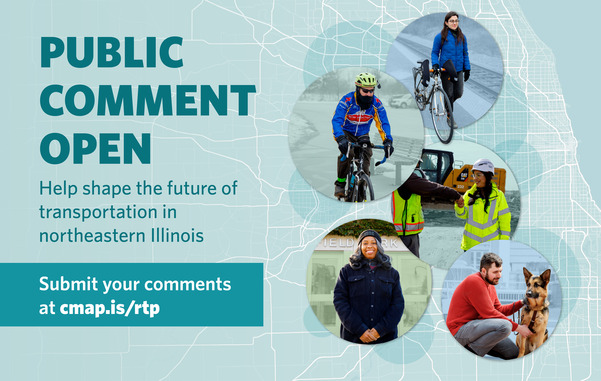
CMAP invites residents, partners, stakeholders, and transportation system users to review and comment on the draft 2026 Regional Transportation Plan (RTP), Air Quality Conformity Determination, and FFY 2027–32 Transportation Improvement Program.
What is the RTP?
The RTP is a long-range blueprint for the future of transportation in northeastern Illinois. It outlines priorities and strategies to improve how people and goods move throughout the region, to strengthen connections, improve safety, reduce pollution, support economic opportunity, and invest strategically in the transportation system.
Public feedback will help shape the final documents before the CMAP Board and MPO Policy Committee consider adoption in October 2026.
🗺️ Review the by July 31.
CMAP will host a public hearing for the draft 2026 RTP on Thursday, August 6, from 3:00 to 4:30 p.m. at the Old Post Office. Everyone is invited to learn more about the draft plan and provide comments on the region’s long-range transportation priorities.
🔔 Register for the public hearing
|
|
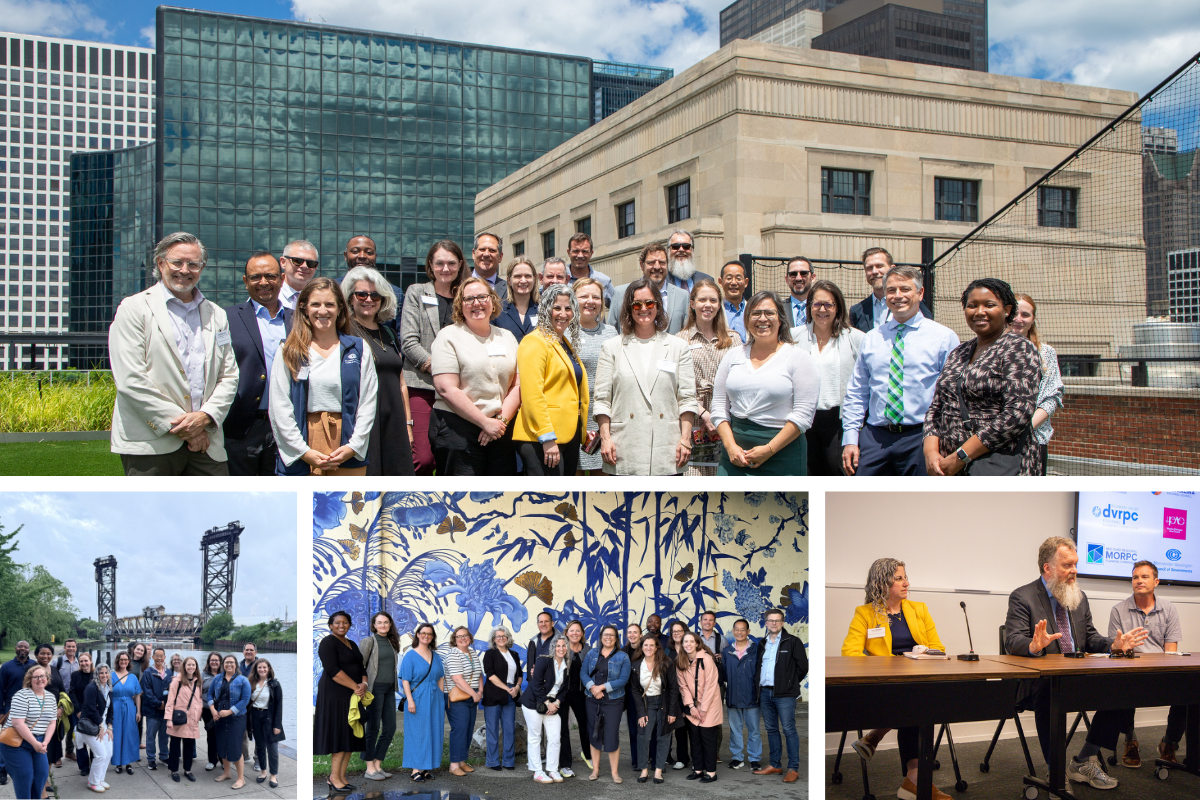
Two days of sharing, comparing, and learning: leaders from across the U.S. bring their expertise to our region
Colleagues from metropolitan planning organizations from across the country joined us in Chicago for two days of sharing ideas, comparing approaches, and learning from one another. We talked about transportation, climate, technology, the economy, operations, engagement, funding strategies, and more.
We welcomed peers from:
✔️ Atlanta Regional Commission
✔️ Centralina Regional Council
✔️ Delaware Valley Regional Planning Commission
✔️ Houston-Galveston Area Council
✔️ Metropolitan Area Planning Council
✔️ Mid-Ohio Regional Planning Commission
✔️ Metropolitan Washington Council of Governments
✔️ Southeast Michigan Council of Governments
Their participation sparked thoughtful conversations about our work, the challenges we face, and the opportunities ahead. The roundtable sessions created space for dialogue, while the panel discussion offered a deeper look into each leader’s agency, priorities, and inspiration.
|
|
Improving public health across Greater Chicago through climate action
Climate action is not only about reducing greenhouse gas emissions — it’s also a powerful tool to improve public health.
Greater Chicago ranks among the most polluted metropolitan areas in the country for fine particulate matter and ozone. These and other air pollutants contribute to chronic disease, increased health care costs, and premature deaths.
- Fine particulate matter comes mainly from commercial cooking, residential wood combustion, metal manufacturing, construction, and road dust.
- Ozone forms when emissions from cars, trucks, power plants, and forest fires react with heat and sunlight.
The good news: Reducing greenhouse gas emissions — by cutting fossil fuel combustion — also reduces air pollutants. Fully implementing the Comprehensive Climate Action Plan for Greater Chicago could help annually avoid nearly:
- 1,250 premature deaths
- 4,000 new asthma cases
- 400 non-fatal heart attacks
- 1,500 pollution-related emergency room visits
💡 Learn more about the public health benefits of climate action
|
|
Opportunity alert: apply now for a position at CMAP
CMAP is hiring! We're seeking:
• A director in our Regional Policy and Implementation (RPI) division, who will guide complex programs and manage a high-performing team that delivers impactful regional work. It's an ideal opportunity for a seasoned professional who can translate regional goals into actionable strategies while advancing a collaborative, innovative, and mission-driven work culture.
👉 Apply for the RPI director position
• A GIS architect, who will work on our data team, under the leadership of CMAP’s first deputy of data. We're looking for someone who loves geospatial technology and wants their work to help shape the future of northeastern Illinois.
👉 Apply for the GIS architect position
|
|
EV ready: Metropolitan Mayors Caucus program helps communities prepare for growth of electric vehicles
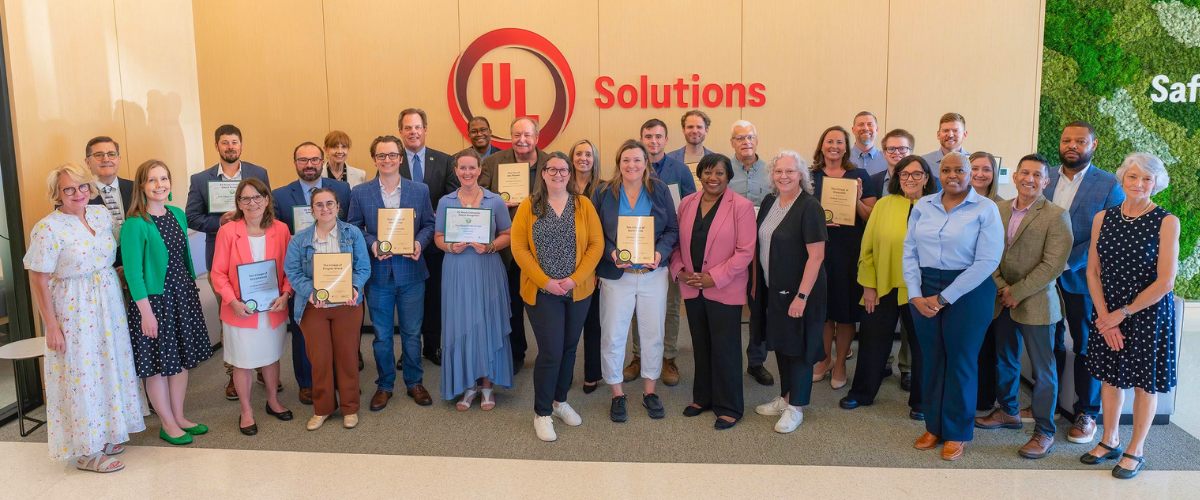
The Metropolitan Mayors Caucus, in partnership with ComEd, recognized nine communities that graduated from the 2026 EV Readiness Program.
What does the program do?
It supports municipalities as they prepare for the continued growth of electric vehicles (EVs) through improved local policies, permitting and first-responder readiness. The program helps communities remove barriers to charging, improve safety, and streamline their processes.
The graduating cohort includes:
- Burr Ridge
- Des Plaines
- Downers Grove
- Grayslake
- Northbrook
- Pingree Grove
- Streamwood
- Vernon Hills
- Woodridge
The ceremony took place at UL Solutions in Northbrook, bringing together municipal leaders, sustainability staff, and officials from across northeastern Illinois.
💡 Learn more about the 2026 EV Readiness Program
|
|
Housing readiness in action: Kane County approves plan that addresses the demand for housing
Kane County has taken a major step toward addressing the demand for housing: its Board voted to adopt the Kane County Housing Readiness Action Plan.
What does it mean to be housing ready?
- Clear and navigable development procedures
- Access to funding and financing to make deals work
- Collaboration between public, private, and nonprofit sector stakeholders
- Community engagement and education on housing issues
- Zoning regulations and design standards allowing for a variety of housing types, especially near economic opportunities and transportation infrastructure
How did it come together in Kane County?
CMAP and Kane County collaborated on this regional housing policy. This included a two-part panel series with ULI Chicago, to learn from developers who work across Kane County and northeastern Illinois to expand housing supply and provide options that meet local needs.
Housing readiness looks different for each community.
For communities looking to implement the plan, there's a housing readiness checklist that:
- Serves as a guide to place communities in a more advantageous position to remove barriers and add to the housing supply at local and regional levels.
- Regulatory barriers can include building codes, inspections, entitlement processes, and zoning. Working on these barriers can clear the way for housing that meets the needs of residents through all stages of life and household budgets.
- Can be adapted by each individual community, with its own optimal set of actions to attain the level of housing readiness that makes the most sense for their residents and neighborhoods.
👉 Read the entire Kane County Housing Readiness Action Plan.
|
|
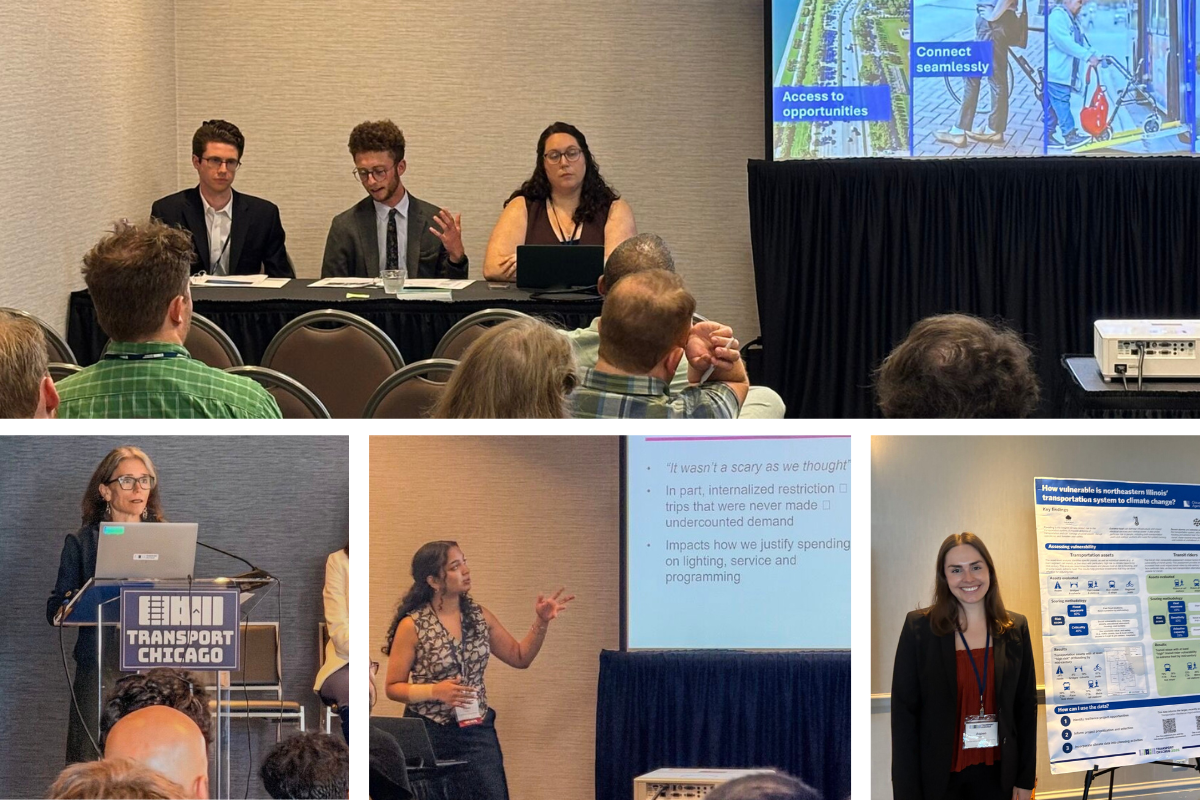
Helping shape the future of mobility in our region: CMAP team members among presenters at Transport Chicago
CMAP joined transportation leaders from northeastern Illinois at Transport Chicago 2026 to share insights on the plans, policies, and partnerships shaping the future of mobility.
CMAP team members participated in sessions focused on several of our region’s most pressing transportation issues:
➤ Vickie Barrett, program lead for Safe Systems, highlighted the Safe Travel for All project. This regional safety action plan was developed with the Illinois Department of Transportation and six counties in northeastern Illinois to help reduce serious injuries and deaths on the region’s roads.
➤ Planner Prithvi Hegde discussed “Women Walk at Midnight,” a global initiative in which women gather to walk together to reclaim streets and advance conversations about safe mobility.
➤ Policy analysts Elizabeth Ginsberg, Noah Harris, and Nikolas Merten shared emerging strategies for a more reliable transportation system. They included CMAP’s work on congestion management and road usage charges as the region explores more sustainable ways to improve mobility and fund transportation needs.
➤ Kasia Hart, intergovernmental affairs principal, joined partners from the Illinois Department of Transportation, Chicago Transit Authority, and CDM Smith for a discussion on the Connect Program, a cross-agency effort focused on the I-290 Blue Line corridor. The program coordinates investments and planning to improve safety, accessibility, economic development, and infrastructure along one of our region’s most important corridors.
➤ Policy Analyst Jesse Altman moderated a panel on vehicle electrification and the electric grid. The panel explored how transportation agencies, utilities, local governments, and planners can better coordinate as transit agencies, fleets, freight operators, and communities transition to electric vehicles.
Together, these sessions reflect CMAP’s role in convening partners, advancing data-informed planning, and helping the region prepare for a safer, more reliable, and more resilient transportation future.
|
|
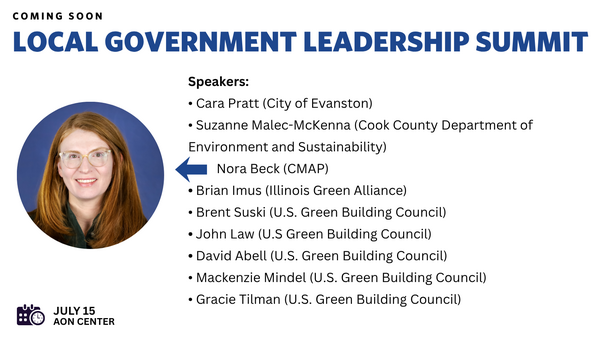
Regional challenges and opportunities: CMAP's Nora Beck to speak at leadership summit
Principal Policy Analyst Nora Beck will be among the speakers at an event focused on green building successes, challenges, and opportunities.
What's the event?
The U.S. Green Building Council will host the Local Government Leadership Summit on July 15 at the Aon Center in Chicago. Nora's panel on regional challenges and opportunities will run from 1:20-1:45 p.m.
Who might be interested?
Local government team members; elected officials; county, state and federal staff; education and university partners; consultants and others who engage with local governments. Also, city and county planners, sustainability and resilience teams, building and facility managers, city/county managers, local board and commission members.
💡 Learn more about the summit
|
|
Join the next cohort of the Illinois Certified Public Manager Program
The Government Finance Research Center at the University of Illinois Chicago is accepting applications for its next cohort for the Illinois Certified Public Manager Program, which begins in August. The 12-month program includes in-person and online instruction, guided activities, individual and group projects, and ongoing peer-to-peer learning.
👉 Apply by July 31
|
|
|
|
|