|
Future-focused for a stronger region
The Chicago Metropolitan Agency for Planning (CMAP) is bringing together leaders who can guide us down a path to a stronger region in the years to come as Northeastern Illinois faces a future filled with challenges.
In this edition of the CMAP Update, we're:
- Celebrating CMAP team members with our Public Service Awards
- Observing National Bike Month and the importance of investing in reliable transit
- Sharing examples of how local governments and engineers can support more resilient infrastructure
- Preparing for the Transport Chicago conference
- And much more!
We appreciate you taking the time to read the CMAP Update. We also have dedicated newsletters for The Century Plan, regional economy, transportation, planning, climate, data updates, and more. Sign up now to discover more of our newsletters.
|
|
Century Plan spotlight: managing our water advantage
With expert voices leading the conversation, and children's artwork brightening the day, CMAP hosted an event that was part of Chicago Water Week, an annual observation presented by Current, a nonprofit innovation hub.
The presentation: Great Lakes, High Stakes: Managing Our Water Advantage
A timely, future-focused conversation about how we can work together to protect and strengthen our region's water systems. It was part of CMAP’s Catalyst Series, which brings leaders together to shape The Century Plan, a long-term vision for a better, stronger future for northeastern Illinois.
Key takeaways:
-
Our water advantage is not self-sustaining. Lake Michigan gives our region abundant, clean drinking water that has propelled our growth and shaped our identity. Access to the lake is a major strength, but it operates within a fixed legal allocation and growing demand pressures. Long-term reliability will depend on how well we plan, coordinate, and invest — not just on what we have.
-
Fragmentation, not scarcity, is one of our biggest challenges. Our region’s water system is highly fragmented, even by national standards. While smaller systems often face real capacity constraints, right-sizing does not necessarily require eliminating local control. There are meaningful opportunities to build shared capacity through coordination, partnerships, and new governance approaches.
-
Our water systems are connected by nature but divided by governance. While water systems are interconnected across the region, they're often managed one community at a time. Better aligning decision-making with how the resource actually functions will be critical to long-term resilience.
Driving the discussion: Thanks to speakers Manuel “Manny” Teodoro, Professor at the University of Wisconsin-Madison, and Joel Brammeier, President and CEO of the Great Lakes Water Alliance, for leading important conversations about the future of our region’s water.
Student perspective: Special shout out to the student art ambassadors from Budlong Elementary School in Chicago for sharing what they love about water through art!
👉 Learn more about The Century Plan
|
|
The future of our electric grid: a powerful conversation about a critical issue
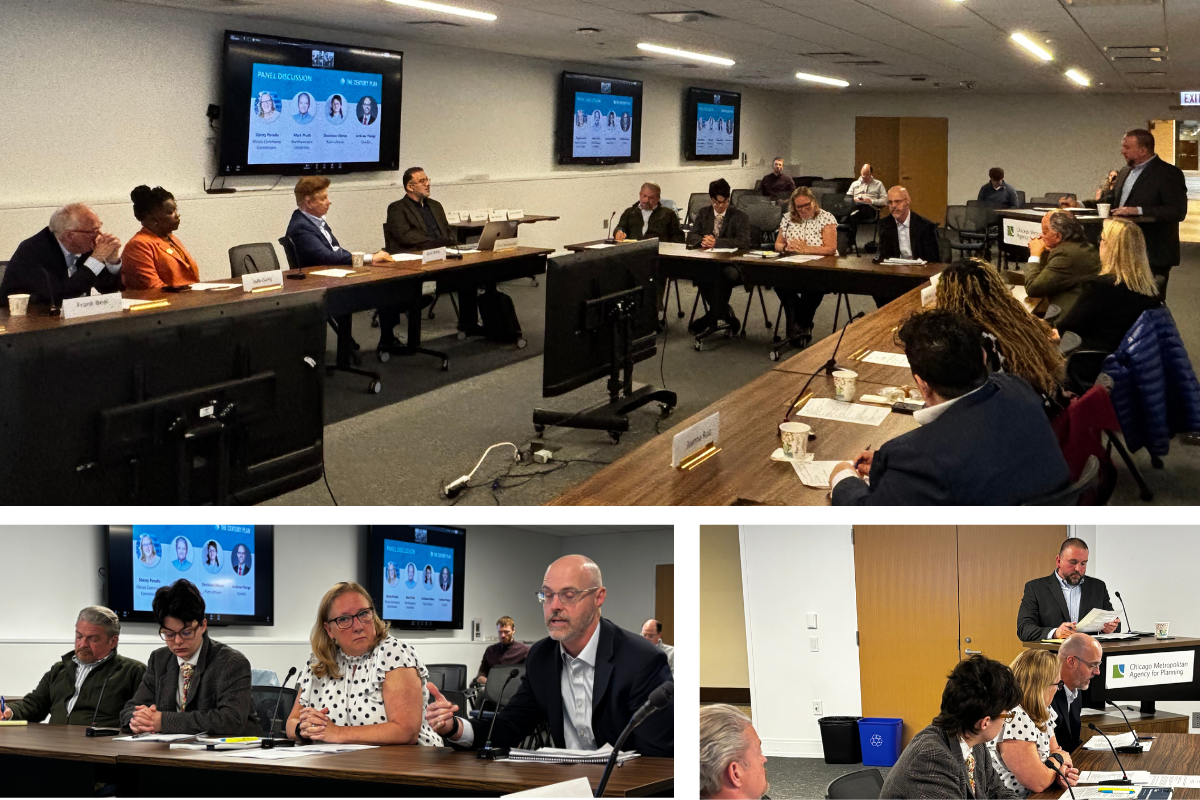
We rely on electricity to power our lives and the economy, as well as for climate resilience. As demand on the electric grid grows, there is an emergent need to plan for its future. We're grateful for local experts who joined our CMAP Board meeting to talk about this critical issue.
Who joined us:
- Desislava Dikova, Policy and Grant Manager, Pure Lithium
- Stacey Paradis, Commissioner, Illinois Commerce Commission
- Andrew C. Plenge, Vice President of Strategy and Energy Policy, ComEd
- Mark Pruitt, Principal at the Power Bureau and Adjunct Professor at Northwestern University’s Master of Science in Energy and Sustainability Program
What they had to say: Panelists shared perspectives on current modernization efforts, long-range grid planning, and how regional collaboration can accelerate progress toward a more resilient and prosperous future.
Why it matters: This input will help inform The Century Plan, our region's long-term vision for a stronger future. A clean, reliable grid is essential to so many areas that contribute to regional resilience and success: housing, transit, economic competitiveness, and climate resilience.
👉 Watch the panel discussion
|
|
"You belong here": SelectCHI in the spotlight
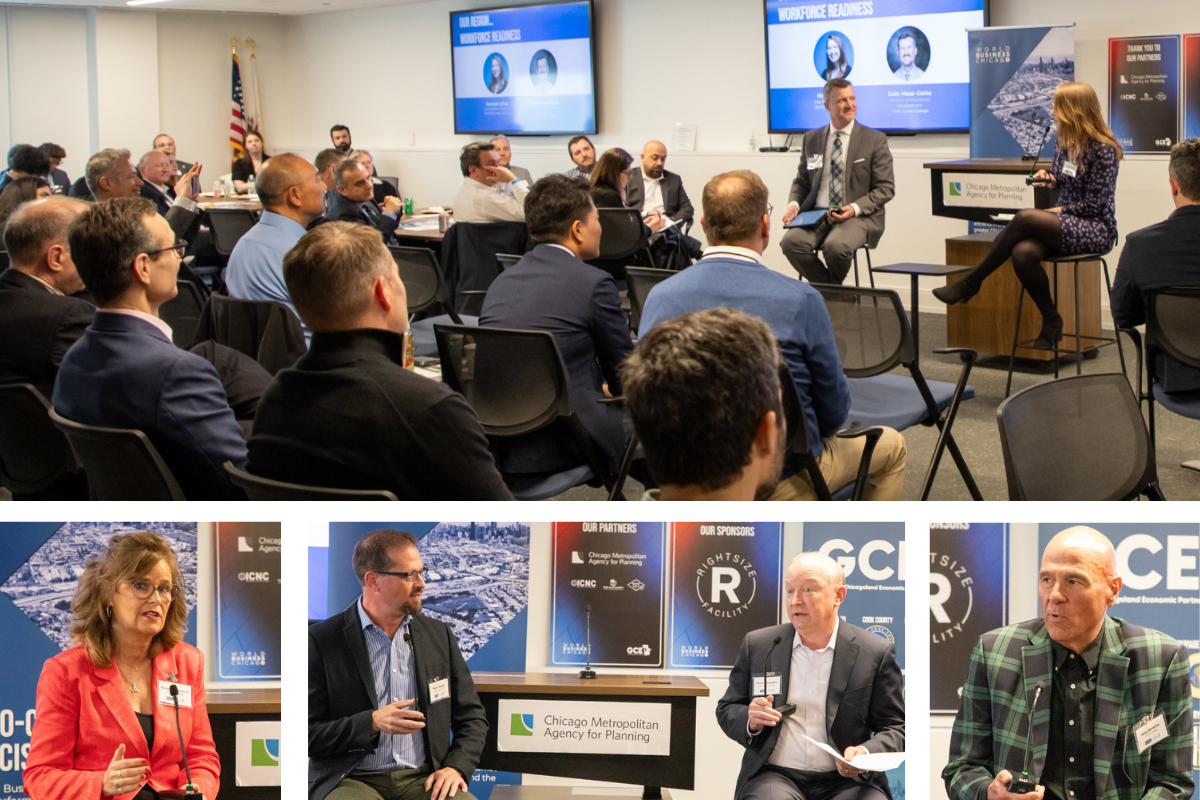
CMAP welcomed an international delegation of more than 50 business leaders at our office as part of the SelectCHI tour. The Chicagoland Regional Networking Luncheon put a spotlight on our region’s workforce, the diversity of its economy, and the many benefits of doing business here.
What it is: Organized by World Business Chicago, SelectCHI brings together company representatives from around the world. With the theme of “you belong here,” it’s designed for international companies in clean technology, energy, and food and beverage looking to invest or establish an office in northeastern Illinois.
Who spoke:
- Mason Awtry, CEO, Wurkwel Ventures
- Greg Bedalov, President and CEO, Choose DuPage
- Kevin Considine, President and CEO, Lake County Partners
- Alex Iseri, Director of Economic Development, World Business Chicago
- Hannah Loftus, Vice President for Research, World Business Chicago
- Dain Meza-Gotto, Director of Workforce Development, Joliet Junior College
- Meredith O'Connor, Leader for Economic Incentives and National Site Selection Division, JLL
- Kyle Schulz, Director of Strategic Advancement, CMAP
|
|
The strength of our supply chain: how our region can build on a solid foundation
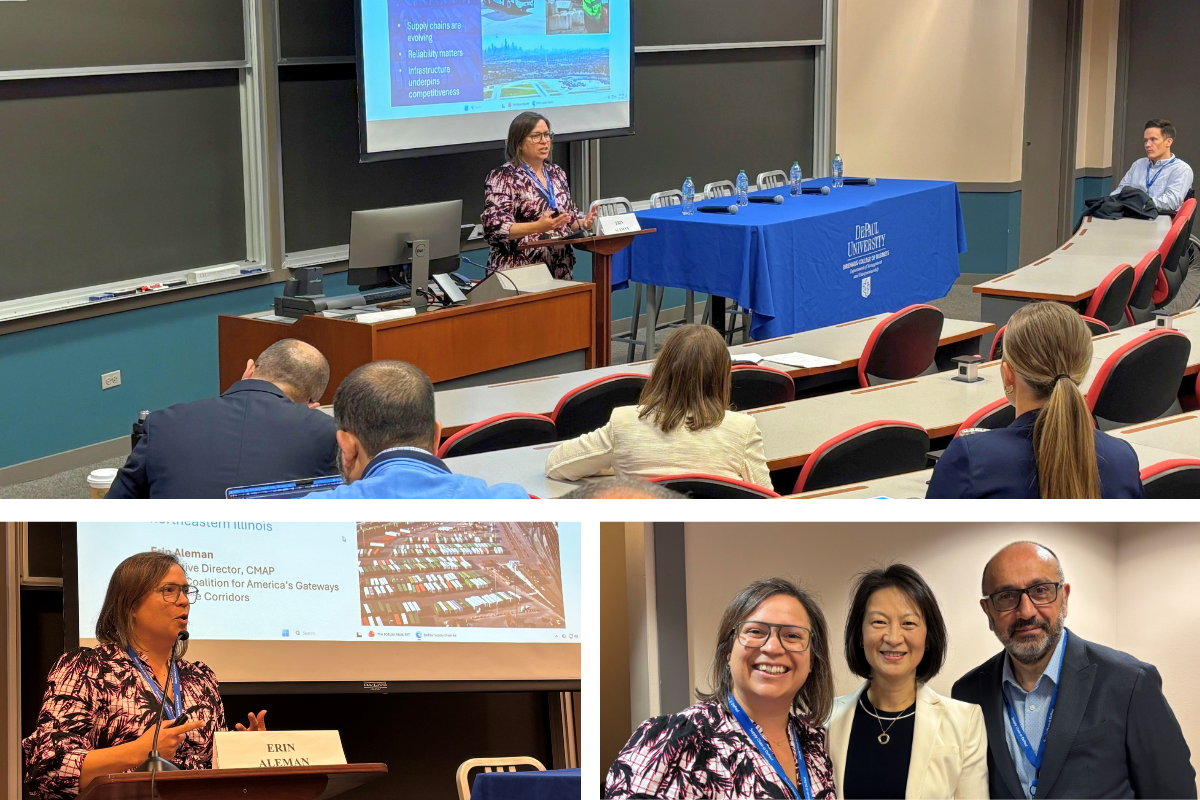
CMAP Executive Director Erin Aleman delivered the keynote at this year's Chicagoland Supply Chain Forum at DePaul University.
What it is: The forum highlighted how northeastern Illinois can build on its strong freight and logistics foundation to remain competitive in the decades ahead.
The message: Erin discussed the region’s unmatched infrastructure assets, the future being shaped through The Century Plan and the 2026 Regional Transportation Plan, and the major investments already turning plans into progress across our freight, rail, highway, and logistics networks.
|
|
Comprehensive Climate Action Plan: an ambitious path to reduce emissions
The recently released Comprehensive Climate Action Plan for Greater Chicago is the first regional framework to address all major sources of greenhouse gas emissions across a 13-county area spanning Illinois, Indiana, and Wisconsin.
What it is: A plan grounded in rigorous data and shaped by community and partner voices. It charts a clear and ambitious path to reduce emissions, improve public health, and strengthen the economy.
Key takeaways: It makes it clear that electric grid decarbonization and modernization is foundational to nearly every major emissions-reduction strategy. As drivers adopt electric vehicles, industry electrifies more processes, and homes switch to heat pumps, the electricity system must deliver significantly more power and do so with far fewer emissions.
👉 In short: a clean grid makes the region's climate strategies possible. Learn why.
|
|
Faces of the Regional Transportation Plan: Bailey's commute combines bicycling and transit
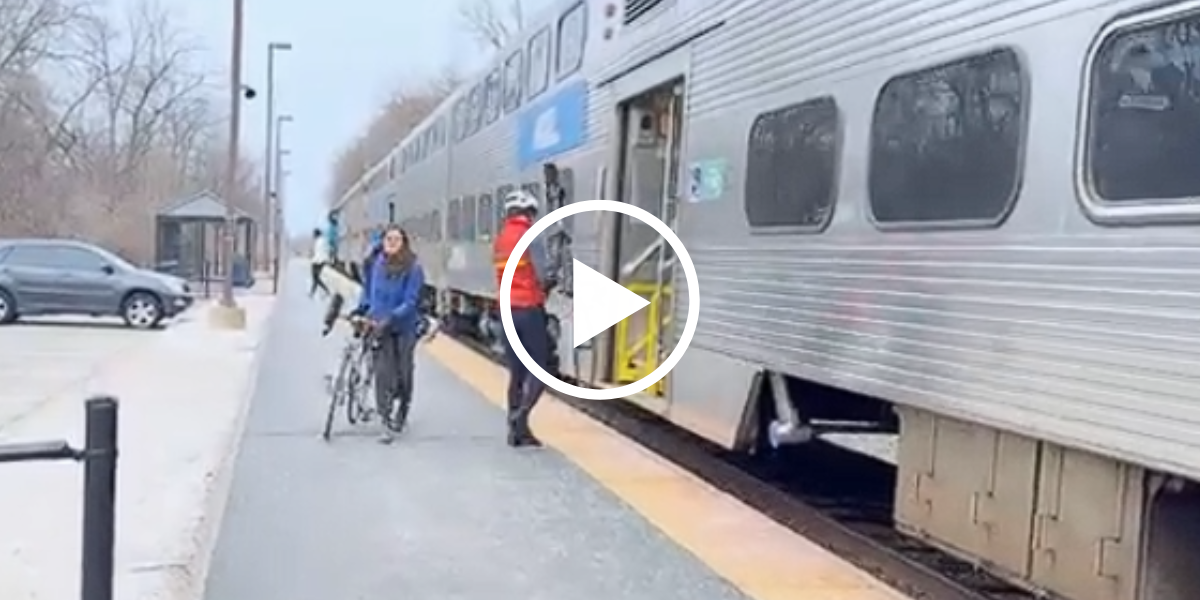
National Bike Month is coming to a close, so it’s a great time to meet Bailey, who's featured in our Faces of the Regional Transportation Plan (RTP) series.
What's the story? Bailey Werner's commute combines bicycling and transit to travel between Chicago and the suburbs, showing us how connected transportation options can expand access to jobs and destinations across northeastern Illinois.
What's the RTP? CMAP is leading the development of the RTP — a long-term blueprint that will guide how our region invests in and improves its transportation system over the coming decades. We are hard at work developing the draft 2026 RTP, which will be released for public comment in early June.
What's the connection? Stories like Bailey’s help illustrate the importance of investing in reliable transit, safer bikeways, and stronger regional connections.
|
|
Resilient infrastructure in action: some shining examples from our region's communities
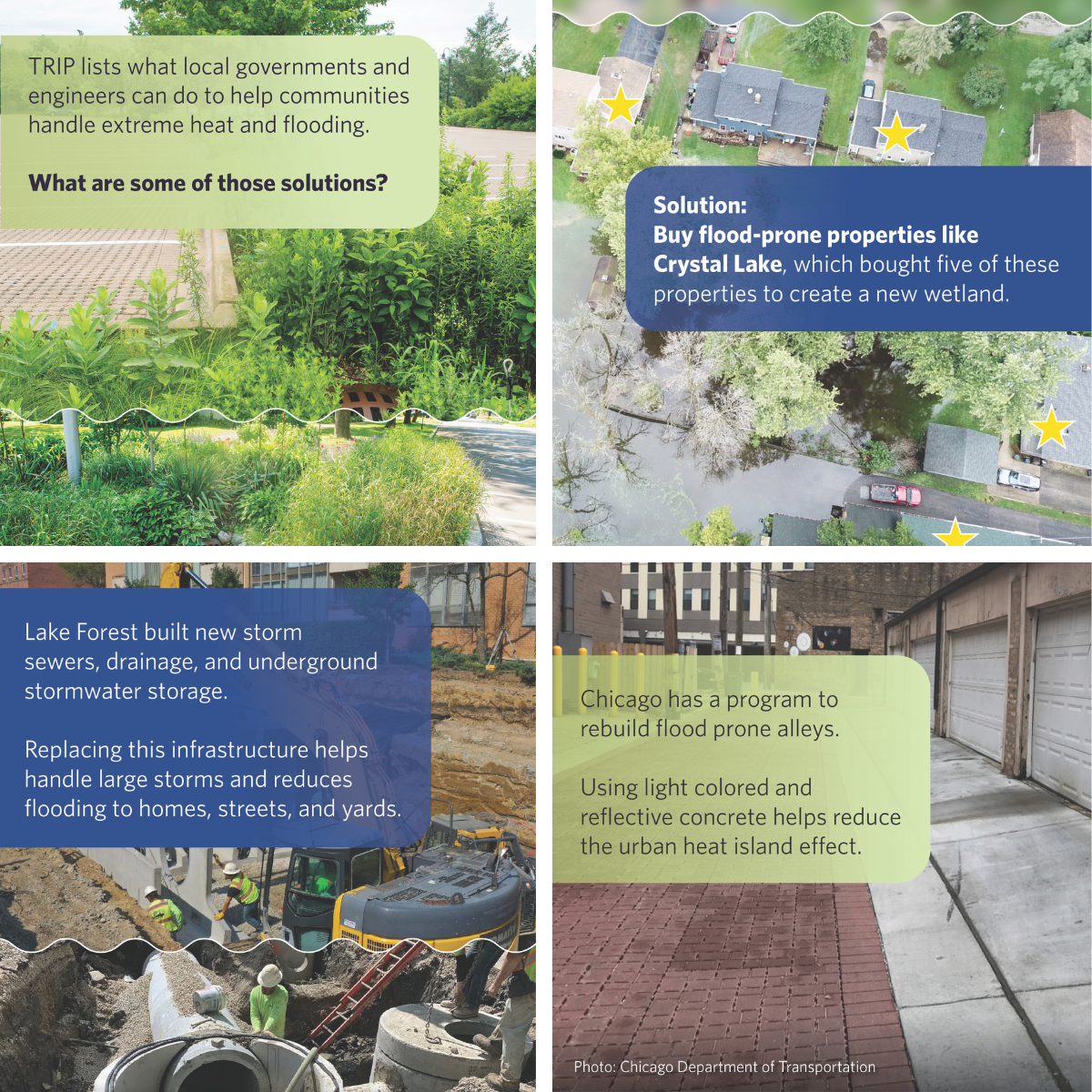
CMAP's new Transportation Resilience Improvement Plan (TRIP) identifies more than 20 ways local governments and engineers can support more resilient infrastructure. Communities like Crystal Lake, Lake Forest, and Chicago are already leading the way.
What they did:
- Crystal Lake bought flood-prone properties to create a new wetland. It serves as regional detention in a neighborhood that experienced repeated flooding.
- Lake Forest built new storm sewers, drainage, and underground stormwater storage. It remediates flooding in basements, garages, lobbies, streets, and yards.
- Chicago has a program to rebuild flood-prone alleys. It incorporates lighter-colored and reflective concrete to help reduce the urban heat island effect.
👉 Read the TRIP plan to learn more about implementation in your community
👉 Look for #WhatsUpWednesday each month on our social media platforms. We’ll spotlight one of our current projects and share a bit about what's going on in our region.
|
|
Opportunity knocks: CMAP is seeking a GIS architect and a senior planner
CMAP is hiring! We're seeking a GIS architect and a senior planner.
The GIS architect will join our data team and work under the leadership of CMAP’s first Deputy of Data. CMAP is looking for a spatial technology leader with:
- A business background; bachelor’s degree in geography, urban planning, computer science, information systems, or a related field
- At least six years of professional experience; master’s degree preferred
- Demonstrated experience presenting technical analysis to non-technical audiences including senior leadership or elected officials
- GISP certification preferred
👉 Learn more and apply for the GIS architect position
We're also looking for a senior planner with advanced knowledge in transportation mobility, local governance, and land use planning, with:
- A specialized focus on bicycle and pedestrian planning to support CMAP's long-term planning needs and address current capacity gaps
- Experience leading and supporting projects and initiatives, including scope development, project tracking, and budgeting
- At least five years of advancing experience, through professional practice, with urban planning projects including content development, research, advanced data collection and analysis, data mapping, field work, external partner engagement, consultant management
- A minimum of two years of advancing project management experience
👉 Learn more and apply for the senior planner position
|
|
Water workshop: explore tools and strategies for building resilient water systems
Climate variability is changing how we plan for water. Join CMAP's upcoming workshop on utility climate and drought preparedness to explore tools and strategies for building resilient water systems.
What it is: Shared Waters, Shared Future is a five-part virtual workshop series designed to bring people together to address the region’s pressing water supply issues. The next session takes place on June 3.
Who's speaking:
- Rachel Duncan, Senior Engineer, Carollo Engineers
- Trent Ford, State Climatologist, Illinois State Water Survey
- Cary McElhinney, Source Water Protection Coordinator, U.S. Environmental Protection Agency, Region 5
- Grant Wollert, Director of Operations, Central Lake County Joint Action Water Agency
- Molly Woloszyn, Senior Associate Scientist and Regional Drought Information Coordinator, CIRES/University of Colorado and NOAA’s National Integrated Drought Information System
👉 Register now to join us on June 3
|
|
Coming soon: CMAP team members presenting at Transport Chicago
Northeastern Illinois' premier transportation conference is coming soon. Transport Chicago is set for Friday, June 12.
What it is: An all-day conference filled with sessions, keynote speakers, and a post-event reception, including CMAP team members among the presenters. There are also pre-conference events, including a ride through North Lawndale, and an opportunity to explore Logan Square.
👉 Register for Transport Chicago.
|
|
Spotlighting the NITA Act at WTS Awards event
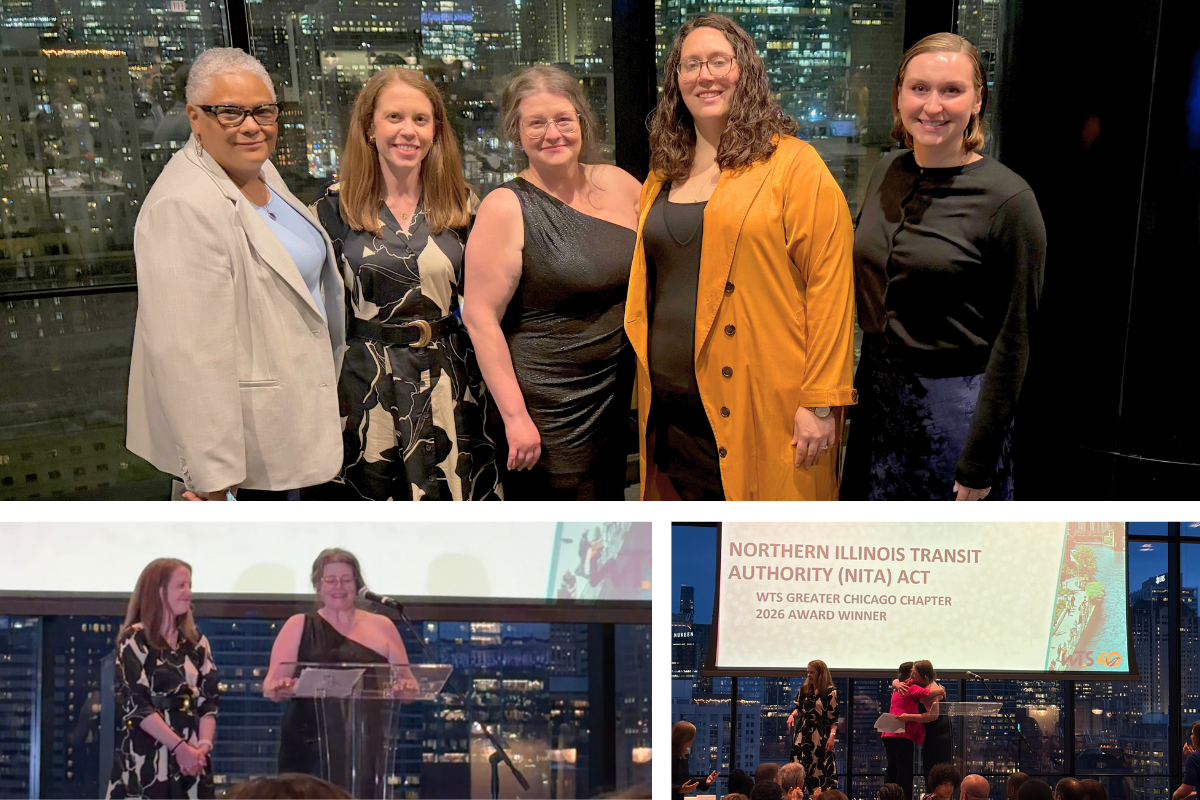
CMAP was excited to present the 2026 Innovative Transportation Solutions Award at the WTS of Greater Chicago Chapter's Recognition Awards event.
The CMAP team helped honor legislators who passed the Northern Illinois Transit Authority (NITA) Act, which will redefine how transit operates in Illinois. NITA will replace the Regional Transportation Authority, provide roughly $1.5 billion in new annual funding to stabilize operations and support service improvements, and advance long-term goals for integrated fares, accessibility, and regional coordination.
CMAP previously received the 2025 Innovative Transportation Solutions Award for the Plan of Action for Regional Transit.
|
|
Public Service celebration: highlighting our team members' good work and good deeds
Each year, CMAP shines a light on our team members who have been recognized by their peers for their good work and good deeds.
Our Public Service Awards honor individuals and teams in four awards categories — Difference Maker, Good Government, Core Values, and Strategic Advancement.
Why it matters: The good work of government can go unnoticed at times. The awards are a reminder of the progress made on important goals and initiatives.
Who got the honors? We're featuring the winners on CMAP's social media platforms — LinkedIn, Facebook, and Instagram.
|
|
Award-winning engagement: Safe Travel for All initiative earns honors from Granicus
CMAP received the Granicus Digital Government Award for Community Engagement for its Safe Travel for All initiative. The initiative is a standout example of inclusive, data-driven regional engagement.
The Safe Travel for All EngagementHQ hub is customized for each county, with branding, accessible language, and bilingual translations. Among the highlights:
- A survey about how people get around, traffic safety concerns, and safety improvement priorities — with more than 1,300 responses.
- Safety hotspot maps for each county — community members dropped over 1,800 pins and explained where they’ve experienced unsafe conditions.
- Accessible virtual meetings and in-person engagement, including open houses, community events, forums, and more.
- Materials to help explain the critical need for improved safety. That includes FAQs, coloring books for youth, photography and video assets, a communications toolkit, and the final action plans.
👉 Learn more about the award.
|
|
|
|
|