|
Opportunities abound! From technical assistance to FLIP to Water Week and workshops
As we head into the warmer weather ahead (hopefully!), this edition of the Chicago Metropolitan Agency for Planning (CMAP) Update highlights available resources, tools, and events:
-
Opportunity knocks: Communities can apply for technical assistance, and high school students can join the Future Leaders in Planning summer program.
-
Tools you can use: The Comprehensive Climate Action Plan for Greater Chicago offers dozens of strategies to reduce emissions and improve health outcomes, TRIP supports more resilient infrastructure, and new resources help tackle road congestion.
-
Take part: Register for our virtual water series and find out about Water Week.
We appreciate you taking the time to read the CMAP Update. If you're interested in more topics, we have dedicated newsletters for regional economy, transportation, planning, climate, and more. Sign up now to discover more of our newsletters.
|
|
Solving for tomorrow, together
We are currently developing our next regional plan — The Century Plan — a long-term vision for a better, stronger future for northeastern Illinois.
It is a plan for the region, by the region, to guide us for the next 20 to 30 years. It will prioritize what we will need to thrive by midcentury, define what we must do together, and policy guidance on how we get there.
We are convening stakeholders from across government, business, civic, academic, and philanthropic spheres to help us develop the plan. Learn more about these opportunities in the latest The Century Plan newsletter and update your settings to receive future updates.
CMAP’s recently published Comprehensive Climate Action Plan will inform The Century Plan.
This first comprehensive climate action plan for the greater Chicago region — spanning 13 counties and 3 states — provides a clear, data-driven roadmap to cut emissions from every major source.
CMAP, in partnership with the Metropolitan Mayors Caucus and the Northwestern Indiana Regional Planning Commission, developed this plan that recommends 70 strategies to reduce emissions, improve public health, and strengthen the economy.
👉Read more about the plan.
|
|
A more resilient region: preparing our transportation system for a changing climate
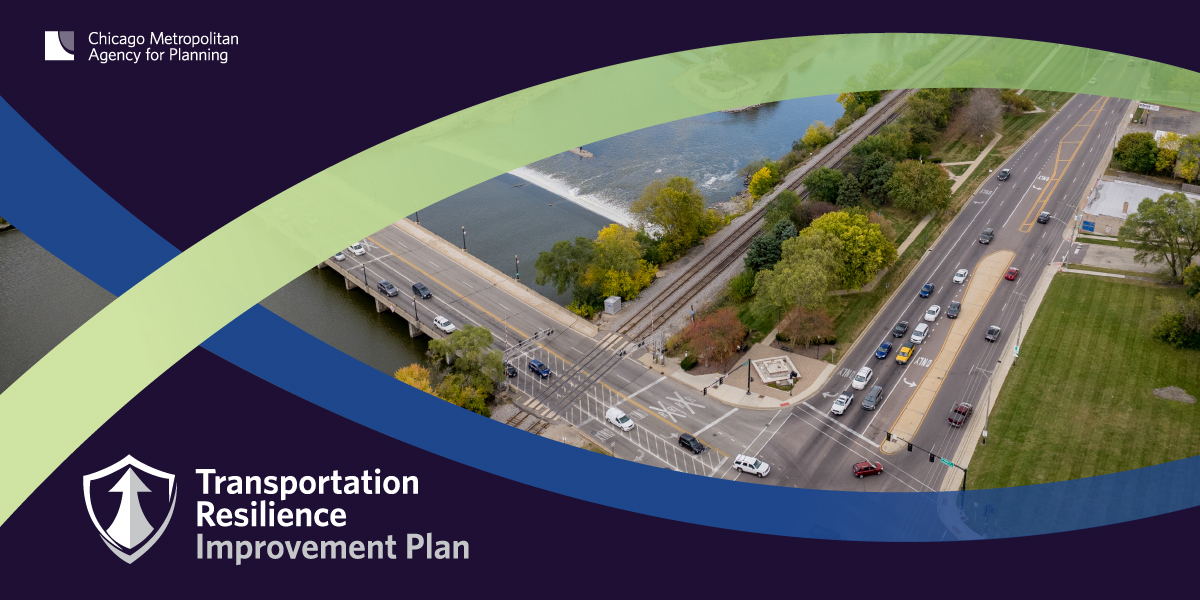
In addition to the Comprehensive Climate Action Plan, CMAP's new Transportation Resilience Improvement Plan (TRIP) calls for actions to make our region more resilient.
TRIP identifies vulnerabilities in the regional transportation system and how we make it more resilient to extreme weather and climate change.
What you can do for your community
-
Pinpoint local vulnerabilities using regionwide data
-
Advance projects with a funding edge through PROTECT eligibility
-
Apply ready-to-use strategies, from green infrastructure to shaded transit stops
-
Embed resilience into everyday decisions, from capital planning to design standards
The findings
Flooding is one of the biggest risks to the transportation system. It impacts all forms of transportation. About a third of the region's highway miles and roughly half of its bus and train stops are at high or very high risk from flooding.
Extreme heat is a major climate concern. It damages infrastructure and poses a particular risk to people, including those using transportation and the outdoor workers who keep the system running. By mid-century, the number of very hot days (an average temperature of at least 95 degrees) is expected to be nine times higher than what we're used to.
🔗 Explore the Transportation Resilience Improvement Plan
|
|
It's not guaranteed: planning for a future in which water is plentiful, safe, reliable, and affordable
In a recent op-ed for Crain's Chicago Business, CMAP Executive Director Erin Aleman discusses the importance and challenges of water governance.
How can our region carefully manage our water resources? How can we make sure they are resilient and shared fairly for generations to come? And how do we plan today to have plentiful, safe, reliable, and affordable water tomorrow?
These are emerging questions as we convene leaders across government, business, and civic sectors to develop The Century Plan, which will define priorities and a shared vision for a better, stronger future.
|
|
Apply for support to help your community
There's still time for communities across northeastern Illinois to apply for technical assistance. CMAP and the Regional Transportation Authority (RTA) are working together to provide proven resources that turn local priorities into real, implementable plans.
What technical assistance supports
🚶♀️ Improved walking, biking, and transit access
🛣️ Advanced safer streets and corridor improvements
🚆 Residents better connected to jobs, services, and opportunity
📊 Plans that position communities for future funding
🏘️ Plans that help clear the way for future housing development.
What’s available? Support includes bicycle and pedestrian plans, corridor and safety plans, transit-oriented development, access to transit improvements, and more.
How it works: CMAP and the RTA offer a joint application, making it easier for communities to apply.
⏰ Applications due Friday, April 17 at noon
➡️ Learn more and apply: cmap.is/callforprojects
|
|
Clearing the congestion: identifying solutions that go beyond road widening
When our region's roads experience congestion, it can lead to a slow morning commute, a delayed delivery, or a missed transit connection. It affects travel time, safety, freight movement, and quality of life across northeastern Illinois.
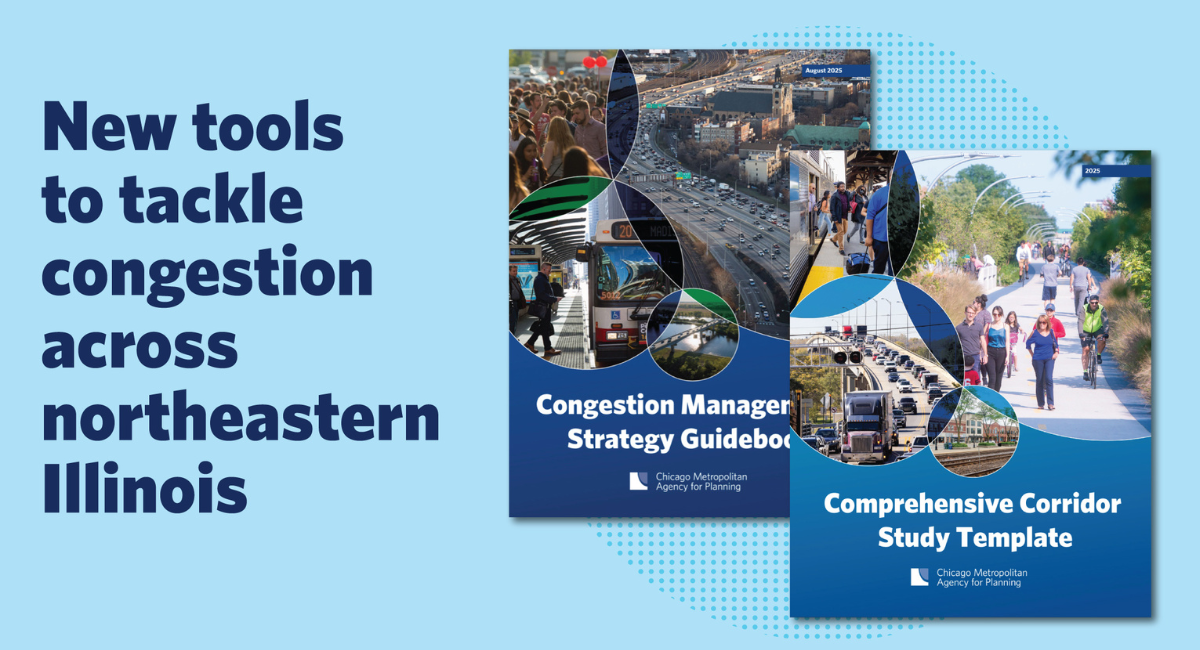
CMAP's congestion management process helps identify solutions that improve mobility without always relying on costly roadway expansion. Two new resources help support local and regional partners with planning improvements along busy corridors:
-
Congestion Management Strategy Guidebook — A practical resource outlining strategies to address congestion, including system optimization, travel demand management, transit improvements, and targeted infrastructure investments.
-
Comprehensive Corridor Study Template — A standardized framework to help agencies evaluate congestion problems, identify potential solutions, and coordinate planning across jurisdictions.
👉The guidebook and template will support corridor studies across the region and help inform future investments. Read more.
|
|
Spend five days in June with CMAP! High school students invited to apply for Future Leaders in Planning
Do you want to learn about the decisions that shape our region? Spend five days in June with CMAP as part of the Future Leaders in Planning (FLIP) summer program.
Who can join?
CMAP welcomes high school students from Cook, DuPage, Kane, Kendall, Lake, McHenry, and Will counties who want to know more about urban planning and share ideas about how to make northeastern Illinois a better place to live, go to school, work, and play.
When?
- Week 1: June 23, 24, 25, 26 (Tuesday – Friday)
- Week 2: June 30 (Tuesday)
- 10:00 a.m. to 4:00 p.m. each day.
Where?
Students will meet at CMAP’s office at the Old Post Office in downtown Chicago. The program is fully in person and it will include field trips. It is completely free to students and includes snacks, meals, public transportation to and from sessions, and materials.
👉 Today’s high school students will be tomorrow’s leaders. The application deadline is 11:59 p.m. on Friday, May 1. Apply to be part of the 2026 FLIP cohort.
|
|
Protecting the water supply: second workshop highlights sustainability planning
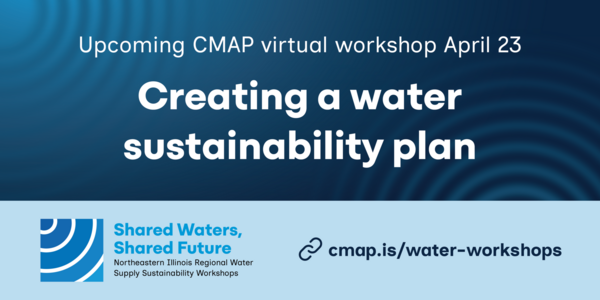
Sustainable water management starts with a plan. Shared Waters, Shared Future is a five-part regional workshop series designed to bring people together to address the region’s water supply issues. It's hosted by CMAP and the Illinois-Indiana Sea Grant with support from the Illinois Department of Natural Resources Office of Water Resources.
The next virtual workshop on April 23 will explore water sustainability planning, with a focus on peer examples.
▶️ Register today: cmap.is/water-workshops
|
|
New regional authority will reshape transit across northeastern Illinois
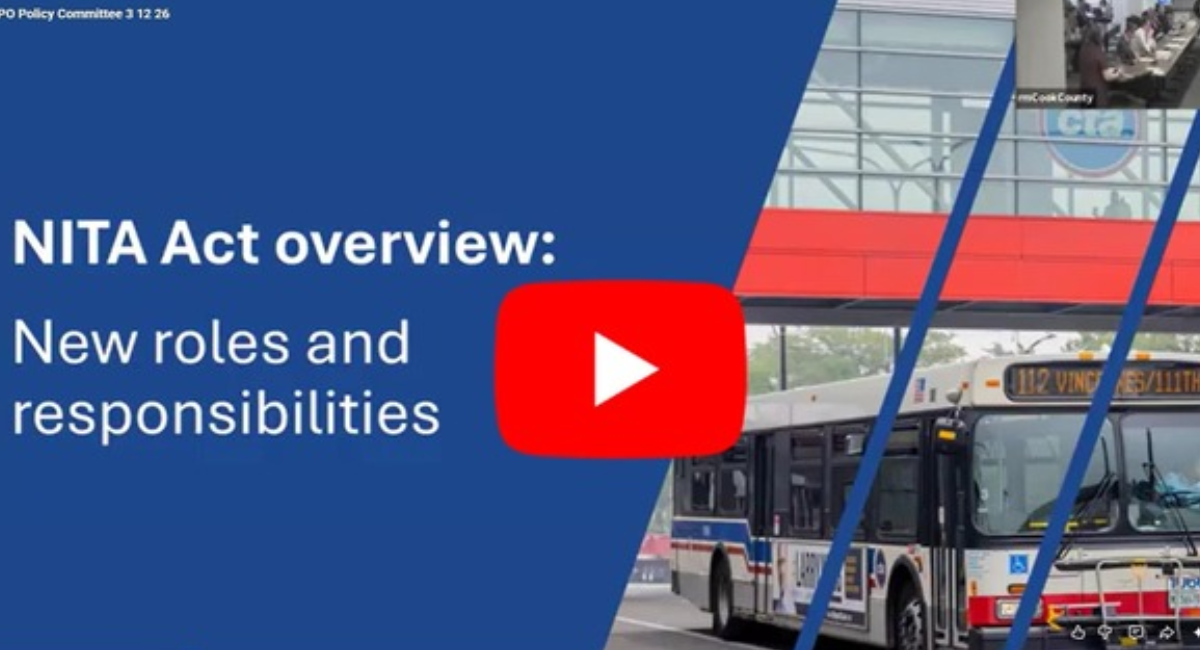
A new era for transit is coming to northeastern Illinois. CMAP Principal Elizabeth Scott recently briefed the MPO Policy Committee on the Northern Illinois Transit Authority (NITA) Act, which will reshape how transit is funded, governed, and delivered across the region.
Why it matters
🏛️ Creates a new regional authority to oversee transit operations, planning, and service standards
💵 Provides nearly $1.5 billion annually in new transit funding
🚆 Aims to improve service frequency, reliability, and the rider experience
🔧 Requires major coordination to stand up the new agency by June 1
What’s next: Significant work is underway to implement the law, including board appointments, new programs, and regional coordination.
▶️ Watch the full presentation to learn what’s ahead for transit in our region
|
|
Eyes on the state budget: the impact on local governments, transit, and clean energy
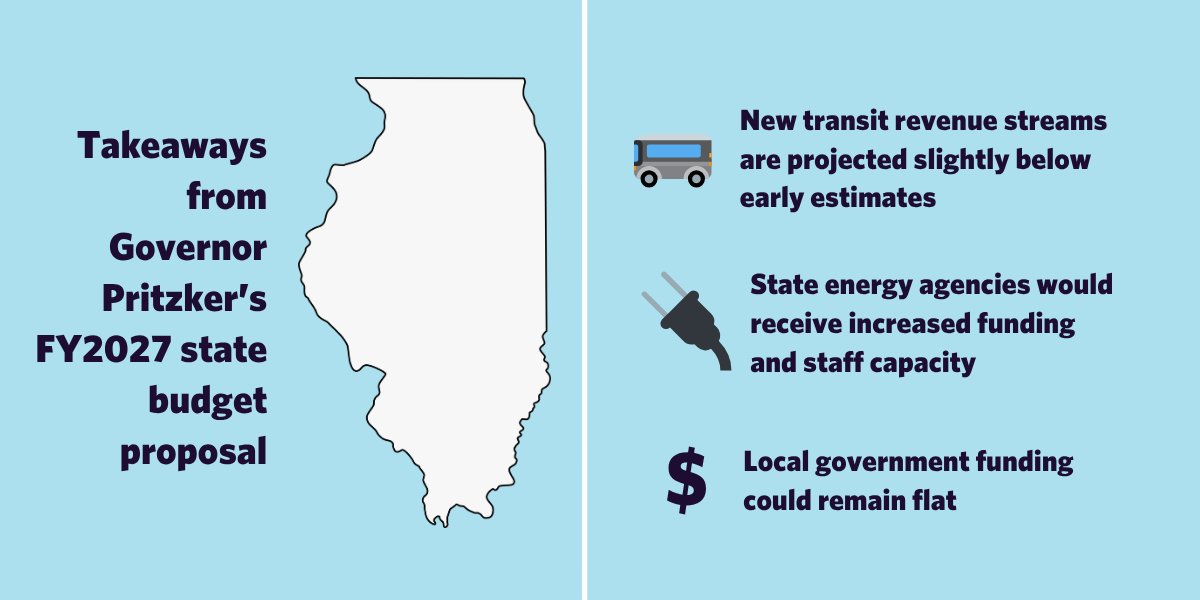
CMAP’s early analysis of the FY2027 Illinois budget shows potentially tighter conditions for local governments, even as transit and energy investments move forward.
What we’re watching
-
Local revenues held flat: State contributions to local governments could remain unchanged, effectively reducing funding in real terms as costs rise. This could increase reliance on other revenue sources like property and sales taxes.
-
New transit funding realized: New revenues for transit are slightly below projections, highlighting the need for long-term, sustainable resources to support future investment needs.
-
Clean energy implementation: Increased funding for state agencies will help carry out new energy laws, with implications for local planning and infrastructure.
What’s next: State lawmakers must pass a budget by the end of the legislative session on May 31. CMAP will release a deeper analysis this spring to help local leaders further understand the impacts on transportation, housing, and fiscal health.
🔗 Read the budget analysis
|
|
A deep dive: Chicago Water Week events will explore our region's challenges
Current’s 6th annual Chicago Water Week returns May 3-9. Partnering organizations will independently host events throughout the week, from indoor and outdoor experiences to virtual and in-person gatherings.
Highlights
- The Metropolitan Water Reclamation District of Greater Chicago will lead an open house with tours at the O'Brien Water Reclamation Plant in Skokie on May 2.
- CMAP will lead a panel discussion May 6 at Brookfield Zoo, exploring how northeastern Illinois can turn Great Lakes water abundance into a durable regional advantage.
- Current's Freshwater Forum on May 7 will feature a panel discussion with William Dichtel (professor of chemistry at Northwestern University), William Tarpeh (assistant professor of chemical engineering at Stanford University), and Juan Salgado (chancellor at City Colleges of Chicago).
Participants will:
- Learn about the role water plays in our environment, communities, and economy
- Hear from leaders, policymakers, innovators, researchers, and advocates on how our region is addressing today’s challenges
- Network with industry, business, regulatory, and community professionals
▶️ Learn more about Chicago Water Week
|
|
Pulse check: Pace seeks public input on plans for Cermak/22nd Street line
If you use transit near the Cermak Road, 22nd Street, and Butterfield Road corridor, Pace Suburban Bus wants your thoughts on service and infrastructure improvements.
As part of Driving Innovation, Pace's strategic vision, the agency is expanding its Pulse network of arterial bus rapid transit service.
Pulse provides:
- Fast, frequent, and reliable services with limited stops
- Transit signal priority that can shorten red lights and extend green lights
- Bus lanes to keep buses moving even if traffic is heavy
The Pulse Cermak/22nd Street Line will connect riders between the Chicago Transit Authority's Pink Line 54th/Cermak Station in Cicero and Yorktown Center in Lombard.
▶️Learn more and share your comments
|
|
Have a connection to Des Plaines? Study aims to shape housing strategies for the next 10 to 20 years
Local housing decisions shape regional outcomes — from affordability and workforce access to transit use and economic growth.
The City of Des Plaines is conducting a study around how housing can connect to jobs, transit, and services.
Have a connection to Des Plaines?
- Live, work, or own a business there
- Have considered moving to the area
- Travel to or rely on the community
If so, your input can help guide local policies, zoning updates, and housing strategies over the next 10 to 20 years.
🔗 Take the survey (5–7 minutes)
|
|
|
|
|