|
|
Safer streets, new travel data, and regional updates
Communities across northeastern Illinois are moving from planning to action to make streets safer. This issue highlights CMAP’s new safety tools and county safety action plans, along with travel data, community voices shaping the Regional Transportation Plan, and funding opportunities that support safer and more connected transportation across the region.
Have a project update or engagement opportunity to share? Please let me know at msobczak@cmap.illinois.gov.
|
|
Turning safety plans into safer streets
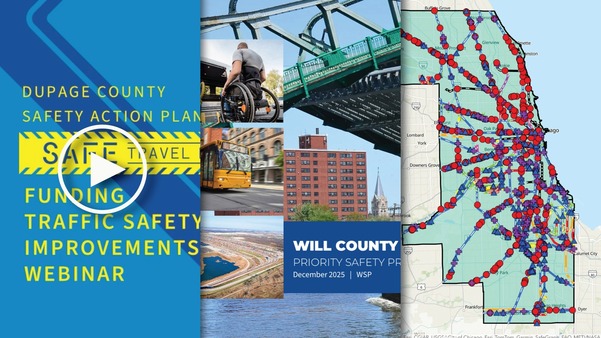
The Chicago Metropolitan Agency for Planning (CMAP) and its partners are moving from planning to action on regional traffic safety. Six county safety action plans — now adopted and in use — are helping local governments target high-risk locations, prioritize projects, and compete for federal funding that reduces deaths and serious injuries, especially for people walking and biking and in communities with the greatest crash burdens.
New tools like web maps, priority corridors, design concepts, and funding guidance are helping counties and municipalities advance data-driven safety investments and coordinate improvements across jurisdictions.
📅 Coming soon: Federal funding opportunity
The U.S. Department of Transportation (USDOT) is expected to release the next SS4A Notice of Funding Opportunity (NOFO) this spring, creating another chance for local governments with adopted safety plans to pursue implementation funding. Keep a look out on the SS4A webpage, and subscribe to the USDOT's email updates to be notified when additional information is available.
|
|
|
CMAP has released the Phase One dataset from the My Daily Travel household survey, offering new insight into how residents move across the region — and helping inform the next Regional Transportation Plan.
The details:
Between September 2024 and June 2025, more than 3,500 households across northeastern Illinois participated in the survey, sharing information about their daily travel.
The dataset sheds light on:
-
Travel patterns across the region
-
Mode choice and transit use
-
Telework trends
-
Barriers that make travel harder for residents
What it supports:
The data will help inform CMAP’s travel demand modeling, policy analysis, and long-range transportation planning, including development of the next Regional Transportation Plan.
What’s next:
Additional survey waves are planned, with future releases building a more complete picture of post-pandemic travel behavior across northeastern Illinois.
🔗View the dataset
|
|
2026 Regional Transportation Plan |
|
From neighborhood streets to global trade: Voices shaping the RTP
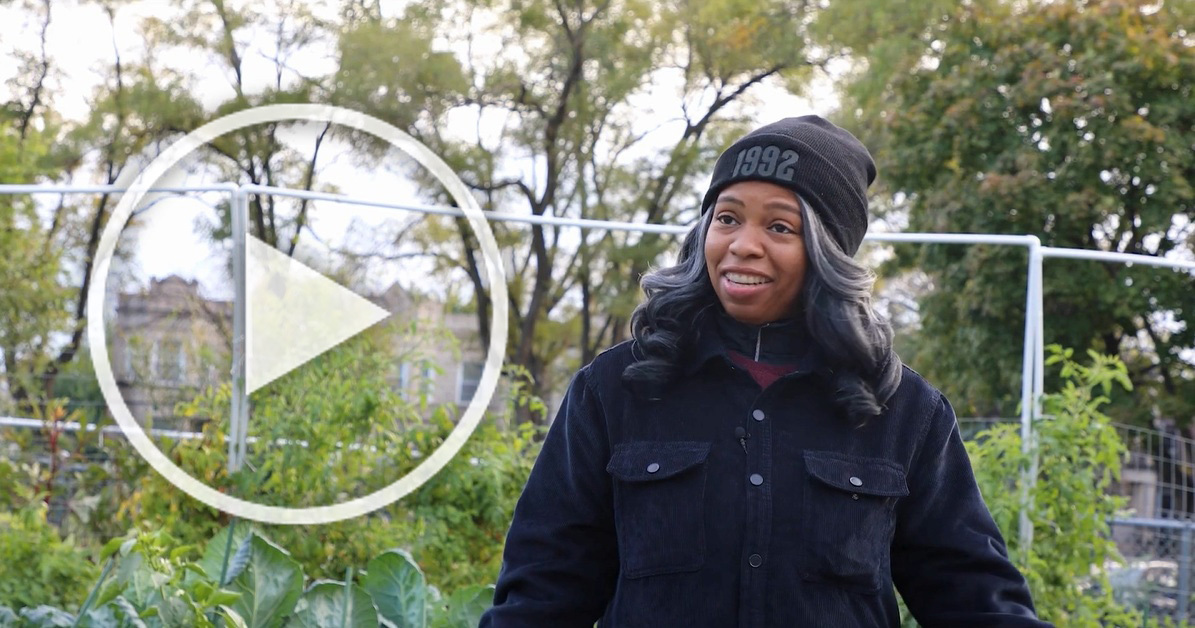
As CMAP develops the next Regional Transportation Plan (RTP), we’re sharing stories from people across northeastern Illinois about how transportation connects them to jobs, services, and community life.
The big picture:
From neighborhood sidewalks and transit stops to international freight gateways, these perspectives highlight how a multimodal transportation system supports daily life, economic opportunity, and regional connectivity.
|
|
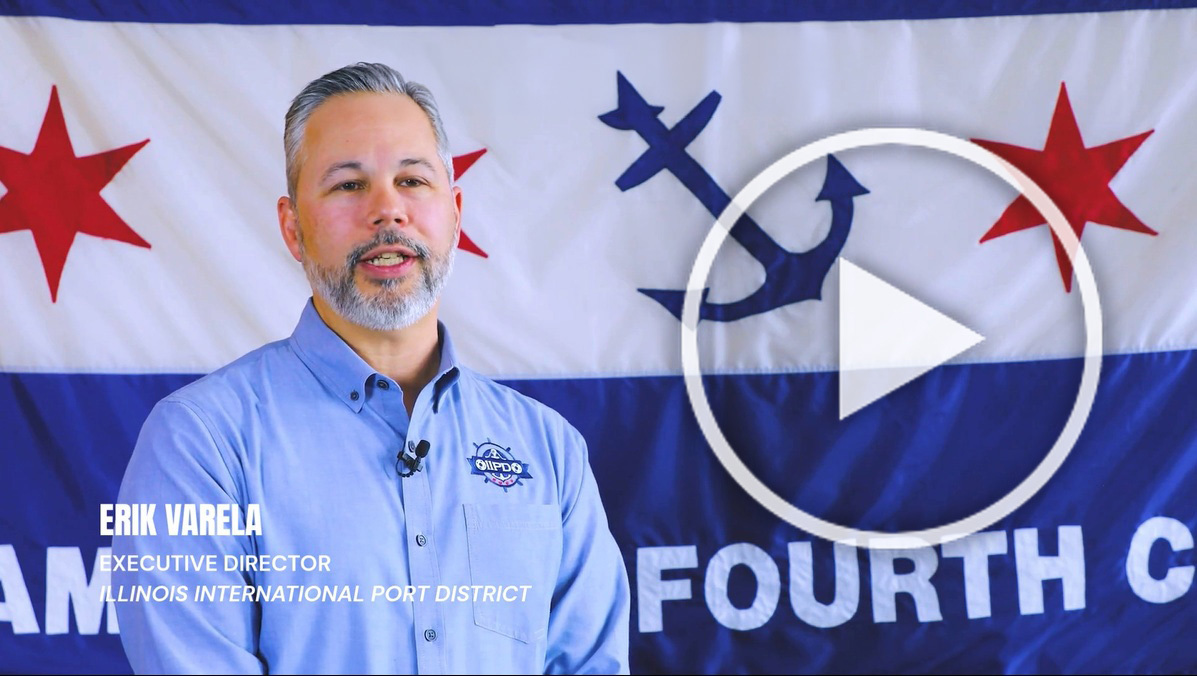
📽️Erik Varela – Illinois International Port District
Erik discusses the Port of Chicago’s critical role in the regional economy, moving more than 10 million tons of cargo each year and connecting northeastern Illinois — and the broader Midwest — to global supply chains through maritime travel. |
|
State of the Region report highlights transportation trends shaping northeastern Illinois
How do people and goods move across the region? What challenges threaten the reliability of our transportation system? How will changing demographics shape future mobility needs?
These are just a few of the questions explored in CMAP’s new State of the Region report, which examines the major systems shaping life in northeastern Illinois. As the region begins developing a shared long-term vision through The Century Plan, understanding today’s transportation trends will help guide future investments and policy choices.
🔗Read the State of the Region report
What are we seeing?
Northeastern Illinois is one of the nation’s most connected transportation hubs, with 30,000 miles of roadway, 275 bus routes, more than 1,400 miles of bikeways, and access to all six Class I railroads. These networks support millions of daily trips and help move nearly $3 trillion in freight goods each year.
What challenges are emerging?
Despite these strengths, the region’s transportation system faces growing pressures, including congestion, traffic safety concerns, and aging infrastructure that threaten reliable travel for both people and goods.
What trends will shape future travel?
Demographic shifts are also influencing mobility needs. The region is aging rapidly, with the share of residents 65 and older increasing from 11 percent to 15 percent since 2010, creating new demand for accessible transportation options and services.
What can we do?
Maintaining the region’s leadership as a transportation hub will require strategic investments, coordinated regional planning, and improvements across all travel modes. Together, we can ensure residents and businesses can continue to move efficiently across the region.
📢Join the conversation! What's your vision for the future of northeastern Illinois?
|
|
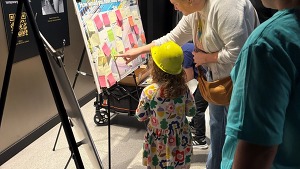
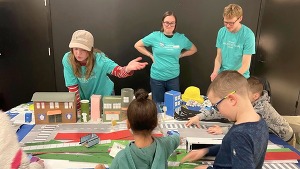
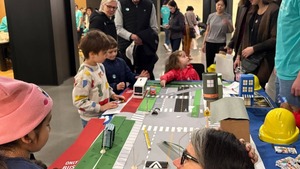
Kids design safer streets at Engineering Fest
Hundreds of families explored engineering and planning through hands-on activities at the Chicago Architecture Center's Engineering Fest at Willis Tower.
At CMAP’s station, Designing Safe Streets for All, kids and families reimagined street designs, experimenting with intersections, sidewalks, bike lanes, and transit space to see how planning decisions shape safety and mobility.
The activity highlighted how thoughtful street design can support safer, more accessible travel for everyone.
|
|
|
Cook County’s Department of Transportation and Highways has announced the tenth round of Invest in Cook, an $8.5 million program supporting local transportation improvements across the county.
Why it matters:
Invest in Cook helps communities advance projects aligned with the Connecting Cook County long-range transportation plan, including planning, engineering, right-of-way acquisition, and construction.
Who can apply:
Local governments, regional partners, and private entities sponsoring transportation improvements in Cook County.
Deadline:
March 20, 2026
🔗Learn more and apply
|
|
IDOT opens highway safety grant opportunity
The Illinois Department of Transportation (IDOT) is accepting applications for the Local Agency Sustained Traffic Enforcement Program (STEP), a federal highway safety grant designed to help reduce serious injuries and fatalities on Illinois roadways.
Why it matters:
The program supports local enforcement efforts that address dangerous driving behaviors and improve safety on Illinois roads.
Who can apply:
Local governments and organizations (state agencies are not eligible).
Key details:
-
Application deadline: April 10, 2026, at 4:00 p.m.
-
Grant period: October 1, 2026 – September 30, 2027
-
Funding source: Federal Highway Safety Program
Applications must be submitted through the State of Illinois AmpliFund grant management system.
🔗Learn more and apply
|
|
From our partners across the region |
|
2025 Bicycle Friendly Community Awards
The League of American Bicyclists recently announced the 2025 Bicycle Friendly Community Awards. Congratulations to Evanston for receiving Silver, and Elmhurst, Batavia, Niles, and Aurora for receiving Bronze awards. Kane County, Grayslake, and Skokie also received honorable mentions.
A Bicycle Friendly Community designation recognizes communities that are working to support bicycling and make it a safe and accessible daily opportunity. The awards are determined by the policies, plans, and systems that improve local standards and allow for increased involvement.
|
|
IDOT shares Blue Ribbon Commission recommendations
IDOT recently briefed CMAP’s Transportation Committee on the Blue Ribbon Commission on Transportation Infrastructure and Funding and Policy, which released a final report outlining 27 recommendations to strengthen Illinois’ transportation system.
The recommendations focus on accelerating project delivery, expanding workforce capacity, maximizing investments, advancing sustainability, and securing long-term transportation funding.
📽️Watch the presentation
|
|
Metra invites students to design rail safety artwork
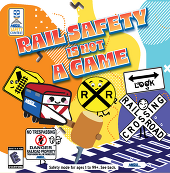
Metra is inviting students to participate in its 19th annual Safety Competition, themed Rail Safety is not a Game.
Students in grades K-12 can submit original artwork for a chance to win up to $500 and have their design featured in Metra’s 2027 safety calendar and on weekend day passes.
Entries are due March 29, 2026.
Learn more and submit artwork. 🚆🎨
|
|
|
|
|