|
Looking forward and exploring our region's future
In this edition of the CMAP Update, we're looking to the future!
- What will it take to live in northeastern Illinois in the decades to come?
- How can our region clear the way to address a housing shortage?
- How can communities reduce water use?
- What are some strategies for long-term water sustainability?
We appreciate you taking the time to read the Chicago Metropolitan Planning Agency's (CMAP) newsletter. If you're interested in more topics, we also have dedicated newsletters for regional economy, transportation, planning, climate, and more. Sign up now to discover more of our newsletters.
|
|
Solving for tomorrow, today: State of the Region report starts conversations about regional systems and trends
What does it take to live in northeastern Illinois? Will we have the water we need in the future? Will the region remain a global economic center?
These are just a few of the trends CMAP’s new State of the Region report examines.
-
The Century Plan: As northeastern Illinois embarks on defining a shared vision for the future, we need to understand where we’ve been, where we are today, and what the future may hold. The State of the Region report helps start those conversations.
-
What do you think? As you read the report, we’d love to hear what resonated with you. What was surprising? What could we dive deeper into? The journey is just starting.
|
|
My Daily Travel data: insights on transit use, telework, travel barriers, and more
CMAP has published Phase One results from its My Daily Travel household survey — a major step in understanding how residents move throughout northeastern Illinois.
📊 From September 2024 to June 2025, 3,500+ households across 7 counties shared insights on daily trips, transit use, telework, and travel barriers.
🚦 The data will inform CMAP’s travel demand modeling and help shape the next Regional Transportation Plan.
🔎 More survey waves — and deeper post-pandemic travel insights — are up ahead.
|
|
Shaping the future: new policy briefs support development of the 2026 Regional Transportation Plan
As CMAP continues developing the region’s next long-range transportation blueprint, the agency has a new series of policy briefs to inform and support the 2026 Regional Transportation Plan (RTP).
Who's involved
The briefs were prepared in partnership with Cempel International Transportation Consulting and CDM Smith, providing independent analysis to support CMAP’s planning work.
Why it matters
Together, the policy briefs offer considerations to inform discussions and decision-making as the RTP advances toward adoption in October 2026.
The policy briefs
-
Asset Management: Examines the state of asset management across highways, transit, and other multimodal infrastructure in our region.
-
Emerging Technologies: Explores a range of technologies with implications for transportation planning, including electric vehicles, intelligent transportation systems, connected and autonomous vehicles, unmanned aircraft systems, cybersecurity, and artificial intelligence.
-
Intercity Rail and Bus: Examines the current systems serving the region and identifies emerging challenges and opportunities, such as capacity constraints, terminal access, and coordinated planning.
-
Innovative finance and project delivery: Explores strategies available in Illinois, including design-build, construction manager-general contractor, public-private partnerships, and value capture.
|
|
A model for the region: Housing Lake moves from conversation to commitment
Lake County is leading the way in its collaborative approach to housing challenges. Stakeholders from across public, private, nonprofit, and community sectors came together to listen, learn, and build a shared vision for the future of Lake County’s housing.
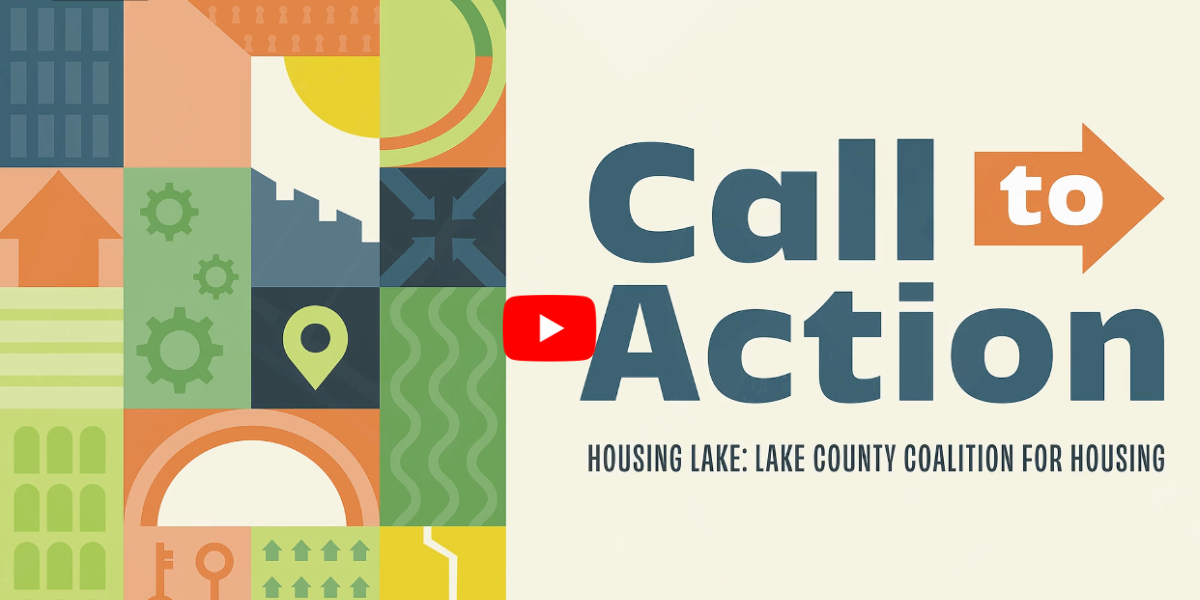
A call to action
Housing Lake, in partnership with CMAP, developed the Comprehensive Housing Call to Action that paints a picture of the county’s housing challenges, including:
- Regulatory updates needed.
- Financing gaps to address.
- Opportunities to strengthen communication and deepen partnerships.
The roadmap and The Century Plan
Importantly, it identifies clear pathways forward through coordinated action. This roadmap will chart a path for Lake County — and the entire region — as it will inform The Century Plan, a long-term vision for a better, stronger future for all of northeastern Illinois.
An early output of The Century Plan process is the State of the Region report that looks at where the region is today related to key topics that are ripe for regional coordination. CMAP Executive Director Erin Aleman shared these housing-related report findings at the summit:
- The average cost of living in our region increased by 63 percent between 2000 and 2023. While higher incomes grew faster than the cost of living, low-income households have not kept pace, adding to financial strain.
- Rents increased nearly 100 percent in the same period, and home ownership costs increased by 80 percent.
- Today, 75 percent of the jobs in our region that pay a living wage require at least a bachelor’s degree. But only 44 percent of the working adults in the region have a bachelor’s degree.
What's next
In early summer, a virtual speaker will launch, connecting coalition members with expertise and actionable strategies.
👉 Learn more about Housing Lake County.
|
|
There's a toolkit for that! Exploring housing rehabilitation in our region
Municipalities across northeastern Illinois need housing support and resources.
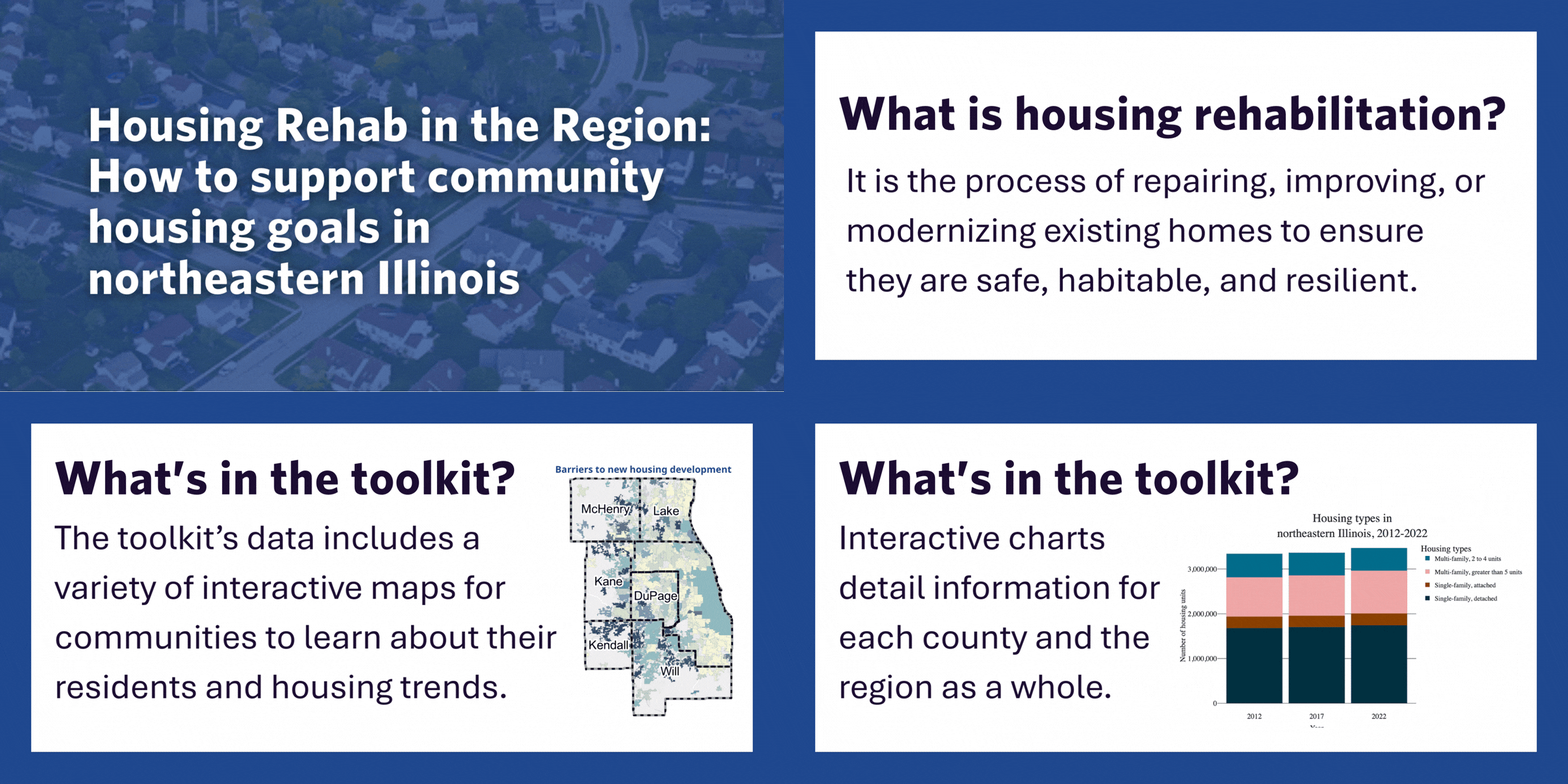
A new toolkit highlights housing rehabilitation in our region. It explores how improving and repairing existing homes can expand housing options — especially where structures are underused, deteriorating, or no longer habitable.
Why it matters:
-
Adds housing supply without new land consumption
-
Addresses safety and structural issues
-
Helps communities support affordability and neighborhood stability
The toolkit includes a StoryMap on rehab challenges and opportunities, plus a curated set of resources to support local housing goals.
|
|
Housing readiness in McHenry County: developers talk about removing obstacles
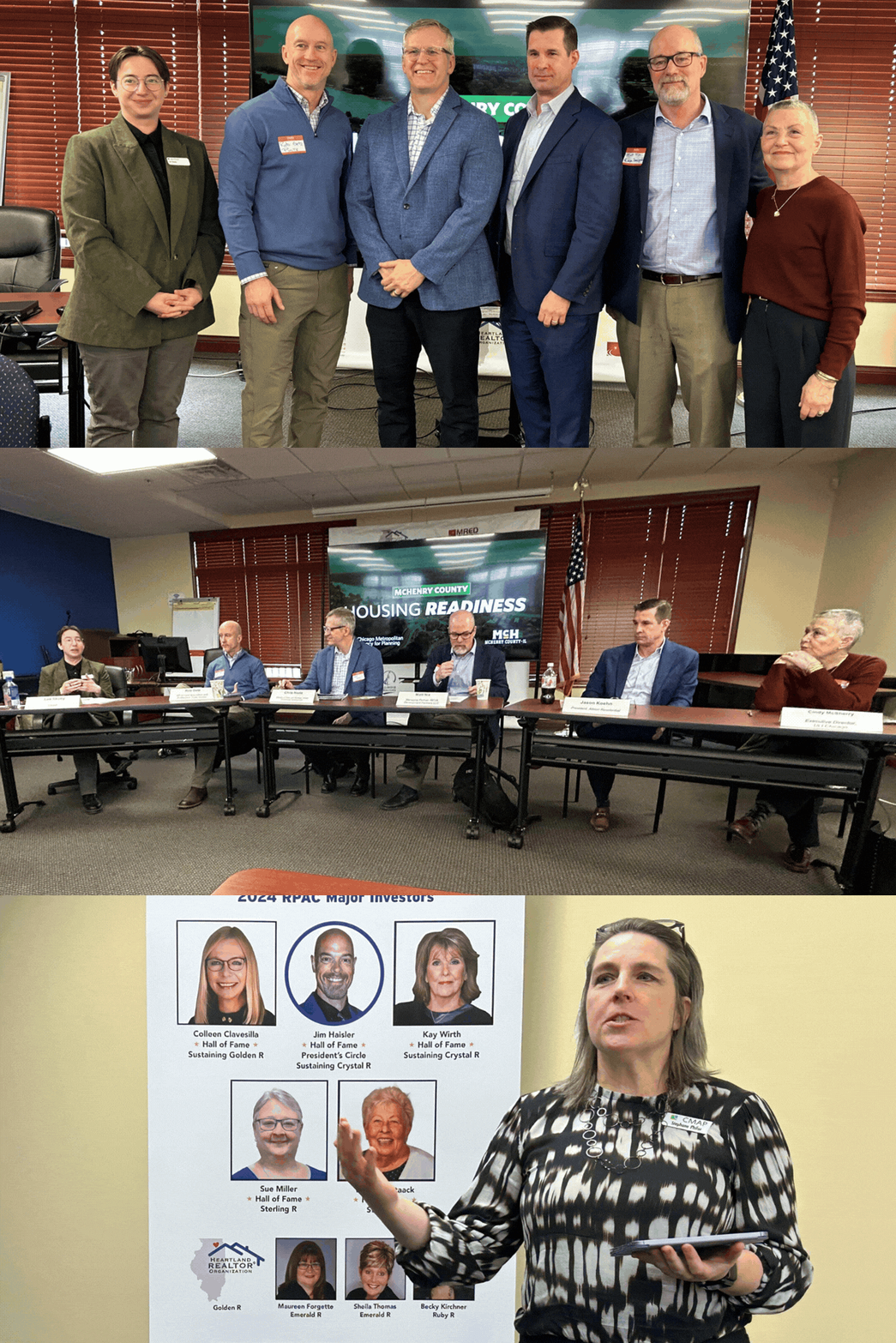
Through housing readiness planning, CMAP works with local leaders to identify barriers to housing development and create solutions to remove them. ULI Chicago and McHenry County recently teamed up to host a McHenry Housing Readiness panel in Crystal Lake.
Who was there
CMAP Planner Lee Skuby and ULI Chicago Executive Director Cindy McSherry were joined by an all-star panel of developers who talked about the obstacles that developers face — and how communities in McHenry County can address them by using a housing readiness action plan and checklist.
Thanks to Jason Koehn (Albion Residential), Matt Nix (REVA Development Partners LLC), Chris Naatz (Crown Community Development), and Rob Getz (Pulte Homes) for their insights. The event featured presentations from CMAP Deputy of Planning Stephane Phifer, as well as senior planner Lily Brack.
Get project updates and follow along for information on the final action plan and checklist.
|
|
Next in our virtual workshop series: Creating a water sustainability plan
The second session of CMAP's Shared Waters, Shared Future virtual workshop series is coming in April. The series brings together community leaders, water utilities, planners, policymakers, and residents to explore strategies for long-term water sustainability.
Who should attend:
- Local government staff members and elected officials
- Water utility managers and technical staff members
- Regional planners and policy professionals
- Community-based organizations and educators
- Residents and advocates interested in protecting local water resources
📅 What's next: Creating a water sustainability plan on Thursday, April 23.
👉 Learn more about Shared Waters, Shared Future.
|
|
Five fixes: what communities can do to reduce water use
Local governments can act today to conserve their water for the future. CMAP completed a water supply sustainability plan with the Northwest Water Planning Alliance (NWPA) and is sharing five key strategies NWPA communities — and communities around northeastern Illinois — can use to conserve public water supplies.
The five actions:
-
Retrofit homes: Joliet offers a $100 rebate to eligible water customers who replace low-efficiency toilets with a WaterSense-certified toilet.
-
Control water loss: Montgomery conducts annual water main leak detection, replaces leaky pipes, and has a district-metered area to better track potential leaks.
-
Increase landscape efficiency: Twenty years ago, Aurora adopted a regional lawn watering ordinance, leading to reduced water demand of 20 gallons per person, per day, in the summer.
-
Build water efficient developments: Since 2023, Phoenix, Arizona, requires new developments to meet WaterSense or equivalent certification as a stipulation in rezoning cases.
-
Promote conservation programs: The Illinois Green Business Program helps businesses create environmental and economic savings.
|
|
Free grant technical assistance for Kane County growers and supply chain contributors
Kane County is launching a Food & Farm Technical Assistance Grant Program to help support qualified food and farm businesses and nonprofits with grant applications.
- Are you a Kane County producer, processor, or aggregator interested in pursuing an infrastructure improvement?
- Are you a food producer that sells beyond Kane County and into the Chicago area?
- Do you actively provide or are you preparing to provide to food banks or food pantries?
Learn more about available grants.
|
|
What to do when there's a flood: MWRD resource guide offers practical steps to follow
The Metropolitan Water Reclamation District (MWRD) of Greater Chicago has released a new flood response resource guide for residents. It provides practical steps for residents to follow before, during, and after a flood. It also lists key agencies, local resources, and contact information to help them recover more quickly.
|
|
|
|
|