|
Working with you to help shape our region's economic competitiveness
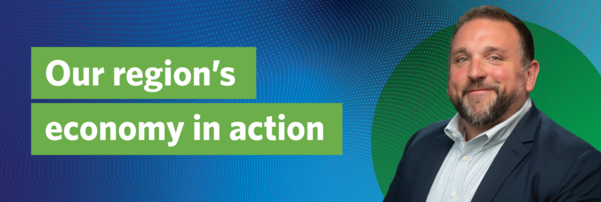
Greetings! My name is Kyle Schulz and I am the new deputy of strategic advancement, having joined the Chicago Metropolitan Agency for Planning (CMAP) in September.
I'm coming from a 15-plus-year career in economic development, most recently as chief growth officer at World Business Chicago. In coordination with CMAP, I helped stand up the Greater Chicagoland Economic Partnership.
As I reflect on the economic happenings taking place this fall, I am reminded that our region's economy is resilient in the face of continued pressures. That resilience is best captured in data from CMAP’s Northeastern Illinois Development Database (NDD). For 2025, we already have had more than 370 qualifying developments in the NDD. That's more than we had in 2024 and 2023, with more than a month remaining in the calendar year.
These trends are captured by the recent groundbreaking of the Illinois Quantum and Microelectronics Park in the South Chicago neighborhood. It will bring together unrivaled regional advantages like national laboratories, major research universities, a world-class workforce, and a commitment from local, regional, and state leaders (more on this later in the newsletter).
Another major success has been the Illinois General Assembly’s $1.5 billion investment into the transit system, which is the economic engine for our region. The system faced various fiscal cliffs. CMAP’s leadership in developing the Plan of Action for Regional Transit was crucial in not just sustaining our transit but proposing a system worthy of Chicagoland’s status as a global super region.
In early November, we also hosted our State of the Region event, welcoming more than 900 partners to jumpstart our region's next long-range planning process. As we move into the new year, we will have opportunities for you to engage with us in roundtables, workshops, and convenings to gain your insights. And as we the develop The Century Plan, we will work towards a truly inclusive and equitable economy.
I welcome the opportunity to connect, visit your site, or familiarize myself with a corridor or development. Feel free to reach out anytime!
|
|
A huge investment in a brighter future: breaking ground on the Illinois Quantum and Microelectronics Park
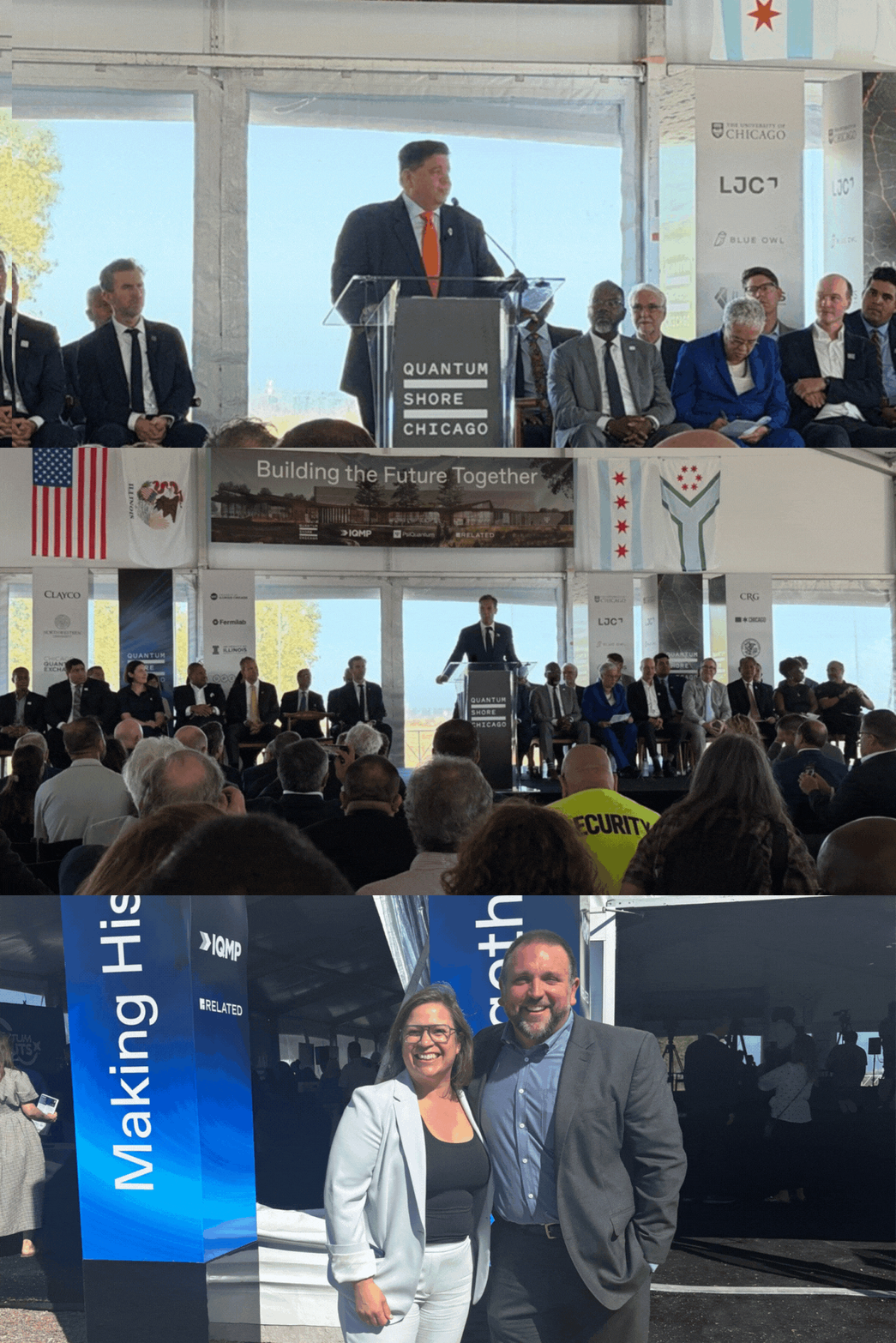
CMAP was delighted to take part in the groundbreaking of the single largest economic development investment in our region's history. The Illinois Quantum and Microelectronics Park (IQMP) will be built at the site of a former U.S. Steel mill that once made the steel that became the Golden Gate Bridge and 875 N. Michigan Ave (formerly known as the John Hancock Center).
The IQMP is transformational in its ambition and scope. This 325-plus-acre site was once a symbol of the industrial might of Chicagoland, but by the early 1990s, the site sat vacant. Over the next 30-plus years, the site had several failed redevelopment efforts, but nothing could ever fully address its size and scale. The IQMP changes all of that.
CMAP is proud of the role we played in bringing this economic development opportunity to fruition. The agency's leadership in the creation of the Greater Chicagoland Economic Partnership (GCEP) made it possible to attract PsiQuantum as the anchor tenant — the Palo Alto-based quantum company will be building the USA’s first full-tolerant quantum supercomputer in Chicagoland.
The GCEP organized a regional pitch to highlight the incredible assets that an emerging technology like quantum would need to be successful in its ambition and scale. The GCEP’s efforts brought together over 75 business, civic, community, public, and philanthropic institutions to showcase Chicagoland and Illinois' partnership.
Companies like IBM, Infleqtion, Defense Advance Research Project Administration, and several others will join the IQMP and solidify the site's redevelopment. CMAP will be working with the IQMP, the Illinois Department of Commerce and Economic Opportunity, and other partners to support the development of the site and its surrounding area.
|
|
Clean energy boost: solar farm to power hundreds of low-income households
A ribbon-cutting event in Kane County celebrated a solar farm that will power nearly 600 low-income households, a local park district, and a commercial business. Gov. JB Pritzker visited the Village of Hampshire to highlight the Highway 20 Community Solar Farm.
The project features 12,000 solar panels spanning 26 acres and can offset more than 7,500 metric tons of carbon dioxide each year. The project is supported by the Illinois Shines program with an $8.7 million in a contract for 200,000 Renewable Energy Credits.
|
|
On the right track: new battery electric locomotive makes its debut
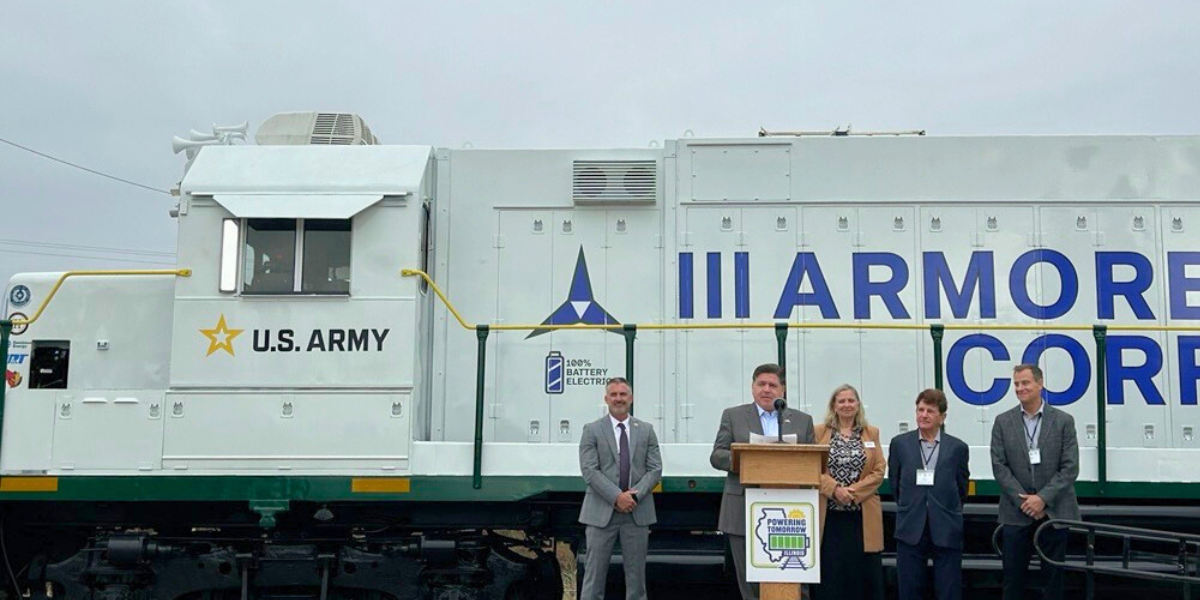
CMAP welcomes the growing list of clean energy manufacturers that have recently chosen to expand or establish their business in Illinois, including Innovative Rail Technologies (IRT), the largest manufacturer of battery electric locomotives in North America.
At a recent press event with Governor JB Pritzker and other partners in Minooka, IRT unveiled its new zero-emission locomotives.
Growing clean energy production and advancing manufacturing industries is a high priority for the state because it drives economic growth, creates jobs and positions Illinois at the forefront of sustainable transportation. “This new zero-emission locomotive is proof of Illinois' strength in manufacturing, leadership in sustainability, and commitment to innovation,” commented a state economic leader.
|
|
Clearing the way for development: Regional Site Readiness Program aims to attract future investment
Governor Pritzker and the Illinois Department of Commerce and Economic Opportunity announced $31.5 million in funding as part of the Regional Site Readiness Program. Through the program, entities can apply for funding to begin planning and prepare unused or unsuitable sites — such as abandoned factories or brown fields — for development.
This investment is part of the governor's $500 million site readiness initiative. This includes $200 million for Site Ready Illinois (including the Regional Site Readiness Program), which is designed to prepare sites to attract future investment and create new job opportunities. It also includes $300 million for the Surplus to Success program, which will prepare idle state-owned properties for private development.
|
|
Regional economy in action |
|
Chicago 2050: growing northeastern Illinois' economy
World Business Chicago released Chicago 2050, a plan that reflects the scale of a modern economy (the Chicago metropolitan region) and the full, shared assets of our region — as well as a new era of collaboration across its seven counties.
Chicago 2050 is a two-phase plan for growth. Chapter One (unveiled this month) focuses on the next five years: where Chicago is strongest and what can be done now to grow jobs, investment, and confidence. Phase Two, launching later this year, will build on that foundation with bold, long-term investments that shape the Chicago of 2050.
|
|
Sweet success: highlighting our region's amazing candy businesses
Enjoying sweet treats during the holiday season is more than just an opportunity to indulge in traditions. You'll also be supporting businesses based in our region.
The Chicago region's sugar and confectionery manufacturing industry ranks as the top in the nation. The industry has grown in recent years, with output increasing by $500 million between 2019 and 2024.
The region’s industry is composed mostly of non-chocolate confectionary manufacturers. Among the local favorites:
-
Blommer Chocolate Company: Supplying cocoa for many candy creations.
-
Ferrara Candy Company: Makers of Lemonheads, Nerds, and Atomic Fireballs.
-
Ferrero: Producing brands such as Butterfinger and Crunch.
-
Garrett Popcorn Shops: Known for its famous Chicago Mix.
-
Mars: Home to favorites like Starburst, Skittles, and Juicy Fruit.
-
Mondelēz International: Producing Oreo, Swedish Fish, and Sour Patch Kids.
-
Tootsie Roll Industries: Creators of Tootsie Rolls and Tootsie Pops.
|
|
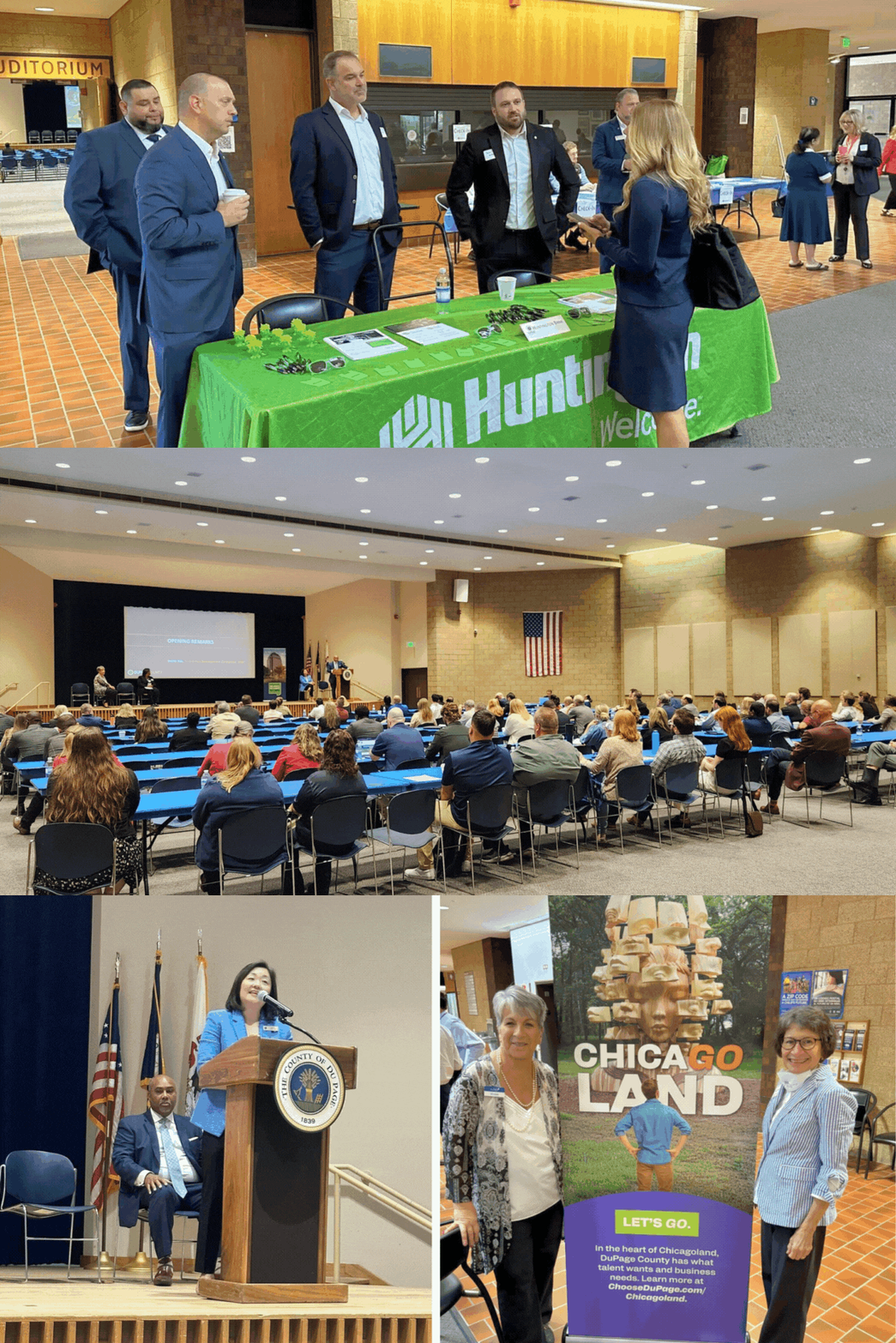 Choose DuPage hosted a County Connection event, with the theme of how to do business with DuPage County.
|
|
Making connections with Choose DuPage
Visitors learned about doing business with DuPage County, with Choose DuPage welcoming them to a County Connection event in Wheaton. The event brought together those who live and work in the county, with sessions about procurement, stormwater, transportation, public works, and more.
Smartest workplaces
Choose DuPage highlighted organizations that create environments where employees thrive, ideas flourish, and communities grow stronger. The list of the smartest workplaces in DuPage County is out now.
Choose DuPage blog
Coming out of the pandemic, businesses were faced with tough decisions. Chief among them: Should they keep work-from-home policies, go back to the way things were, or find a middle ground? In the Choose DuPage blog, President and CEO Greg Bedalov explores whether there's a secret recipe to success.
Choose DuPage podcast
Check out recent highlights from the second season of the Choose DuPage podcast:
- A look at four members of the "Century Club," leaders of local businesses that have been operated for at least 100 years.
- Community leaders — representing the public, private, and nonprofit sectors — talk about the DuPage Foundation's impact across the county.
- A look at the Veteran Business Project and how it's opening doors for veterans.
|
|
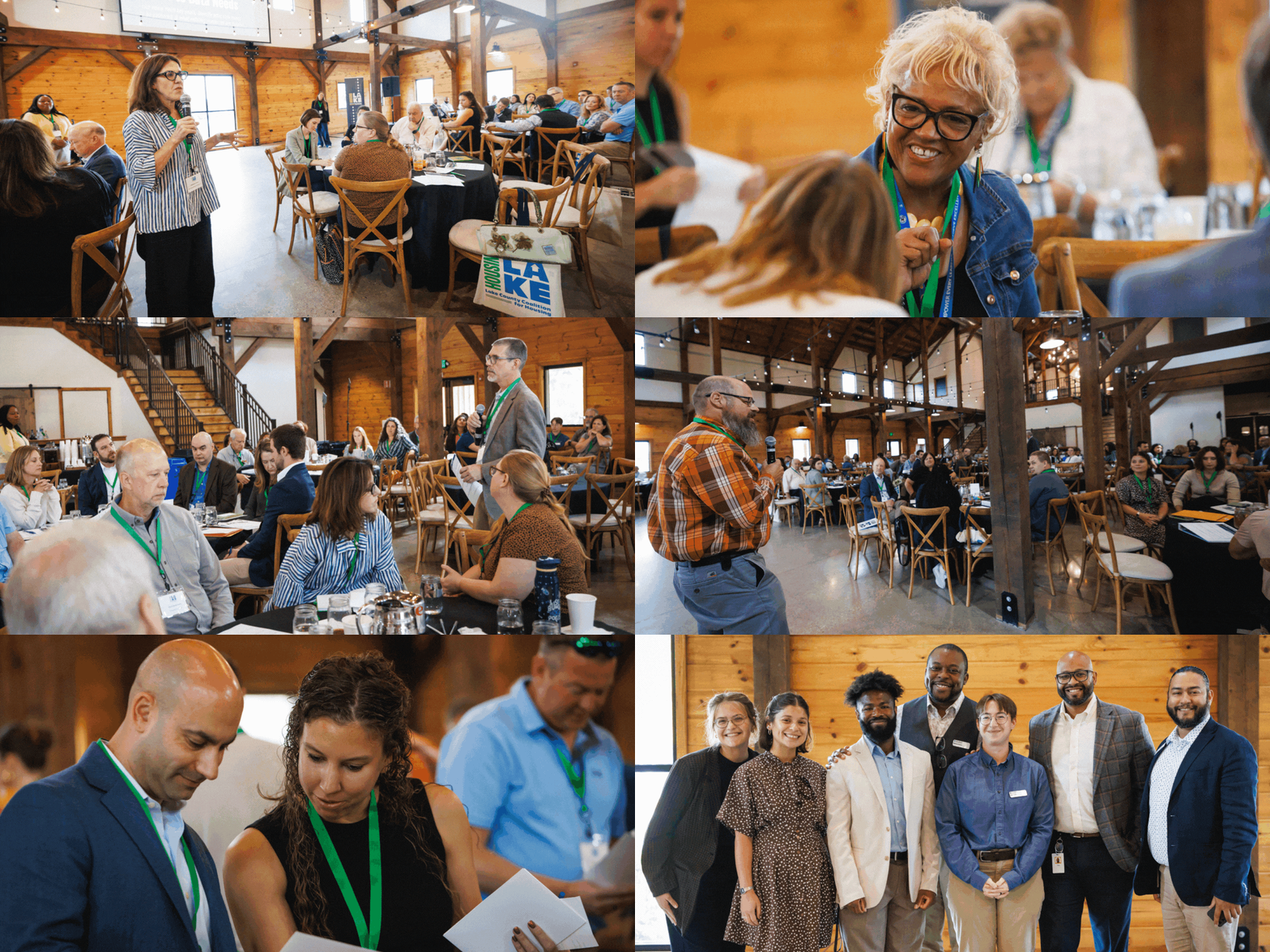 Participants collaborated on Olympic-themed activities at a Housing Lake County workshop this fall.
|
|
Working to build solutions for Lake County's housing challenges
Lake County and CMAP, supported by a grant from Schreiber Philanthropy, are bringing together business leaders, elected officials, municipal planners, developers, and community advocates to tackle housing challenges.
Housing Lake is creating a vision and strategies to increase attainable housing throughout the county and improve links between housing, jobs, and transportation options — and they've been busy:
- An in-person workshop in September featured Olympic-themed activities to help identify shared housing values, establish a baseline understanding of housing stock, and connect goals to the data needed to achieve them.
- In October, more than 60 people gathered virtually for a second workshop to learn how peers in Michigan are tackling housing issues from a regional perspective. Participants also worked in small groups to discuss mobility and growth trends, housing supply and demand, demographic shifts and housing needs, and affordability drivers.
- A third workshop for was held in mid-November, with the theme of envisioning growth together.
Coming up next, Housing Lake will host a virtual session in December, followed by an in-person workshop in January. Then, the culminating celebration for this collaborative journey will take place in February at the Housing Lake: Lake County Coalition for Housing Summit. The summit will feature the task force's recommendations and dynamic panel discussions as we look to the future of housing in Lake County.
|
|
Made in Kendall: showcasing the county's innovative businesses and products
Kendall County will once again be highlighting local innovators, businesses, and products.
Made in Kendall is a Kendall County Economic Development Office program with the goal of promoting manufacturing and supporting manufacturers and local makers. Nominations are accepted in three main divisions: consumer product, industrial product, and community maker. Submit your Made in Kendall 2026 nomination by December 15.
|
|
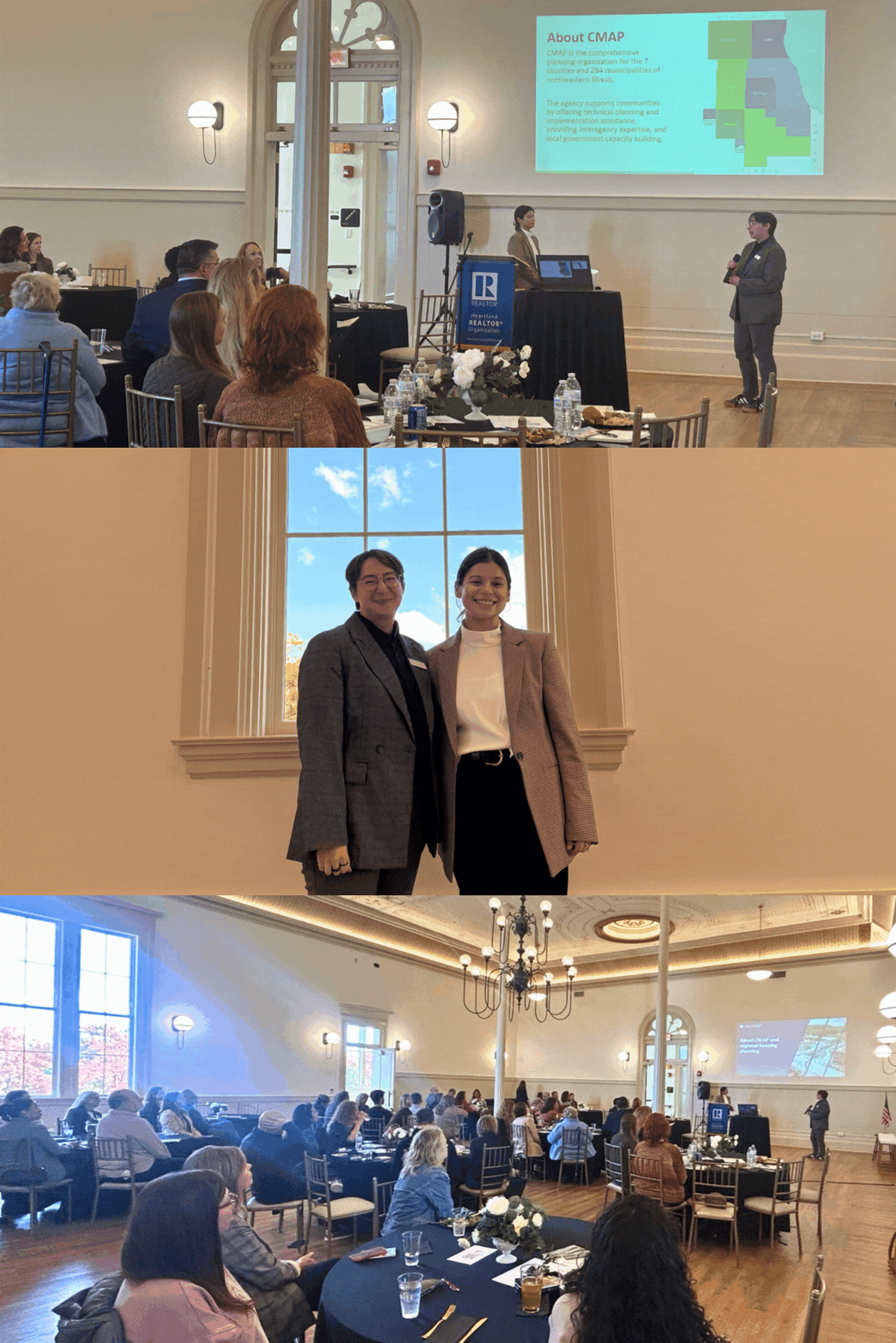 CMAP's Lee Skuby and Makala Morales presented at a recent forum in McHenry County.
|
|
Exploring McHenry County's housing market
People who live in McHenry County should be able to stay in their community through all phases of life, from youth to adulthood to retirement. But economic conditions and low new housing development over the last 15 years have led to unattainable housing for many.
A recent forum explored the county's housing market and needs, with CMAP team members Lee Skuby and Makala Morales among the presenters at the Housing For Working Families event in Woodstock.
CMAP and McHenry County are partnering to develop a housing readiness action plan. Learn more about McHenry County Housing Readiness.
2025 Business Development Roadshow
The McHenry County Economic Development Corporation (MCEDC) worked with the Illinois Department of Commerce and Economic Opportunity (DCEO) to host the 2025 Business Development Roadshow this fall at McHenry County College in Crystal Lake.
Speakers included DCEO’s Manny Lopez and Joe McKeown, as well as Claire DeLay from the Illinois Economic Development Corporation. They shared updates on programs, funding opportunities, and initiatives that support business growth and economic development across the state.
For more information, subscribe to the MCEDC Development Digest.
|
|
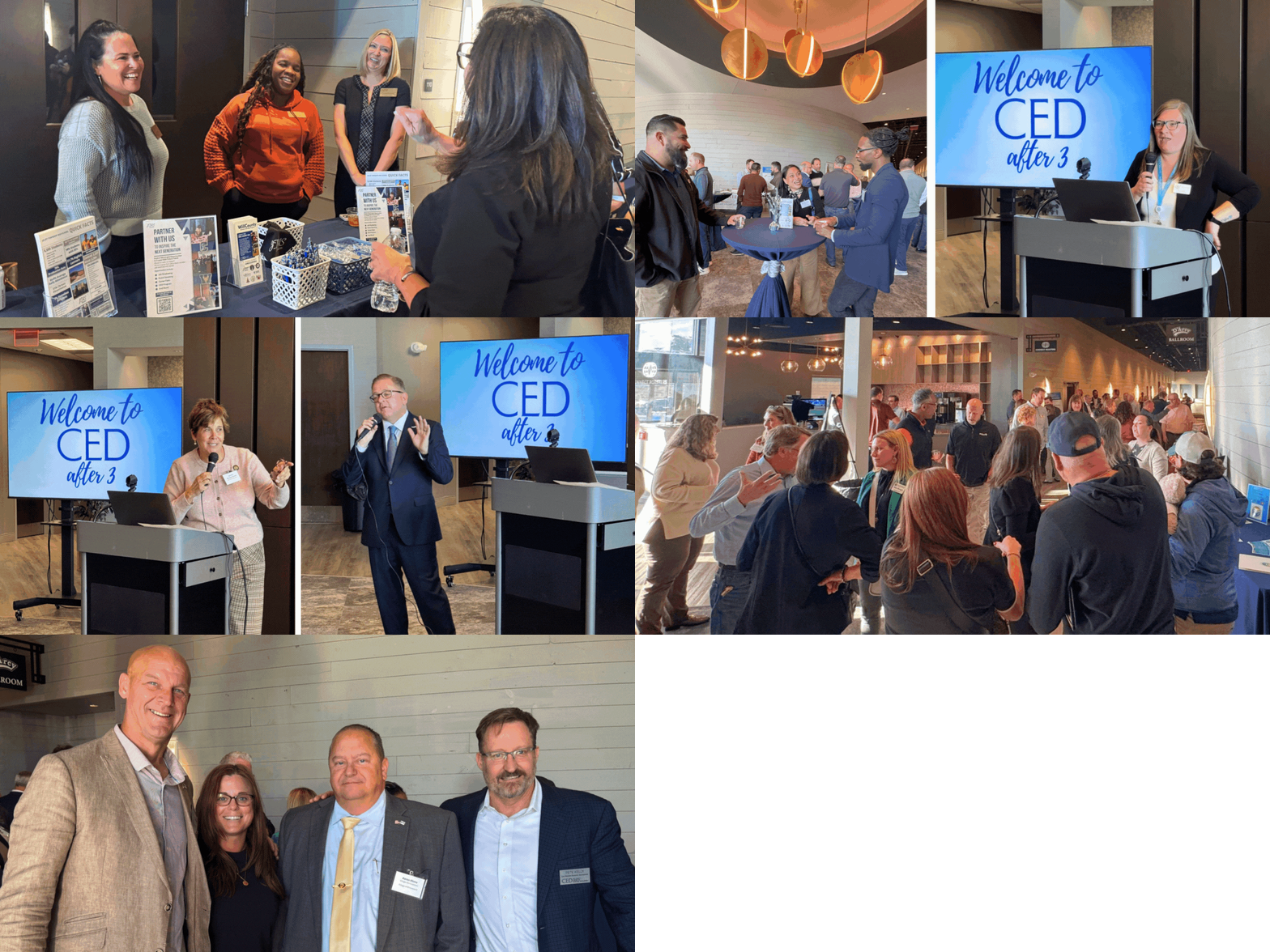 The CED After 3 event brought together economic development partners in Romeoville.
|
|
Spotlight on Will County: CED After 3 celebrates county's internship program; 2025 annual report
Will County employers, educators, and community leaders celebrated their summer internship programs at the final CED After 3 event of the year.
The Will County Center for Economic Development (CED) highlighted school district partners, as well as chambers of commerce from Lockport, Romeoville, Joliet, Bolingbrook, Plainfield, and Shorewood.
Register for the CED 2025 event
The Will County CED has set its biggest event of the year — showcasing the annual report — for December 5 in Bolingbrook.
The morning event will highlight 2025 wins, including key project highlights, community impacts, and economic insights. Registration is now open.
|
|
Job kiosks to boost access to opportunities in Kane County and beyond
Job seekers in Kane County have greater access to career resources thanks to a new network of job kiosks. This fall, workNet Batavia, in partnership with the Aurora Quad County Urban League, hosted a ribbon-cutting ceremony to unveil the kiosks. They will be installed in Aurora at the Aurora Quad County Urban League offices, Santori Public Library, West Branch Public Library, and Hesed House.
A total of 15 kiosks will eventually be placed in accessible locations, such as libraries and food pantries throughout Kane, Kendall, and DeKalb counties. Each kiosk connects residents to job listings, career coaching, training opportunities, and other services.
The project is funded by a grant from the Illinois Department of Commerce secured by Kane County. The kiosks aim to remove barriers for residents who may not otherwise have easy access to workforce services.
|
|
|
|
|