|
|
Hello, partners in planning!
It’s time for another planning update from your regional planning agency, CMAP. I’m Mike Sobczak, a member of CMAP’s communications team, where I focus on transportation and planning. Have a project or update to share with the CMAP community? Reach out anytime at msobczak@cmap.illinois.gov.
In this issue, we’re excited to share success stories from across our region — highlighting how we, together, are strengthening communities through strong planning and collaboration. Plus, don't miss our first-of-its kind State of the Region event taking place November 4th.
|
|
Cicero charts a safer future with new safety action plan
Cicero residents deserve streets that safely connect them to schools, jobs, and one another — and now the town has a clear, community-informed roadmap to get there. With support from the Chicago Metropolitan Agency for Planning (CMAP), the newly completed Cicero Safety Action Plan responds to a critical reality: while pedestrians and bicyclists make up just a small share of crashes, they suffer a disproportionate number of serious injuries and fatalities — especially youth.
Backed by extensive public engagement and a data-driven analysis of crash trends, the plan outlines targeted strategies to eliminate traffic deaths and life-altering injuries across Cicero.
With this plan in place, Cicero is taking a bold, coordinated step toward streets that work for everyone.
|
|
Building a safer future in Ashburn
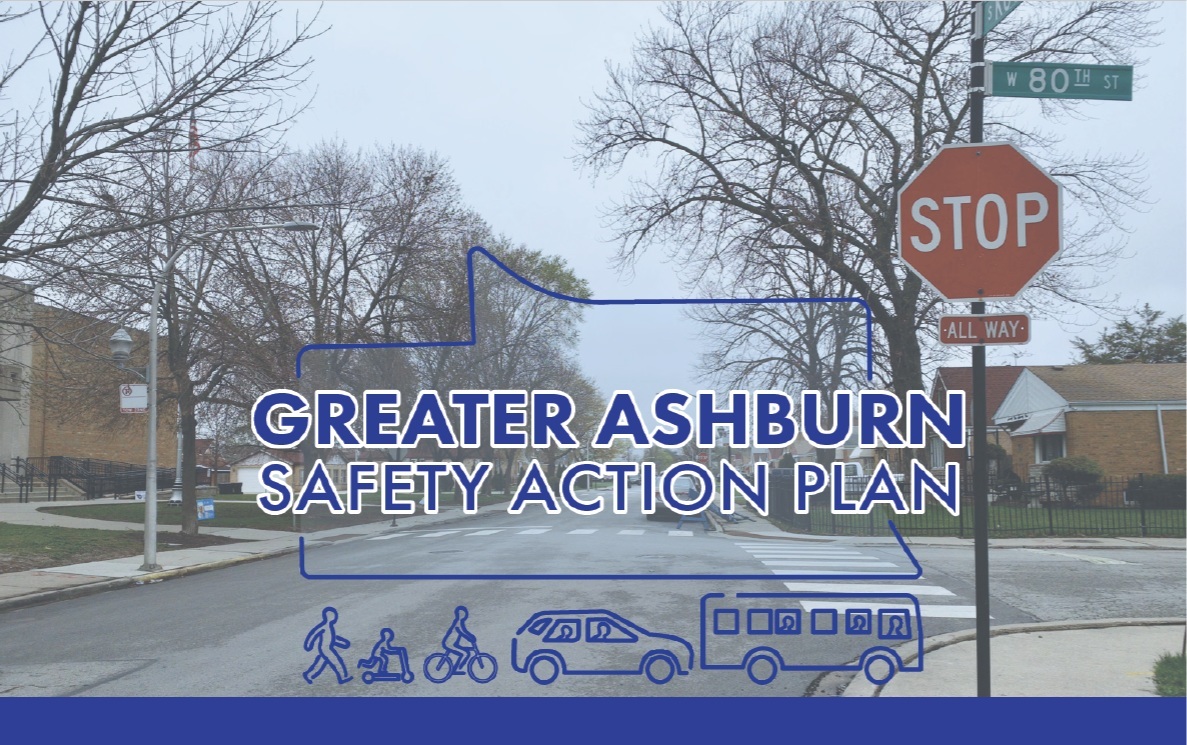
The Greater Ashburn Safety Action Plan lays out a bold, community-driven roadmap to make neighborhood streets safer for everyone — whether walking, biking, driving, or taking transit. Developed in partnership with the Greater Ashburn Development Association, the plan was made possible through CMAP’s technical assistance program.
The plan builds on the Safe System Approach, which recognizes that traffic deaths and serious injuries are preventable and calls for shared responsibility to eliminate them. With more than 6,000 crashes and 175 serious or fatal crashes in Ashburn between 2019 and 2023, this work is critical to protecting lives and ensuring residents can move safely through their community.
The plan identifies priority corridors, schools, and parks where improvements are most needed, and pairs those findings with targeted strategies. Highlights include traffic calming near schools and parks, enhanced pedestrian crossings, safety upgrades at rail crossings, and infrastructure investments on major corridors such as 79th Street, Cicero Avenue, and Western Avenue.
|
|
|
In close partnership with Addison, Bannockburn, Fox Lake, Godley, Indian Head Park, Palos Heights, Richton Park, St. Charles, and Wood Dale, CMAP recently completed pavement management plans that strengthen infrastructure and guide future transportation investment. Developed with engineering support, these plans assess pavement conditions, evaluate costs, and provide data-driven strategies for preservation and capital planning.
By adopting innovative approaches rooted in the ON TO 2050 comprehensive regional plan, these communities now have practical tools to prioritize repairs, stretch limited dollars, and invest wisely in their transportation networks.
|
|
Make no small plans I Project highlights |
|
|
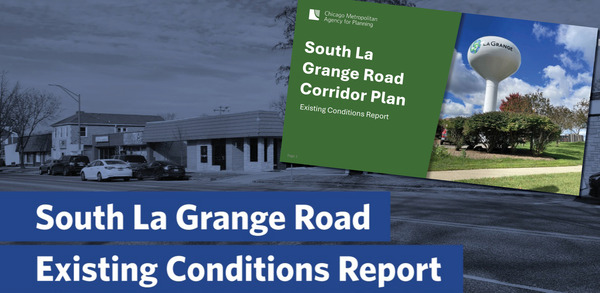
The Village of La Grange continues to work with CMAP to revitalize one of the community’s most important gateways: South La Grange Road between 47th Street and East Plainfield Road. Building on the recently adopted La Grange Forward Comprehensive Plan, the South La Grange Road Corridor Plan is a focused effort to improve transportation, guide redevelopment, strengthen the local economy, and enhance quality of life along the corridor.
The newly completed Existing Conditions Report provides a detailed look at current land use, business activity, and mobility along the corridor. It identifies opportunities for infill and context-sensitive redevelopment, notes higher-than-average retail vacancies, and highlights the challenges posed by heavy traffic volumes and limited pedestrian crossings. This report will inform the next steps of the planning process, including a market study, development of key recommendations, and a final corridor plan that reflects both technical analysis and community input.
|
|
Reimagine River Street: Transforming a vacant site into a downtown asset
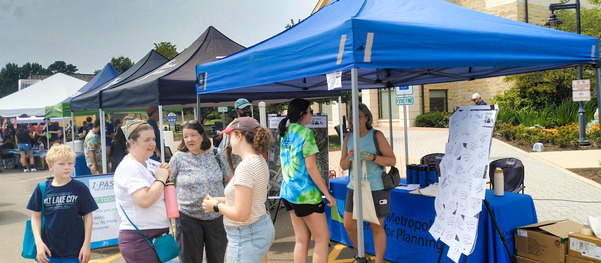
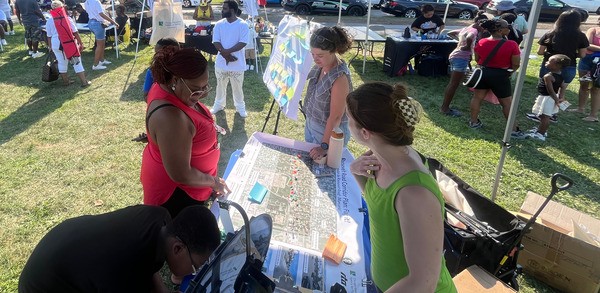
The Village of Montgomery is working with CMAP to develop a plan for a vacant, village-owned site located in the heart of Montgomery's historic downtown, alongside the Fox River. The pilot project, Reimagine River Street, seeks to create a plan for the site that fits into the character of the downtown area, expands pedestrian movement and improves accessibility in the downtown area, considers the site’s role within larger downtown development goals, and helps the village attract appropriate development interest.
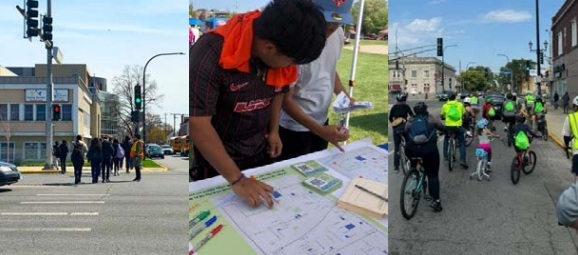
At Montgomery Fest the team asked attendees which downtown places they already enjoy and invited their “big ideas” for the site and the downtown area — seeking to learn what would inspire them to visit and linger more often.
|
|
Charting the future of Roosevelt Road in Maywood
CMAP and the Regional Transportation Authority are partnering with the Village of Maywood to reimagine Roosevelt Road as a safer, more accessible, and thriving corridor. The Roosevelt Road Corridor Plan in Maywood will guide future decisions on housing, development, transportation, and infrastructure — helping the community attract investment, support transit-oriented development, and improve conditions for people walking, biking, and riding transit.
Your voice is essential. Share your ideas through the project’s engagement tools: Take the survey to highlight issues and priorities, and add to the map to pinpoint location-specific opportunities and challenges. Together, we can ensure Roosevelt Road reflects the needs and aspirations of all community members.
|
|
Shaping the future of biking and walking in Oswego
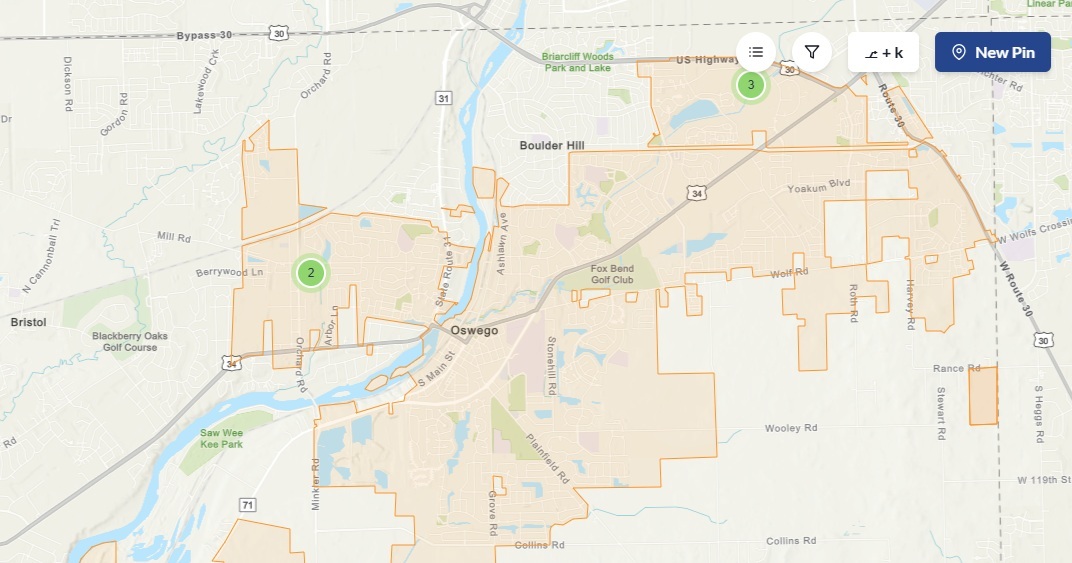
The Village of Oswego and CMAP have launched work on the Oswego Bicycle and Pedestrian Plan with the goal to expand safe, accessible, and connected walking and biking options for residents and visitors. The plan will guide future investments to improve safety, strengthen connectivity, and support equitable access across the community.
Do you live, work, or play in the area? Share your insights by adding location-specific comments on the project’s interactive map — highlight challenges, opportunities, and ideas for walking and biking in Oswego. CMAP team members will also be at the Oswego Country Market on Sunday, September 28, from 9 a.m. to 1 p.m. to gather more input from the community.
|
|
CMAP is hosting a first-of-its kind State of the Region event — get your tickets now!
CMAP invites government, civic, and business partners from across northeastern Illinois to a first-of-its-kind State of the Region event the evening of November 4th at the Old Post Office in Chicago. This interactive, immersive event will celebrate CMAP’s 20th anniversary and the launch of The Century Plan, a vision for northeastern Illinois for 2060 and beyond.
This is a room you’ll want to be in! You enjoy:
- Connections with hundred of attendees including elected officials, policymakers, and civic and business leaders from across northeastern Illinois
- Performances showcasing the talent, art, and culture of the region
- Food, drinks, and inspiration for the future!
|
|
Shaping the next federal transportation bill
With the Infrastructure Investment and Jobs Act set to expire in September 2026, CMAP is working with regional partners, civic and labor organizations, and peer metropolitan planning organizations (MPOs) across the country to outline shared principles for the next federal transportation reauthorization. Together, we’ve developed One Regional Voice 2025, a statement of priorities calling for robust, durable revenues, enhanced safety, efficient transit and rail, maintained bridges, performance-based programming, multimodal freight, technological innovation, resilient systems, and policies that recognize the unique needs of major metropolitan areas.
Similarly, CMAP joined MPOs from other large U.S. regions to advance common principles for reauthorization, including prioritizing safety, preserving core highway and transit programs, balancing formula and competitive funding, targeting investments to the nation’s economic engines, and streamlining project delivery.
These efforts reflect a united call for a strong federal transportation package that ensures stable, predictable funding and empowers regions to meet the nation’s evolving transportation needs.
|
|
CMAP shares regional expertise at national AMPO conference
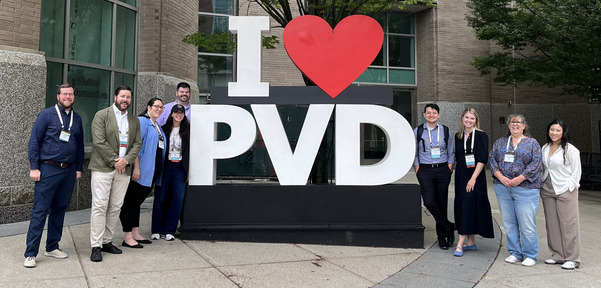
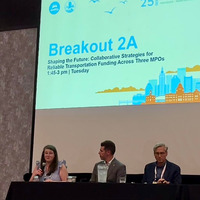
CMAP team members recently joined peers from across the country at the Association of Metropolitan Planning Organizations (AMPO) national conference in Providence, Rhode Island. In addition to attending sessions and mobile tours, staff contributed by presenting CMAP initiatives. Patrick Day, Lily Brack, and Mai Dang presented on the Local Government Network — which strengthens connections with the region’s 284 communities — while Jaemi Jackson highlighted CMAP’s work supporting ADA-compliant communities. Elizabeth Scott moderated a session on approaches to securing reliable transportation funding.
|
|
ADA coordinators invited to October 14 session on facility assessments
The October 14 meeting of CMAP’s Regional ADA Coordinators Group will focus on accessibility assessments for government buildings and facilities. Robert Judd, Manager and Senior Accessibility Consultant with Jensen Hughes, will lead a discussion on how to initiate and conduct a facility assessment. Come with questions!
|
|
|
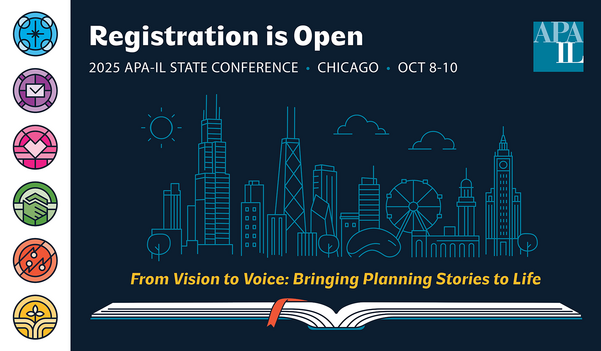
Registration is open for the annual American Planning Association Illinois Chapter's annual state conference. The three-day event showcases urban planning in Illinois, with educational sessions, mobile workshops, and more. And this year’s conference theme examines different ways to bring planning stories to life.
It takes place October 8-10 at the Old Post Office in Chicago, where CMAP's office is located. Look at the agenda to learn more.
|
|
|
|
|