|
Region's next generation of leaders participates in FLIP
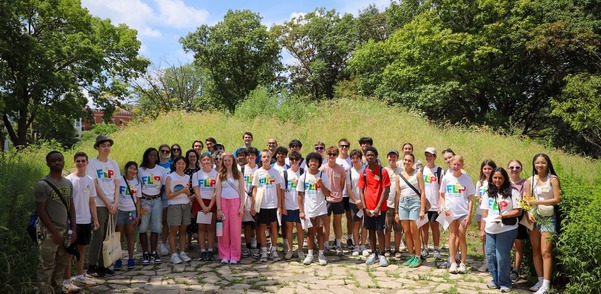
Future Leaders in Planning (FLIP) plays a vital role in shaping the next generation of leaders by engaging high school students from across the region in hands-on urban planning. The program fosters a diverse pipeline of future planners with the curiosity needed to tackle northeastern Illinois' complex transportation, environmental, and land use challenges.
Through FLIP, students gain valuable insights from the Chicago Metropolitan Agency for Planning's (CMAP) team members and community partners, learning firsthand about the planning profession and how it shapes communities. This summer, CMAP introduced participants to a wide range of planning topics, including communications and engagement, accessibility, the 2026 Regional Transportation Plan, housing, and Geographic Information Systems.
Students also experienced the region as a living laboratory, with site visits to places like the Loop, Horner Park, O’Hare Airport, Chinatown, Bronzeville, and East Garfield Park — each offering a unique perspective on planning in action.
Programs like FLIP underscore how important it is to nurture tomorrow’s planning leaders today — ensuring a more inclusive, informed, and sustainable future for the region.
|
|
CMAP welcomes national transportation asset management conference to Chicago
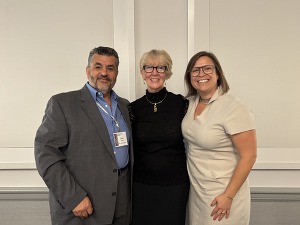
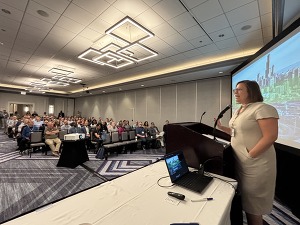
CMAP Executive Director Erin Aleman opened the 15th National Conference on Transportation Asset Management by welcoming planners, engineers, researchers, and policymakers from across the country to Chicago — a region whose history and future are deeply tied to transportation.
Erin highlighted Chicagoland’s role as a global hub, the challenges of maintaining aging infrastructure, and the importance of transparent, data-driven investment to keep people and goods moving safely and reliably. She also underscored how CMAP’s regional planning efforts, from ON TO 2050 to the upcoming 2026 Regional Transportation Plan, integrate asset management principles to prioritize maintenance and modernization.
|
|
Share your input on the Berwyn-Riverside Railroad Grade Crossing Study |
|
|
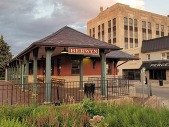
In partnership with Berwyn, Riverside, the BNSF Railway, and Cook County, CMAP is studying ways to improve safety, mobility, and access at railroad crossings between Ridgeland Avenue in Berwyn and Delaplaine Road in Riverside. The goal is to reduce congestion, improve emergency response and hospital access, support local businesses, and make travel safer for everyone — whether by car, train, bike, or on foot.
As we move into the next phase of the study, we want your ideas. What kinds of improvements do you think could help — changes to roads, bridges, crossings, or other ideas? And what matters most to you — safety, cost, travel time, neighborhood impacts, or something else?
Take the Finding and Screening Solutions survey today to share your ideas and help shape the study.
|
|
Regional Transportation Plan updates |
|
Help shape northeastern Illinois’ transportation future
CMAP is continuing to seek input on its Regional Transportation Plan (RTP) Questionnaire. The survey asks about how you travel today and what you hope for in the future, helping shape the region’s long-term blueprint for transportation investments. Take a few minutes to share your voice and help guide the 2026 RTP.
|
|
Your research can help inform the 2026 RTP
Does your organization have insights that can help inform transportation in the region? Transportation partners and stakeholders are invited to share research, white papers, and other materials that highlight organizational priorities and recommendations. Your submissions will help inform the strategy development phase of the 2026 RTP, the region’s long-term blueprint for transportation investments. Please upload your materials to be part of the planning process.
|
|
Innovative road resurfacing in McHenry County
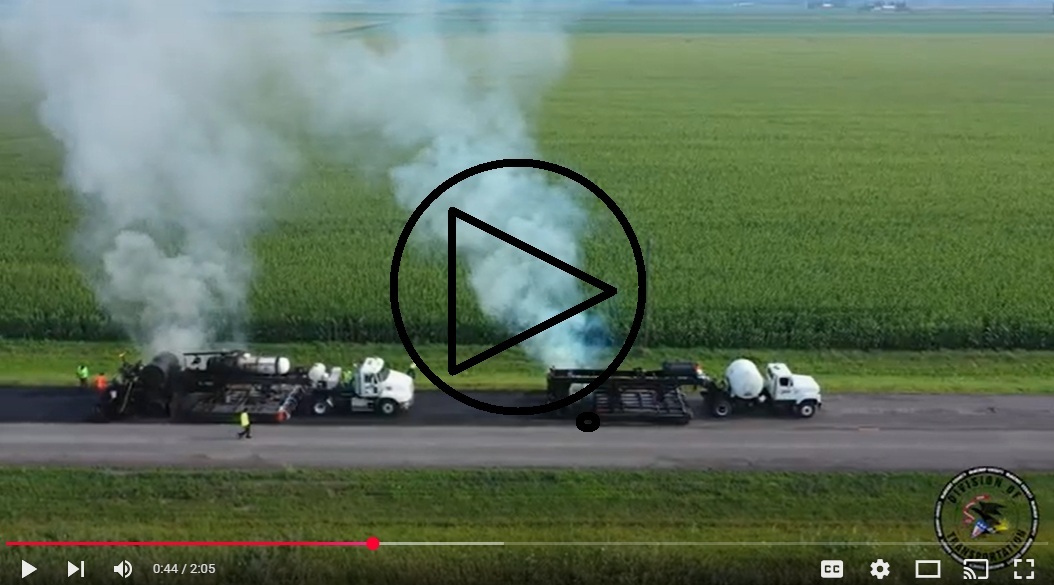
The McHenry County Department of Transportation recently tested an innovative resurfacing method on Kishwaukee Valley Road that reuses existing pavement rather than relying entirely on new materials.
Known as Hot In-Place Recycling, the process involves heating, scarifying, mixing, and re-compacting the roadway on-site, followed by a final asphalt layer applied by a local contractor. This approach reduces trucking needs, lowers emissions, cuts costs, and maintains road quality—all while lessening construction-related congestion. The project reflects the county’s commitment to environmentally friendly and cost-effective transportation solutions.
Watch a video of the pavement technology in action. Interested in learning more? Contact Jeremy Stull at jrstull@mchenrycountyil.gov.
|
|
Public comment open for Bishop Ford at 111th Street
The Illinois Department of Transportation is seeking public input on proposed improvements to the Bishop Ford Freeway (I-94) at the 111th Street interchange in Chicago. The study aims to address safety, congestion, and drainage concerns in the corridor. A video overview of the project and materials shared at the August 21 public meeting are also available on the project website for review.
Comments may be emailed to i94at111study@gmail.com, or mailed to:
Illinois Department of Transportation
Bureau of Programming,
Attn: Valentina DeFex, P.E.
201 West Center Court
Schaumburg, IL 60196-1096
All comments received by September 11 will become part of the official public record.
|
|
From our partners across the region |
|
Applications open for 2025 Safe Routes to School Program
The Illinois Department of Transportation is now accepting applications for the 2025 Safe Routes to School Program, a 100% federally funded initiative to improve how students travel to and from school. The program supports both infrastructure and non-infrastructure projects that make school routes safer, more accessible, and encourage active transportation for children of all ages and abilities. Eligible applicants include schools and school districts, municipalities, counties, townships, planning agencies, and other public entities. Applications are due by October 13, 2025.
|
|
Understanding the transit fiscal cliff: Your guide from the RTA
Visit the RTA’s Fiscal Cliff Hub to understand the impending $770 million funding shortfall that could trigger service cuts across CTA, Metra, and Pace as federal COVID relief expires.
The hub equips policymakers, planners, and advocates with data, reform proposals, and advocacy guidance — including the call for $1.5 billion in state investment to maintain current service levels.
With potential reductions of up to 40% in service and fare hikes looming for January 2026, the resource acts as both a warning and a tool for collective action across the region.
|
|
It's time for back to school
Across the country, many children are headed back to school, and regardless of how they get there, we want them to get there safely.
Keep your community safe! The National Highway Traffic Safety Administration crafted a variety of resources to increase timely safety messaging across all platforms.
⇨ School Bus Safety ⇨ Pedestrian Safety ⇨ Bicycle Safety
|
|
Understanding the difference between e-bikes and e-motos
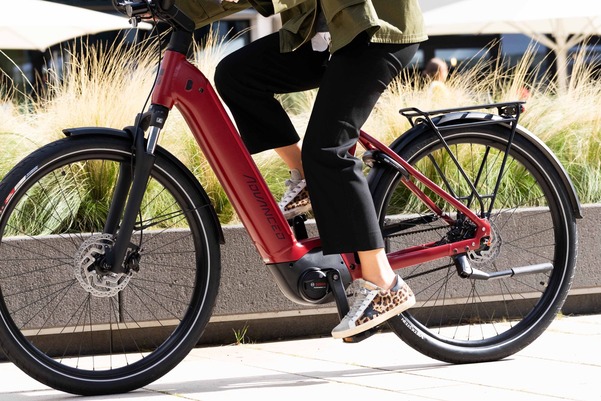
Do you know the difference between a legal low-speed electric bicycle (e-bike) and devices commonly referred to as e-motos? With local news stories and municipal ordinances sometimes conflating the two, it’s important to understand how Illinois law defines these modes of transportation. Our friends at Active Transportation Alliance and Ride Illinois are here to help educate the public, law enforcement, and elected officials on the differences.
What are e-motos?
E-motos – a term coined by PeopleForBikes – are not defined in the Illinois Vehicle Code. They look like e-bikes but don’t adhere to industry standards.
-
Motors typically exceed 750 watts of power.
-
Have a throttle and bicycle-style frame.
-
Can exceed 20 mph on throttle alone or don't have functioning pedals.
Adults riding e-motos should do so only in lanes meant for automobiles. They should not be used on sidewalks, trails, or bicycle infrastructure. Devices marketed to children and teens often fall into this category and should only be used on personal property. Many transportation partners have an interest in eliminating confusion by defining e-motos in the Illinois Vehicle Code.
What Are legal e-bikes?
Since 2018, Illinois has recognized three classes of low-speed e-bikes (625 ILCS 5/1-140.10). Forty-seven other states follow the same system. Legal e-bikes must have fully operable pedals and an electric motor of less than 750 watts.
-
Class 1: Pedal assist only, up to 20 mph.
-
Class 2: Throttle assist (exclusive propulsion allowed), up to 20 mph.
-
Class 3: Pedal assist only, up to 28 mph. Riders must be at least 16 years old.
These classes are recognized and regulated by state law, ensuring that e-bikes remain safe and accessible transportation options. Learn more with Ride Illinois’ Municipal Guidance on E-Bikes and E-Motos.
By clearly distinguishing e-bikes from e-motos, local governments and community members can support safe, equitable, and effective transportation policies.
|
|
Ride, walk, roll: Experience a week without driving
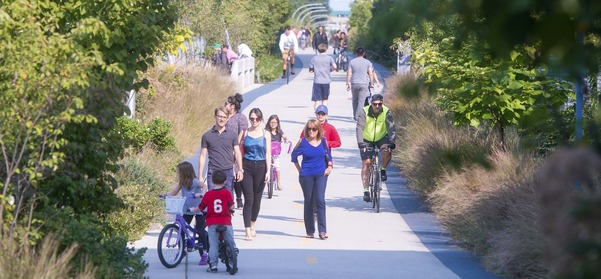
From September 29 to October 5, America Walks invites you to take part in Week Without Driving — a national campaign that asks people to step into the shoes of those who rely on walking, rolling, or public transit every day. For nearly one-third of U.S. residents — including millions across northeastern Illinois — getting around without a car isn’t a choice, it’s a necessity.
Here in Illinois, public transit faces a looming fiscal cliff that could threaten essential service. By experiencing even a week without driving, we’re reminded of the urgency to protect and strengthen transit, so every resident has safe, reliable, and affordable ways to get where they need to go.
|
|
|
|
|