|
Learn more about your community: freshly updated snapshots offer rich resource for northeastern Illinois
The Chicago Metropolitan Agency for Planning (CMAP) released a new set of Community Data Snapshots to help local leaders and the public track progress and make informed decisions in their communities.
These data-rich snapshots — one for each of the region’s 284 municipalities, 77 Chicago community areas, and 7 counties — summarize demographics, housing, employment, transportation habits, and other key details.
This year’s snapshots include new data on uninsured populations and county-level development, as well as significant updates like housing and transportation costs comparisons and annual vehicle miles traveled.
|
|
Future Leaders in Planning: high school students explore our region
Future Leaders in Planning (FLIP) plays a vital role in shaping the next generation of leaders by engaging high school students from across the seven-county area in hands-on urban planning. The program fosters a diverse pipeline of future planners with the curiosity needed to tackle the region’s complex transportation, environmental, and land use challenges.
Through FLIP, students gain valuable insights from CMAP team members and community partners, learning firsthand about the planning profession and how it shapes communities. This summer, we introduced participants to a wide range of topics, including accessibility, communications and engagement, housing, Geographic Information Systems, and the 2026 Regional Transportation Plan.
Students also experienced the region as a living laboratory, with site visits to places like the Loop, Horner Park, O’Hare Airport, Chinatown, Bronzeville, and East Garfield Park — each offering a unique perspective on planning in action.
Programs like FLIP underscore how important it is to nurture tomorrow’s planning leaders today — ensuring a more inclusive, informed, and sustainable future for the region.
|
|
Community voices guide development of the 2026 Regional Transportation Plan
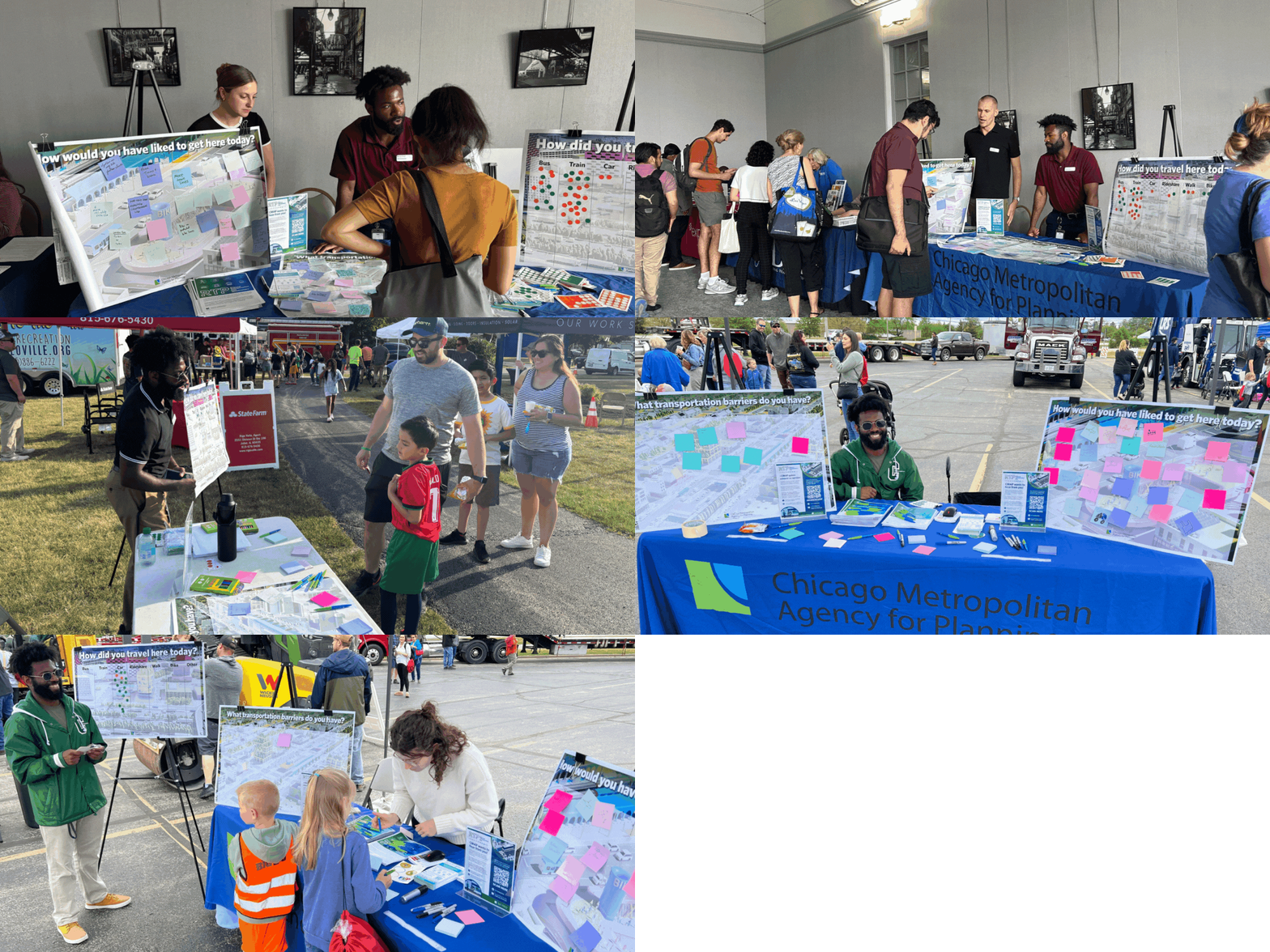
You are helping to shape our region's transportation future. Thank you to all who have contributed to the 2026 Regional Transportation Plan. We have been engaging with community members across the region, including at events in Chicago, Romeoville, and Woodstock.
The team heard firsthand what matters most to people when it comes to transportation. If you didn’t get a chance to participate, there’s still time to weigh in by completing a quick questionnaire at cmap.is/rtp.
|
|
Highlighting CMAP's work at the Esri conference
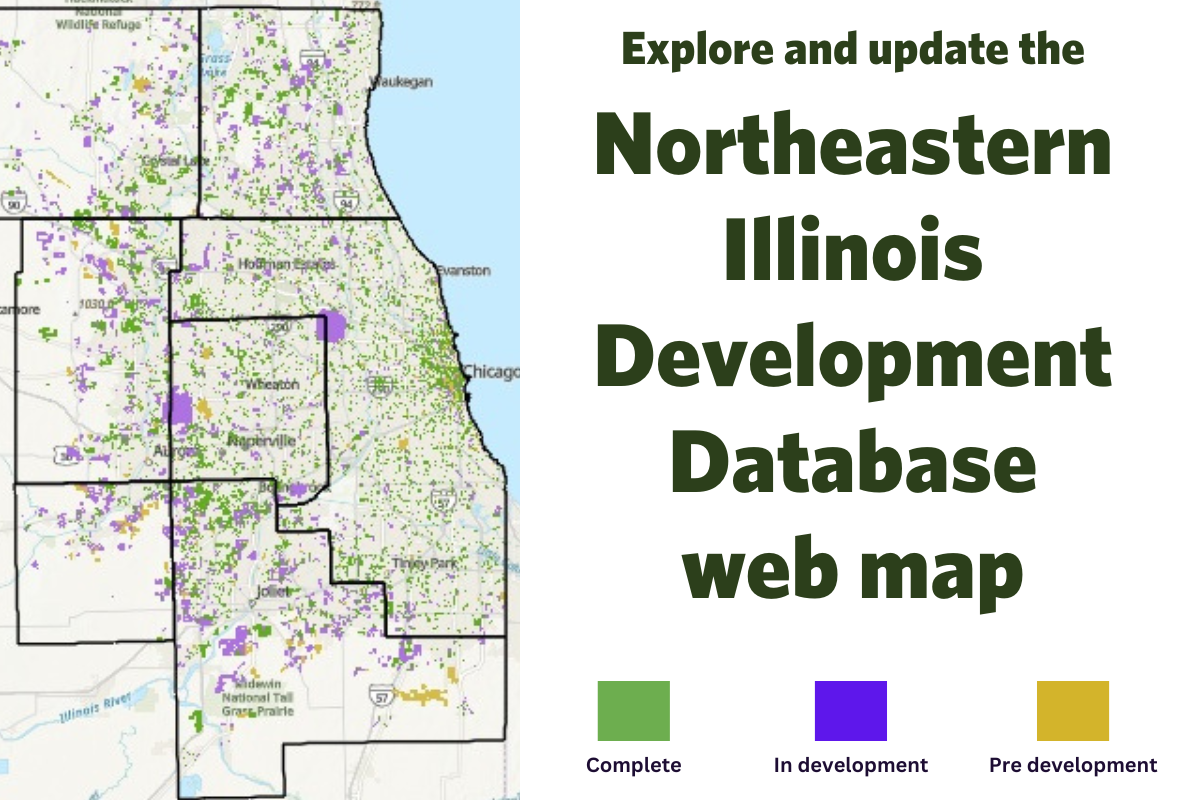
The Esri User Conference brought together geospatial professionals from around the world. The event featured a map gallery showcase that included CMAP's Northeastern Illinois Development Database.
The Northeastern Illinois Development Database tracks significant developments across the seven-county region. Established in 1987, the database records projects that meet specific criteria, documenting land consumption, number of housing units, non-residential square footage, and land use types.
The web map, created this year, is tailored for local government staff members to actively participate in the forecasting process by submitting and editing developments. This data informs CMAP's local forecast model, which predicts household and job placements across the region.
|
|
Over $290M in transportation investments to improve air quality and transportation choices across our region
Our region's transportation decision-makers recently approved 40 new projects totaling $290 million in federal funds that will strengthen northeastern Illinois with projects that will: rebuild roads, bridges, and train stations; add electric locomotives; expand bike and pedestrian facilities; and reduce delays at intersections and railroad crossings.
As the metropolitan planning organization for northeastern Illinois, CMAP manages the five-year Transportation Improvement Program (TIP) which includes projects that use federal transportation funds. Those federal programs include the Congestion Mitigation and Air Quality Improvement Program, Surface Transportation Program Shared Fund, and the locally programmed Transportation Alternatives Program.
TIP updates are done in close collaboration with regional transportation partners through a call for projects, an agreed-upon methodology, and evaluation by multi-agency project selection committees.
Watch this presentation from the June CMAP Board meeting to learn more.
|
|
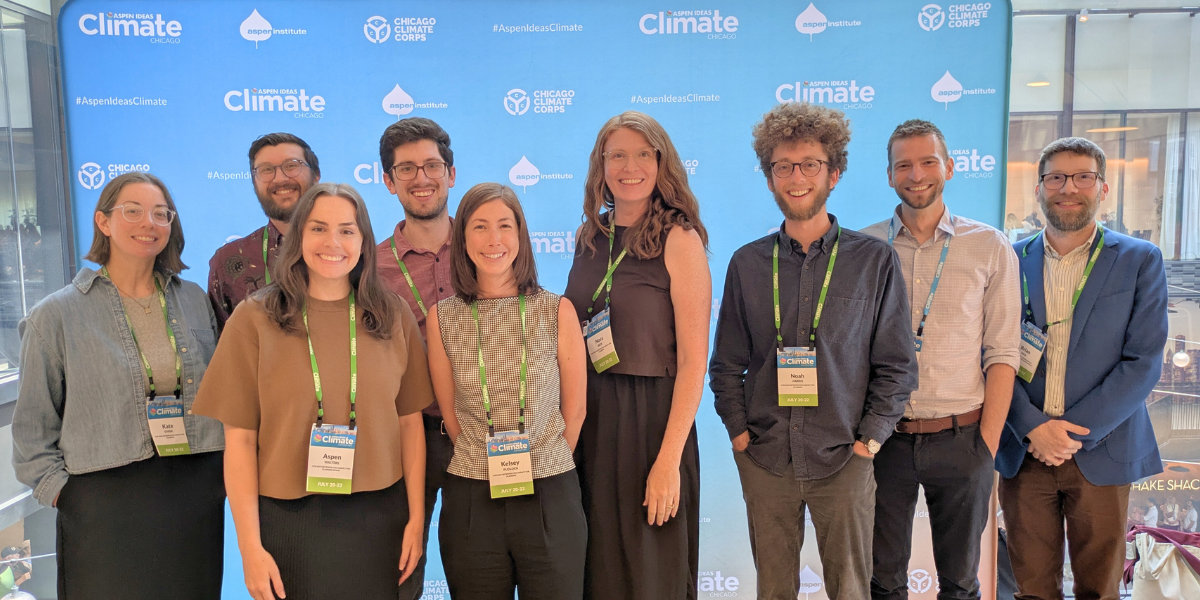 From left: CMAP's Kate Evasic, Mitch Hirst, Aspen Walters, Jesse Altman, Kelsey Pudlock, Nora Beck, and Noah Harris were joined by CMAP alumni Jared Patton and Brian Daly at the Aspen Ideas Climate Conference.
|
|
Chicago hosts national conversation on climate action
CMAP's climate team recently attended the Aspen Ideas: Climate Chicago conference. After three days of inspiring and informative discussions, we're energized by the national expertise influencing critical conversations right here in Chicago.
|
|
Tackling the challenge head-on: Housing Lake County focuses on solutions
Lake County and CMAP launched Housing Lake County — a groundbreaking coalition that brings together business leaders, elected officials, developers, and community advocates to tackle challenges head-on.
Over the next six months, the coalition will create implementable solutions that preserve what we love about Lake County while ensuring everyone has a place to call home.
Rising housing costs and limited inventory are pricing out our workforce, including teachers, healthcare professionals, young families, and long-time residents. When people cannot afford to live where they work, the ripple effects impact economic vitality, school enrollment, and community connections.
The coalition builds on earlier commitments made by Lake County and CMAP, with support from Schreiber Philanthropy, to prioritize housing as an economic development strategy.
|
|
Envision 2050: Lake County's plan looks to the future of transportation
Envision 2050 is Lake County's next Long Range Transportation Plan. The plan will develop a vision that is responsive to the needs of today and flexible enough to adapt to challenges over the next two decades and beyond.
It will establish a framework for infrastructure and investments to provide the physical mobility residents need to reach the economic mobility they seek. When completed, the plan will identify priorities, a list of projects, and implementation strategies.
Lake County is gathering input from residents, commuters, and community members to understand how people get around and how to improve options.
|
|
Kane County Housing Readiness Market Analysis: a look at key factors that will help shape the future
Did you know that in Kane County...
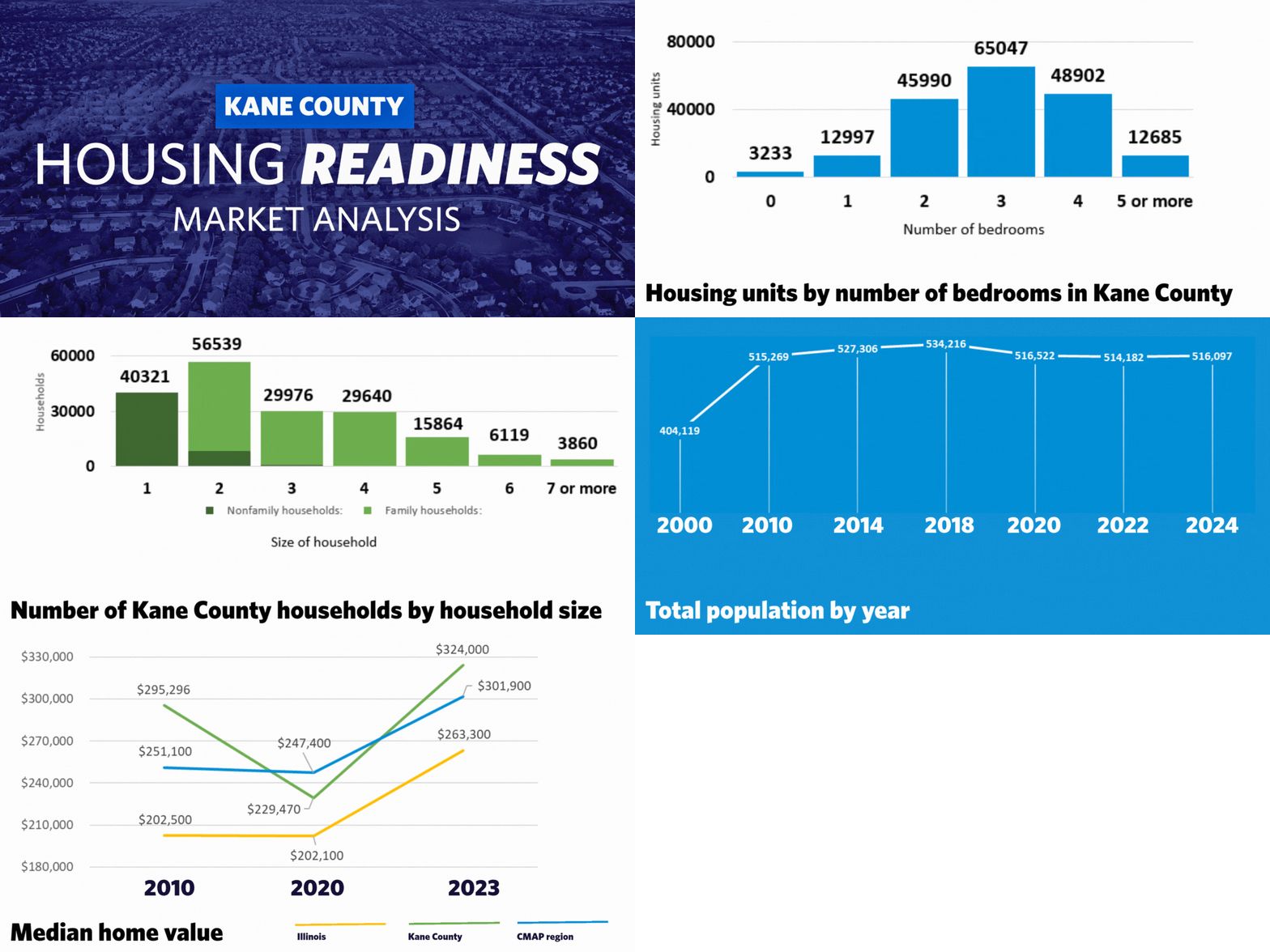
- About 70 percent of residents live in the eastern third of the county
- The population has increased by 22 percent in the past two decades
- One- and two-person households make up the majority, yet housing stock is dominated by three- and four-bedroom homes
- Median home values saw a 30 percent increase between 2020 and 2023
Kane County is partnering with CMAP on a Housing Readiness Plan. It’ll assess the county's housing needs, so communities can become housing-ready. And it can help break through barriers to clear the way for housing options the county needs.
The latest Kane County Housing Readiness Market Analysis is a key component of this plan. In it, you’ll find information that identifies trends in population, housing, and development. It provides a snapshot of the county’s housing, zoning, and land use conditions, as well as key factors that will influence future housing plans.
|
|
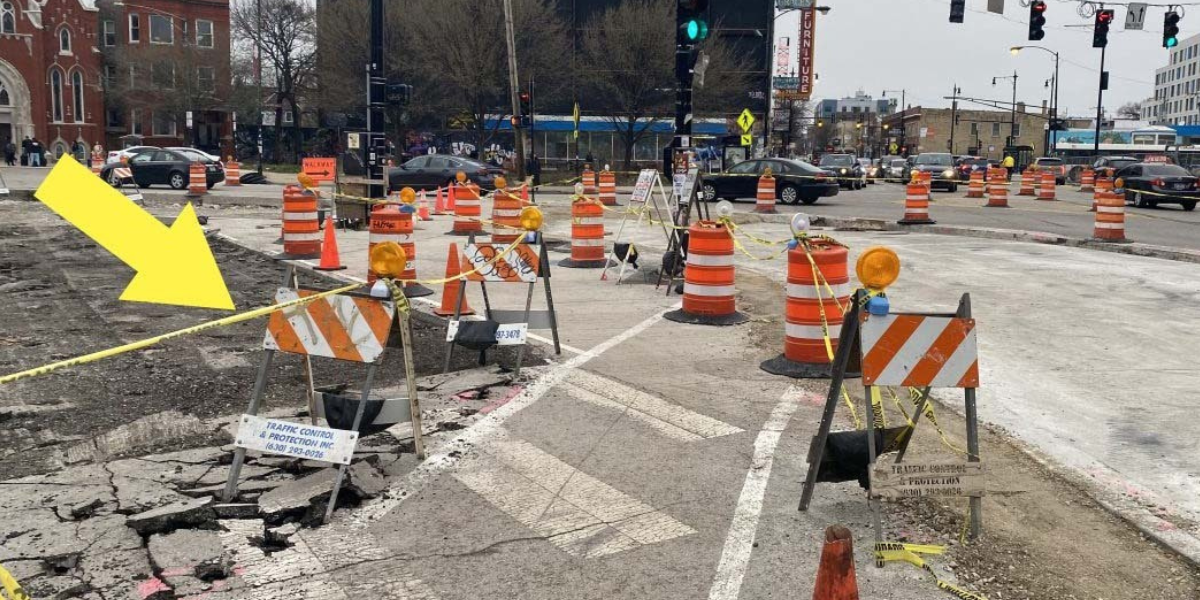
Providing accessible sidewalks and crosswalks during construction isn’t just the right thing — it’s required
Inaccessible pedestrian routes in and around construction zones can cause delays, confusion, frustration, and even bodily harm.
Providing accessible sidewalks and crosswalks during construction isn’t just the right thing to do — it’s required. Under the Americans with Disabilities Act (ADA), governments must provide equal access for people with disabilities.
Check out CMAP's article on how to provide accessible temporary routes during construction.
|
|
Bringing planning stories to life: APA-IL State Conference coming up in October
Registration is open for the annual American Planning Association Illinois Chapter's annual State Conference. The three-day event showcases urban planning in Illinois, with educational sessions, mobile workshops, and more.
It takes place October 8-10 at the Old Post Office in Chicago, where CMAP's office is located. Some of the sessions will take place in our conference rooms, and several presentations will feature members of our team. Look at the agenda to learn more.
|
|
|
|
|