|
Over $290 million in transportation investments to improve air quality and transportation choices across northeastern Illinois
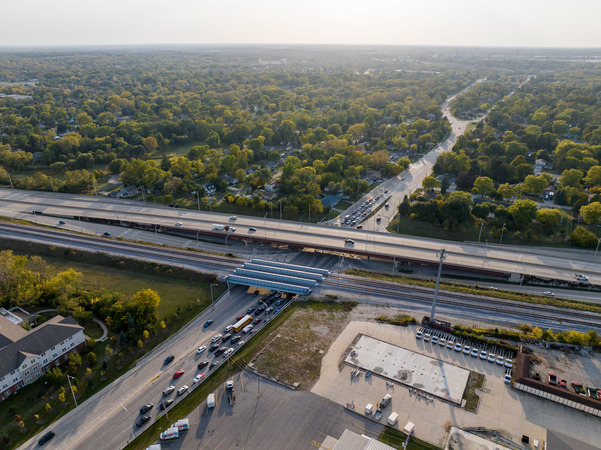
Our region's transportation decision-makers recently approved 40 new projects totaling $290 million in federal funds that will go to strengthen transit, roads, and bridges, and bicycle and pedestrian infrastructure across northeastern Illinois. More specifically, projects will rebuild roads, bridges, and train stations; add electric locomotives; expand bike and pedestrian facilities; and reduce delays at intersections and railroad crossings.
As the metropolitan planning organization for northeastern Illinois, the Chicago Metropolitan Agency for Planning (CMAP) manages the five-year Transportation Improvement Program (TIP) which includes projects that use federal transportation funds. Those federal programs include the Congestion Mitigation and Air Quality Improvement Program, Surface Transportation Program Shared Fund, and the locally programmed Transportation Alternatives Program.
TIP updates are done in close collaboration with regional transportation partners through a call for projects, an agreed-upon methodology, and evaluation by multi-agency project selection committees. About half of the projects submitted were selected. CMAP conducts this process every two years.
Watch this presentation from the June CMAP Board meeting to learn more. Visit the eTIP website to see projects in the TIP on an interactive map and by county.
|
|
Existing Conditions report sets foundation for 2026 Regional Transportation Plan
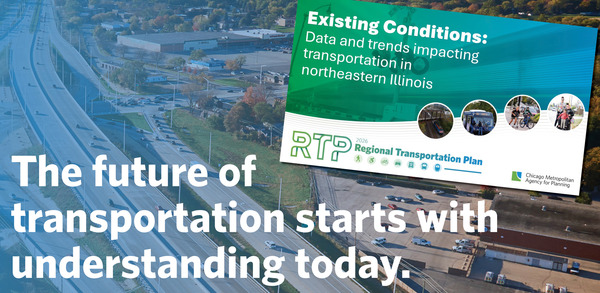
CMAP has released its Existing Conditions report — a key milestone in shaping the 2026 Regional Transportation Plan for northeastern Illinois. Building on the Emerging Priorities report, this comprehensive snapshot highlights the region’s biggest transportation challenges and opportunities. It explores shifting commute patterns, disparities in transit access, rising safety concerns, and the growing impact of climate change on aging infrastructure. It also underscores the critical role of freight, the need for sustainable funding, and how changes in population and housing could reshape travel demand.
These insights will guide regional partners as they define priorities and strategies for a more connected, safe, resilient, and equitable transportation system.
To view the maps in the report in greater detail, please visit the ArcGIS data explorer.
|
|
CMAP awards technical assistance to help 30 communities plan for the future
Dozens of communities throughout northeastern Illinois will receive technical assistance from CMAP to improve traffic safety, make travel more accessible, increase transportation choices, and help them prosper in the years ahead.
CMAP approved 30 new technical assistance program projects this month following a joint call for projects with the Regional Transportation Authority (RTA). The RTA also completed project selection for its Community Planning program. CMAP’s technical assistance program aligns with the region’s comprehensive plan ON TO 2050 and its principles of resilience, inclusive growth, and prioritized investment. Read the 2025 program guide for a complete list of awarded projects.
CMAP Board Chair and Palos Hills Mayor, Gerald Bennett, said at CMAP's June Board meeting, “Technical assistance empowers and strengthens local communities. Stronger communities mean a stronger region. I consistently hear from other mayors about the value this brings to build local capacity and overcome challenges. Since the program’s inception, we’ve supported more than 300 local projects.”
|
|
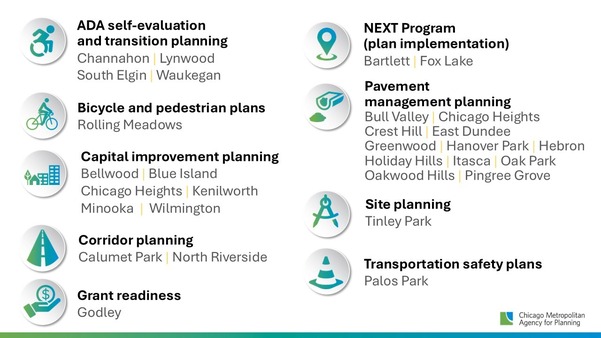 Communities awarded technical assistance in 2025, by category.
|
|
Countywide safety action plans adopted
A first of its kind regional safety initiative achieved a major milestone with the adoption of countywide safety action plans for Cook, DuPage, Kane, Lake, McHenry, and Will counties. CMAP's Safe Travel for All program supported this work with a federal Safe Streets and Roads for All (SS4A) grant.
The safety action plans are roadmaps for improving traffic safety by reducing the risk of death and serious injury on roadways throughout the region, particularly for people walking and biking, and for communities with disproportionately high crash rates.
Each county has committed to safer roads and passed resolutions in support of this work, grounded in the fundamental approach that traffic-related deaths and serious injuries are preventable.
With the plans adopted, Cook, DuPage, Kane, Lake, McHenry, and Will counties and local governments with them are eligible to apply for grant funding opportunities.
|
|
Accessibility considerations during construction season
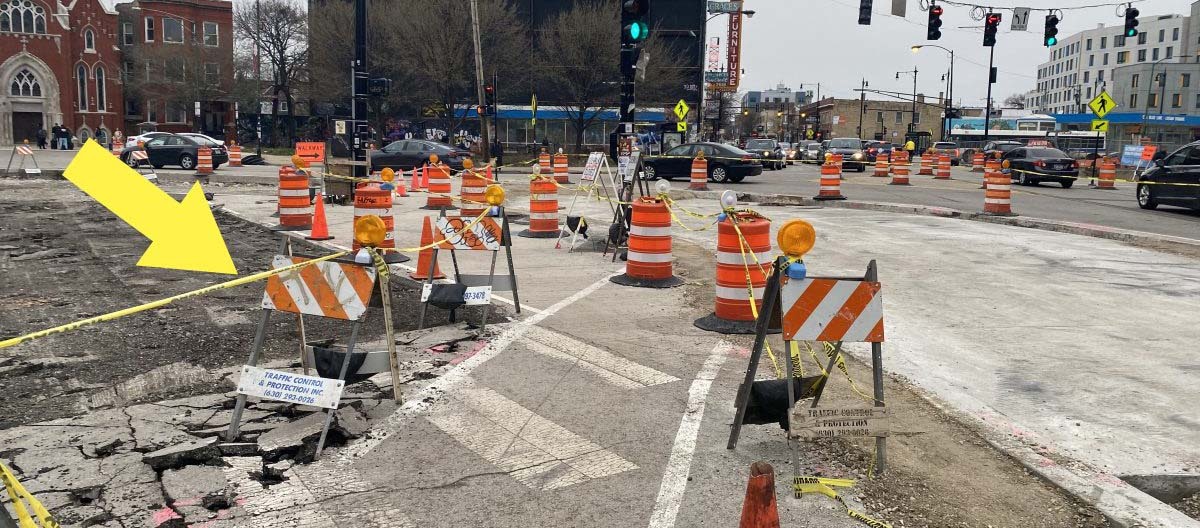
Just as signs, flaggers, and barriers help drivers safely navigate through roadway construction zones, pedestrians — including people with disabilities — also need safeguards on sidewalks, intersections, and streets during construction. Inaccessible pedestrian routes in and around construction zones can cause delays, confusion, frustration, and even bodily harm.
Providing accessible sidewalks and crosswalks during construction isn’t just the right thing to do — it’s required. Under the Americans with Disabilities Act (ADA), governments must provide equal access for people with disabilities. Additional standards and guidelines discussed below detail how to provide accessible temporary routes during construction.
|
|
Share your experience with climate change impacts
How has climate change impacted you and your community? CMAP, in partnership with the Northwestern Indiana Regional Planning Commission and Metropolitan Mayors Caucus, is creating a plan to reduce greenhouse gas emissions in the greater Chicago region by 2050, and they want to hear from you! For a chance to win a $20 gift card, share your experience by visiting cmap.is/ccapgc.
The Comprehensive Climate Action Plan for Greater Chicago is funded through the U.S. Environmental Protection Agency’s Climate Pollution Reduction Grants program.
|
|
Shaping the future of mobility, together, at Transport Chicago
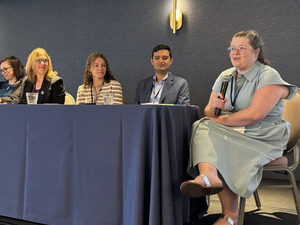
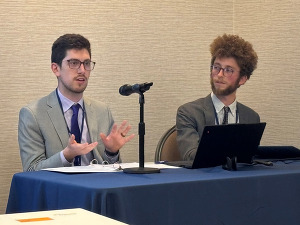
The CMAP team joined regional peers at this year’s Transport Chicago conference to exchange ideas for shaping the future of mobility. During a dynamic morning session, CMAP’s Elizabeth Scott moderated a conversation with leaders from the RTA, Metropolitan Planning Council, UIC, and the Illinois AFL-CIO about the region’s looming transit fiscal cliff — discussing what it will take to achieve meaningful governance reform, secure sustainable funding, and improve service for riders. Later in the day, Jesse Altman and Noah Harris presented CMAP’s strategies to decarbonize transportation in northeastern Illinois, emphasizing that while electrification is essential, a full transition to low-carbon mobility requires a broader set of solutions.
|
|
Community voices guide development of the 2026 Regional Transportation Plan
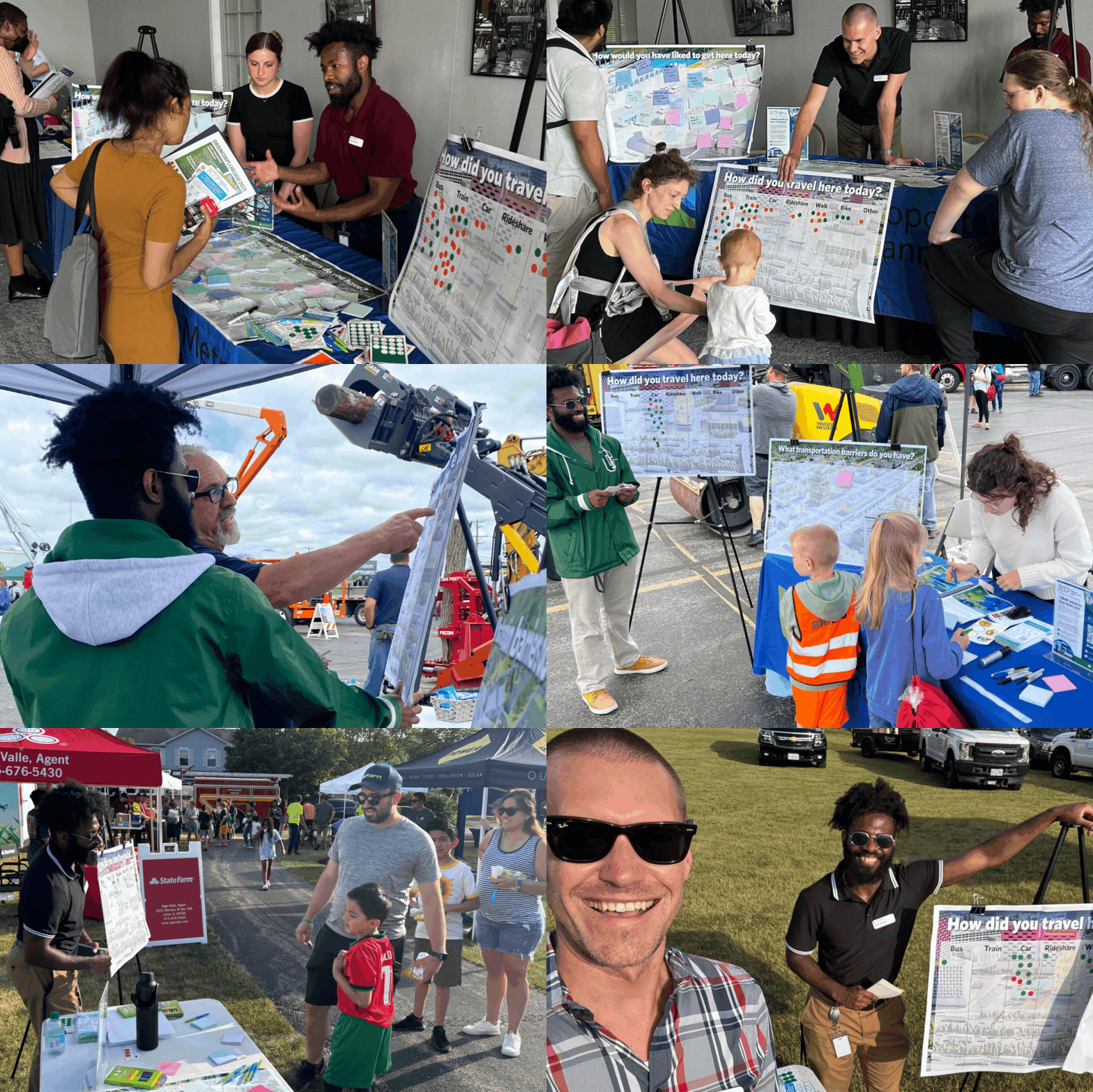
The CMAP team was out in the community recently connecting with residents about the 2026 Regional Transportation Plan at events in Chicago, Romeoville, and Woodstock. The team heard firsthand what matters most to people when it comes to transportation. Thanks to everyone who stopped by to share their ideas and priorities — your voice helps shape the future of mobility in northeastern Illinois.
If you didn’t get a chance to participate, there’s still time to weigh in by completing a quick questionnaire at cmap.is/rtp.
|
|
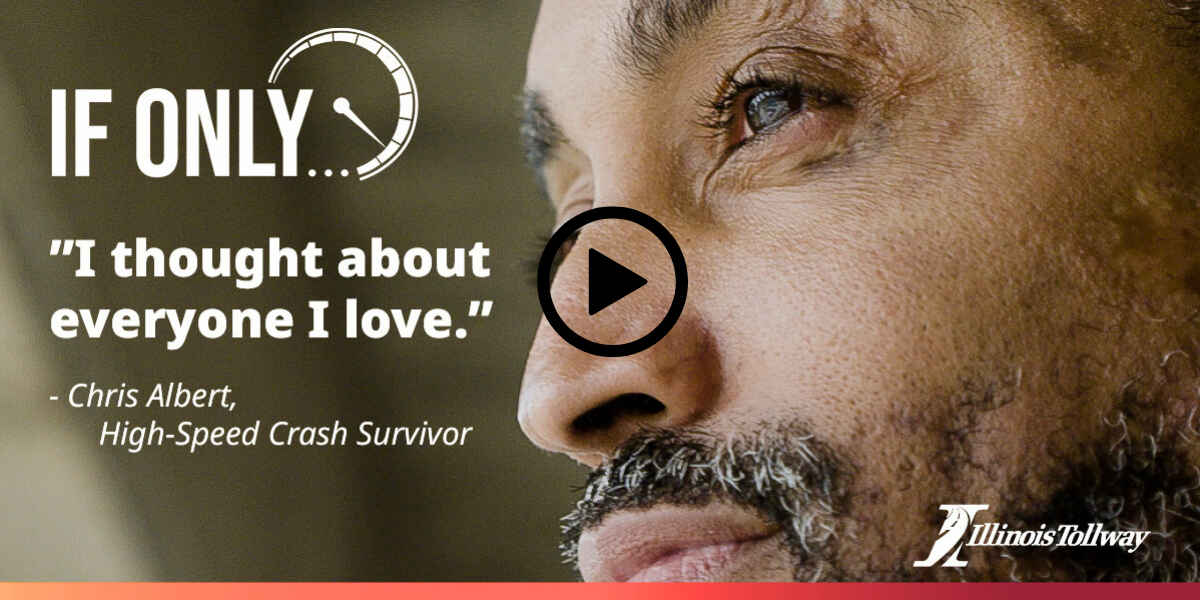
"If Only": Illinois Tollway campaign drives home consequences of speeding
The Illinois Tollway recently launched “If Only” — a campaign to make drivers stop and think: if only I had made a safer choice, if only I had considered the lives at stake, if only I had slowed down, a tragedy could have been avoided.
“If Only” features perspectives of people who have been deeply impacted by speed-related crashes, as well as advertising, and promoting safe driving tips and outreach to stakeholders who can help amplify the message.
|
|
|
|
|