|
Regional priorities include mitigating pollution and investing in resilient infrastructure
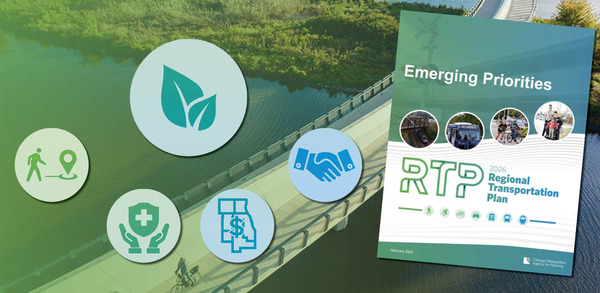
The Chicago Metropolitan Agency for Planning (CMAP) spent the last year engaging with stakeholders and researching to understand priorities, challenges, and emerging trends relevant to our region. The resulting report summarizes and organizes these priorities into five goals that will inform actionable strategies in the 2026 Regional Transportation Plan:
- Strengthen connections
- Prioritize safety and public health
- Mitigate pollution and invest in resilience
- Support economic prosperity
- Govern and fund transportation systems
By outlining high-level goals and objectives in this early phase, we can build consensus around what the region wants to achieve and align around next steps, including developing policies and performance metrics.
ON TO 2050, northeastern Illinois' long-range plan, establishes a strong foundation for fostering sustainability and resilience, emphasizing climate preparedness, water resource management, and development practices that protect natural resources. Given the strong connection between transportation and environmental outcomes, the Regional Transportation Plan presents an opportunity to further integrate sustainability and resilience into regional decision making.
Next, CMAP will assess existing conditions and continue gathering community input to shape investment priorities for northeastern Illinois' transportation future.
Learn more about what's included under these goals in this presentation to the Metropolitan Planning Organization Policy Committee (view time: 20 minutes).
|
|
CEJA Waukegan Hub celebrates first graduating class
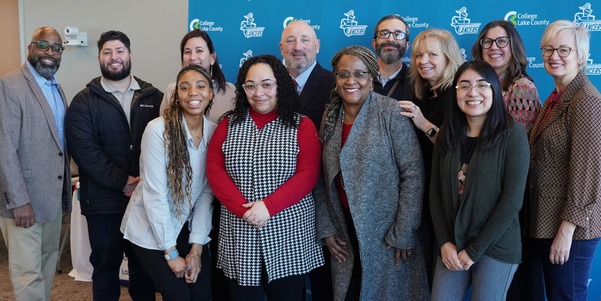
Congratulations to the members of the first cohort to graduate from the Climate and Equitable Jobs Act (CEJA) Waukegan Hub Training Program! Twelve participants completed a comprehensive, four-week program where they learned foundational clean energy technical skills and crucial soft skills like communication, problem solving, and teamwork.
The College of Lake County, Lake County Workforce Development, and The Community Works created the CEJA Waukegan Hub to expand access to clean energy job opportunities for areas of persistent poverty. More cohorts will be offered monthly throughout the year.
|
|
Evanston becomes first Illinois city to pass building performance standard
Evanston has become the first city in the state to adopt a higher standard for building energy efficiency. The city's healthy buildings ordinance will regulate, educate, and provide a clear path for Evanston's largest buildings to comply with goals set out in the city's Climate Action and Resilience Plan. The policy — which applies to buildings over 20,000 square feet — will reduce building emissions while ensuring fair decision making, affordability preservation, workforce development opportunities, and cost savings.
Roughly two-thirds of our region's emissions come from buildings in the form of electricity or natural gas for heating and cooking. ON TO 2050, the long-range plan for northeastern Illinois, calls for the region to reduce emissions by 80 percent, relative to 2005 levels, by 2050.
|
|
Pace breaks ground on region's first all-electric bus facility
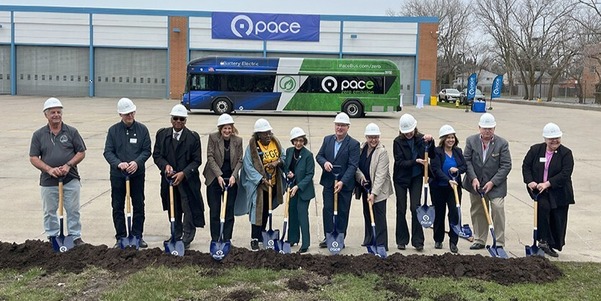
Waukegan will soon be home to the region's first all-electric bus facility. Officials broke ground on the renovation of Pace's North Division garage, which will be retrofitted into a facility that can charge a zero-emission fleet.
The first zero-emission buses are expected to operate out of Waukegan by late 2025 following the installation of 12 chargers and the construction of a covered outdoor charging facility. The second phase of the project, expanding and modernizing the garage, is expected to be completed by 2027.
|
|
May 4-10: Dive into Chicago Water Week
The fifth annual Chicago Water Week returns May 4-10! Hosted by Current, a nonprofit that develops climate solutions, the week highlights the role of water in our environment, communities, and economy.
Chicago Water Week includes free, water-focused events hosted by Current's partner organizations to engage regional leaders, policymakers, innovators, researchers, advocates, and industry veterans.
Event spotlight: Hear from CMAP's Nora Beck
Join CMAP's Principal Policy Analyst Nora Beck who will participate in a panel discussion, Fighting Misinformation & Disinformation About Water. Along with experts from Current, the Alliance for the Great Lakes, and the Shedd Aquarium, Nora will discuss water data and decision making, and how a smart water strategy can create a more resilient future. Nora will also participate in an event designed specifically for water professionals, A Vision for Water: Regional Collaboration, Local Impact.
|
|
Mayor's Roadmap: toolkit to remove and replace lead pipes
Attention mayors and community leaders: Do you have lead pipes but don’t know where to start to replace them? Check out the Mayor's Roadmap, a step-by-step, easy-to-follow guide to help you develop a plan to replace lead pipes and ensure safer drinking water in your community. This toolkit includes helpful resources for each step, including checklists, case studies, and example ordinances. An interactive map also highlights mayoral leadership and mayors in the news.
|
|
Workshops on IDOT funding opportunities coming to northeastern Illinois this summer
The Illinois Department of Transportation (IDOT) is hosting workshops throughout the state to help local governments and communities learn about and apply for funding opportunities.
The Special Programs Assistance Conferences in northeastern Illinois will take place in June and will cover the Illinois Transportation Enhancement Program, Safe Routes to School, and Economic Development Program.
Mark your calendar for these sessions in the region:
- June 5 and 6: IDOT District 1 Office
- June 10 and 11: Hillside Village Hall
- June 12 and 13: McHenry County Administration Building
- June 23 and 24: Matteson Village Hall
|
|
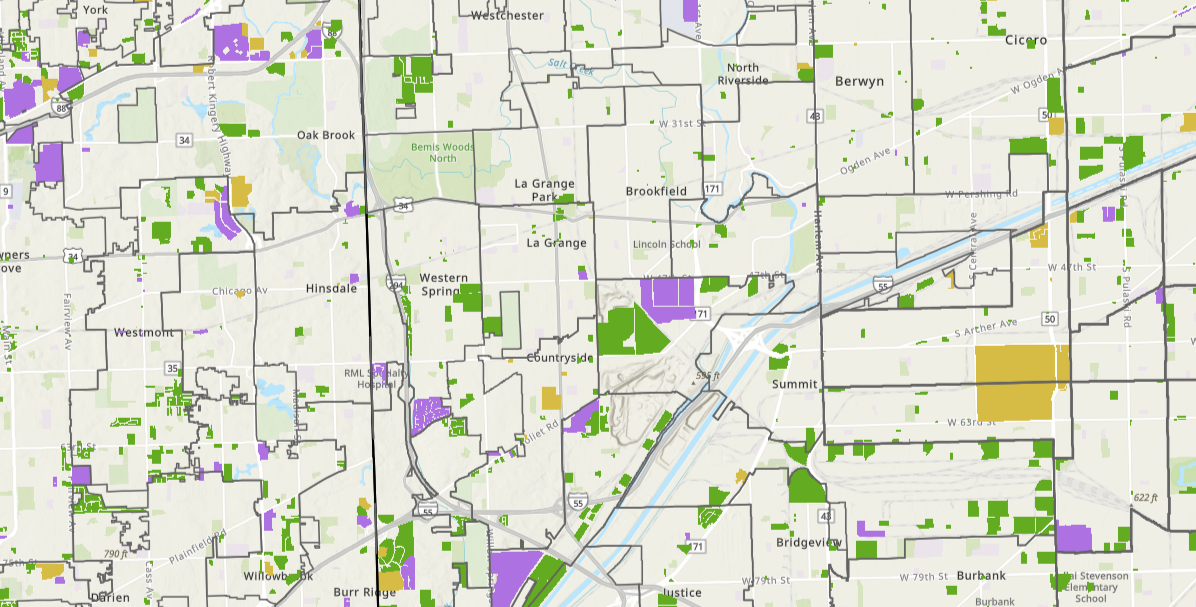
Communities can update the Northeastern Illinois Development Database
Our region is constantly changing, with some communities experiencing rapid growth, while others experience significant changes to land uses. The Northeastern Illinois Development Database tracks significant developments across the seven-county region.
Municipalities are encouraged to submit proposed, in-progress, or completed developments, to the Northeastern Illinois Development Database web map. Contributing to the web map helps CMAP and regional planners better understand current and future development trends.
By providing more accurate data, communities can influence future planning, infrastructure, and transportation decisions. This strengthens planning for regional growth to consider local and regional goals and priorities.
|
|
May 22: Climate Committee meeting
The Climate Committee will hold its next meeting on Thursday, May 22, at 1:00 p.m. CMAP will post the agenda on the public meeting website a week before the meeting.
|
|
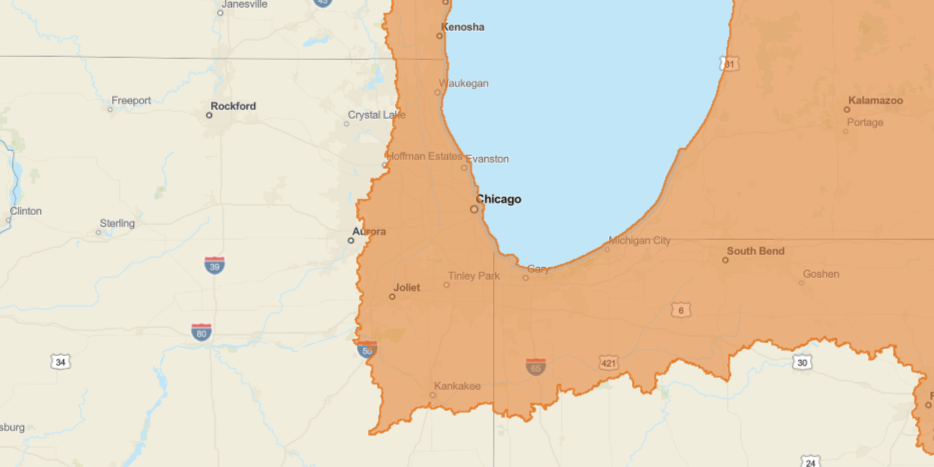
National Coastal Resilience Fund: Increasing the nation's natural defenses
The National Fish and Wildlife Foundation (NFWF) is accepting proposals for the National Coastal Resilience Fund. NFWF will fund planning, design, and implementation of nature-based solutions to enhance protection from the impacts of storms, floods, and other natural hazards while improving habitats for fish and wildlife. Projects must be located within the coastal areas of U.S. coastal states, including the Great Lakes states. Pre-proposals are due Tuesday, May 6.
|
|
Funding available to adopt solar permitting software
The Illinois Climate Bank is offering grants to local governments that would like to adopt SolarAPP+ residential solar permitting software. The program will give up to 10 grants of up to $30,000 each to fund staff time and expenses necessary to implement SolarAPP+. The grants may also be used to update residential electrical codes, where that effort is necessary to adopt and implement SolarAPP+. Applications are due Sunday, May 11.
SolarAPP+ is a no-cost permitting software developed by the National Renewable Energy Laboratory to streamline permitting processes for standardized solar systems. It automates rooftop solar plan reviews and produces instant compliance approvals for municipal governments. The software addresses plan and building code compliance and does not address utility interconnection reviews.
|
|
Grants available to pursue adoption of stretch codes
The Illinois Climate Bank is launching a competitive grant opportunity to support local governments adopting and implementing the 2023 Illinois Stretch Energy Code. Local governments can apply for up to $200,000 to pursue either full adoption of the Illinois Stretch Energy Code or a phased approach to updating base codes that lay the groundwork for future adoption. Funding may be used for staff training, community engagement, technical assistance, internal planning, permitting process updates, and tracking emissions impacts. Applications are due Friday, May 23.
|
|
Driving a Cleaner Illinois funding available for trucks
The Illinois Environmental Protection Agency is accepting applications to fund a portion of the costs associated with the replacement of eligible on-road diesel medium- and heavy-duty local freight trucks and Class 8 port drayage trucks. Applicants must pre-qualify before applying. Applications are due Friday, June 6.
|
|
Kane County water conservation, education, and technical assistance program
Attention Kane County municipal officials, public works staff, and water suppliers: Are you interested in implementing innovative water conservation projects in your community? Apply for technical assistance to enhance efforts in your community and reduce costs.
The Conserve Water for Kane program offers technical assistance for water conservation initiatives and guidance on efficient water use and sustainable practices. For questions and support, email mschneemann@cmap.illinois.gov or call 312-386-745. Applications are accepted on a rolling basis.
|
|
|
|
|