|
New water demand forecast highlights need for sustainable water management
Clean, reliable, and affordable water is vital for northeastern Illinois' health and prosperity. Acting today can help preserve a sustainable water supply for future generations.
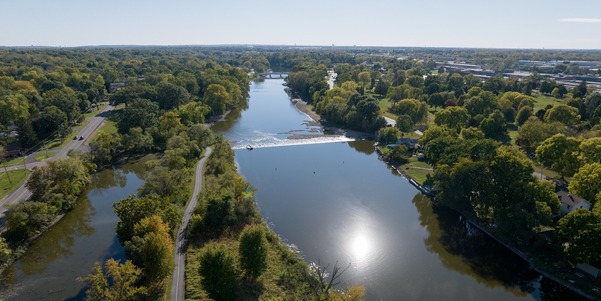
The Chicago Metropolitan Agency for Planning (CMAP), Illinois-Indiana Sea Grant, and University of Illinois Extension updated the region's water demand forecast, which compares projected demand with the amount of water that can be sustainably removed without causing further desaturation of deep aquifers or harming aquatic ecosystems.
This forecast estimates future water demand to the year 2050 at the municipal, county, and regional level, as well as by water source and sector for the seven-county region. It can help local and regional planners understand water sources conditions and how to act to conserve water, protect supplies, and explore alternative drinking water sources — strategies highlighted in ON TO 2050, the region's comprehensive plan.
Learn more about this and CMAP's other recent water work at the Climate Committee workshop on Thursday, February 27.
|
|
Securing Illinois' groundwater future
Our state's groundwater — long considered abundant — is under pressure. Aquifers are experiencing alarming levels of desaturation, creating challenges for communities relying on them for drinking water.
CMAP's groundwater report examines the Illinois 1983 Water Use Act, assesses the high-capacity well review process, and draws insights from groundwater governance practices in neighboring states.
CMAP offers recommendations to modernize Illinois' approach:
- Expand the objectives of the Water Use Act to include long-term groundwater supply management.
- Provide dedicated funding for the high-capacity well review process and streamline coordination among state agencies.
- Improving water-use reporting systems with standardized data collection and compliance mechanisms will enhance planning efforts and transparency.
|
|
Lake County's winter best practices and salt conservation efforts
Every year, the Lake County Stormwater Management Commission hosts a winter best practices workshop to help personnel from public and private entities implement winter maintenance best management practices in their operations. Their goal is to reduce the amount of salt they use while maintaining safe roadways, parking lots and sidewalks. Some of the highlights from the annual workshops include anti-icing versus deicing practices, good housekeeping procedures, equipment calibration, weather forecasting services and winter maintenance decision-making procedures.
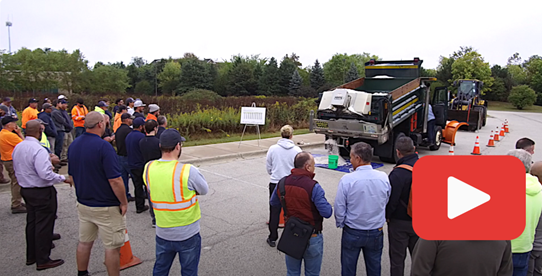
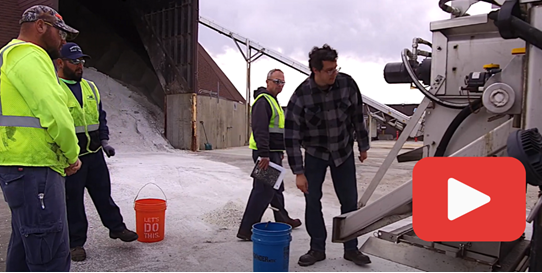
The Stormwater Management Commission, along with the Division of Transportation and Health Department, hosted its first event for winter maintenance trucks. They highlighted the importance of calibrating — or fine tuning — equipment before the winter season and after a relevant repair to make sure vehicles spread salt efficiently. The county's goal is to help train winter maintenance operators to set up their own equipment and train other staff. This can help protect the environment and save money.
Watch a video about the calibration event.
|
|
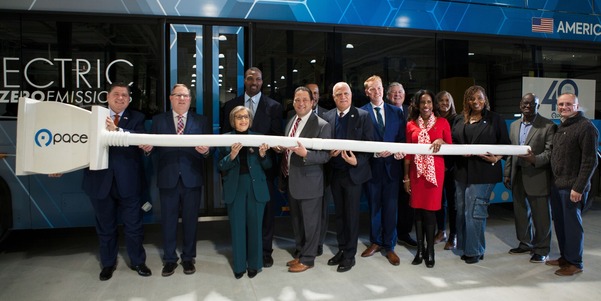
CTA and Pace receive grant to buy 57 electric buses
The Illinois Environmental Protection Agency (IEPA) awarded Pace and the Regional Transportation Authority (RTA) (for the Chicago Transit Authority, or CTA) $27 million and $31.25 million, respectively, to purchase electric buses. The funding was made available through Driving a Cleaner Illinois. Pace will provide a $9 million match to the IEPA award, and the RTA will provide a $10.42 million match.
Pace will purchase 27 battery-electric buses, and the CTA will purchase 30 all-electric buses to replace the oldest diesel buses in their fleets.
"Transit is the strongest tool we have in the fight against climate change, and we are grateful for the partnership of the IEPA in leading that fight," said RTA Board Chair Kirk Dillard. "This investment will improve service and provide cleaner air for Pace and CTA riders in the short term and in the long-term, help us lower greenhouse gas emissions."
|
|
CRTI hosting two trainings on tree preservation and urban forestry basics
The Chicago Region Trees Initiative (CRTI) has two upcoming trainings to help you preserve and support your community's trees.
On Friday, March 7, join the CRTI for an in-person workshop to learn how to administer and manage a tree preservation ordinance effectively and equitably. Learn how to strike a balance between the black and white of the law, the best management practices of site development and tree health, and the positive and negative realities of tree preservation. This training is intended for land managers, urban foresters, certified arborists, code enforcement officials, architects, civil engineers, consultants, and anyone working to improve their urban forest.
On Thursday, April 3, the CRTI will host an urban forestry basic training at the Town of Cicero Community Center. This training is designed for non-forestry professionals who work with or near trees, or manage staff or contractors who work with trees. The expert-led sessions include important forestry topics such as planting, pruning, tree biology, proper tree care, and avoiding tree damage during construction. There is also a second optional day on Friday, April 4, focused on chainsaw basics.
|
|
Learn about low- and no-emissions tech at Green Drives Conference and Expo
The Illinois Alliance for Clean Transportation is hosting the annual Green Drives Conference and Expo on Thursday, May 8, in Alsip.
Green Drives is an annual event for government officials, commercial and municipal fleet managers, corporate sustainability officers, and clean-tech and clean-energy professionals who want to learn how to use cleaner, lower emissions fuels and technologies, while saving money.
|
|
2024 annual report highlights climate action and resilience work
CMAP's 2024 annual report highlights how we serve northeastern Illinois, its communities, and its people to improve infrastructure, mobility, environment, the economy, and quality of life. This included climate action and resilience work, such as:
- Partnering with the Metropolitan Mayors Caucus, Northwestern Indiana Regional Planning Commission, and stakeholders across the region to begin the Comprehensive Climate Action Plan for Greater Chicago.
- Releasing a flood resilience investment guide that shows engineers, planners, and decision makers key considerations for integrating equity into decision making.
- Completing a risk-based vulnerability assessment of the transportation system to identify which assets will be most impacted by climate hazards, where climate risk are clustered, and who will be most affected.
|
|
Advocacy agenda details policy positions and priorities that will guide our region
CMAP's 2025-2026 Federal and State Advocacy Agenda details policy positions and priorities that can help the region address challenges, seize opportunities, and continue to thrive, including:
- Stronger policies that enhance resilience and reduce emissions and congestion.
- Increased resources for integrated water resources management.
The advocacy agenda details legislative priorities at both the federal and state levels with actionable steps.
|
|
CMAP Board approves FY26 budget and work plan
Our annual budget and workplan — recently approved by the CMAP Board for fiscal year (FY) 2026 starting July 1, 2025 — describes what we do per our federal and state mandated responsibilities, presents budget details including funding, revenues and expenses, and outlines activities the agency will continue or commence over the fiscal year. FY26 program areas include community resilience, emissions forecasting and analysis, and infrastructure resilience.
|
|
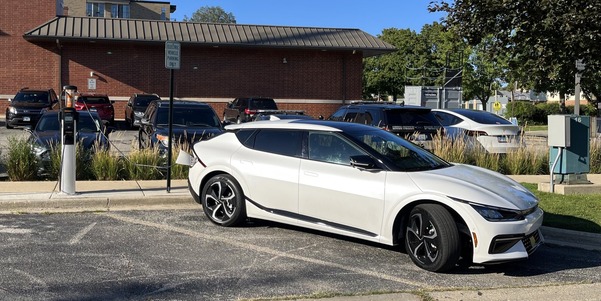
ComEd EV rebates available to boost electric charging and vehicle adoption
ComEd is offering rebates to help customers take steps toward electric vehicles (EVs) in 2025. Its 2025 EV program includes $53 million in rebates available for business and public sector fleet purchases, including small businesses pursuing as few as one EV for commercial use, regardless of small-, medium- or heavy-duty weight class size. It also includes nearly $38 million in rebates available to support infrastructure "make ready" upgrades needed for the installation of public and private Level 2 and Level 3 charging stations for non-residential customers.
|
|
Powering Safe Communities Grant Program opens
The Metropolitan Mayors Caucus is partnering with ComEd to administer the Powering Safe Communities program, which provides grants for local public safety and electrification projects. Recognizing that electrification can reduce carbon emissions, improve public health outcomes, and advance community resiliency, there will be a special focus on electrification projects this year. Applications close Friday, March 28, at 5:00 p.m.
|
|
Plant trees in your community
TreePlanters grants help people, groups, organizations, or municipalities plant 10-40 trees in their neighborhood. Grantees provide the people and places to plant trees, and Openlands provides the education, organization, supplies, expertise, and quality control on the planting day, working with the grantee to host an educational and engaging tree planting event. After the planting day, community members who received trees agree to take care of these trees for several years while they get established. Openlands' community arborist and forestry staff are available to provide support and educational resources and answer questions throughout the process.
|
|
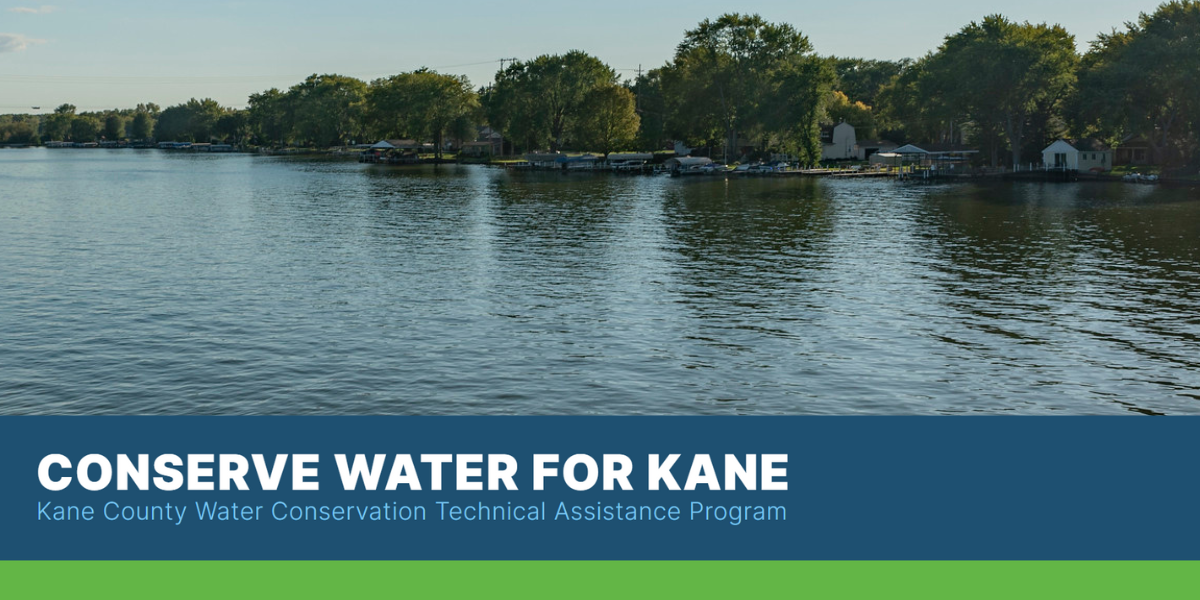
Kane County water conservation, education, and technical assistance program
Attention Kane County municipal officials, public works staff, and water suppliers: Are you interested in implementing innovative water conservation projects in your community? Apply for technical assistance to enhance efforts in your community and reduce costs. The Conserve Water for Kane program offers technical assistance for water conservation initiatives and guidance on efficient water use and sustainable practices. For questions and support, email mschneemann@cmap.illinois.gov or call 312-386-745. Applications are accepted on a rolling basis.
|
|
|
|
|