|
Austin’s Central Avenue Action Plan released
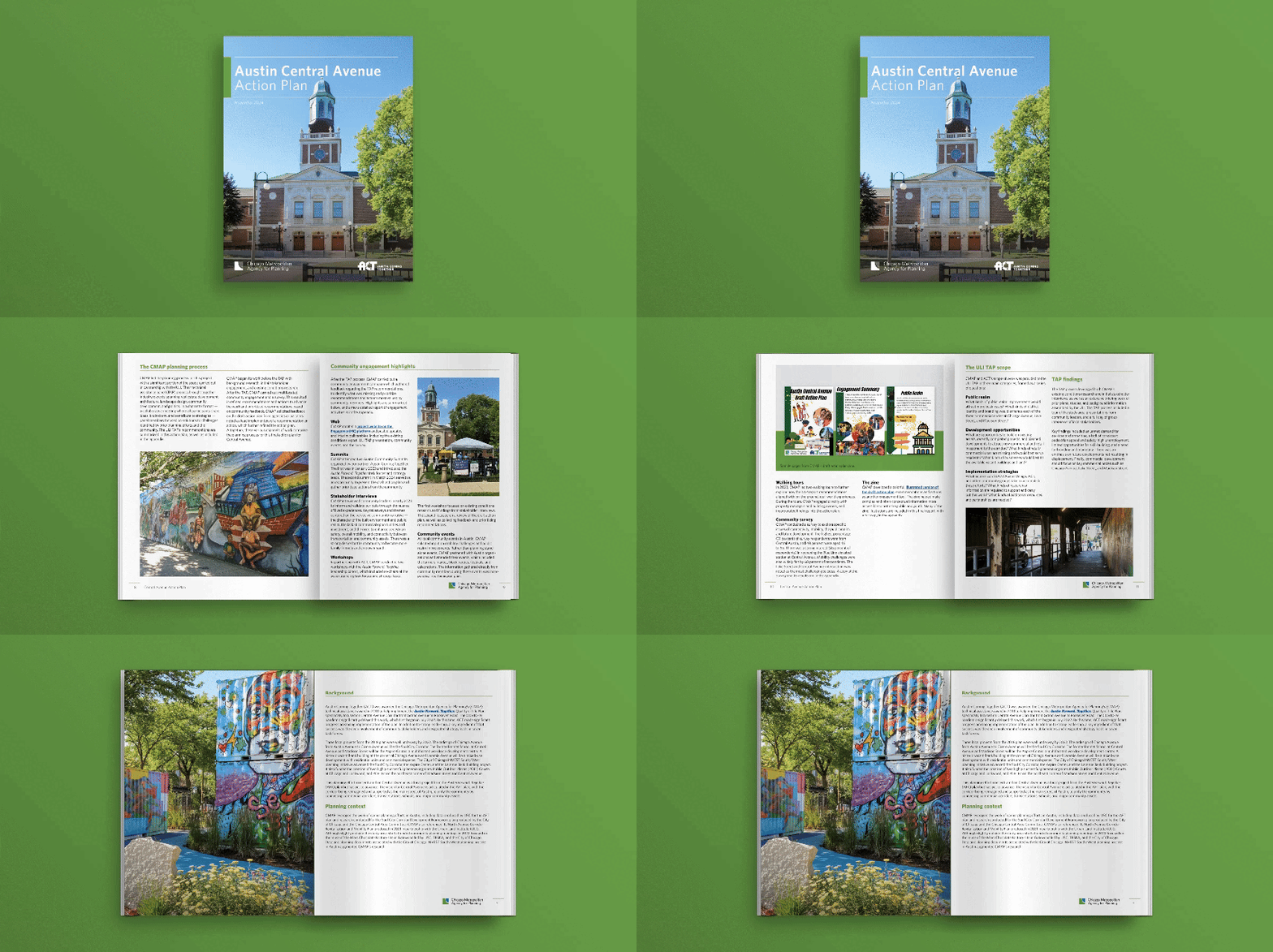
Austin Coming Together (ACT), in partnership with the Chicago Metropolitan Agency for Planning (CMAP), are excited to announce the release of the Austin’s Central Avenue Action Plan.
The new plan focuses on actionable ways to improve the Central Avenue corridor in Chicago's Austin neighborhood, re-imagining it as a main street and unifying the community by connecting commercial corridors, transit stations, schools, and major community assets. The Urban Land Institute (ULI) was instrumental in the development of the plan’s goals, strategies, and recommendations via their Technical Assistance Panel process, which brought expert voices to the table.
The Austin’s Central Avenue Action Plan goals include:
- Creating an attractive, safe public realm for residents and visitors that helps unlock the neighborhood’s development potential.
- Encouraging development that enhances quality of life and increases opportunities for residents.
- Building community support and partnerships, identify funding sources, and secure other resources to advance community priorities.
|
|
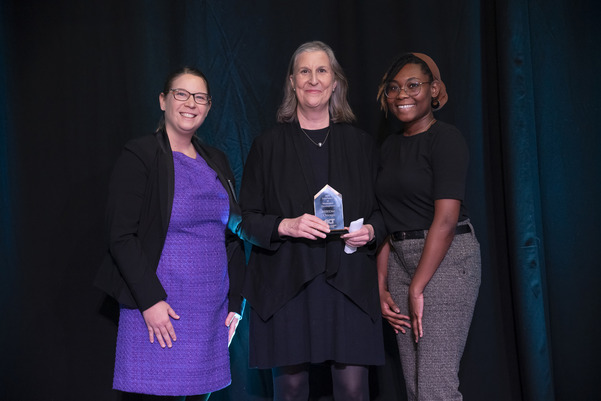 From left to right: Caroline Manley (Center for Diability & Elder Law) with Julie Burros (CMAP) and Asha Barnes (CMAP) receiving the Housing and Neighborhood Development award from ACT.
|
|
|
CMAP was honored to be a part of ACT's 2024 Membership Awards. The organization celebrated some of its members, partners, and local leaders who made significant contributions to advancing the mission of creating conditions for a thriving Austin.
CMAP and ULI Chicago received the excellence in Housing and Neighborhood Development award for their collaborative work on the Central Avenue redevelopment project. Our own Julie Burros and Asha Barnes (pictured center and right) accepted the award at the ceremony. We're proud of our work in Austin, and this recognition.
|
|
CMAP's planning work continues in 2025, and beyond! |
|
|
To strengthen the region and its communities, ON TO 2050 underscores the need for local investments, collaboration across jurisdictions, and building local capacity. Many communities can’t do it on their own and CMAP helps bridge the gap through its technical assistance program. For almost fifteen years, this program has helped more than 300 communities with local planning projects.
In 2024, CMAP awarded 30 new projects following a joint call for projects along with the Regional Transportation Authority. These projects will increase compliance with the Americans with Disabilities Act, plan for improvements that protect bicyclists and pedestrians, better prepare for grant opportunities, and address long-term planning needs.
Take a look to see what's in the works in your corner of our region. And stay tuned for the next opportunity to apply for technical assistance in Spring 2025!
|
|
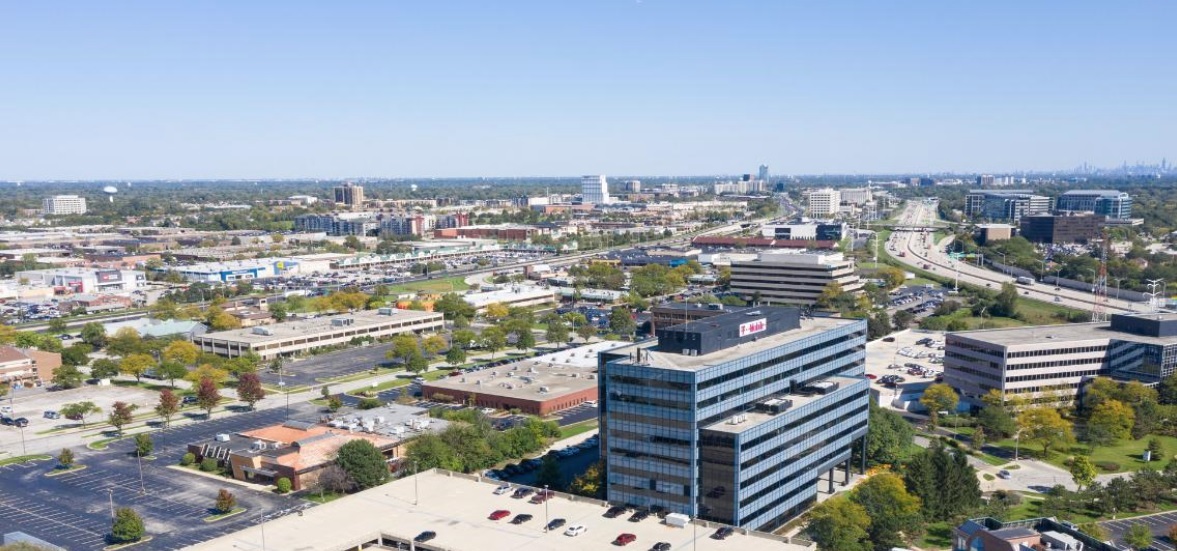 The Butterfield Road Corridor Plan was released in 2024, bringing together the villages of Downers Grove, Lombard, Oak Brook, and DuPage County Department of Transportation to strengthen this regional retail destination and employment center.
|
|
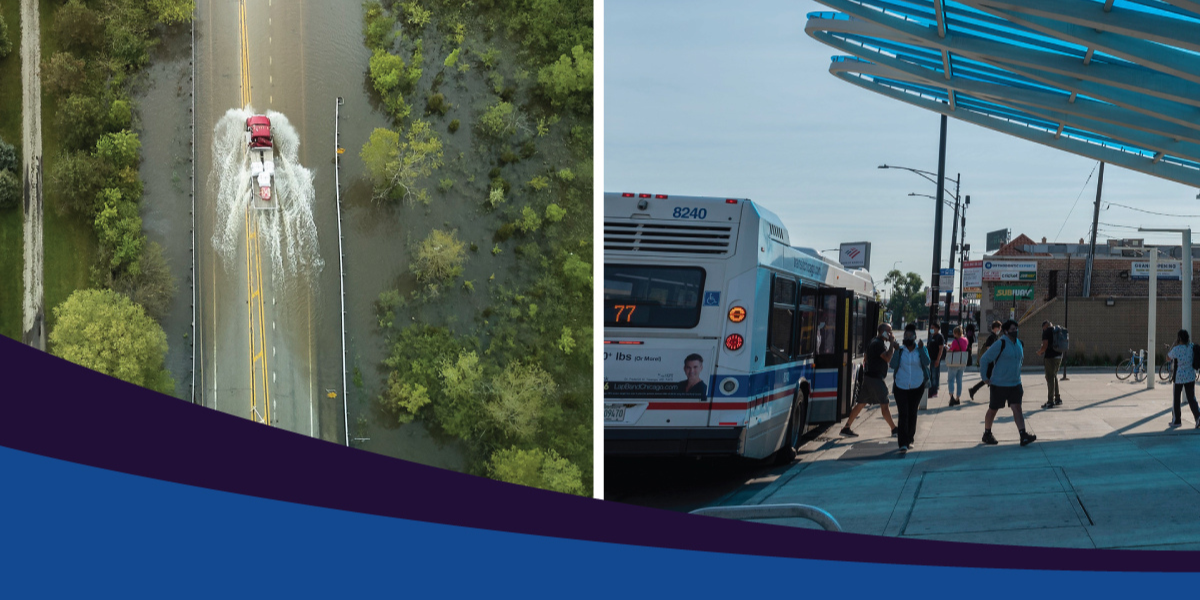
New data shows our transportation system's vulnerability to climate hazards
Climate change is already impacting northeastern Illinois and our transportation infrastructure — and it's projected to get worse.
Climate resiliency remains a top regional priority in our comprehensive plan, ON TO 2050. CMAP is helping the region better understand which climate hazards are the biggest threat, where they are located, which transportation assets are most at-risk, and how heat will affect transit riders.
Our new report, Risk-based Vulnerability Assessment, uses the latest data to analyze climate risks in the region. Along with the maps, charts, and key findings in the report, the raw data is available to view and download on CMAP's Data Hub. You can use this information to identify projects, inform project selection, and incorporate resilience into local planning activities like comprehensive, capital improvement, and corridor plans.
|
|
Creating a comprehensive climate action plan for Greater Chicago
CMAP has partnered with the Metropolitan Mayors Caucus (MMC), the Northwestern Indiana Regional Planning Commission (NIRPC), and stakeholders across the greater Chicago region to lead the creation of a comprehensive climate action plan.
The plan will identify key actions needed to reduce greenhouse gas emissions from all major sources and align Greater Chicago with the national goal of net-zero emissions by 2050.
The plan builds on previous climate action plans — including the MMC's Climate Action Plan for the Chicago Region — to create a coordinated strategy that equitably reduces emissions and prioritizes communities experiencing the greatest climate burdens.
In January, the planning team will solicit feedback from residents, businesses, and other stakeholders. In the coming months, CMAP will post articles about sector-specific issues and potential solutions. Sign up for CMAP’s climate newsletter to make sure you don't miss these articles!
Once final, the plan will provide a broad outline of strategies to meet the region’s emissions reduction goals, but more work will be needed to refine and implement specific strategies. As regional planning organizations for most of the planning area, CMAP and NIRPC will use the plan to inform other long-range planning efforts.
|
|
|
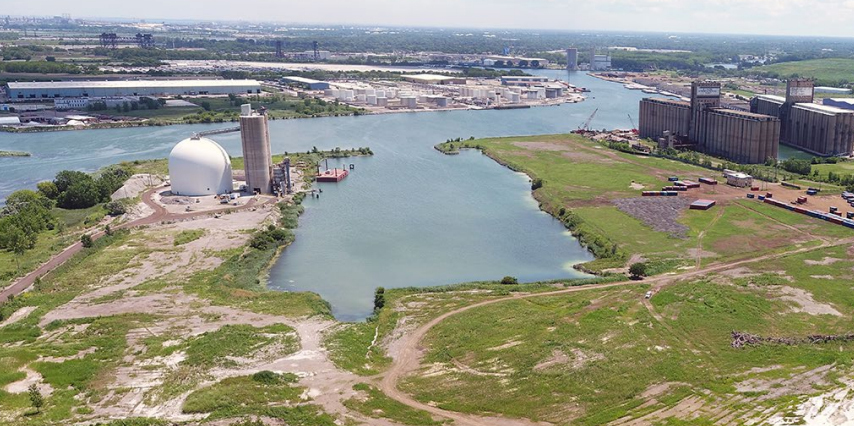
The Illinois International Port District (IIPD) will receive a significant portion of a $92 million grant to invest in new green technologies, reduce emissions, and improve infrastructure to position the IIPD for sustainable growth.
The grant is part of the U.S. Environmental Protection Agency's Clean Ports Program, which was established under the Inflation Reduction Act to fund zero-emissions port equipment and infrastructure as well as climate and air quality planning.
IIPD's award will go toward zero-emissions technology, including electric vehicle supply equipment, shore power infrastructure, solar and wind power generation, hydrogen fueling infrastructure, and battery energy storage systems.
In 2022, CMAP and IIPD finalized the first-ever master plan for the port, created through CMAP’s technical assistance program. It established a vision for the port district’s future — maintaining its status as a national freight and logistics hub, facilitating economic development, and enhancing quality of life and community benefits.
"The IIPD is currently pursuing several funding sources as a much larger master plan to restore infrastructure and expand economic and workforce opportunities for the City of Chicago, the State of Illinois, and the region," said Ivan Solis, Chairman of the IIPD. "Receiving this grant is transformational for the port and moves us closer to realizing that much larger vision and master plan for the port in an environmentally responsible way."
|
|
Share your thoughts on Pace's new network plan
The Pace ReVision project is a transformative initiative designed to create a more accessible, equitable, and productive transit system across our region. By reimagining service routes, schedules, and on demand options, this study could lead to significant service updates — starting as early as 2026. To help inform the effort, Pace is asking for public input via an online survey.
|
|
|
|
|
|
Move Illinois: 2024 Long-Range Transportation Plan seeks feedback
Imagine roadways built by Illinoisans for Illinoisans. IDOT's long-range transportation plan (LRTP) is working to do just that. The LRTP is a comprehensive and strategic roadmap that outlines transportation goals, objectives, and planned investments over an extended time frame, usually spanning 20 to 30 years. IDOT updates the LRTP every five years, with the last plan released in 2019.
Using feedback from residents about improving getting around, IDOT is planning roads, rails, and trails that meet our state's needs.
|
|
|
|
|