IDL tracks and monitors news coverage of our activities and significant events that may impact our operations, recapping the coverage in this newsletter.
This publication also details IDL's social media posts for the week, keeping stakeholders and our front-line customer service staff apprised of our public-facing communications.
The City of McCall will join a task force formed to evaluate proposals that would make state endowment lands around Payette Lake part of the Payette National Forest.
Last week the McCall City Council accepted an invitation to join the group, which is being assembled by United Payette, a local advocacy group focused on preserving public land around Payette Lake.
Council member Julie Thrower was appointed to the task force by fellow council members during last Thursday’s meeting.
“I definitely would be interested,” said Thrower, who has an environmental law practice in McCall. “Obviously, I do have an interest in these issues.”
Annual Grangemont Road Closure Begins November 8th
Big Country News, 10-31-24
OROFINO - Roads accessing the South Grangemont block of state endowment trust land from Grangemont Road between Rudo Road and Cow Creek Road will close to vehicle traffic beginning Friday, November 8, but will remain open to ATVs (under 50 inches) and motorcycles.
The closure is designed to reduce erosion and sedimentation, minimize road maintenance expenses, and minimize wildlife disturbance.
This is an annual closure by Idaho Department of Lands (IDL) in cooperation with the Idaho Department of Fish and Game for roads accessing the South Grangemont block of state endowment trust land.
The closure will remain in effect until May 23, the Friday before Memorial weekend.
The public is urged to help protect this area by reporting violations or suspected violations to the appropriate wildlife conservation officer.
For questions or concerns, please contact the IDL office in Orofino at (208) 476-4587.
Idaho Department of Lands Rescinds Extended Closed Fire Season Order, Friday at 8:00 a.m. MST
KOZE, 10-30-24
While IDL will no longer require burn permits after this date, voluntarily obtaining a free permit is still encouraged to assist fire managers and are available at https://burnpermits.idaho.gov/. IDL encourages anyone planning to burn to check with local fire authorities and the Idaho Department of Environmental Quality (IDEQ) for any local permits or restrictions for open burning or air quality in their area.
Permits for burning crop residue are issued by the Idaho Department of Environmental Quality and available online at https://www2.deq.idaho.gov/air/CRB/.
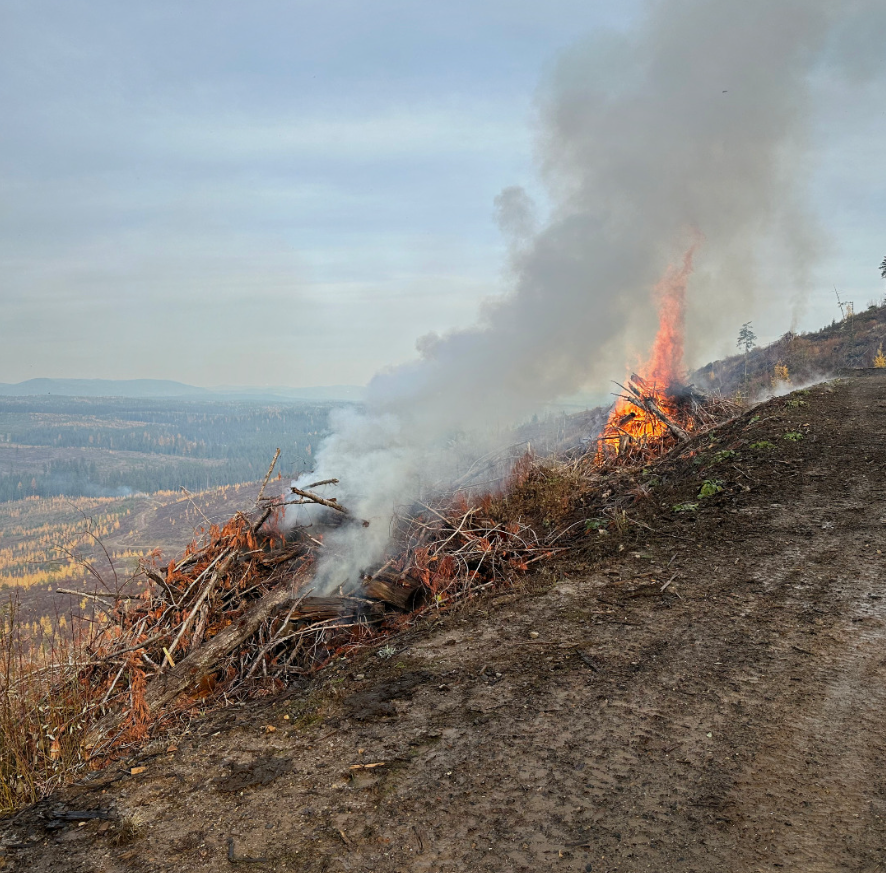
Please remain vigilant and practice safe burning habits, as fire prevention is essential year-round. Anyone starting a fire is responsible for the fire, which may include responsibility for damages and suppression costs of an escaped fire.
Idaho Department of Lands finds invasive species of moth in Sandpoint
KREM2, 10-30-24
SANDPOINT, Idaho — The Idaho Department of Lands (IDL) said on Tuesday, that an invasive spongy moth was detected in Sandpoint for the first time in more than 30 years.
IDL works with the Idaho State Department of Agriculture (ISDA) and the U.S. Forest Service (USFS) to conduct extensive annual monitoring by placing thousands of traps throughout the state. These traps feature sticky inner walls and utilize a pheromone lure that mimics a female moth to attract males. The traps are deployed statewide during the moths' flight period in summer and are collected in the fall for evaluation.
What was detected this year:
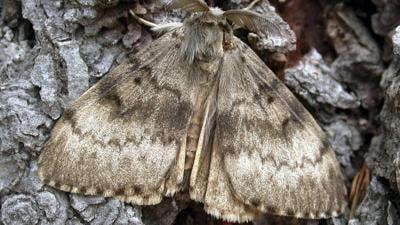
A spongy moth trap near the intersection of Oak Street and Division Street in Sandpoint captured a single male moth resembling a spongy moth.
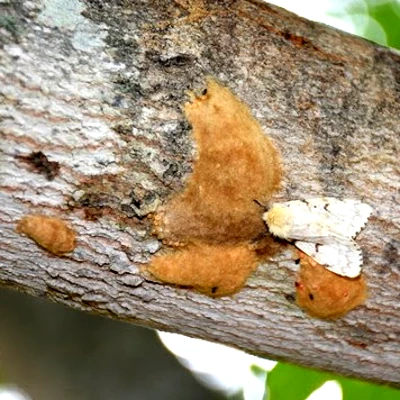
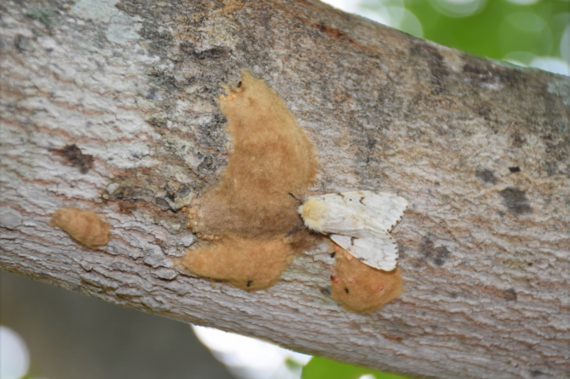
Female spongy moth and egg masses. Whereas male spongy moths are brown, have feathered antennae, and can fly, female spongy moths are white, do not have feathered antennae, and are heavy-bodied and flightless. Many native, non-damaging moths look very similar to spongy moth adults; seeing a similar-looking moth is usually not cause for concern. Photo by Karla Salp, Washington State Department of Agriculture.
The Invasive Spongy Moth was detected in Sandpoint for the first time in more than 30 years. The Idaho Department of Lands (IDL), in collaboration with the Idaho State Department of Agriculture (ISDA) and the USDA Forest Service (USFS), conducts extensive annual monitoring to identify new introductions. This includes placing thousands of traps throughout the state. These traps feature sticky inner walls and utilize a pheromone lure that mimics a female moth to attract males. The traps are deployed statewide during the moths’ flight period in summer and are collected in the fall for evaluation.
The spongy moth was formerly known as the gypsy moth until its name was changed by the Entomological Society of America in 2021. The new name reflects its spongy egg masses, aligning with the French common name for the species (spongieuse).
SANDPOINT - State officials say the invasive Spongy Moth was recently detected in north Idaho for the first time in more than 30 years.
The Idaho Department of Lands, in collaboration with the Idaho State Department of Agriculture and the USDA Forest Service, conducts extensive annual monitoring to identify new introductions. This includes placing thousands of traps throughout the state. These traps feature sticky inner walls and utilize a pheromone lure that mimics a female moth to attract males. The traps are deployed statewide during the moths' flight period in summer and are collected in the fall for evaluation.
The spongy moth was formerly known as the gypsy moth (a name changed by the Entomological Society of America in 2021). The new name reflects its spongy egg masses, aligning with the French common name for the species (spongieuse).
Invasive moth found in Sandpoint, first time in 30 years
KXLY, 10-29-24
SANDPOINT, Idaho -- Idaho Department of Lands is working to stop the spread of an invasive moth species detected in Sandpoint.
According to IDL, the department conducts annual testing which involves placing thousands of traps in statewide.
IDL says one trap captured a moth suspected of being an invasive moth and further testing confirmed it was a European spongy moth. The moth was found in a trap placed near Division Street and Oak Street.
IDL says the moth was likely introduced accidentally by someone traveling from the East Coast back to Idaho. IDL says the moths and their eggs can hitchhike via firewood, campers, outdoor furniture, or vehicles.
A smoky summer and a fire-filled fall: How Idaho’s ecosystem will recover from recent 10,000-acre wildfire
The Arbiter, 10-29-24
After a smoke-filled summer, Boise citizens enjoyed a few weeks of recovery before the wildfire that burned 9,904 acres of land. Idaho Power admitted to accidentally starting the fire due to a low-hanging power line that was sweeping the dry ground.
During a board meeting, Department of Lands Fire Bureau Chief Josh Harvey noted the department will be working with its legal team to determine the best course of action moving forward, and whether or not the fire was caused by negligence.
After working alongside deputies to determine whether the fire was negligence or a willful act, Harvey explained that it is up to the attorneys to dictate what that definition of negligence entails.
“For years we always work directly with your deputies (in the Idaho Attorney General’s Office) to determine whether a fire is billable and it’s clear in code — negligence or a willful act. The term negligence, we always leave that to the attorneys to determine what that legally means. And if we have built a case based on the facts that negligence was present, and therefore making that fire a billable fire, we have exclusively billed for suppression cost alone, as code allows,” Harvey said in response to a question Idaho Attorney General Raul Labrador asked.
How To Help The Idaho Animals Affected By The Wildfires
WOW Country, 10-29-24
This past wildfire season took a heavy toll on the Treasure Valley. Many were forced to surrender the land they had and evacuate for their safety.
On the other side, Idaho firefighters spent countless hours working to extinguish the flames threatening our land.
The Ripple Effect Of The Wildfires
For the people living near the areas affected by the wildfires, there was a legitimate lingering fear that they could lose everything. Because of that, it's understandable that many of us didn't consider the other effects the wildfires would have on the animals of Idaho.
...
A Look At Idaho's Wildfire Statistics in 2024
This wildfire season has been one for the books. Let's look at the numbers according to the Idaho Department of Lands.
Gallery Credit: Chris Cardenas
246 days into the year there were a TON of fires...
In the early afternoon on Tuesday, Oct. 15, a wildfire started on the Georgetown Summit Wildlife Management Area (WMA) in southeast Idaho’s Bear Lake County. The WMA is managed by the Idaho Department of Fish and Game.
Due to dry fuel conditions, high temperatures, and moderate winds, the fire moved quickly along the west side of Highway 30 onto the WMA, moving along the northeastern slopes of the management area. The fire burned in a mix of shrubland and aspen/conifer tree stands.
Fish and Game personnel were on the scene that same afternoon, working with incident command and fire personnel who were the first to respond. Due to the quick action of county, state, and federal agencies and multiple air support resources, the wildfire was contained at 105 acres.
Starting Nov. 1 at 8 a.m. MST, the Idaho Department of Lands (IDL) will lift the extended Closed Fire Season order. This means IDL burn permits will no longer be required on private land outside city limits due to cooler temps and reduced fire risk.
Optional: Get a FREE burn permit to support local fire managers burnpermits.idaho.gov
Photo: Female spongy moth and egg masses. Whereas male spongy moths are brown, have feathered antennae, and can fly, female spongy moths are white, do not have feathered antennae, and are heavy-bodied and flightless. Photo by Karla Salp, Washington State Department of Agriculture.