The Lens is the City’s newsletter to expand conversations on equity, inclusion, belonging, and access.
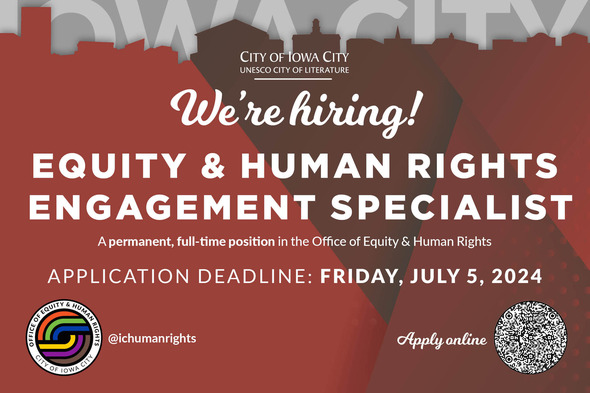
We Are Hiring!
We are accepting applications for the newly established Equity & Human Rights Engagement Specialist position.
Job summary
The role involves supporting community relations and engagement, focusing on racial equity, social justice, and human rights. The specialist coordinates awareness, education, and marketing efforts for the Office and ensures alignment of office goals and objectives by facilitating meaningful engagement with diverse populations and supports collaborative implementation of special projects and programs.
Wage: $62,566.40 – $78,457.60 (starting wage contingent upon experience)
Hours: Monday – Friday, 8 – 5 pm, some evenings and weekends required
How to apply
To apply for a job with the City, candidates must submit an application through the self-services website at the time a vacancy is actively posted. Resumes may be uploaded and attached to the online application but will not be accepted in place of the online application. The Iowa City Public Library provides computer workstations for public use.
Volunteer to Serve on the City’s Human Rights Commission
The City’s Human Rights Commission has a vacancy to fill. The position is for an unexpired term ending December 31, 2024, with an additional three-year term (January 2025 through December 2027) too follow. Service is on a volunteer basis.
The commission meets on the fourth Tuesday of each month at 5:30 p.m. The commission educates the community on civil and human rights, including planning programs and activities to eliminate unlawful discrimination, makes recommendations to the City Council on what businesses/organizations should be funded by the city’s Social Justice and Racial Equity Grant, and has the authority to recommend to the City Council any further expansions of the Human Rights Ordinance. To read the Commission's current strategic plan, visit this link.
How to apply
Applicants must be at least 18 and reside in Iowa City. Visit this site to apply. Applications must be received by 5 p.m., Tuesday, July 30, 2024. Further inquiries on the Human Rights Commission can be directed to Stefanie Bowers at 319-356-5022 or email sbowers@iowa-city.org.
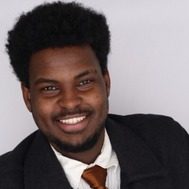
Meet Human Rights Commissioner Idris Abdullahi
Idris Abdullahi was appointed to the Human Rights Commission by the City Council in March. Here are his thoughts on why he wanted to serve as a commissioner.
Growing up, I have always considered myself a futuristic and optimistic person. As a child, the prospect of the next day was always a source of excitement and anticipation. This sense of optimism, however, was not without its fair share of disappointments. Through these experiences, I learned to understand and accept that setbacks and challenges are part of the reality of life. This understanding of the value of tomorrow and the mysteries it holds has fueled my passion for various endeavors. These include growing a business, helping those in need, and pursuing my educational achievements.
Additionally, I have developed a strong passion for my current position as a Human Rights Commissioner for the City of Iowa City. Many of my peers have asked why I chose to take on such an important role at a young age, and my answer has always been consistent. I took on this position to ensure that my opinions, as well as those of others in my demographic, are heard and have a meaningful impact on our community's decisions regarding human rights. I believe it is crucial for young adults to have a voice in these matters, as we are often the ones most affected by the decisions being made today.
Young adults have many opinions about the issues facing our society today and feel strongly that numerous performance goals need to be met. As a Human Rights Commissioner, I aim to bridge the gap between the younger generation and those in positions of power. By doing so, I hope to bring fresh perspectives and innovative solutions to the table. Our generation is deeply aware of and invested in issues such as equality, justice, and inclusivity. We have a unique understanding of the modem world and its challenges, and it is essential that our voices are included in discussions and decision-making processes.
Human Rights and Food Insecurity
News that HyVee will close stores in Cedar Rapids, Waterloo, and Davenport brings nationwide concerns close to home. Located in low-income, majority-minority neighborhoods, these stores are a lifeline for their communities. While the HyVee corporate office cites failure to meet sales goals, city officials and residents are more concerned about loss of access. Iowa State Representative Sami Sheetz said of the Cedar Rapids store, “This is the only source of food in a couple of miles in every direction—and pharmaceuticals.” Cedar Rapids City Councilman Dale Todd stated he was “shocked,” since he believed the City had negotiated a five-year lease extension with HyVee.
If the store closes, the densely-populated Wellington Heights and Moundview neighborhoods will exist in a food desert. Councilman Todd characterized the closing as “an abandonment of some of our community’s most vulnerable.” Many who use the Cedar Rapids store walk, bike, or take the bus. The next closest HyVee is two miles away, a 15-minute bus ride. The bus, however, only runs once an hour, making getting there, shopping, and getting back quite time-consuming for a person without a car.
These closings are part of a trend. Walgreens, CVS, and Rite Aid have collectively closed almost 1,000 stores in predominantly Black, Latino, and low-income neighborhoods across the country, leaving them without easy access to food and prescriptions and leading to protests. A 2022 joint study by Cornell and Yale University researchers found that of 670 pharmacy deserts in the nation’s four largest cities, all but three were in majority-minority neighborhoods.
While corporate offices cite purely financial reasons, others see underlying structural racism at work. Researchers at the University of California at Berkeley found that store closings “are almost always in Black or Latino communities,” and that “because minority communities are more likely to have residents on public healthcare programs like Medicaid, which sees a lower medication reimbursement rate than many private insurers, it’s likely true these stores are often a cost burden.”
Access to food and medication should not, however, be purely profit-driven. Aside from primary humanitarian reasons, consider that people without easy access to prescriptions are likely not to take medication as prescribed; not adhering to recommended medication schedules is estimated to cost the US between $100 and $290 billion per year. And there are solutions. Rite Aid is experimenting with mini outlets. A typical Rite Aid store is 11,000 to 15,000 square feet. Rite Aid has opened several 3,000 square foot stores in areas otherwise without pharmacies. It's a start.
Upcoming events
Human Rights Commissioners Out and About
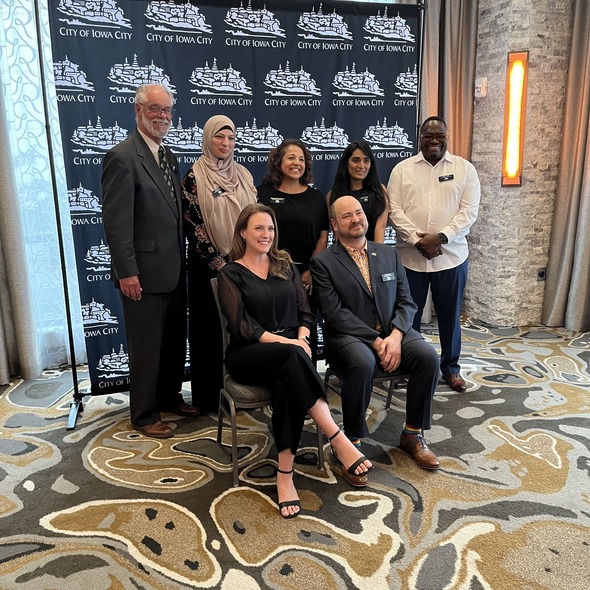
Youth Human Rights Award Ceremony - Hilton Garden Inn Main Ballroom
(Back row, L - R: Mark Pries, Vianna Qadoura , Elizabeth Mendez Shannon, Jahnavi Pandya, Roger Lusala. Front row, L - R: Kelsey Paul Shantz, Doug Kollasch. Not pictured: Idriss Abdullahi.)
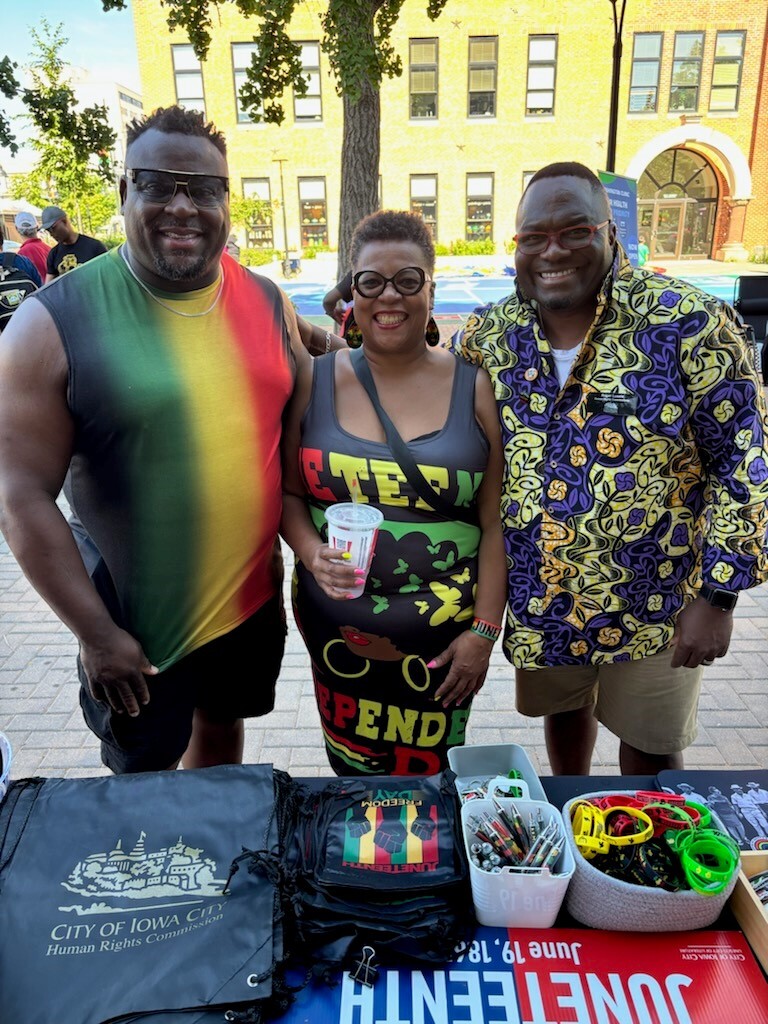
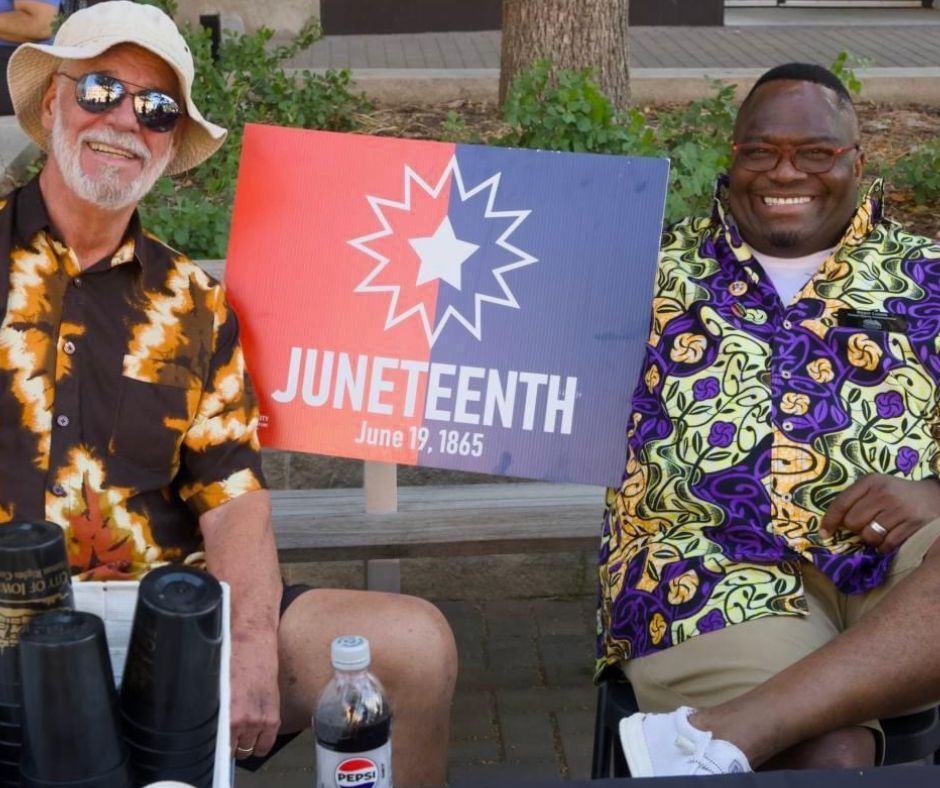
Juneteenth Celebration
(L-R: Mayor Bruce Teague, Sandra Cox, Human Rights Commissioner Roger Lusala)
(L-R: Human Rights commissioners Mark Pries and Roger Lusala)
Questions or accommodations
For questions or if you will need disability-related accommodations to participate in any of our programs, contact the office at 319-356-5022 or humanrights@iowa-city.org. Early requests are strongly encouraged to allow sufficient time to meet your access needs.