|
A Little Bit About a Lot of Things!
Mike Wallace, Conservation Director
First of all, on behalf of the Dallas County Conservation Board, our staff, and myself, we wish Chris Adkins, our Environmental Education Coordinator, the best in his upcoming retirement from this department. I know he has many things he plans to do, many of them with his family, which is the way it should be. Chris has been employed with the DCCB since 1997. Everyone has a story they could probably tell about Chris, who is one of the best storytellers on the planet. My story about Chris is more of an observation. One of his favorite things to do is tag monarch butterflies. It is so satisfying to see such a mountain of a man enjoy the intricate and precise process of putting a tiny tag on the wings of a butterfly. For Chris, it isn’t only about putting the tag on the butterfly; it’s also about how the butterfly and everything around it, and us, tie into the world we live in. Chris touched the hearts of thousands of people by promoting environmental education in a unique and captivating way. He will be missed, but his core values of getting people outside to experience the “wilds” of wherever you live will continue.
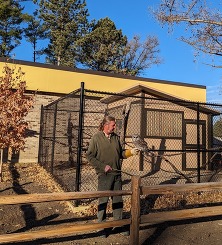
A new mew for our Barred Owl is complete at Forest Park Museum. A mew is a structure that provides a raptor with a safe, secure home where it is protected from predators, domestic animals, and the environment.
|
|
|
|
Click to view Stivers Ford website
|
|
Click to view Kyle's Bikes website
|
|
|
Click to view Elite Electric website
|
|
Click to view Shottenkirk website
|
|
The Green Glacier
Curt Cable, Deputy Director/Biologist
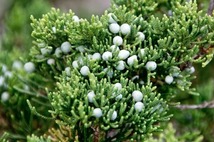
I was listening to a trivia podcast recently–and I know what you are thinking: not another person talking about a podcast they heard…–anyway, the trivia question was, “This tree with a color in its name is the most widely distributed conifer in the Eastern United States.” Answers given were blue spruce and white pine, which were incorrect. Many of you may know the answer, as you don’t have to go far to see a whole grove of them popping up in the right-of-way, scattered throughout a cattle pasture or on the edges of forest. Any ideas yet? Eastern redcedar is the answer.
Prior to European settlement, redcedars were fairly uncommon in many areas around the Midwest. Their growth was restricted to areas on rocky outcroppings atop bluffs and cliffs where fire could not reach. Fire suppression and altered land uses have resulted in their rapid expansion.
|
|
|
|
Click to view EBC website
|
|
Click to view Van Wall website
|
|
|
Click to view Spurgeon Manor website
|
|
Click to view Moss Bros. website
|
|
Retiring? More Akin to ReWilding!
Chris Adkins, Environmental Education Program Coordinator
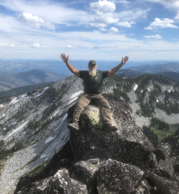
Greetings Friends. This will be my last DCCB newsletter article as I will be retiring in January 2024. It is not so much an article, but more like a thank you, or love letter.
I would like to thank the Dallas County Conservation Board for the privilege of being a Naturalist here for the past 27 years. My tenure here has never been a vocation, but instead my advocation. Thank you for the opportunity to teach in the wilds of Dallas County.
I would also like to pause here to recognize, and thank, my Elders. It is my humble hope that I was a respectful and attentive student. Thank you, Big Trees, for holding my sky up!
In gratitude, I recognize the many students-learners, fellow educators, volunteers, fellow Naturalists and most encompassing–friends. I was blessed to have the lessons of the Wilds to share with you all.
Early in my teaching career, I came upon this Latin phrase that summarized for me why I loved this advocation: docendo discimus (“ by teaching, we learn”). You see, every wild story, lesson, or trail I shared with you as DCCB’s Naturalist was also a lesson for me. I can only hope that you learned a small measure from me compared to the lessons I learned from you in the wilds. Thank you!
Educate. What is in a word? As a scientist and science teacher, I recognized that the vocabulary of ecology often got in the way of understanding. I realized that I would need to become a student of etymology–the study of the origin of a word and historical development of words and their meaning.
|
|
|
A Very Big Project
Pete Malmberg, Museum Curator
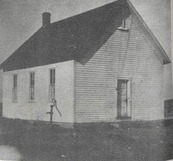
A small number of clubs, fraternal organizations, food pantries and other groups have emerged from the turmoil of the last few years with very active members who are tackling some big projects. One of these groups, the Dallas County educators of the Nu Alpha Gamma Chapter of Delta Kappa Gamma Society International, has been a big help to Forest Park Museum.
This group was established in 1956 and has been very involved in awarding college scholarships to education majors, awarding grants to Dallas County educators to promote literacy in their classrooms, and supporting the local women’s crisis center. They also developed the interactive audio exhibit in the Alton School in 2018.
The Alton School project has been very well received by Forest Park visitors. In addition to creating the audio, the group made visual displays and maps of some of the other long-forgotten schools around the county. These displays complement several graphics and signs about the history of the Alton School.
Now, in the fall of 2023, Nu Alpha Gamma Chapter is launching what may be the most ambitious project since it was founded. The group is working with historians throughout Dallas County to identify the location of the over 140 one-room schools that dotted the landscape from 1847-1961.
|
|
|
Calendar of Events

We offer many educational public programs to help you experience the wilds of Dallas County! Click below for details of all our public programs coming up in January, February, and March.
|
|
|
Power of Words
Mike Havlik, Naturalist
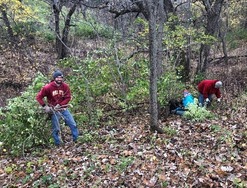
This past fall, at our Prairie Awakening Prairie Awoke Celebration, I was participating in a ceremony with a diverse group of people including some First Nations People. Some I knew very well and some only as acquaintances. We were engaged in a tradition of acknowledgement where we move in a circle, shaking hands or hugging depending on your relationship or comfort level with that person. A woman who I recently met shook my hand and said, “Thank you for caring for this land.” Within a few seconds, I went through my emotional Rolodex: I was first confused, then surprised by a revelation, quickly followed by validation, and finally understanding. After a couple of days of reflection, I believe I comprehended the meaning of her words. It was a moment of profound enlightenment.
|
|
|
A Long Winter's Nap
Erica Northwick, Naturalist
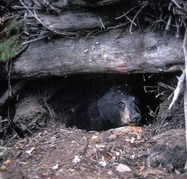
In the winter months many people hunker down inside to avoid the cold and darkness. I’ve always enjoyed winter, but even I have a hard time getting up on those cold, dark mornings when it’s so much cozier under warm blankets. Sometimes I feel like my namesake – Erica “Bearica” – and wish I could just hibernate through parts of winter. But what is hibernation? Why do some animals do it?
Bears are known for, and are often the face of, hibernation. This is fair, considering they are the largest hibernator we have in North America. Most of our hibernators are much smaller critters like the chipmunk, groundhog/woodchuck, and the thirteen-lined ground squirrel. Who would have thought bears and chipmunks would have such a special thing in common?
What is hibernation? Some people may think of it as an extended sleep like a coma, but there’s more to it than that.
|
|
|
Experience the Thrill of Winter's Chill
Greg Sieck, Natural Resource Manager
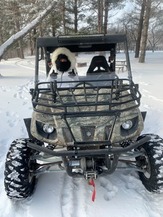
While the winter season often tempts us to stay indoors, basking in the warmth of a fireplace, recent changes in ATV/UTV laws provide a compelling reason to venture out into the crisp winter air. Now you can fully embrace the winter wonderland from the cozy cab of a UTV.
On July 1, 2022, the state of Iowa enacted a new law granting ATV/UTV enthusiasts the opportunity to explore any of its 99 counties. Gravel roads are fair game unless explicitly marked as closed. State highways, on the other hand, are off-limits to ATVs and UTVs. They are also prohibited on four-lane or interstate roads.
|
|
|
The Mighty Badger
Matt Merrick, Natural Resource Manager
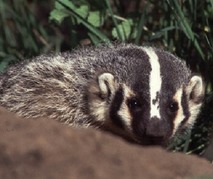
Have you ever wondered what causes those oval-shaped holes along and under Dallas County’s paved trails? Every year, usually in the spring and early summer months, the phone rings off the hook with reports of holes appearing by the trail or mounds of soil and rock flung all over it. More than likely what you are seeing is the result of the American badger. It’s true that there are other burrowing species found in Dallas County, but nine out of ten times that I have to fill a hole, it’s because of the wholesome badger.
The American badger is roughly 30 inches long and can weigh up to 19 pounds. With an oval-shaped body, characteristic black and white striping on its face and two-inch long claws, the badger is a unique native resident of Dallas County. Seldom are they seen, the nocturnal badger may create many burrow holes in a single day. The ir choice of prey is usually ground squirrels, mice and snakes.
So why does the badger make these holes?
|
|
|
The Dallas County Conservation Board was established in 1962 to protect, preserve, and enhance our natural resources by providing opportunities to improve the public's quality of life through environmental education, ecosystem management, outdoor recreation, and historic preservation. |
|
|
|
|