|
Over the past twenty years, Iowans have been implementing conservation actions outlined in the Iowa Wildlife Action Plan, such as conducting wildlife research and monitoring, improving habitat, and educating others about the fascinating lives of Iowa’s wildlife.
The 2025 version has been submitted to the U.S. Fish and Wildlife Service (USFWS) and is currently undergoing the review process. This comprehensive review and revision of Iowa’s Plan would not have been possible without the contributions of many dedicated experts across the state.
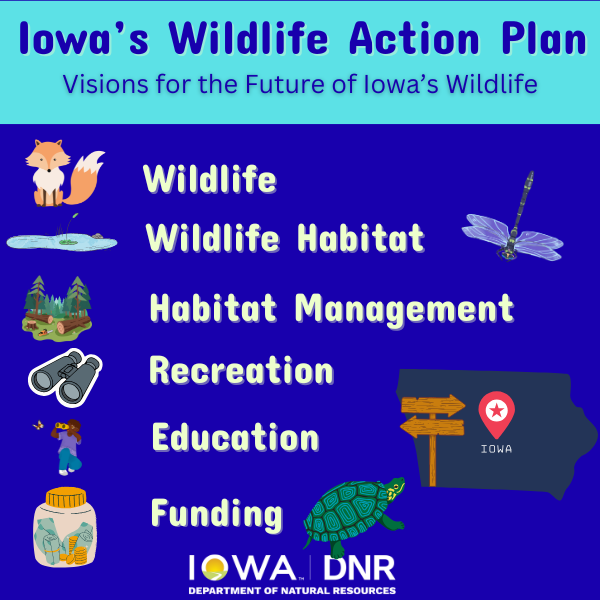
The Plan outlines six aspirational Visions for Iowa.
- A Vision for Iowa’s Wildlife: Iowa will have viable wildlife populations that are compatible with modern landscapes and human social tolerance.
- A Vision for Wildlife Habitats: Iowa will have healthy ecosystems that incorporate diverse, native habitats capable of sustaining viable wildlife populations.
- A Vision for Wildlife Management: Diverse wildlife communities will be developed on public and private lands and waters through the use of adaptive ecological management principles.
- A Vision for Wildlife-Associated Recreation: More Iowans will participate in wildlife-associated recreation, and all Iowans will have access to publicly owned recreation areas to enjoy wildlife in its many forms.
- A Vision for Wildlife Education: Iowans will respect wildlife for its many values and they will advocate effectively for conservation of wildlife and wildlife habitats.
- A Vision to Fund Wildlife Conservation: Stable, permanent funding will be dedicated to the management of wildlife adequate to achieve the visions of this plan.
The Plan goes on to identify a suite of actions that need to take place in order to achieve each of these visions. These visions and conservation actions are not specifically designed to be implemented by DNR; the conservation actions called for in the Plan will continue to require a broad array of funding sources, skills and expertise. Partnerships and collaboration will continue to be a key part of conservation efforts in Iowa. Throughout this year, a series of Wildlife Diversity Program newsletters will highlight these visions of the Wildlife Action Plan.
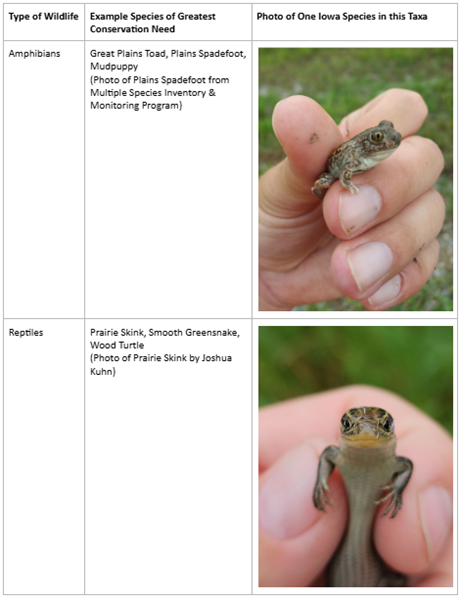
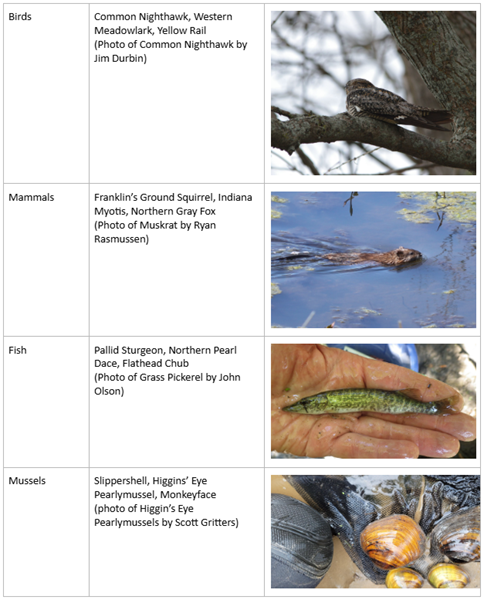
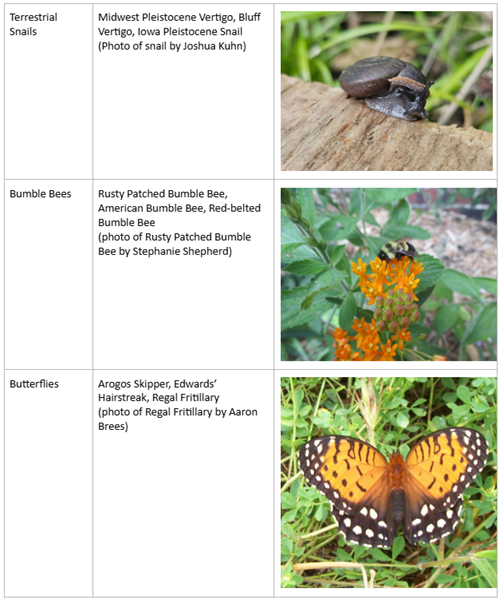
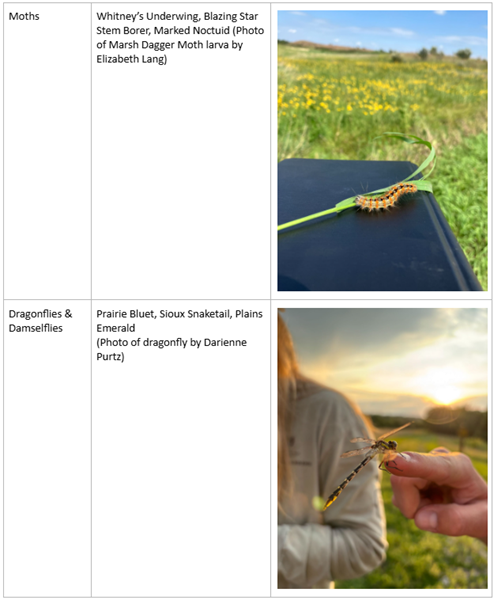
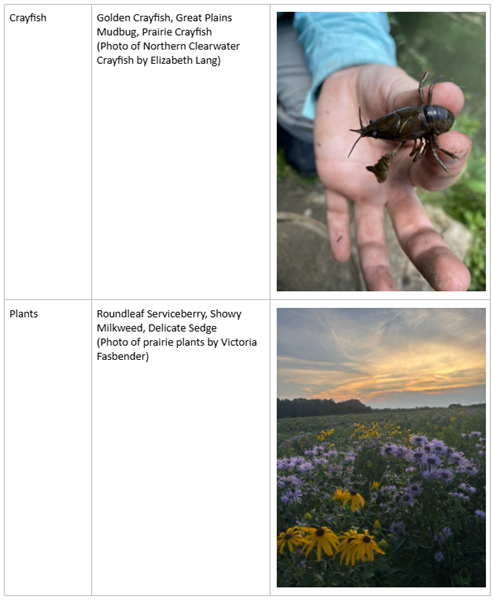
The Plan describes which species occur in Iowa from across a broad array of taxonomic groups - amphibians, reptiles, birds, mammals, fish, and several invertebrate groups including mussels, butterflies, bumble bees, and crayfish. From each of those groups, experts determine which species should be included in the list of Species of Greatest Conservation Need (SGCN) for Iowa. The updated plan also includes plant SGCN.
 |
 |
 |
 |
 |
State Wildlife Action Plans conserve wildlife and natural places. They assess the health of each state’s wildlife and habitats, identify the problems they face, and outline the actions that are needed to conserve them over the long term. In 2005, every state, territory, and the District of Columbia turned in its first State Wildlife Action Plan to the USFWS for approval. Collectively, these plans serve as a national conservation blueprint for proactive wildlife conservation. This historic effort was undertaken in order for states to meet eligibility requirements for a relatively new funding program referred to as State Wildlife Grants (SWG). In order to be approved, each must address 8 Required Elements. Each plan identifies SGCN, which includes federal and state threatened and endangered species and other rare or declining species. The Plans describe the habitats important to SGCN, key threats to these species and their habitats, needed conservation actions, and research and monitoring plans. The Plans are developed in collaboration with scientists, conservation organizations, land managers, and interested members of the public. Each Plan must undergo a comprehensive review and revision at least once every ten years, most agencies completed their second major review and revision in 2025.
State Wildlife Action Plans outline the steps that are needed to conserve wildlife and habitat before they become too rare or costly to restore. Taken as a whole, these proactive plans present a national action agenda for preventing wildlife from becoming endangered. Investing in cost-effective conservation will safeguard Iowa’s natural resources for the generations to follow.
Iowa’s Plan is currently under review; when it is approved by the U.S. Fish and Wildlife Service, it will be published on the Iowa DNR website here.
|