|
This is part of our 2025 series about 5 simple things we can all do to support our native Iowa wildlife.
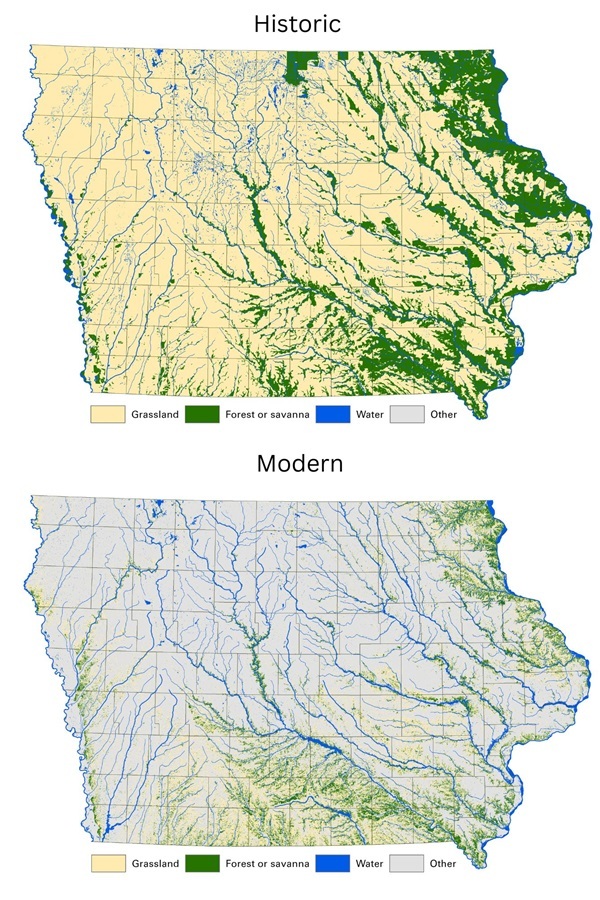
At one time, Iowa was covered with prairie. Wave after wave of big bluestem and Indian grass dotted with unique and beautiful wildflowers. From 70 to 80% of the ground in Iowa was prairie which supported large populations of Bobolinks, Meadowlarks, Ornate Box Turtles, Bullsnakes, Regal Fritillary butterflies, Rusty-patched Bumble bees and so much more.
Land cover in Iowa historically and in Modern day. Prairie was the dominant ecosystem historically. Images courtesy of the Iowa's Nature series and data sources Source data from General Land Office surveys summarized and distributed by the Iowa Geographic Map Server and the 2016 National Landcover dataset.
The time of a prairie dominated landscape has passed and many of the wildlife that rely on prairies have diminished in numbers. However, we can achieve a landscape that honors and brings back some of that prairie heritage. It’s as simple as including native wildflowers and grasses in YOUR landscape.
There are a million ways native plants benefit wildlife but they can also be extremely beneficial to the landowner.
- Prairie plants tend to have deep roots that hold onto and help build soil. Once established they are excellent for solving erosion issues.
- Most prairie plants are resilient to drought conditions which means that once established they don’t need to be watered to thrive. That can save money on water bills!
- Prairie plants can also save you money on gas or electricity used to run a mower. After the first year or two, mowing is only needed sporadically or not at all.
- Got a soggy spot? There are prairie plants that would love to grow there, keep water from pooling and as mentioned above stop erosion.
- Most prairies plants are either perennials, biennials, or hardy self-seeders. Because they don’t need to be re-seeded or planted again, you save money on new seeds and plants every year.
- They are beautiful and can really enhance your landscape once established!
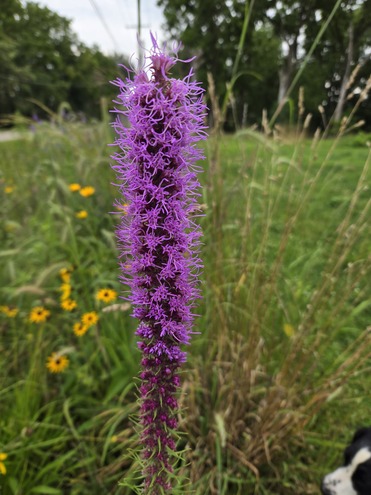 |
Many native wildflowers, like this Prairie Blazing Star, bring just as much if not more color and beauty to the landscape as any ornamental plant.
By planting native prairie flowers and grasses you are helping your landscape become a functioning community of wildlife from the ground up. The deep roots aerate, stabilize, and add organic matter to the soil encouraging a healthy and balanced soil community. The flowers and leaves attract a diversity of insects which have fed and lived on these plants for thousands of years. This foundation of plants and insects feeds everybody else. For example, during the nesting season, songbirds rely on insects to raise their young and then happily feed on plant seeds in the fall.
Crash Course on using Native Plants in Landscaping
-
Plants or Seeds? Buying started plants will be more expensive but they should establish and bloom more quickly and can be more strategically planned out. If you have a small space and want a more manicured look, using seedlings is likely best. If you have a larger area and want a more natural prairie look, a seed mix will be more economical and easier to manage. It will take some work in the first 2-3 years to get established including site preparation and occasional mowing in the first year or two. A seed mix heavy on flower (forb) seeds is recommended.
-
Where to get plants? The Tallgrass Prairie Center maintains a good database of native plant nurseries and service providers. Also look for native plants at farmer’s markets or native plant sales hosted by county conservation boards or Wild Ones groups in your area. There are several good online sources of plant materials as well.
-
When to plant? If you wish to direct seed, right now is the ideal time! The perfect time would be before the ground completely freezes and right before a snow storm so the seeds get some insulation and protection from birds and mice. However, seeds can be planted in the spring which is also the best time to put seedlings into the ground.
-
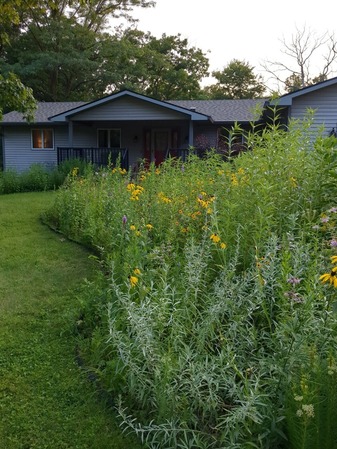
How to Plant? Prairie plants will likely do best if planted pretty close together, filling the entire space of a garden bed. They are accustomed to growing with lots of competition and keeping them tight together will help discourage lawn-grass and other plants from moving in. To keep it neat looking, install and maintain a clean edge. They do not need enriched, fertilized soil. Other tips:
- Plant clumps or swaths of each species. Not only will this look more organized and attractive but it’s actually beneficial for foraging bees.
- Use short grasses such as Side-oats Grama, Little Bluestem or Prairie Dropseed in between flower clumps to help provide structure and support for the flowers.
 |
-
What to Plant? The sky is the limit here and it can get quite overwhelming but here are some good rules to follow and keep it simple:
- If in an urban or suburban setting choose mostly plants that are on the shorter side; Pale Purple Coneflower, Purple Prairie Clover, Sky Blue Aster to name a few; and use a fewer taller species as statements or accents.
- Start with a limited number of species and vary the bloom time – 2 flowers that bloom early (examples: Golden Alexander, Hairy Beardtongue), 2 midsummer (examples: Swamp Milkweed, Wild Bergamot), 2 late summer (examples: Prairie Blazing Star, Stiff Goldenrod) and a native grass. This will cover the bases and you can always add to it.
- Plant 5 or more plants of each species.
- There are some plants that have very high wildlife value and are beautiful but are very prolific spreaders so just consider that if including them in your landscape. They need a space where they can run a little wild and not get in the way. Some examples include: Common Milkweed, Wild Bergamot, Anise Hyssop, Cup Plant.
- Consider adding some woodland wildflowers if you have a shady spot: Virginia Bluebells, Spring Beauty, Virginia Waterleaf, Columbine. Some native shrubs and trees are also particularly useful for providing shelter and early season nectar and pollen where prairie plants are the weakest.
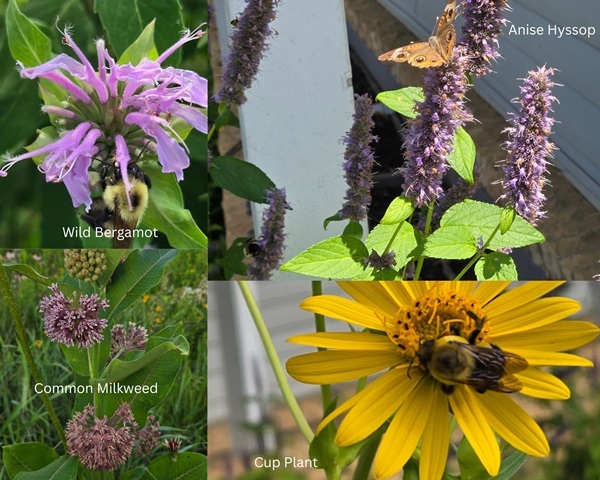 |
These 4 plants, Wild Bergamot, Anise Hyssop, Common Milkweed and Cup Plant, are super valuable plants for wildlife but also need room to "roam".
Plant a small patch of prairie plants and watch the natural world open up!
To benefit wildlife you don't have to convert your entire lawn to a jungle of native plants. If you have 30 acres you want to plant to prairie that's wonderful but even incorporating a few native plants into your landscaping can make a big difference. And just imagine if all Iowa landowners would do this... it might give us a little window into our prairie past!
Want to do a deeper dive? These are some good information resources:
|