|
FOR IMMEDIATE RELEASE
Month, Day, Year - CLICK TO EDIT HERE
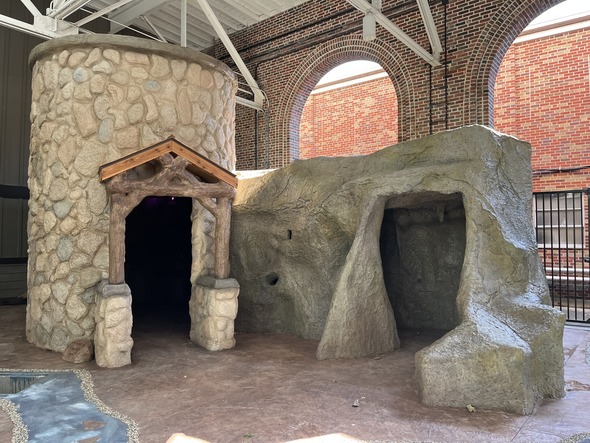 DES MOINES – The Iowa Department of Natural Resources (DNR) is introducing a new hands-on attraction at the Iowa State Fair: the Conservation Discovery Area, located at the historic DNR Building.
This new playscape offers fairgoers of all ages a chance to experience elements from two well-known Iowa state parks—Maquoketa Caves and Pilot Knob—without leaving the fairgrounds. Visitors can walk through a cave-like structure modeled after formations at Maquoketa Caves State Park, and explore a replica of the stone tower found at Pilot Knob State Park. The exhibit also includes a stream feature with cut-outs highlighting aquatic life and a full-size poster of Bridal Veil Falls at Pikes Peak State Park.
“Our goal is to bring Iowa’s iconic natural spaces to the fair,” said Tammie Krausman, public information officer with the DNR. “We hope this inspires visitors to get out and explore all that Iowa’s outdoors have to offer.”
The Conservation Discovery Area was designed and built by Austincrete of Newton, Iowa. Artist Tawna Austin, along with 13 family members, spent 15 weeks building the display using more than 20,000 pounds of concrete and 5,000 pounds of steel. They visited both Maquoketa Caves and Pilot Knob to closely match the natural rock formations and design details. Custom molds were created to replicate the stones used in the original Pilot Knob tower.
This playscape is part of the ongoing improvements to the DNR area at the fair. In 2024, the DNR updated its outdoor courtyard to include a covered stage, rainscape garden, and a new shooting range building. The range is open daily from noon to 6 p.m., offering visitors a chance to try archery and shooting sports in a safe setting.
At the Courtyard Stage, DNR staff and guest presenters will lead daily programs on topics like wildlife, camping tips, outdoor skills and nature crafts. Inside the DNR Building, visitors can also explore fish aquariums, animal displays, a duck pond, a sustainable living exhibit, and a magazine booth with a free T-shirt offer for new subscribers.
Funding for the Conservation Discovery Area was provided by the Iowa Legislature, with additional support from Safari Club of Iowa, Izaak Walton League and Ryan Elliot Design.
For a full schedule of activities and more information, visit: www.iowadnr.gov/statefair
A healthy pond needs aquatic plants, but too many can upset a fishing pond’s balance and become a nuisance. Many pond owners struggle with how to control the amount of aquatic plants, without completely removing all of them, so they can enjoy their pond.
Pond owners can use herbicides to reduce aquatic plants, but their growing season is almost over by August.
Pond rakes or cutters, although more labor intensive, are perfect this time of year to control aquatic plants in small areas to create fishing lanes, swimming areas and dock access.
Pond rakes cut plants from the bottom and let you remove them from near shore or around docks. Attach a float to the rake to let it skim and remove plants and moss or algae from the surface.
A cutter will sink to the bottom and cut the plant stems as it is dragged back, allowing the plants to float to the top. The pond plants are often carried away by the wind or you can pick them up with a floating rake.
Use a rope attached to a long-handled rake or cutter that you can throw and pull back. You can use these handy tools for many years, and they cost less than a gallon of some aquatic herbicides. Local hardware or pool stores may carry these, or try an online search for “pond rake or cutter.”
A few tips to remember:
- Many plants spread by fragmentation, so if growth is not throughout the pond, do not use these methods.
- Once out of the water, let the plants dry out before moving them too far. This will greatly lighten your load.
- Obey State Law. Don’t haul the plants off your property; you cannot transport aquatic vegetation in Iowa. Once out of the water, leave the plants onshore to dry and compost or move dried plants to your garden where they make excellent mulch.
- Lakeshore property owners on a public lake can physically remove a 15 foot wide path of vegetation for navigation to the main lake without a permit; you cannot use herbicides to remove the aquatic plants in a publicly-owned lake. Contact the DNR fisheries office in your area if you have questions.
Learn more about aquatic plants in ponds at www.iowadnr.gov/pondplants.
Media Contact: Jason Euchner, Fisheries Biologist, Iowa Department of Natural Resources, 515-230-4789.
|