|
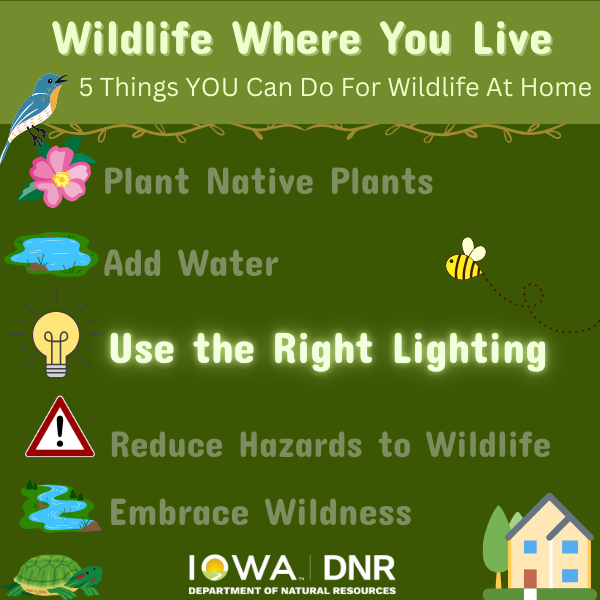
In 2025, the Wildlife Diversity Program is releasing a series of articles throughout the year on how to support wildlife where you live. We will focus on five areas where humans and wildlife can connect. They all represent positive actions that can be taken to make your little corner of the world a little more welcoming to wildlife. This month we are all about pollinators and insects since June 16-22 is Pollinator Week! But before we get there, we're going to examine some actions you can take around your house that you may not have thought about before - changes to how you use light at night.
Humans have modified the world in a lot of visible ways and coincidentally one of the biggest modifications we’ve made has been in the pursuit of better visibility. It is estimated that artificial light covers at least ¼ of the Earth’s surface and it impacts the natural world in many unexpected ways.
ALAN or Artificial Light at Night refers to any human made light that shines at night. Mostly refers to outdoor lighting but interior lights can also be impactful.
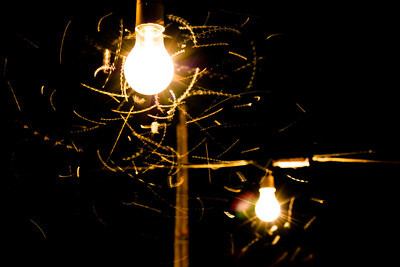
You’ve likely heard the term light pollution and how it makes the stars in the night sky less visible. Maybe you’ve even been hearing recently about how artificial light impacts bird migration. And, of course, we’ve all heard the saying “Like a moth to a flame…”, which is a recognition that the lights we produce affect insects but it is only recently that we’ve gotten a better picture of just how lights impact insects and it’s not great.
Photo by Lazellion. Under a creative commons license 2.0.
Roughly half of the world’s insects are nocturnal and while artificial light is not the main cause for insect declines it is a contributing factor. The good news is that it is a contributing factor that we can do something about at our home and in our town!
Some ways that artificial light at night can impact insects:
- EXHAUSTION: Lights draw in some species of insects (like that moth) who are confused by it which can cause them to circle and fly around the light for hours, wasting energy, often leading to death.
-
BEING EATEN: If those insects confused by the light don’t exhaust themselves to death, they may end up as a meal because the congregation of insects attracts their predators. While these predator-prey interactions are natural, the light can tilt things too far in the predators favor.
- INTERRUPTED BREEDING: Fireflies depend on species specific lighting patterns to find others of their kind and artificial lights can drown these out and interfere with their signals.
-
DISORIENTATION: Aquatic insects (like Mayflies) can be fooled by the reflection of lights on wet pavement and lay their eggs on the road or sidewalk.
- HIT BY CAR: Street lamps and vehicle head lights draw insects into danger on our roads.
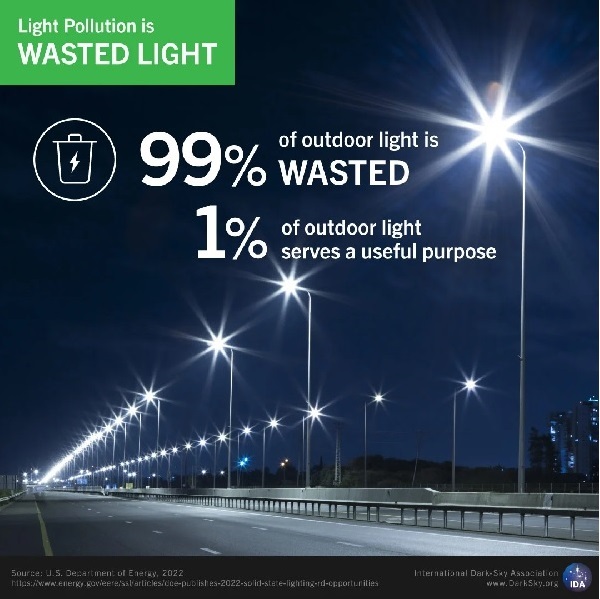
These are just a few of the disruptions artificial light can cause insects. If you want your home to be a welcoming place for pollinators and other insects then examining the lighting... at your home, in your town...can make a big difference!
Courtesy of Dark Sky International
What you can do!
-
Do an assessment of your home lighting. How many outdoor lights do you have? Is the light from them targeted where it is needed? How often are they on? How much light is spilling out from inside the house?
- Make a plan:
- Shielded downward directed lights that shine right where they are needed are the ideal - Can you replace some of the existing lights?
- Timers or motion sensors installed on outdoor lights are a great way to ensure they are not being used when they aren't needed.
- Can you replace some bright cool white bulbs with some that are a warmer tone?
- Pull blinds at night and turn off lights in rooms when they are not being used.
- If you don't own your home you can talk to your landlord about updating the lighting. Maybe reach out to the city council too! Spreading the word and educating is a huge help!
Hopefully you understand now why we included lighting as one of our top 5 ways you can live more in harmony with the wildlife where you live. Not only is it something we can all help with, it could also save you a few bucks - if you'd like to do a deeper dive into the topic of how lighting impacts insects and how to improve lighting here are some links:
Get Ready! June 16th-22nd is Pollinator Week! It's the perfect time to get out there and do something to help pollinators....like paying some attention to your lighting. The moths will thank you!
|