|
March 19, 2025
In 2025, the Wildlife Diversity Program is releasing a series of articles throughout the year on how to support wildlife where you live. We will focus on five areas where humans and wildlife can connect. They all represent positive actions that can be taken to make your little corner of the world a little more welcoming to wildlife. This month we are highlighting some actions you can take to Reduce Hazards to Wildlife
In last month’s issue, we discussed the importance of keeping snags and downed trees to provide food and shelter for a diversity of wildlife species. However, sometimes quality habitat outside can lead to wildlife conflicts inside when our homes become mouse bed and breakfasts. And being welcoming to wildlife outside does not mean you need to welcome it inside! There are lots of products available direct to consumer or used by pest control companies to resolve rodent problems, and most of these compounds are marketed as “anticoagulant rodenticides” that can have devastating impacts to non-target wildlife.
Example of an anticoagulant rodenticide. Source Wikimedia commons - linked
Anticoagulant rodenticides work by preventing Vitamin K from being recycled by the liver. Without Vitamin K, the liver cannot maintain normal production of clotting factors and so the rodent will eventually bleed out. These compounds can be further classified by generation, with second-generation compounds developed to be more lethal (e.g. require single exposure to bait versus multiple), though both types are still widely used today. Interestingly, the first blood-thinner used in people, warfarin, took advantage of this same mechanism of action to prevent blood clots!
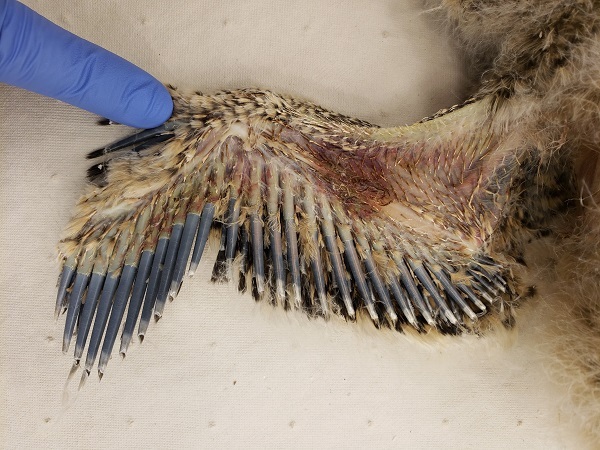
Bruising on the wing of a great-horned owlet from the Des Moines metro that was fed a tainted rodent.
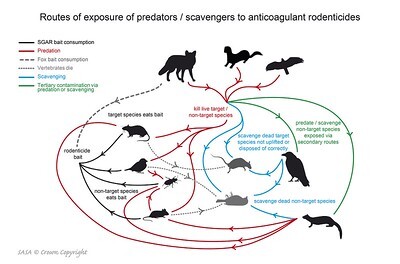
Unfortunately, once a rodent consumes these compounds, they remain active in the tissues and can lead to a phenomenon called “relay toxicosis.” That means that if the rodent gets back outside (or is tossed outside by a well-intentioned homeowner), it can then poison whatever predator or scavenger it crosses paths with next. (Chart source Scotgov SASA on Flickr.)
|
Thresholds for toxicity are not well-defined in wildlife, but we do know that certain species are extremely sensitive, including raptors and red foxes. In other species, while the initial exposure may not kill them, it may cause or contribute to an immunosuppressed state that allows other health challenges to take root, like mange in coyotes.
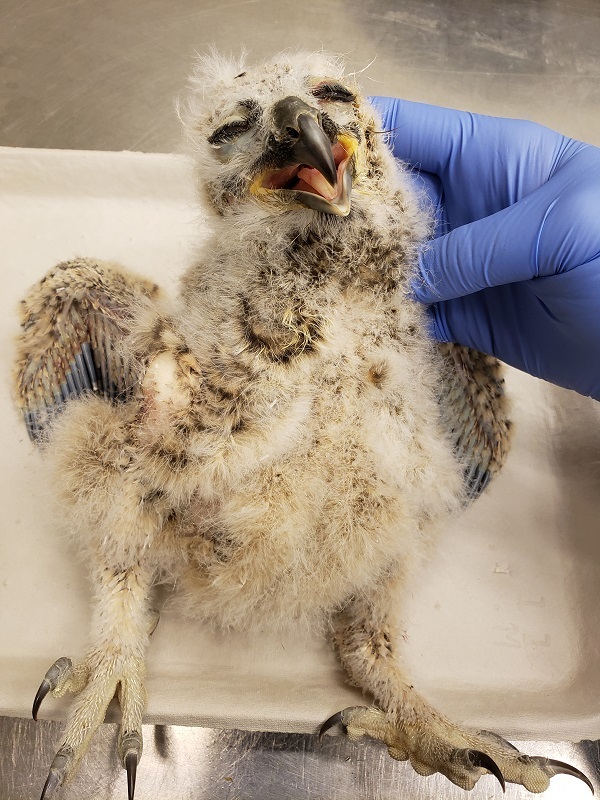
Two different compounds were detected in the liver of this owlet that died from anticoagulant rodenticide poisoning.
By knowing about these non-target impacts, we can make informed decisions about a rodent control plan that considers the well-being of the larger wildlife community. For occasional visitors, live traps can be an easy, cost-effective option and are available at most hardware stores. Also, be aware of city or county ordinances or state laws regarding “nuisance wildlife” when choosing your release site. Lethal options like snap-traps or non-toxic baits that coat the stomach may be more appropriate for frequent flyers or when equipment is at risk. Just remember, with any strategy, removing the offending rodent is just treating the symptom not the source. Try to identify potential ingress/egress points and seal them off- looking for tracks after a fresh snow can be very insightful.
A healthy prey base supports a diverse and resilient wildlife community. If you currently put out baits, see if anticoagulant rodenticides are listed in the label. If so, consider transitioning to an alternative strategy that can still meet your needs. If you use a pest control service, strike up a dialogue at your next visit. Create a healthier space for wildlife by removing these unintended hazards and create a stronger, safer community for us all!
Want to learn more about avoiding non-target impacts on wildlife? Check out the link below!
Rodenticide and Wildlife by the Wildlife Center of Virginia
National Pesticide Information Center Fact Sheet on Rodenticides
|