Statewide Youth Broadband Advisory Council Update
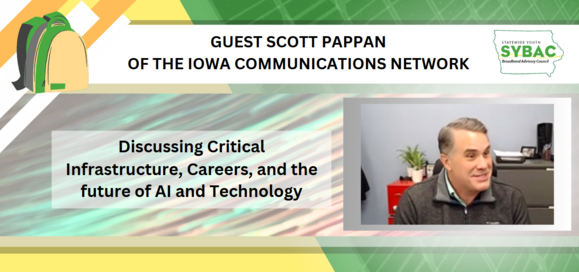 Exploring Technology with Scott Pappan
Scott Pappan, ICN's Chief Technology Officer, participated in our December SYBAC session, discussing the statewide network's critical infrastructure and daily technology applications. Two students presented articles on careers and AI, sparking a conversation about AI's practical implications for our lives, careers, education, and the future of businesses.
Scott shared insights on ICN's cybersecurity technologies, types of AI used in various sectors, and the future job landscape, emphasizing that AI will both replace certain roles and create new opportunities.
Find out more about the SYBAC Council on our website.
 |
|
In the News
Two SYBAC students led the session by presenting articles that sparked their interest, leading to enlightening discussions.
First up was Lakshmi from Ankeny High School, who discussed an article on the dangers of digital advertising and the potential new regulations that lawmakers might be considering.
Raymond from Green County High School shared an article about AI transforming the job landscape by replacing repetitive jobs and creating new opportunities in AI ethics and machine learning engineering.
|
HIGHLIGHTED SERVICE
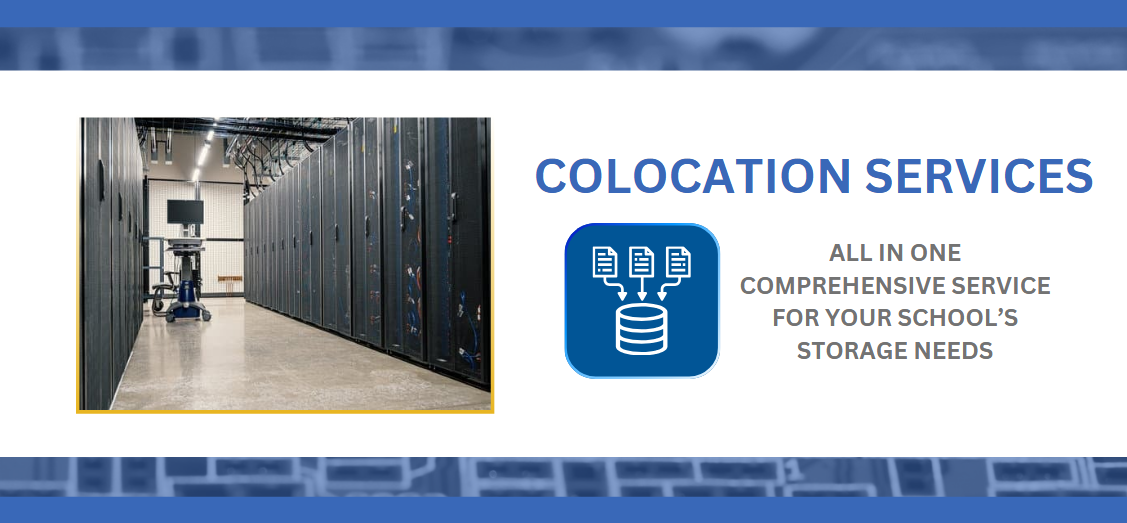 Secure Colocation Services
Colocation services are crucial because schools want safe data storage for their critical systems in addition to dependable and fast internet connectivity. Our colocation service provides everything from electricity, equipment cabinets, network connections, bandwidth, facilities, cooling, and physical security.
We have three colocation locations where you can rent space in full, half, or quarter cabinets, and we take security very seriously at our sites. Our high-quality colocation centers have secure facilities with controlled access points and safeguarded cabinets. Plus, we offer options for cross-connects, bandwidth, and network connectivity, so if you're interested in those additional services, be sure to reach out to your account consultant.
E-RATE Update
E-Rate News for K-12 Education & Library Customers
 |
|
Schools and libraries can improve their network technology through the federal E-rate program, which funds telecommunications and Internet services to bridge the digital divide.
To access E-rate funding, institutions must complete a detailed application process, including competitive bidding for services to ensure transparency in provider selection. For more information on eligible services, see our E-rate Services article.
Have you checked out the ICN's Managed Firewall service which is E-Rate eligible? We can handle the setup and management for you, allowing your team to concentrate on other important work. Contact your Account Consultant for more info.
|
Internet2's Presidential Primary Sources Project
 Internet2 has announced their 2025 series of FREE interactive webinars for students in grades 4-12, in partnership with the National Park Service, National Archives, Presidential Libraries, and cultural organizations. These sessions will be both fun and informative!
Here are the first three sessions next year:
- January 14 - NASA: The Beginning of a New Frontier, Eisenhower Foundation
- January 16 - An Old and Haunting Dream: Andrew Jackson, Theodore Roosevelt, and Popular Imperialism, The Hermitage & Theodore Roosevelt Center
- January 21 - The First 100 Days: FDR Set the Benchmark, Roosevelt Presidential Library and Museum
Iowa Communications Network (ICN) is Iowa’s only authorized Research & Education Network giving our education customers exclusive access to Internet2 services.
Ed. Dept. Recommends These 3 Principles to Develop School Cellphone Policies
 EdWeek
By Alyson Klein
Every district and school in the country should have a policy addressing whether—and how—students can use cellphones in school, the U.S. Department of Education recommends in new guidance released Dec. 3.
The department doesn’t take a position on whether schools should ban cellphones, allow them to be used at certain times of the day or in certain circumstances, or permit them for every student. Instead, the agency offered district-level examples of all three approaches.
The department’s move is part of a growing push among policymakers to set some parameters around cellphone use in schools. At least 18 states have passed laws or enacted policies that ban or restrict students’ use of cellphones in schools statewide or recommend local districts enact their own bans or restrictive policies, according to an Education Week analysis...
|