|
Nov. 20, 2024
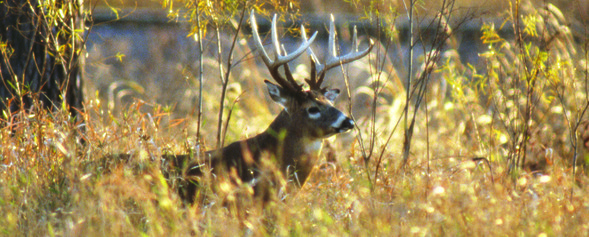
Iowa’s most popular deer hunting seasons are just around the corner, when roughly 100,000 hunters take to the timber for the long-awaited gun seasons.
Iowa’s first gun season is Dec. 7-11. Second gun season is Dec. 14-22.
Last year, hunters reported around 60,000 deer during these two seasons, which is more than half of the total deer harvested for all seasons, and wildlife experts are forecasting a similar harvest.
So far this fall, youth, disabled hunter, early muzzleloader and archery hunters have reported more than 25,000 deer through the harvest reporting system, which is about the five-year average.
“We’ve had a strong harvest in Eastern Iowa, but the declining populations in Western Iowa has impacted hunting opportunity and led to an overall lower harvest,” said Jace Elliott, state deer biologist with the Iowa Department of Natural Resources (DNR). The 2024 harvest to date is about six percent behind the 2023 harvest.
Archery season got off to a slow start due to summer temperatures extending into early October but harvest has been strong as the calendar turned to November. The long-range forecast calls for above normal temperatures extending into middle December.
“More hunters participate in cooler temperatures,” Elliott said. “Cold weather puts deer on their feet and hunters in the woods.”
The gun seasons have been traditionally associated with groups of hunters walking through the timber, pushing deer towards other members of the hunting group, but results of the recently completed deer hunter survey found that gun season hunters are divided evenly in how they pursue the deer.
About half participate in traditional deer drives, while the other half prefer to hunt from stationary position. The deer hunter survey found that overall, 80 percent of respondents indicated they are satisfied with the overall deer hunting experience, citing the social aspect of the hunting groups and the opportunity to put deer meat in the freezer as two reasons they hunt.
Main beam antler measurement
This is the second year the Iowa DNR is requiring hunters to include the main beam antler measurement when reporting their deer.
“Last year, for the first time, we could estimate the percentage of yearling bucks as part of the harvest based on the antler measurement. There was a strong variation across counties in Iowa where some counties had 50 percent of their harvest consisting of yearling bucks, compared to other counties where they were 20 percent,” Elliott said.
Statewide, yearling bucks made up 38 percent of the total buck harvest.
Hemorrhagic disease
Iowa experienced another outbreak of hemorrhagic disease with 93 counties reporting deer mortality. Hemorrhagic disease tends to affect deer in Iowa between late summer and early fall, though outbreak severity can vary from year to year. Hunters and landowners may discover multiple deer carcasses on a property, specifically near a water source, during these months as a result of hemorrhagic disease.
There is no effective treatment or known prevention for wild deer.
“Central Iowa has been the most impacted to date, with Guthrie County reporting the highest deer mortality,” Elliott said. Western Iowa from Lyon County to Monona County have also reported high deer mortality, along with a few Eastern Iowa counties.
“The disease doesn’t impact counties equally, and local deer harvest often lags slightly following outbreaks due to loss of opportunity,” he said. “Populations often recover a few years following the disease, however, in Western Iowa, it may take more time due to an already limited population. As we continue to monitor the effects of this year’s outbreak on county deer populations, hunters in some areas may see responsive regulatory changes in the next hunting season. However, hunters should always remember that the decision to pull a trigger is their own and populations are sensitive to doe harvest.”
In Western Iowa, the DNR has taken steps to recover the deer herd by reducing or eliminating county specific antlerless only deer licenses, and adding six counties to the list where hunters in the first gun season are limited to bucks only.
“We’ve had almost 2,000 dead deer reported across the state with nearly 900 entries coming through the new online reporting option,” Elliott said.
The DNR rolled out a webpage that allowed Iowans to report finding dead deer to provide a better picture of the extent that hemorrhagic disease has impacted the deer in a given year. Go to https://www.iowadnr.gov/Hunting/Deer-Hunting/Deer-Health then click on Seasonal Diseases.
Identifying hemorrhagic disease is pretty straightforward: mortalities occur between July and September, sometimes later during unseasonably warm weather; more than one deer carcass is found, and carcasses are found near a water source.
Virtual meeting updating status of chronic wasting disease
The Iowa DNR is holding a virtual public meeting on chronic wasting disease at 7 p.m., on Dec. 5. There is no cost to attend. To register, visit: https://bit.ly/CWD120524.
Staff with the Wildlife Bureau will provide an update on the science of chronic wasting disease, status in Iowa, and current management efforts. Participants have the opportunity to ask questions live or in the chat. Staff will answer as many questions as time allows.
Media Contact: Jace Elliott, State Deer Biologist, Iowa Department of Natural Resources, 515-249-7056.
For an expected 100,000-plus deer hunters, the long wait is almost over, Iowa’s gun deer seasons are right around the corner.
But before heading to the timber, it’s important that hunters go through their gear, sight in their gun and take time to review their hunting safety plan, said Craig Cutts, chief of the Iowa Department of Natural Resources Law Enforcement Bureau.
“Hunters should check their blaze orange gear to make sure it still fits and that that orange hasn’t faded to the point of being ineffective,” Cutts said. “We’re not hiding from deer during the firearm seasons; we want to be seen by the other hunters. The more external blaze orange that’s worn, the better the chance that hunters will be seen in the timber.”
The minimum amount of blaze orange required by Iowa law to hunt in the firearm deer season is a 100 percent solid blaze orange vest, but hunters should wear as much blaze orange as possible, he said.
“We have a lot more hunters choosing rifles and rifles can travel much greater distances so blaze orange is really important,” he said. “But they also need to be cognizant of that distance, so they need to take good shots – avoid shooting at running deer, and know what’s in front of and behind the deer, in case the shot misses.”
Not shooting at running deer is key to avoiding property damage or injuring another hunter. With the added distance rifles are capable of, hunters really need to be aware of what is behind the deer if the shot misses.
Cutts said there has been an average of nine hunting related incidents over the past three deer gun seasons involving rifles with around six involving personal injuries. Following the hunting plan is another way to avoid problems.
The hunting plan identifies the location, outlines each person’s role, describes how it will unfold and when the hunters are expected to return home. Hunters are encouraged to leave a copy of the plan with someone in the event of an emergency.
“You cannot deviate from the plan,” Cutts said. “The problems start when you see the deer coming out of a different area than you expected, then leave your location to get closer to the deer and suddenly the hunter is in the line of fire.”
Iowa’s first gun season is Dec. 7-11; second gun season is Dec. 14-22.
For more information on hunting safety, contact your local conservation officer.
The Iowa Department of Natural Resources will again be partnering with Iowa deer hunters to collect tissue samples to monitor for chronic wasting disease during the upcoming gun seasons.
The goal is to collect samples from each county, with higher quotas based on the presence of or proximity to confirmed positive locations. The goal is to collect about 5,000 samples statewide. Hunters interested in submitting samples to the DNR’s surveillance program can do so by contacting their local wildlife staff. Hunters can monitor progress towards surveillance quotas by county on the DNR CWD Dashboard (www.iowadnr.gov/cwd).
Hunters in areas where the disease has been found or in counties where the quota has filled, can get their deer tested by going to www.iowadnr.gov/cwd and clicking on the hunter submission pathway. There is a video demonstrating how hunters can remove the lymph nodes and package them for mailing.
The hunter submission pathway allows hunters to pull and submit their own tissue sample simply by filling out the online form and paying a $25 processing fee, the same fee the DNR pays for its samples.
Shipping doesn’t require special packaging and hunter submitted samples are prioritized so testing and results can be turned around quickly. Samples are tested at Iowa State University’s Veterinary Diagnostic Lab, in Ames. Hunter submitted sample results are included with the data from samples the DNR is collecting.
“Local wildlife staff can help hunters with pulling samples. There are also resources online that shows how to pull and ship samples,” said Tyler Harms, wildlife biologist with the Iowa DNR. “It’s a really good partnership that provides an additional testing option for our hunters.”
The Centers for Disease Control and Prevention advise to avoid consuming meat from deer that test positive. Most deer that have tested positive in Iowa to date have not shown signs of infection, and appear to the eye to be healthy and normal. Since 2013, the disease has shown up in 25 counties, most recently in Davis County, in southeastern Iowa, and Shelby County, in western Iowa. It has been found in all neighboring states as well.
Chronic wasting disease is spread through direct contact between deer and through contact with contaminated surfaces in the environment. Artificially concentrating deer by putting out grain or mineral can increase transmission of the disease because it increases the opportunity for deer to interact and come in contact with infectious material. Deer will concentrate on their own through scrapes and during the breeding season.
“We want to minimize artificially concentrating deer by not putting out mineral or grains,” he said.
The disease can also be spread by transporting infected carcasses.
“We stress to hunters not to transport the deer carcass outside of the county where it was harvested if at all possible, to avoid introducing the disease to a new area,” Harms said.
If, for some reason, hunters need to take the carcass with them, he said hunters should landfill the carcass through regular waste disposal. In the few instances where landfilling isn’t an option, hunters should return the carcass to the site of harvest after processing.
“Hunting plays a huge role in slowing the spread of the disease. We encourage hunters to continue hunting in Iowa and managing the herd for future generations,” Harms said.
Iowa is in its 23rd year of monitoring for chronic wasting disease and Iowa’s deer hunters have played a significant role in this effort by providing more than 100,000 tissue samples for testing, and by increasing harvest surrounding positive test results, when asked. Iowa has been tracking the presence of chronic wasting disease since the first positive deer was found in Allamakee County in 2013.
Deer management zones
Deer management zones exist in some areas where chronic wasting disease has been detected, and in areas where the local population is above goal. A listing of deer management zones is available online at https://www.iowadnr.gov/Hunting/Deer-Hunting/Deer-Health/Chronic-Wasting-Disease/CWD-Deer-Management-Zones.
Tags available in deer management zones are specific to the zone and not tied to the county antlerless quota. These are often available after the county quotas are gone.
“The primary reason for a zone is to manage the deer herd towards the lower end of our population goal in a specific area where the disease has been confirmed. We also want to increase our surveillance so we highly recommend hunters provide a sample to help monitor the disease in these areas,” Harms said.
In addition to the deer management zones, incentive zones in Allamakee, Dubuque, and Wayne counties, focus harvest on a small area where detections on more concentrated. The incentive is, if hunters harvest three female deer and submit their samples for testing – then they receive an additional any deer license for next year for the season of their choice. These incentive zone hunts are in late January and hunters must register ahead. Information is on the website, including staff who can get hunters registered.
Media Contact: Tyler Harms, Biometrician, Wildlife Bureau, Iowa Department of Natural Resources, 515-777-5378.
Hunters interested in working with farmers to harvest additional does are encouraged to sign up with the Iowa Doe Harvest Registry. The Registry has been a resource that the Iowa DNR has offered to farmers since the mid-2000s, but is now easier to access.
To participate, go to https://www.iowadnr.gov/Hunting/Deer-Hunting and complete the online form. Hunters and farmers can select their preferred hunting seasons and their region of the state.
Harvesting antlerless deer is the most important tool for managing deer populations at the state, county and local level.
The Iowa DNR, the Food Bank of Iowa and 31 meat lockers are participating in the Help Us Stop Hunger program for 2024. Hunters are encouraged to contact a participating locker before they harvest a deer to see if the locker has any additional drop off instructions.
Hunters may also sign up as a deer donor or recipient with the Iowa Deer Exchange at www.iowadnr.gov/deer then scroll down to Iowa’s Deer Exchange Program link. There, donors can provide their information on what they are willing to donate. The database creates a map and table with information deer donors and deer recipients can use to get connected.
Hunters and recipients who had previously registered for the Deer Exchange Program should review their information to make sure it is still accurate and active. There is no cost to participate. It is illegal to sell wild fish and game in Iowa.
The Iowa Department of Natural Resources (DNR) has scheduled a virtual public meeting to update the public on statewide chronic wasting disease surveillance and management efforts.
The meeting is scheduled for Dec. 5, at 7 p.m., and will be hosted on Zoom. Those wishing to attend must register in advance using the link below. To view and listen to the presentation, attendees will need a computer or smart device (e.g., phone, tablet) with a secure internet connection. Attendees can also join by calling in but will only be able to listen to the audio. The recording will be posted to the Iowa DNR’s YouTube channel and shared on social media platforms, when available.
To register to attend, visit: https://bit.ly/CWD120524
As of Nov. 19, a total of 397 wild deer have tested positive for chronic wasting disease in 25 Iowa counties.
“Chronic wasting disease will be a generational challenge,” said Dr. Rachel Ruden, state wildlife veterinarian with the Iowa DNR. “What we do to limit the spread of this disease today will pay dividends tomorrow, and we need everyone at the table.”
This public meeting is an opportunity for all Iowans to learn more about chronic wasting disease surveillance and management efforts in Iowa, understand ways they can help, and most importantly, ask questions.
“As this disease continues to expand its geographic footprint in Iowa, we encourage all Iowans to stay up-to-date on where we have found CWD so they can make informed consumption decisions,” she said.
Testing for the disease requires a tissue sample from a particular lymph node found just behind the jaw.
Chronic wasting disease is a neurological disease belonging to the family of diseases known as transmissible spongiform encephalopathies (TSEs) or prion diseases. It attacks the brain of infected deer causing the animal to lose weight, display abnormal behavior, lose body functions, and die. It is always fatal to the infected animal and is present in all tissues, including the meat.
To learn more about chronic wasting disease and the DNR’s surveillance and management efforts, visit www.iowadnr.gov/cwd.
MEDIA CONTACT: Dr. Rachel Ruden, State Wildlife Veterinarian, Iowa Department of Natural Resources, (515) 823-8544.
Hunters donated more than 4,700 deer hides to Elks Lodges across Iowa last year, which was an increase of nearly 200 hides from the 2023-24 season. The deer hides are used by the Elks Veterans Leather Program to make professionally-crafted leather gloves for veterans in wheelchairs and also turned into leather used for therapy programs for recovering veterans.
The Elks Veterans Leather Program relies on the charity of hunters to donate their deer hides. Hunters willing to donate their hides are encouraged to contact the local Elks Lodge for drop off locations or visit www.elks.org/lodges to find the nearest lodge. The therapeutic kits and gloves are distributed at no cost to the veterans. Contact Lisa Widick at 208-360-6294 or ozzywidick@gmail.com for more information.
|