|
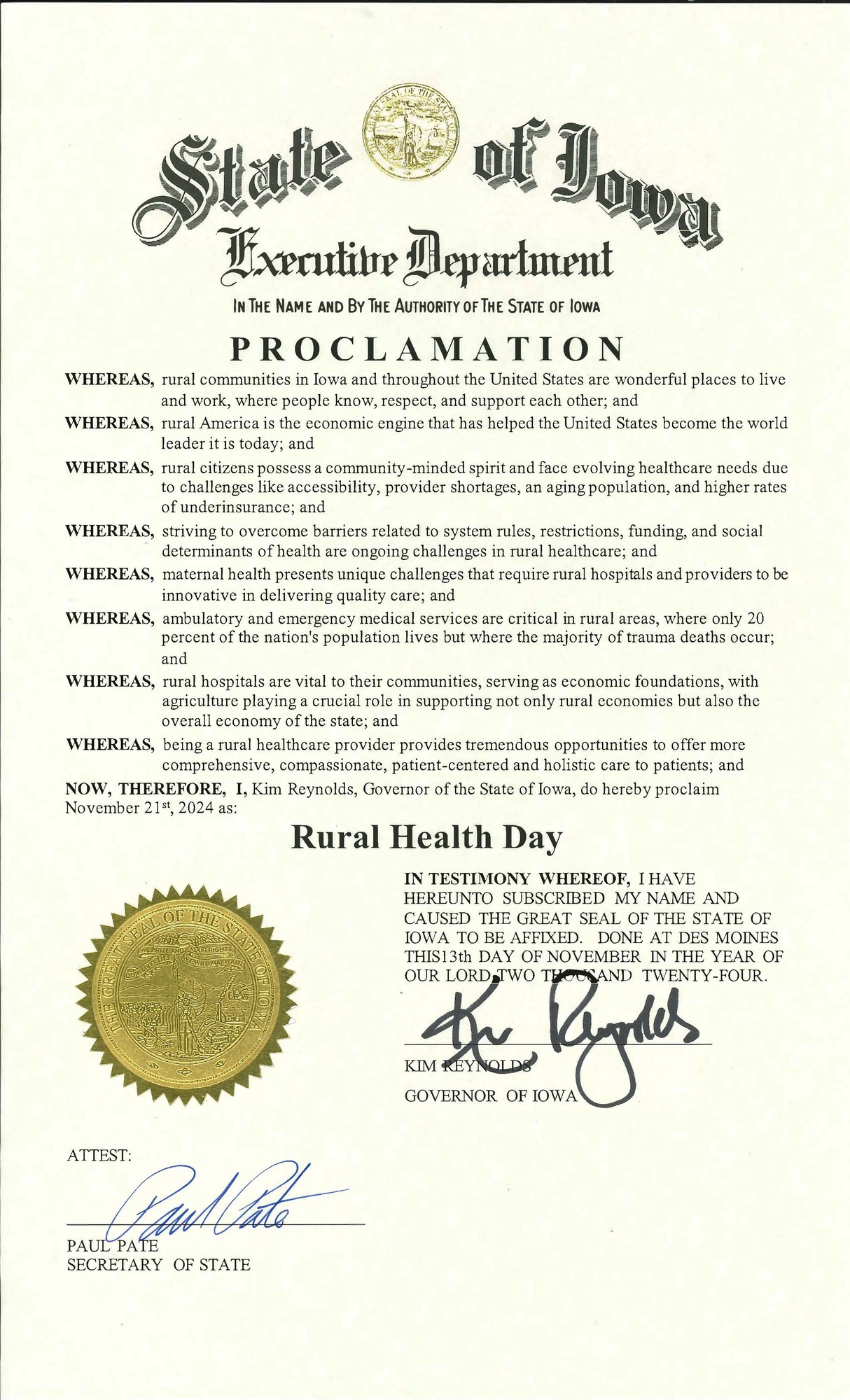
Celebrate the Power or Rural on National Rural Health Day, Nov 21! Take a moment to recognizing the spirit of rural America and the efforts of healthcare providers and stakeholders addressing unique healthcare challenges.
Rural Communities Opioid Response Program Success Stories and Strategies
Join the National Organization of State Offices of Rural Health (NOSORH) for an engaging live webinar in celebration of National Rural Health Day! This year's event shines a spotlight on the transformative impact of the Rural Communities Opioid Response Program (RCORP), featuring powerful success stories and innovative strategies from grantees and key partners. Discover how these community-driven approaches can be adapted to drive lasting change in your own community. Don’t miss this opportunity to be part of the conversation and help move the Power of Rural forward!
Register Here
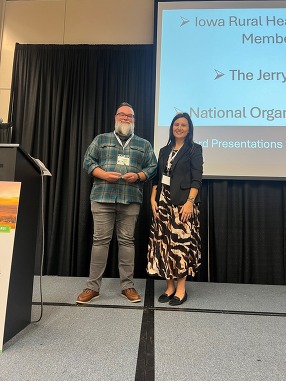
Recipient of the NOSORH Community Star Award - Iowa
The NOSORH Community Stars Award honors individuals and organizations making a significant difference in the health and well-being of the communities they serve.
Dr. Matthew Cooper, Clinical Psychologist and Training Director for the Iowa Psychological Association, is the recipient of the 2024 NOSORH Community Stars Award for Iowa.
Dr. Cooper has successfully expanded training opportunities for predoctoral internships and postdoctoral residencies in Iowa. Since 2008, the Iowa Psychological Association and like-minded partners have trained over 65 pre/post-doctoral psychology trainees, all of whom have provided direct mental health services to underserved populations, including rural Iowans. Remarkably, 80% of these trainees remain licensed in Iowa today, many working for organizations serving underserved counties or providing essential services to rural communities. When reflecting on what the “Power of Rural” means to him, Dr. Cooper emphasized the deep-rooted belief within rural communities that they are there to support one another. The sense of connection fosters resilience and strengthens the overall health of these communities, a key priority topic for our conference today.
Thank you, Dr. Cooper!
|
Opportunities
AmeriCorps Members and Host Sites WANTED
The Iowa Community Corps is a new, Public Health AmeriCorps program at the Iowa Department of Health & Human Services. AmeriCorps members serve directly with community-based organizations and government agencies to tackle our state’s most pressing challenges. Members receive a living allowance and education award for their service, while gaining a professional network, skills, and professional development to forge a successful career in public health. Applications are accepted on a rolling basis.
Application Here

Check out the Iowa Rural Healthcare Workforce Connection for all kinds of information and resources
News
Two rural eastern Iowa communities are focus of new health initiative
A pilot program aims to increase the overall health of residents in the town of Manchester and in Van Buren County.
Experts are collecting extensive data on the two eastern Iowa communities. That’s so they eventually know how to make the most strategic investments in public health.
Article
RCORP Authorization Act Introduced
NOSORH is thrilled to announce that the Rural Communities Opioid Response Program (RCORP) Authorization Act was introduced today by Congresswoman Carol Miller (R-WV) with Representatives Terri Sewell (D-AL), Buddy Carter (R-GA) and Ann Kuster (D-NH). The RCORP Authorization Act will establish and expand prevention, treatment, and recovery services in rural areas for opioid users.
Read Here
Changes to Population Distribution and Commuting Patterns Blur the Line Between Rural and Urban
The increasing connectedness between people who live in rural areas but work in urban areas highlights an interesting dynamic: a melding of rural and urban economies.
Article
Healthcare Options in Rural Iowa Disappearing
According to Kaiser Family Foundation research, about half of U.S. adults say it is difficult to afford the cost of health care. A study on Iowa’s overall health care landscape reveals challenges for providers and citizens. Rural areas in the state face some similar and unique challenges.
Article
Iowa awards nearly $200,000 in grants to strengthen rural communities across the state
Iowa Governor Kim Reynolds and the Iowa Economic Development Authority recently announced the allocation of $190,000 in grant money that will go to ten rural communities throughout Iowa. The allocated amounts are intended to support rural initiatives revolving around housing and childcare. The grants will also spur the growth of small businesses to benefit the whole of the selected communities.
Article
Greenfield Hospital Announces Updated Re-opening
The Greenfield hospital announced their updated grand reopening date and will open their doors in a few weeks after a tornado hit them earlier this summer.
Article
Rural telepsychology program spanning across Iowa
UI Telepsychology Training Clinic works to provide mental health care access to rural individuals.
Article
Tools & Resources
Mindspring Mental Health Alliance
Find a wealth of resources about mental health on the Mindspring Mental Health Alliance website. Additionally, Suicide Prevention resources related to suicide prevention including crisis information, webinar recordings, and information related to 988, a direct connection to a trained counselor who can connect individuals to community resources.
Mental Health Alliance
Suicide Prevention Resources
Workforce Toolkit to Support Critical Access Hospitals and Rural Providers
Health care workforce recruitment and retention challenges are pervasive throughout the U.S., driven by factors such as staff shortages, high rates of burnout and turnover, an aging population, and the lingering effects of the COVID-19 Public Health Emergency. This toolkit provides background on health care workforce challenges in the U.S., describes common workforce challenges faced by CAHs, and provides examples of external resources that CAHs across the country may utilize to address their own workforce needs.
Toolkit Here
Updated Rural Healthcare Facilities Maps
RHIhub recently updated their national and state maps on rural healthcare facilities. Take a look to see the locations of hospitals, clinics, and other types of facilities in rural areas, including Rural Emergency Hospitals and Critical Access Hospitals.
Maps Found Here
NRHA Launches New Go-To Resource Hub for Rural Health Executives
NRHA is excited to announce the launch of NRHASC.com, a new platform designed to provide rural health care executives with essential, rural-proven resources for specific needs. Developed by rural health care experts, this resource hub is focused exclusively on helping busy rural health care executives find solutions to the unique challenges they face. The platform offers comprehensive coverage from policy updates to practical tools all in one easy-to-navigate site. Additionally, NRHA Partner Ovation Healthcare discusses how to strengthen rural health care through cybersecurity assessments.
Resource
Finding Statistics and Data Related to Rural Health
This guide will help you locate and accurately use statistics and data to:
- Understand rural health needs and rural/urban disparities
- Communicate rural health needs
- Inform decision-making related to service delivery and policy
Article
Updated Health Professional Shortage Area Designations
HRSA published a Federal Register Notice (FRN) announcing the complete list of Health Professional Shortage Area (HPSA) designations. This notice reflects the updated list of designated HPSAs and withdraws all HPSAs that were in a “proposed for withdrawal” status as of October 15, 2024.
Federal Register Notice Here
Check out the Iowa Rural Healthcare Workforce Connection for all kinds of information and resources
Publications
Inspiring Rural Youth to Consider Healthcare Careers Through an Interpersonal Healthcare Traveling Roadshow
There are well-documented shortages of healthcare providers in rural and remote communities worldwide, and these shortages correlate with inequitable health outcomes for rural peoples. This paper will share our experience from 15 years of running this initiative, for those hoping to implement similar programs in other areas of the world.
Publication
Burnout, Depression, and Diminished Well-Being among Physicians
Diminished well-being among physicians is of growing concern. The authors review measures of burnout and depression, causal factors, and interventions to improve well-being.
Publication
Recruitment of Residents to Rural Programs: Early Outcomes From Cohort 1 of the Rural Residency Planning and Development Grants Program
This study highlights the early recruitment outcomes of the 25 Cohort 1 RRPD grantees establishing rural residency programs, offering insight into recruitment strategies, application trends, and initial grantee successes. Understanding these emerging programs’ experiences is crucial for educators and leaders striving to enhance equity and access to health care in rural communities.
Publication
Health professional retention in underserved areas: findings from the National Health Service Corps Loan Repayment Program participants in the United States, 2019–2021
Health care provider retention is important for mitigating workforce shortages in underserved areas. The National Health Service Corps (NHSC) provides loan repayment for a two or three-year service commitment from clinicians to work in underserved areas. We observed that technical assistance and job resources were more influential on clinicians’ intentions, compared to individual- or community-level characteristics. Organizations with efficient and supportive work environments may help retain clinicians in underserved areas.
Publication
CDC Rural Public Health Strategic Plan – FY 2024-2029
The Rural Public Health Strategic Plan outlines key priorities, objectives, and outcomes for the next five years for collaborating with both internal and external partners, including federal agencies. The document includes background on CDC's rural public health efforts, the science and practice of rural public health, the structure and role of ORH, and the strategic plan's development. This plan will guide CDC's programs and research to ensure rural needs are part of public health programs at the outset.
Strategic Plan PDF
Characteristics of Communities Affected by Critical Access Hospital Mergers
This descriptive study provides comparative statistics on the demographic, socioeconomic, health status, and geographic characteristics of communities served by CAHs by their merger status. Findings from this study will help inform hospital leaders, State Flex Programs, and policymakers about community characteristics that may be associated with CAH mergers, and the rural populations that are affected by CAH mergers.
Publication
New Report Highlights Strategies for Building, Growing, and Retaining Rural Health Workforce
The report from the National Rural Health Resource Center was done in collaboration with FORHP and is a product of the May 2024 Rural Health Workforce Summit. Each of the report's four key strategies include specific and practical actions that can be adopted to address workforce shortages.
Publication
An Updated Model of Rural Hospital Financial Distress
Given the ongoing challenges and consequences of rural hospital unprofitability, there is a clear need for accurate assessments of financial distress risk. The financial distress model can be used by researchers, policymakers, and rural health advocates as a screening tool to identify at-risk rural hospitals for closer monitoring.
Publication
The Maternal and Child Health Workforce: A Snapshot of Current and Future Needs From Public Health WINS 2021
The MCH module highlights a need to further prioritize workforce development efforts for governmental public health staff, especially in LHDs. There is an ongoing need to meet public health professionals where they are and to tailor training models and workforce development plans to account for new and ongoing stressors faced by the workforce.
Publication
Utilizing Federal Data Sources to Support Nursing Workforce Analysis
In this article, we introduce and review 18 federal data sources pertinent to nursing workforce analysis. We categorize the datasets by their associated federal agency, describe each source, discuss their applicability to nursing workforce studies, present examples of past studies that employed these datasets, and highlight their limitations. Our aim is to help researchers, policymakers, and healthcare administrators efficiently locate and leverage relevant data for their analysis.
Article Here
Check out the Iowa Rural Healthcare Workforce Connection for all kinds of information and resources
This email was sent to you by the Iowa Department of Health and Human Services. https://hhs.iowa.gov/
|