|
FOR IMMEDIATE RELEASE
Oct. 15, 2024
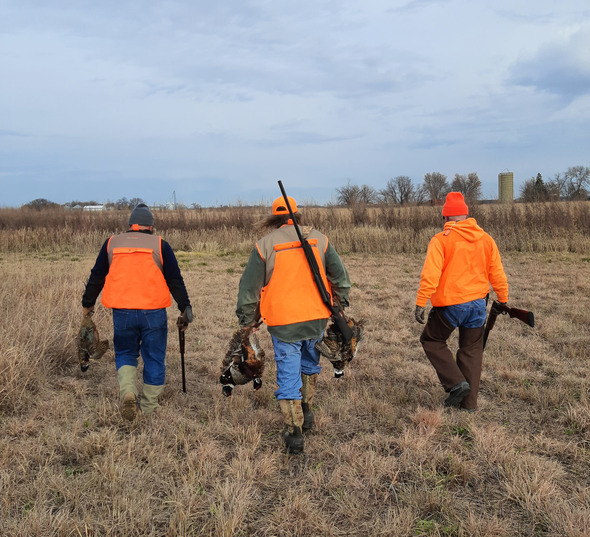 Success during the 2023 pheasant season has Iowa hunters eagerly awaiting this year’s opening day and with bird population estimates similar to two years ago, hunters are expecting another great fall afield.
Pheasant hunting has been an Iowa tradition spanning generations. This year, it starts with the resident youth-only pheasant season Oct. 19-20 that is only open to Iowa youths aged 15 and younger. Iowa’s regular pheasant season is Oct. 26-Jan. 10, 2025.
Friends and family would gather late each fall to reminisce about hunts from years gone by, while planning the next outing. For decades, Iowa was a pheasant hunting destination and the 2024 season marks the end of the first century of pheasant hunting in the Hawkeye State.
The Iowa DNR and Pheasants Forever are partnering to celebrate Iowa’s 100-year tradition of pheasant hunting beginning this fall, and running through October 2025.
History, news stories, population surveys, places to hunt, classes and events, links to other resources and more is all available on a new webpage at https://info.gooutdoorsiowa.com/100-year-pheasant-anniversary/ marking the 100-year anniversary. The page will be updated throughout the year.
2024 pheasant season expected to be similar to 2022
The Iowa Department of Natural Resources’ annual August roadside survey found the statewide pheasant population to be 19 birds per 30-mile route, down from 23 birds per route last year. The decline was likely due to a wetter than normal spring that coincided with the nesting season. Based on the results, hunters can expect a harvest between 350,000 and 400,000 roosters.
This year’s excitement comes on the heels of a successful 2023 season that had a jump in harvest to 590,000 roosters, the most since 2007, thanks to roughly 20,000 additional pheasant hunters returning to the field.
“We’ve had a population that could support this level of harvest, but until last year we didn’t have the hunter numbers,” said Todd Bogenschutz, upland wildlife biologist for the Iowa Department of Natural Resources.
An estimated 83,600 pheasant hunters participated in 2023, and many of those came from out of state. Iowa has been attracting pheasant hunters from Minnesota, Michigan, Wisconsin, Illinois, Missouri, Ohio, Nebraska and from as far away as Georgia, North Carolina and Alabama.
These hunters can expect to find higher populations in west central and northwest regions, followed by central and north central Iowa, Bogenschutz said. “Look for cover, cover will hold birds, regardless of location,” he said.
The return of drought conditions across much of the state since August has allowed the corn and soybean harvest to occur without pause. As of Oct. 6, the corn harvest is about 22 percent complete which is about average and the soybean harvest is 58 percent complete, which is ahead of schedule.
As the harvest progresses and the birds become more visible, Bogenschutz begins to get more phone calls from hunters looking for insights.
“What I’ve been telling them is, that we could see most of the crops out of the fields by opening day, and if that’s the case, we could see another really good opening weekend, similar to last year. If hunters want less competition, they should consider going during the week, but the first few weekends it will be pretty busy out there,” he said.
Roughly one-third of the pheasant harvest occurs within the first nine days of the season. Iowa’s pheasant hunters season opens statewide on Oct. 26.
Places to go hunting
Iowa hunters have been using the interactive Iowa hunting atlas to find new places to go hunting. The hunting atlas features more than 680,000 acres of public hunting land that is owned by the state, county or federal governments. It’s available online at www.iowadnr.gov/hunting.
This tool allows hunters to see which zone the public area is in, type of shot allowed, wildlife likely to be found and get an overhead look at the terrain. The mobile version of the atlas will show hunter location on the area if granted permission.
The atlas view from above allows hunters to zoom in on an area, see how to get there, the lay of the land and where one parcel of public hunting land is in relation to others and print off maps.
Information is updated as public hunting lands are acquired.
The hunting atlas also includes 33,000 acres of private land enrolled in the Iowa Habitat and Access Program (IHAP) where private landowners receive assistance to improve habitat on their land in exchange for opening the property for hunter access.
Site maps are available at www.iowadnr.gov/ihap showing boundaries and which species would be most likely attracted to the habitat. Walk-in public hunting through IHAP is available between September 1 and May 31.
Media Contact: Todd Bogenschutz, Upland Wildlife Biologist, Iowa Department of Natural Resources, 515-979-0828.
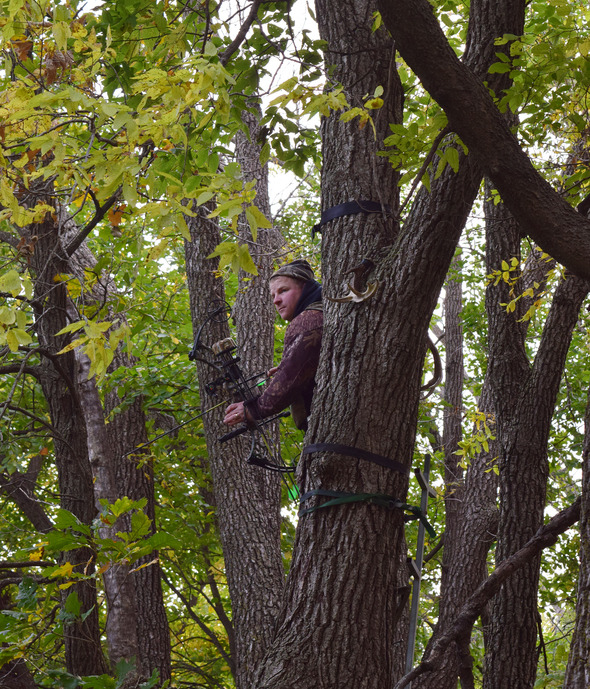 Despite warm weather persisting in much of the state, roughly 6,000 deer have been registered so far through the youth and disabled hunter seasons, and the opening of the archery and early muzzleloader seasons, which is slightly higher than both last year and the five-year average.
The crop harvest, cooling temperatures and approaching rut, should increase deer activity leading to greater harvest success.
The long-anticipated rut, which will be in full swing by November, is when mature bucks spend much of their time actively tending and searching for does during daylight hours, creating opportunity for thrilling action from the tree stand at any hour of the day.
A major factor leading to Iowa’s world-renowned buck quality is the simple fact that hunting during the rut – when bucks are most vulnerable – is restricted to compound and traditional bows. The archery season runs through Dec. 6, then closes for the two regular gun seasons before re-opening Dec. 23 through Jan. 10, 2025. The early muzzleloader season closes Oct. 20.
Deer Disease Update
Iowa’s deer population is in the midst of another outbreak of hemorrhagic disease, which tends to affect Iowa deer from late summer to early fall. Though outbreak severity varies annually, it began increasing in September, with roughly 750 related deer mortalities reported throughout the state, which is considered a moderate outbreak compared to past years.
The DNR added new online tools to the Deer Hunting webpage that allow the public to report and monitor hemorrhagic disease activity. Hemorrhagic disease has been reported in at least 78 Iowa counties, though disease activity has generally been mild at the county scale at fewer than 50 mortalities per county.
Chronic Wasting Disease (CWD) continues to increase in geographic spread and prevalence, though most Iowa counties have yet to detect their first CWD-positive deer. Last year, eight new counties were added to the list: Des Moines, Guthrie, Howard, Jones, Marshall, Monroe, Muscatine, and Tama, bringing the total number of counties that have had a positive deer to 23.
Testing of hunter-harvested deer is available in each county by contacting the local DNR wildlife or law enforcement staff. Hunters can help limit the spread of chronic wasting disease by refraining from feeding/baiting deer and transporting deer carcasses across counties. The Iowa DNR primarily manages the disease in areas with moderate-to-high deer densities by adding antlerless tags within special Deer Management Zones.
Media Contact: Jace Elliott, State Deer Biologist, Iowa Department of Natural Resources, 515-249-7056.
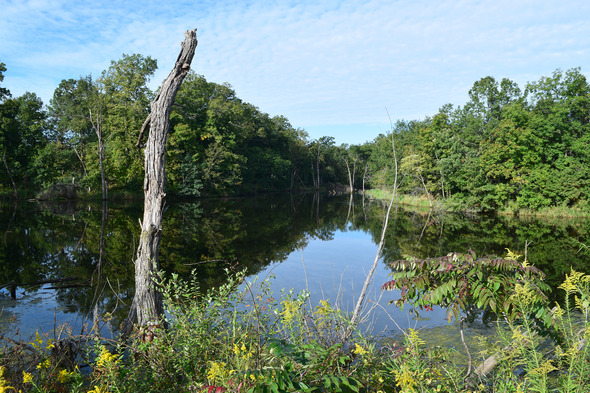 Iowa’s newest wildlife area is open for visitors.
Staff from the Sugema Wildlife Unit finished placing the Bell Branch Wildlife Area sign at the recently installed parking lot, just in time for the 2024 hunting seasons.
This newly acquired 514-acre public wildlife area in northern Davis County is roughly 350 acres of high-quality oak hickory timber with 85 acres on the south end enrolled in the Conservation Reserve Program (CRP). The rest is pasture.
“Having a new area of this size is pretty exciting. It will take some work, but it will be fun to watch it transition into the wildlife area that we want it to be,” said Jeff Glaw, wildlife biologist with the Iowa Department of Natural Resources. “We are excited to get the forest wildlife stewardship and management plan in place and get to work. The CRP contract expires next year when we can begin managing it to eliminate the invasive Reed canary grass and begin work to converting CRP to prairie.”
Access points are currently limited to one parking lot on the southeast side. Old farm lanes will be used as firebreaks and can be used to navigate the rolling and rugged southern Iowa terrain. Several fishable ponds on site could also be a good spot for wood ducks.
The location of Bell Branch in southern Iowa offered an excellent opportunity to enhance the oak hickory habitat to benefit Indiana and Northern long-eared bats, both federally endangered species and restore the prairie.
The Iowa DNR purchased the land from the Iowa Natural Heritage Foundation for a bargain sale price of $1.9 million, using a special federal funding source to support endangered species for bat habitat restoration. It had been appraised for $2.31 million. The DNR will continue to pay property taxes on Bell Branch Wildlife Area.
Bell Branch is adjacent to a 413-acre parcel to the north that is enrolled in the Iowa Habitat and Access Program (IHAP). The two combined areas total nearly 1,000 acres for public use.
The IHAP section remains in private ownership by the Iowa Natural Heritage Foundation who is implementing its forest stewardship plan to improve the timbered resource to benefit wildlife. The area is open from Sept. 1 to May 31 each year, and only for hunting – other activities, like fishing or trapping are not allowed.
Media Contact: Jeff Glaw, Wildlife Biologist, Iowa Department of Natural Resources, 641-799-0793.
Another busy camping year in Iowa state parks is coming to an end and staff are preparing for the first freezing temperatures of the fall.
State parks will begin winterizing their facilities this week including shutting off water in the campgrounds and closing shower houses.
Campers can check the status of water availability in a particular park by going to iowadnr.gov/parkclosures. The page is updated regularly by park staff.
If campers have any questions about water or other facilities during the time of their stay, they should contact the park directly. RV campers are reminded that dump stations are closed during the winter. While Iowa’s interstate rest areas no longer offer dump stations, the DOT does provide a list of dump station alternatives on their website.
Additionally, state park campsites switch to lower, off-season rates starting October 16. While water may be shut off, visitors are encouraged to continue camping and enjoying park amenities. Several parks also have year-round cabins for overnight stays. To learn more and to make a reservation, visit: https://iowastateparks.reserveamerica.com/welcome.do
Fall is usually a good time to plant trees with mild temperatures and adequate ground moisture. With drought conditions across Iowa this fall, watering newly planted trees on a regular schedule through the 2025 growing season is essential for a strong start and healthy life.
Shade trees can reduce heating and cooling costs, improve the air we breathe, add beauty and color to backyards, provide shelter from the wind and sun, and make our communities a better place to live.
A properly planted and maintained tree will grow faster and live longer than one that is incorrectly planted.
“Properly planted and maintained trees will have a better opportunity for a long, healthy life,” said Iowa DNR district forester Mark Vitosh. “Improperly planted and maintained trees can become stressed more easily or may look otherwise healthy, but then suddenly die in the first 10 to 20 years after planting.”
“The work does not stop after planting,” explains Vitosh. “Proper tree health monitoring and long-term maintenance like watering, mulching, and structural pruning helps promote quality trees long-term.”
Follow these simple tips to properly plant and maintain a healthy tree:
- Select a species that matches your site’s growing conditions (i.e. soil type, soil drainage, available growing space, full sun or shade, etc.).
- Always call Iowa One Call-811 before you start digging to locate any underground utilities.
- Remove top soil from the original root ball until you can see the first lateral root. This first main root should be just below soil grade when planting.
- Examine the root system and prune any circling roots.
- Measure the distance just above the first lateral root to the bottom of the root ball; that is the depth that you should dig the planting hole. Proper planting depth is key to long-term tree survival. If the hole is dug too deep the tree can settle over time which can cause long-term health issues.
- Dig the hole at least twice as wide as the root ball, to loosen the soil and promote good lateral root growth.
- Once the tree is planted, slowly water the planting hole (focus water in the location of the root ball) to settle the soil. As the tree grows, water the expanding root system further away from the initial root ball.
- If you have planted new trees within the last 3 years consider some supplemental watering during the dry conditions this fall.
Find more tips on how to properly plant a tree, select diverse trees and proper tree care after planting on the DNR webpage at www.iowadnr.gov/UrbanForestry.
Media Contact: Emma Hanigan, Urban Forestry Coordinator, Iowa Department of Natural Resources, 515-249-1732.
SHENANDOAH - The Iowa Department of Natural Resources (DNR) is partnering with Optimal Aquafeed and Page County Conservation Board to stock rainbow trout at 9 a.m., Oct. 19, in RAPP Park outside of Shenandoah.
Approximately 800 rainbow trout ranging from around 1- to 2-pounds, from Optimal Aquafeed will be stocked by the Iowa DNR in a small borrow pit on the RAPP Park property.
Anglers 16 years and older must have a valid fishing license and pay the trout fee to fish for or possess trout. The daily limit is five trout per licensed angler with a possession limit of 10.
Children age 15 or younger can fish for trout with a properly licensed adult, but they must limit their catch to one daily limit. The child can pay the trout fee which will allow them to catch their own limit of five trout.
This is the fourth year of this successful partnership that provides a unique fishing opportunity to anglers in southwest Iowa.
Media Contact: Andy Jansen, Fisheries Biologist, Iowa Department of Natural Resources, 641-464-3108.
|