|
FOR IMMEDIATE RELEASE
April 18, 2023
It's as predictable as May flowers - from border to border, the Wildlife Baby Season has arrived in Iowa. From now until at least mid-June, DNR field offices across the state will be inundated with hundreds of phone calls and scores of deliveries regarding "orphaned wildlife."
Most calls begin with something like, "We were walking in the park when . . .," or "I looked out my window and saw. . ." In nearly every instance, the scenario ends with something [or several somethings] being rescued from their mother.
During a typical season, the species will range all the way from baby robins and squirrels to spindly-legged white-tailed fawns. At this time of the year it is not at all uncommon for biologists to discover that complete litters of baby raccoons, foxes, or even skunks have mysteriously appeared on their doorsteps.
Why this happens is no real mystery. From fuzzy yellow ducklings to tiny baby bunnies, nothing appears more cute and cuddly than a wildlife baby. But in reality, most of the wildlife reported to DNR field offices is not really orphaned at all. And while the people who attempt to "rescue" these babies have the best of intentions, they are in fact dooming the very creatures they intend to help.
The babies of most wildlife species leave their nests or dens well in advance of being able to care for themselves. Although broods or litters may become widely scattered during this fledgling period, they still remain under the direct care and feeding of their parents.
For many songbirds, the transition to independence comes quickly and may take as little as four or five days. For other species such as Canada geese, kestrels, or great horned owls, the young and parents may stay in contact for weeks -- even months.
At the beginning of the fledgling period, young birds appear clumsy, dull-witted, and vulnerable. The reason for this is because they really are clumsy, dull-witted, and vulnerable. But as the education process continues, the survivors smarten up fast, while slow learners quickly fade from the scene. Most birds have less than a 20 percent chance of surviving their first year. While this seems unfortunate or cruel, this is a normal occurrence in nature. In the real out-of-doors, it's just the way things are.
Most mammals employ a slightly different strategy when it comes to caring for their adolescents. Since most mammals are largely nocturnal, the mother usually finds a safe daytime hideout for her young while she sleeps or looks for food. Consequently, it is perfectly normal for the young to be alone or unattended during the daylight hours.
Nevertheless, whenever a newborn fawn or a nest full of baby cottontails or raccoons is discovered by a human, it quite often is assumed that the animals are orphaned. The youngster's fate is usually sealed when it is promptly "rescued from the wild."
Many wildlife babies die soon after capture from the stress of being handled, talked to, and placed into the unfamiliar surroundings of a slick sided cardboard box. Should the animal have the misfortune of surviving this trauma, they often succumb more slowly to starvation from improper nourishment, pneumonia, or other human caused sicknesses.
Whether they are adults or young, all species of wildlife have highly specific needs for survival. "Rescuing a baby from its mother" not only shows bad judgment, it also is illegal.
Observing wildlife in its natural habitat is always a unique privilege. Taking a good photo or two provides an even more lasting memory. But once you've done that, let well enough alone. Leave wildlife babies where they belong -- in the wild.
A list of wildlife rehabilitators is available online at http://www.iowadnr.gov/Conservation/Iowas-Wildlife.
Media Contact: Karen Kinkead, Wildlife Diversity Program Coordinator, Iowa Department of Natural Resources, 712-330-8461.
DES MOINES—Figuring out what you can do to help the planet can seem overwhelming.
But there are many ways you can help—at home, in your neighborhood or at your favorite lake, state park or wild area. Wherever you celebrate, the DNR’s Earth Day web page has many ideas.
Some are simple, like educating yourself and your kids by holding a scavenger hunt in the backyard or exploring the woods with all five senses. Others require a little more effort—such as picking up discarded fishing line or trash as you hike a state park. Some can save you money like “9 Ways to Save $$$ and Improve the Air.”
So explore the woods and watch spring come to life. Try out some family activities like “A Poet’s Hunt,” or use your detective skills to find an animal’s tracks and figure out where it was going and why. Follow Conservation Officer Erika Billerbeck and kids as they take you on a “Wild Things” trip to an Iowa woodland.
Plant a tree, following DNR foresters’ tree planting tips to help it survive and thrive. Check out our blogs to attract pollinators with native flowers or build a rain barrel. See tips for greening up your yard or take the next step and consider planting native turf grasses for the ultimate summer green—low maintenance needs, disease resistant, heat tolerant, soil building and pollinator friendly.
Love state parks? From staying on trails to being vigilant on beaches, learn six ways to show you care. Request a reusable litter bag for use on your outdoor adventures.
Learn where recyclables end up and what happens to wastewater after it goes down the drain. Take advantage of opportunities volunteering.
Busy with spring cleaning? If you’re puzzled about disposing of household solvents, pesticides or latex paint, tap into “Bring it in—We all Win,” your guide to household hazardous waste and Regional Collection Centers.
Or show your commitment to Iowa’s natural resources all year long by buying a habitat stamp or purchasing a Natural Resource license plate. Funds from the stamps and license plates take care of Iowa’s wild places and the wildlife that call it home.
Want to stay in the loop year-round? Subscribe to DNR’s quarterly magazine Iowa Outdoors—your exploration guide to the latest outdoor news, wildlife photography and hidden treasure spots across Iowa’s vast nature landscape.
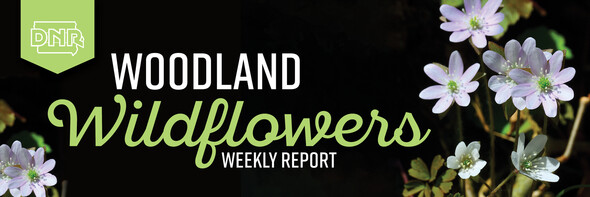
And new this year, the DNR has started a spring wildflower report, tracking some of Iowa’s most beautiful woodland flowers as they bloom. The report is updated each week at: https://www.iowadnr.gov/Conservation/Forestry/Woodland-Wildflower
Take time every day to care for our air, land and water. Our actions help keep Iowa’s natural resources healthy and productive for years to come. The DNR’s Earth Day web page address is: https://www.iowadnr.gov/About-DNR/Earth-Day
Media Contact: Tammie.Krausman@dnr.iowa.gov or 515-402-8763.
Early spring paddling can provide solitude, exercise and an opportunity to see amazing wildlife, but extra precautions are needed to stay safe.
The Iowa Department of Natural Resources (DNR) recommends that paddlers wait for warmer weather to allow the water temperatures to rise slowly. It could be several weeks before water temperatures are ideal and safe as water and air temperatures continue to change.
“Air temperatures may feel warm in early spring, but the water is still dangerously cold and can be deadly to boaters,” said Todd Robertson, Iowa DNR River Programs Water Trails Coordinator. “We have not had enough consistently warm days to raise water temperatures. Cold water shock and hypothermia can set in quickly if you are not dressed and fall into the cold water, so dress for a swim.”
Stay away from strainers and sweepers—wood or branch piles—deadly hazards that can pull a paddler under or pin them underwater. These are usually found on outside river bends where currents are strongest.
Review these simple safety tips before you head out on the water.
- Check your canoe or kayak for any needed repairs or maintenance after being stored for several months. Look for holes and leaks, make sure all hatch lids fit snug and securely and check your paddle blades for signs of cracking or splitting.
- Wear your lifejacket at all times when underway. Dust off your life jacket and make sure all buckles and zippers work properly and look for holes and tears. Replace the life jacket if it has damage that cannot be repaired. Wear a life jacket at all times while on the water, regardless of your swimming ability. Not only do they help keep your head above water, they help maintain warmth.
- Dress for the water temperature, not the air temperature. Plan as if you were to be in the water at some point because “paddlers are just in between swims.” A wet suit or dry suit is a must. Do not wear cotton clothing—it fails to insulate when wet. Choose synthetics or wool. Dress in layers so you can peel a layer off if overheated.
- Always bring along a dry bag with a complete set of extra clothes you can change into if you get wet, a first-aid kit and a protected cell phone or weather radio. Get out of wet, cold clothing as soon as possible. Pack plenty of water to stay hydrated.
- Let a friend or loved one know where you are going and when you are expected to return. It will be easier to find you if you need help.
Get tips for planning a fun and safe paddling trip on the DNR webpage at www.iowadnr.gov/planyourtrip.
Media Contact: Todd Robertson, Iowa DNR River Programs Outreach Coordinator, 515-205-6845.
It may not feel like boating season yet, but the Iowa Department of Natural Resources (DNR), along with boating safety advocates nationwide, are urging boaters to enroll in a boating education course this spring.
“Education is the key to having a safe and enjoyable day on the water, and spring is the perfect time to take a course before the summer boating season begins,” explains Susan Stocker, boating law administrator and education coordinator for the Iowa DNR.
Traditional and online courses are available. Courses are made to fit every schedule and lifestyle. The Iowa DNR has boater education information online at https://www.iowadnr.gov/things-to-do/boating/boater-education.
“A boating safety course provides critical boating knowledge and better prepares you for the risks you may face while boating,” Stocker said.
Benefits to taking a boater education course
- Boost your confidence and Keep Your Edge by brushing up on essential boating skills.
- Even if you have already taken a course or are an experienced boater Keep Your Edge by taking a new course to sharpen your skills.
- A boating safety course can save boaters money. Many boat insurance providers offer discounts to people who have successfully completed a boating safety course.
Iowa boating statistics
- In 2019, there were 22 reported boating incidents on Iowa waters: 14 of those were personal injury; six involved property damage and six resulted in fatalities. Of the six fatalities, two involved alcohol as a contributing factor
- In 2020, there were 39 reported boating incidents on Iowa waters: 16 of those were personal injury; 17 involved property damage, and nine resulted in fatalities. Of the nine fatalities, six involved alcohol as a contributing factor.
- In 2021, there were 33 reported boating incidents on Iowa waters: 26 of those were personal injury; 17 involved property damage, and three resulted in fatalities. None of the fatalities involved alcohol.
- In 2022, there were 28 reported boating incidents on Iowa waters: seven of those were personal injury; 17 involved property damage, and four resulted in fatalities. Of the four fatalities, one involved alcohol as a contributing factor.
Media Contact: Susan Stocker, Boating Law Administrator and Education Coordinator, Iowa Department of Natural Resources, 515-313-6439.
The 147th walleye fishing season officially opens May 6 at Spirit Lake, East and West Okoboji lakes.
“Walleye populations on the Iowa Great Lakes are in very good shape,” said Mike Hawkins, fisheries biologist for the Iowa DNR, “Ice didn’t leave the lakes until mid-April. Fish will likely be more active as they make up for lost time.”
Walleye season opens the first Saturday in May and runs through February 14 each year on Spirit Lake, East Okoboji Lake and West Okoboji Lake. The protected slot limit on walleyes is 19 to 25 inches, with only one walleye over 25 inches allowed per day. The protected slot limit applies to Spirit Lake, East and West Okoboji Lake, Upper and Lower Gar Lake and Minnewashta Lake. The daily limit is three walleyes with a possession limit of six.
The walleye season will be opening in the Iowa Great Lakes, but the lakes offer great fishing for a variety of other species. Panfish, northern pike, and smallmouth and largemouth bass fishing can be very good as the water warms. Water levels on the Okoboji chain are just a little above crest level with water flowing over both the Spirit Lake and Lower Gar spillways.
For many anglers, this will be their first trip on the water for the season. Checking your safety equipment and making sure your boat is ready to get out on the water can help ease congestion at busy boat ramps.
The Iowa Great Lakes Chamber of Commerce will host the 41th annual Iowa Great Lakes Walleye Weekend Fishing Contest in conjunction with the opener. For more information on the contest, visit their website at https://okobojichamber.com/walleye-weekend/.
Anglers are encouraged to participate in the Iowa Walleye Challenge hosted by the Iowa DNR Fisheries Bureau. Angler catch information from this tournament will provide valuable data to help fisheries biologists manage Iowa’s walleye populations. For more information and to sign up visit https://www.anglersatlas.com/event/680/2023-iowa-walleye-challenge-2023.
Media Contact: Mike Hawkins, Fisheries Biologist, Iowa Department of Natural Resources, 712-336-1840.
A healthy pond needs aquatic plants, but too many plants can limit the pond’s use and cause imbalances in the fish population. If you had problems using your pond last year because of aquatic plant growth, you could have similar problems this year.
In an existing pond, mechanical and chemical control methods are the best options for immediate control. They usually work best if you start early, when plant growth is not at its maximum level. If you wait until growths are thick, control will be difficult, take longer, and chemical control could cause water quality issues that harm fish.
Mechanical methods include bottom blanketing, shading, removal and lowering water levels. Temporarily blanket the bottom of a private pond and leave it in place for 30 days early in the season to limit plant growth in fishing or swimming areas. Use weighted commercial weed barrier products or thick black plastic (punctured to allow gasses to escape).
To shade a pond, apply a pond dye in April, before most plants are actively growing, to reduce the amount of light needed for plants to grow. This works best in ponds with a small watershed. Many blue and black pond dye products are available for pond beautification. Re-apply the product at a reduced rate throughout the spring and summer since inflowing water can dilute it and ultraviolet light can degrade it.
Removal is a low-cost way to take out plants from high-use areas. It can be done by hand or with special rakes and cutters (make your own or buy from retail outlets).
Lowering water levels is another way to control aquatic plants. Let water out of the pond this spring (or winter) to expose aquatic plants to drying (or freezing) conditions to limit their growth after water is allowed to refill the pond.
Herbicides will control pond plants chemically, but you may need to reapply during the summer to get season-long control. Follow these five steps when you apply any herbicide: 1) correctly identify the plant you want to control; 2) measure the area you are going to treat (surface area and average depth); 3) read the herbicide label to determine the correct timing and amount to apply; 4) identify possible restrictions on uses of the water (e.g., irrigation or watering animals) and 5) apply according to label directions. Most aquatic herbicides work best if applied on a calm, sunny morning.
Find more information on aquatic plants in ponds on the DNR website at www.iowadnr.gov/ponds.
Media Contact: Jason Euchner, Fisheries Biologist, Iowa Department of Natural Resources, 515-230-4789.
DES MOINES - The Iowa Department of Natural Resources (DNR) is offering a six-month workshop to teach skills needed to hunt with a bow, field dress and cook white-tailed deer to individuals who have little to no archery hunting experience.
This workshop consists of summer long archery practices, fall workshops and hunting opportunities throughout Iowa’s archery season. All sessions are led by instructors that possess the experience to teach skills necessary to become efficient archers and bowhunters.
“For those interested in the challenge of bow hunting as a means of sourcing their own meat, this program provides the opportunity to learn the skills and knowledge it takes to do it all yourself,” said Jamie Cook, Hunter Education coordinator with the Iowa DNR.
Participants will spend the summer becoming proficient archers with compound bows provided by Iowa DNR. As summer progresses, they’ll learn basic strategies for hunting deer such as proper equipment, where to hunt, safe shooting practices, and tree stand placement. During the fall, they’ll learn how to field dress, clean and cook deer from professional butchers and local chefs.
The course will be hosted in Adel, Ames, Council Bluffs, Davenport and Iowa City. It is geared for participants 21 and older. Applications will be accepted beginning April 15 for all locations. Once accepted, participants will be invited to register for the course.
The course cost is $200 which includes essential course supplies and archery loaner equipment. Applications will be accepted through June 1. Space will be limited so those interested are encouraged to apply online right away.
For more information and to begin the application process visit: 2023 Field to Fork Application: https://forms.gle/VTGjbq3vBEkieFZr7
The program is provided through a partnership with Raised at Full Draw, the Iowa Bowhunters Association, Johnson and Story County Conservation, and other local partners and archery retailers. It is part of a national effort to recruit, retain and reactivate hunters due to the overall decline in hunting and outdoor recreation.
Media Contact: Jamie Cook, Iowa Department of Natural Resources, 515.350.8091
The Iowa Department of Natural Resources (DNR) is partnering for a second year with MyCatch by Angler’s Atlas to conduct a statewide walleye fishing challenge starting May 1 through June 30. The Iowa Chapter of the American Fisheries Society has joined as a research partner for the 2023 challenge.
The Iowa Walleye Challenge uses the MyCatch mobile app to record the length of a fish. Participating anglers are encouraged to report all the walleye they catch in May and June through the MyCatch mobile app. DNR fisheries biologists will use the generalized lake and river catch data entered to assess and manage walleye populations across Iowa.
Anglers will have the chance to win numerous local prizes, worth over $6,000, in addition to $5,000 in statewide weekly prizes. Anglers who sign up for the catch photo-release tournament by April 24 are eligible to win an Early Bird drawing for a $50 gift card from Kwik Star.
“Results from year one were very promising,” said Jeff Kopaska, DNR fisheries research biometrician. “Angler groups and local fishing businesses are excited to pitch in and help with this walleye fishing challenge. Fleet Farm is donating over $1000 for the weekly Most Walleyes caught prize and is also providing digital coupons for all participants.”
Local prizes include:
- Des Moines Area – Big Creek Lake (Sportsman’s Warehouse, Johnston Bait & Tackle), Des Moines River (Johnston Bait & Tackle, Bass Pro), Easter Lake (Bass Pro), Saylorville Reservoir (Water’s Edge Marine)
- Albia/Centerville/Moravia – Rathbun Lake (Elliott’s General Store/BP Gas, Rathbun Marina, Top Notch Bait Shop)
- Ames/Boone/Nevada – All public water in Boone/Story Counties (Jax Sporting Goods, Mucky Duck Pub)
- Bellevue – Mississippi River Pools 12 & 13 (Offshore Resort, Kalmes Restaurant and Catering)
- Cedar Rapids/Iowa City – Lake Macbride (Cedar Rapids and Iowa City Walleye Club)
- Corning – Lake Icaria (Adams County Conservation, Lakeside Supplies)
- Creston Area Lakes - Green Valley Lake, Summit Lake, Three Mile Lake, Twelve Mile Lake (High Lakes Outdoor Alliance, Union County Conservation)
- Council Bluffs – Lake Manawa (Woods Sporting Goods)
- Davenport/Bettendorf/Clinton – Lost Grove Lake (K&K Hardware, Duey’s Corner Tap, Walmart, Farm & Fleet), Mississippi River Pool 14 (R&R Sports)
- Dubuque/Guttenburg – Mississippi River Pools 10 & 11 (Mak’s Bait Shack, Murray’s Bait)
- Lamoni/Leon – Little River Lake (Decatur County Conservation)
- Okoboji/Milford/Spirit Lake - Lost Island Lake, Silver Lake-Dickinson County, West Okoboji (Iowa Great Lakes Fishing Club)
- Pella/Knoxville/Monroe – Lake Red Rock (Malone Motors)
- Sioux City – Browns Lake (Scheels, Sioux City)
- Waterloo/Cedar Falls - All public water in Black Hawk County (Scheels, Cedar Falls)
Anglers can register for the Iowa Walleye Challenge at https://www.anglersatlas.com/event/680/2023-iowa-walleye-challenge-2023. There is a $25 fee to enter the tournament; only paid participants qualify for prizes. The individual who catches walleyes in the most different locations statewide will win additional prizes valued at over $150.
Media Contact: Jeff Kopaska, Fisheries Bureau, Iowa Department of Natural Resources, 515-204-8021.
|





