|
FOR IMMEDIATE RELEASE
March 21, 2023
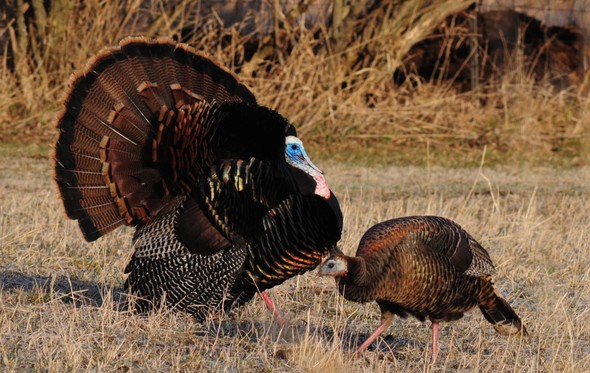 Thunderous calls from competing Toms trying to out-do one another for the attention from nearby hens, rattles through Iowa’s timber each spring. This annual ritual is witnessed by hunters who attempt to mimic the call of a lonely hen, to attract a frustrated Tom to come search her out.
That’s no easy task.
Iowa’s spring turkey hunting begins April 7 with a youth only season, followed by four shorter individual gun/bow seasons and one long archery-only season beginning April 10.
“Do your scouting before the season and be prepared for all types of weather. It doesn’t guarantee success, but you will be in much better position to bag a gobbler,” said Jim Coffey, forest wildlife research biologist with the Iowa Department of Natural Resources. “We are in the turkey’s territory. They live there, this is their home field and they have the advantage.”
For the hunters who head to the timber each spring, success is measured by the pursuit of the birds, hearing them gobble and the opportunity to see them come in. Iowa issues around 50,000 tags each year, with roughly 22 percent getting filled, which equates to a harvest of around 11,500 birds.
“Turkey hunting is an intimate sport done at close range,” Coffey said. “Research indicates that shots of less than 30 yards are the most successful.”
Because it is so intimate, it’s important for hunters to give each other space. If a hunter walks into another’s area, they should say in a loud, clear voice ‘Hey – turkey hunter over here,’ Coffey said.
“Don’t wave at them to get their attention, don’t create movement. The person should turn and walk directly away,” he said. Other safety tips include not wearing red, white or blue (colors on a male turkey head and waddle), avoiding tunnel vision, and properly identifying the target and what’s behind it.
Hunters should also write out their hunting plan that identifies the hunt location, who’s on the hunt and outlines their role, describes how the hunt will unfold and when the hunters are expected to return home. Hunters are encouraged to leave a copy of the plan with someone or somewhere easy to find, in the event of an emergency.
Iowa turkeys had good production last year across most of the state, led by the central and east central regions.
“The two-year-old birds are the most likely to gobble and the most likely to move and make up the bulk of the hunter harvest,” he said. This time of year, turkeys focus on food sources like waste grain, fresh greens (grasses, clover, the green tips on wild raspberries) and insects and it’s why most are seen scratching. Male or bearded turkeys are legal for harvest.
Hunters who bag a turkey are required to report their harvest on the DNR’s website at www.iowadnr.gov, by phone on the toll-free number listed on the tag, through a license vendor, by texting the registration number to 1-800-771-4692 or through the Go Iowa Outdoors app, then write the confirmation number on harvest report tag that is attached to the leg of the turkey. Harvest must be reported by midnight on the day after it is tagged, or before taking it to a locker or taxidermist, or before processing it for consumption.
“Reporting the harvest is important because it provides information on our bird population, and where and when these birds are being harvested,” Coffey said.
Hunters may purchase up to two tags for Iowa’s four spring turkey seasons as long as at least one of the tags is for the fourth season. Each year it all begins with the youth only season.
The purpose of the youth season is for adults to mentor the youth without any competition from other hunting adults.
“Adults serve as a guide, make suggestions and keep the youth focused on the hunt,” he said. “It’s an opportunity to pass along some woodsmanship skills as they youth build knowledge of the outdoors.”
Youth turkey licenses purchased before the youth season closes and are not filled during the youth season may be used in any of the subsequent seasons until filled or the season ends.
2023 Iowa Spring Turkey Seasons (Gun/Bow)
- Youth: April 7-9
- Season 1: April 10-13
- Season 2: April 14-18
- Season 3: April 19-25
- Season 4: April 26-May 14
- Resident archery-only season: April 10-May 14
Licenses and Fees needed (not including landowners/tenants)
Hunting license (age 16 and older), habitat fee, and a wild turkey license
Media Contact: Jim Coffey, Forest Wildlife Research Biologist, Iowa Department of Natural Resources, 515-979-8033.
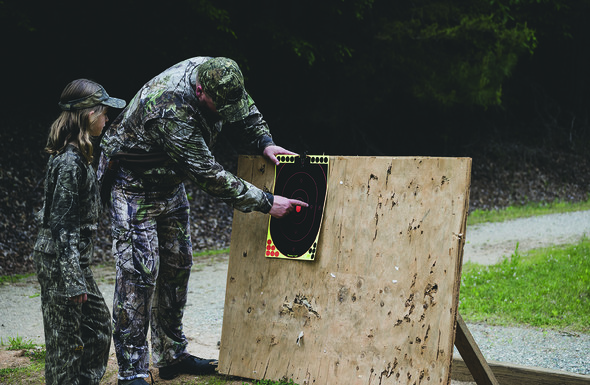 The Olofson Shooting Range is offering three turkey patterning nights at the range:
- April 6, 5-7 p.m.
- April 13, 5-7 p.m.
- April 20, 5-7 p.m.
Stations will be set up with sleds for use, a covered shooting area, ear and eye protection, two splatter turkey targets, and assistance from certified range safety officers. Cost is $5 per person.
The project planned for Martens Lake in Sweet Marsh Wildlife Area has been delayed due to site conditions not progressing as expected.
The Iowa Department of Natural Resources will allow for additional dewatering to occur over the next several months, while soliciting another round of contractors’ bids to complete the repairs. Construction is expected to begin in the fall.
The project will create boating access channels and repair a portion of the dike network associated with Martens Lake.
Water levels in Martens Lake will remain low during 2023.
Media Contact: Dan Kirby, Fisheries Management Biologist, Iowa Department of Natural Resources, 563-920-3456 or Jason Auel, Wildlife Management Biologist, Iowa Department of Natural Resources, 319-213-2815.
Iowans who are graduates of “frog and toad school” have collected data on more than 2,200 wetlands since 1991, providing an incredible record of activity. The goal for this year’s graduates is to add to that legacy.
“It's rare to have such a broad set of data collected over so many years on one species, much less a whole group of vulnerable species,” said Stephanie Shepherd, coordinator for the frog and toad survey for the Iowa Department of Natural Resources (DNR).
The Iowa DNR needs volunteers in northeast and northwest Iowa. There are two in-person courses scheduled for April with seats available:
- Clayton County, April 4, at the Osborne Nature Center
- Buena Vista County, April 11, at Gabrielson Park
There is a $5 fee to cover workshop materials. The courses begin at 6:30 p.m. and run for about three hours. To register, go to https://programs.iowadnr.gov/vwmp/Home/Registration.
“We are looking for people who are interested in the outdoors and who are detail oriented,” she said. “To do a survey, you need time and patience, good note taking skills, and a computer with an internet connection.” The total commitment for the summer is about 8 to 10 hours.
Part of the training includes images to identify each of the 16 frog and toad species in Iowa visually, and recordings to identify them by call.
“You can check out a few of those calls in our new wildlife sound library at https://www.iowadnr.gov/Conservation/Iowas-Wildlife/Volunteer-Wildlife-Monitoring/Frog-and-Toad-Calls,” Shepherd said.
Current graduates are a mix of age, gender and of backgrounds, ranging from a high school student to a retired economist, to a grad student, a bee keeper and a plumbing and heating technician nearing retirement.
The frog and toad surveys are conducted three times during the summer, once each for the singing chronology – early species, middle species, late species. Goals of the survey is to add to the existing data to look at trends over time, to update distribution maps and to get a better understanding of frog and toad breeding.
For more information, contact Stephanie Shepherd, wildlife biologist, Iowa Department of Natural Resources, 515-230-6599.
|





