|
Having trouble viewing this email? View it as a Web page.
|
|
|
|
|
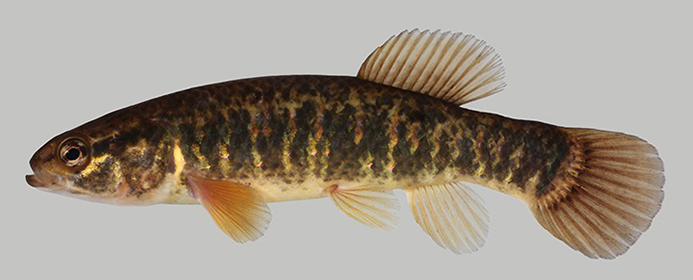
Central Mudminnow
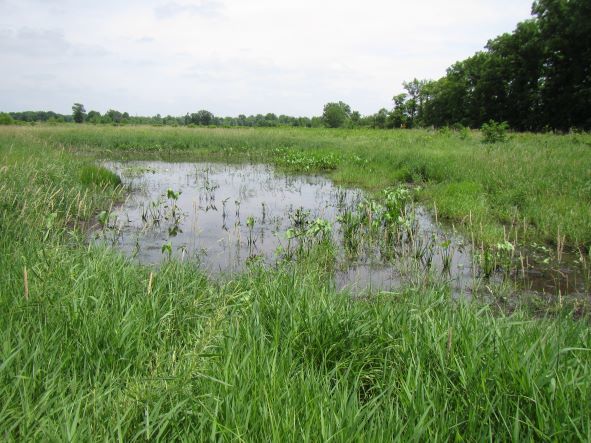
You weren’t expecting it, but there it was; a dark, mottled little fish! What was it and how was it surviving in such a small, shallow wetland? This could be but one fish, the Central Mudminnow. A unique little fish growing no larger than 5 or 6 inches long, Central Mudminnows (Umbra limi) are closely related to the pikes! Mudminnow is a fairly descriptive name as they are often found in shallow, mud-bottomed wetlands and ponds, into which they burrow to escape predators. In Iowa, Mudminnows are found in scattered locations in the northern third of the state and in a few extreme southeastern Iowa counties. They are seldom noticed unless you are collecting crayfish or other bait in shallow wetlands and happen to catch one. During flood events, Mudminnows find themselves scattering eggs in normally isolated wetlands, which is how they end up in strange locations. They are incredibly well-adapted to surviving in low-oxygen, high-acidity situations. Mudminnows can gulp atmospheric air and use their swim bladders to respire when the oxygen levels plummet in the summertime. They can tolerate heat and cold stress better than most fishes. As long as a steady diet of insects, snails, and other small animals is available, they can survive. Mudminnows are in-turn eaten by larger fishes, reptiles, birds, and mammals. Although they are a tough, adaptable, little fish, Mudminnows aren't very common.
|
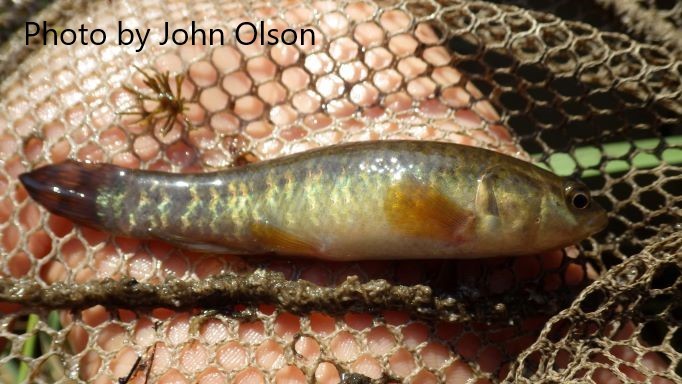
Because of their rarity, Mudminnows are considered a Species of Greatest Conservation Need in Iowa. Conservation of them and their habitat provides important benefits for many other fish and wildlife species. Central Mudminnows are a fascinating part of Iowa's aquatic community!
|
Click this button to learn more about Iowa's fishes:
|
|
|
|